You may (or may not) know that I sponsor a few skaters, snowboarders and scooter riders.
TEAM GYM MOMENTUM!
Enjoy The Crash of the Week!
Share your ideas, drills and Crashes with GYM MOMENTUM! Sharing is Caring!
You may (or may not) know that I sponsor a few skaters, snowboarders and scooter riders.
TEAM GYM MOMENTUM!
Enjoy The Crash of the Week!
Share your ideas, drills and Crashes with GYM MOMENTUM! Sharing is Caring!
SHARING IS CARING! Thanks to Kris Silvestri Head Coach at CountrySide Gymnastics in Fayetteville, NC for sharing this circuit.
I like this circuit because it breaks down all the parts of the vault. It has:
Share your drills and ideas with Gym Momentum!
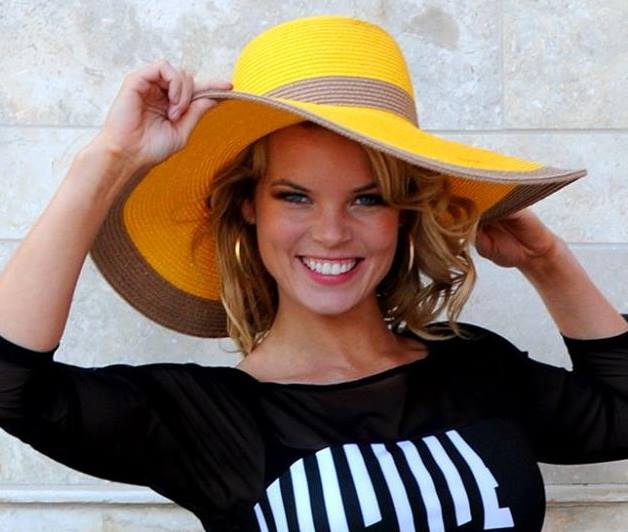
Danielle was one of my favorite gymnasts I have ever had a chance to work with. I am so glad to see her coaching! Take the time to check out her blog!
Tony
As a gymnastics coach, I run into a lot of kids that say “I can’t.” Gymnastics is a very difficult sport that takes perseverance, persistence and at times some discomfort. Even the most basic skills take quite a lot of strength, flexibility and coordination that can be frustrating for kids that live in a “give it to me, now” society. Gymnastics is not a “give it to me, now” sport.
Over my 15 years of coaching I have noticed that kids give up quicker than in the past. What used to take many turns before they said “I can’t.”, Now takes only a few. Kids are starting to make up their minds quickly that they are incapable of completing a task. The “I can’t” kid typically breaks down, gives up and refuses to try again from fear of instant failure.
The easiest response to an “I can’t” kid is- “Don’t say that!”, “Gymnasts don’t say ‘I can’t’”, “Yes, you can!”. Maybe the “Yes, you can!” seems like the best, most well intentioned response. However, you are lying. The child really can’t do the skill… yet. So, saying “Yes, you can!” doesn’t make sense. You are watching them fail, yet saying they can do it.
Effective motivation can only be used after a thorough explanation. First, agree with them that the skill is difficult and validate their sense of frustration that they can’t do the skill…. yet. Yet, is the key word. Educate them by explaining that we are here to learn and the coach is here to help. Teach them that the inability to do the skill is a phase and learning is a process that takes time, determination and perseverance. Give them the appropriate words and tools to ask for help and provide a space that promotes asking and learning.
An example of a response to “I can’t”- “Yes, this skill is difficult right now, isn’t it? You’re right that you can’t do this skill just yet. But, that’s why I am here! You are here to learn and I am here to help you. Let me see you give it your best try. You might not make it today, but that’s ok, you’re still learning! If you keep working hard and trying your best, you will continue to get better and eventually make it. But, it takes time for your muscles to gain enough strength to make this skill. So, instead of saying “I can’t”, next time you can say “Can you help me, please.” Because with my help and your hard work, you will be able to do it in the future.”
Yes, that response takes time and can be exhausting to convince a stubborn “I can’t” kid into believing what you are saying is true. But, once that child makes that skill- there is nothing better than seeing their face light up from the accomplishment of their hard work. And when they do make that skill, make sure to reiterate that it was through their hard work and perseverance. Then- jump up and down! Run a victory lap for them! Pick them up and twirl them around! Positive reinforcement for that hard work will emanate with them and they will be more likely to adopt the same behavior in the future.
As an educator, don’t pass up this moment to teach this important life skill, because once they are successful through asking for help, they are likely to use the tools learned in gymnastics class in school, at home, college, work place and etc…
Tip: Create small successes to lead up to their big success. Try not to give the student the whole skill at once. Break the skill down into parts and give them a piece at a time. Small achievements boosts their self confidence and increases their motivation to strive for the ultimate goal.
 I was watching some Ice Hockey highlights on ESPN last night and I started thinking. Spectacular performances will get an athlete on the highlight reel. But it is consistency that wins championships. ESPN was showing some amazing saves and equally amazing shots. What I realized was that the athletes performing these amazing feats were almost all on teams who were not really going to contend for a spot in the play offs. The best teams are the ones who had the most consistency from top to bottom.
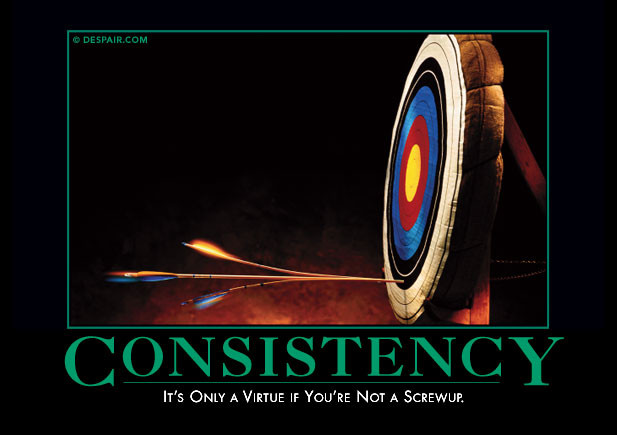
In gymnastics it is my experience that consistency is rewarded over spectacular. A spectacular bar routine in February or an amazing vault in March may get noticed in your local news or make your own personal highlight reel but consistency will most likely get you to nationals. It is the gymnast who shows up for every training session with their head in the game who will likely perform at a consistent level and may even rise to the occasion when necessary. The athlete who is great one day, does not show up mentally the next and pouts the next may perform at a spectacular level once or twice but overall they will disappoint and fall short.
As coaches we must find ways to reward and reinforce consistency. It’s too easy to get caught up in the spectacular. Coaches also must also be consistent. It is imperative to maintain an even temperament from day to day. If you are not consistent in your behavior and actions how can you expect the athletes to be consistent?
Every day when you walk into the gym you need to have a plan (and a possible back up). Sometimes your plan can be, “We just returned from a weekend of competition with a lot of travel. Let’s start slow and see where we end up”. The gymnasts in your program need to be able to count on you Day in and Day out. They need to know that you have a plan that will help them succeed.
I have seen some very passionate coaches fall short of their potential because of lack of consistency. What is funny today must be funny tomorrow. Your expectations need to also be the same. You may need to take the time to explain to your gymnasts when expectations are increasing (You might be happy with a hit routine in October but that same routine in February has too many deductions for you to be happy with).
Consistency in a positive way is what every gymnast (should) want to achieve. There are not many things in gymnastics that are more annoying than when you compete great one week and then the next week your performance drastically dips. They could have prepared all week in exactly the same way as they did the previous week but for some reason their performance was completely different.
This difference could be the environmental factors that you have no control over. The athlete you can only control what they are doing. The environment is unpredictable and you cannot control what the weather is like or how much homework they have. You, as the coach, can only control YOU.
(and because I found this and I thought it was funny)
It is that time of the year that my schedule is filling up with Congresses, Workshops and Symposiums. I am going to try to keep this updated.
-Biggest mistake I ever made when my wife asked where I was traveling to, “Just check the website”. That didn’t end well.
If you want to try to catch me at a conference here is where I will be.
March 2- 6. Reykjavik Iceland. Various sites
April 28- May 1. Level 9 Eastern’s. Virginia Beach
May 5-8. JO Nationals. Fort Worth, TX
May 19-21. Milan Italy ASD ARTISTICA
May 27-29. Frosinone, Italy. Pro Sede Gymnica.
June 3-5. Hartford, CT US Classic (W). USA Championships (M)
June 16-19. Charolette, NC. Region 8 Congress.
June 23-26. St Louis, MO. Region 4 Congress. Men’s Olympic Trials. Women’s P&G Champs.
July 7-10. San Jose, CA. National Congress. Women’s Olympic Trials.
July 14-17. Boston, MA. Gym Momentum Training Camp.
July 29-31. Rock Hill, SC. Thomas Gymnastics.
August 5-6. Providence, RI. Region 6 Congress.
August 7-13. Reykjavik Iceland Training Camp
August 26-28. Rochester, NY USECA Coaches Symposium.
August 29- September 10. Rome, Florence, Monterosso al Mare, Italy
September 29- October 1. Idaho State Clinic
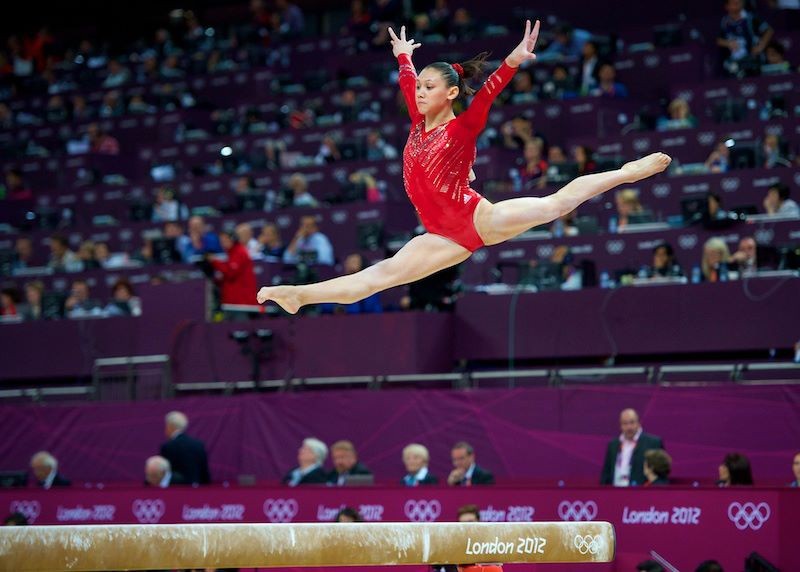 February 29 comes every 4 years. Every Olympic Year. A leap can be many things.
verb (used without object), leaped or leapt, leaping.
1. to spring through the air from one point or position to another; jump:
to leap over a ditch.
2.to move or act quickly or suddenly:
to leap aside; She leaped at the opportunity.
3.to pass, come, rise, etc., as if with a jump:
to leap to a conclusion; an idea that immediately leaped to mind.
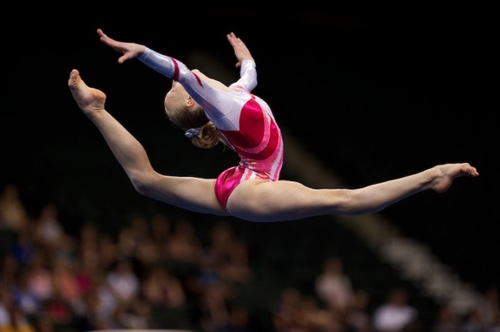
Gymnasts, celebrate it by spending a little extra time on your leaps or your leap series. We have a few weeks until States and Regionals. Now is the time for you to shave a few tenths. Saving these tenths you could leap ahead of the competition.
Coaches, Take LEAP DAY, come up with a plan to work leaps. TAKE OFFS and LANDINGS. Can you come up with 3 drills for each?
Last Month I wrote in the US Elite Coaches Association News letter about the need for an Intellectual Great Leap Forward in our sport.
In the short voyage of our lifetime, in and out of the gym, we can see the eddies and ripples on the surface, but not the under-currents changing the main channel of the stream. Only history can see that. We need to look back at the things that caused real and fundamental change in our sport.
In gymnastics things tend to stagnate for a long time before there is some jump forward.
Look at vault. It hadn’t changed at the top level until Natalia Yurchenko competed the first Yurchenko Vault in 1982. Until the introduction of the vault table in the late 90’s (first used at World Championships in 2001) Yurchenkos were really only competed (successfully) by the most dedicated gymnasts.
But still there has been little change.
So many coaches view the yurchenko double full as a great and rare vault especially at the JO level. But did you know it was first competed in 1985? The Vault Table has made Round Off entry vaults more available to the masses but in more than 30 years there has been little change. The Amanar (Yurchenko 2 1/2 twist) was first competed at the 2000 Olympics!
What our sport needs is an intellectual Great Leap Forward.
Where do our great ideas come from?
Thinking about the origins of human intelligence, basically seeking to discover where we came from and where we are headed next. For the past 200,000 years, human brains have been roughly the same size and shape, but for some inexplicable reason, roughly 50,000 years ago, there was an explosion in art, ingenuity, and civilization. Why? No one knows. This conundrum has been given the name the Great Leap Forward and has baffled both anthropologists and philosophers.
Various theories have been proposed, but no true consensus has ever been reached. The most common thought is that the Great Leap Forward coincided with early man’s migration out of Africa, when we were exposed to foreign lands and unique challenges, which stimulated new innovations and ways of looking at life.
But what if it was something more?
What if there was a person or a group of people, possibly a tribe, who were just smarter than the rest through some interesting mutation in their DNA. And what if this tribe was teachers?
They taught the other tribes, they assimilated into them and that stimulated the great changes.
Take that same theory and look at art. Famous artists did not paint and create in solitude. They had apprentices and students. They taught others.
The Renaissance artists gave way to Baroque.
I would like to see the same thing in gymnastics. Our Great Leap Forward. Instead of playing catch up, which too many coaches do, Think big and make that leap.
I wrote these ideas to a friend and colleague. Her response is worth sharing.
Coaches with great ideas need a chance to share them. Great thoughts or ideas often create new thoughts or ideas. Someone’s genetic makeup may allow them to be predisposed to being smarter but people can have great ideas without being a genius. An intellectual leap forward can be created. That’s what teaching or coaching is. Planting new ideas or intellectual thoughts is what creates critical thinking and therefore, creates new ideas. I think the way you educate coaches is what will create a leap forward. The new and great ideas are going to come from the more experienced coaches who have evolved and pass their experiences and great ideas onto others. The other part of this is that coaches have to be willing to fail.
C.G.
Too many are afraid of the risk of failure in the coaching process. But just like with kids, you must fail if you will succeed.
My goal for 2016 is to spend time with people willing to share their knowledge and experience, let me get their thoughts and ideas.
I think I can learn from everyone.
So when are we going to get a coffee and what are you going to teach me?
How are you going to spend LEAP DAY?
https://youtu.be/kIOeWPZIy4w
In the gym and probably every business, everyone wants to be the leader when things are going well. Everyone wants the credit when there is success but no one wants to be held accountable during rough water.
A leader is there at the helm of the ship in calm water they do their best to avoid rough water but unexpected storms come up. That leader needs to be willing and able to navigate those waters as well.
When I go into gyms for clinics, I get to see everyone on their best behavior. The gymnasts, the coaches, the parents. I always try to follow up through e-mail to see if they have any questions. This tends to be when I hear about any problems in the gym. How they are dealing with the rough water.
As an owner of my gyms, I try to be hands on as I can with out micro managing. Like a marriage, My staff need to know that I am there for them through good times and bad, in sickness and in health. When things are running smoothly I want my staff to bask in the glory and feel the reward. When things are rough, they need to know I’ve got their back.
Do I take credit for their accomplishments?
Hell yes.
I was smart enough to hire them and let them do their job.
A leader at any level, can choose to lead by example. Or not… and not play by the same rules you expect others to. But why would you want to?
There are two highly practical reasons why leading by example makes excellent sense in the gym.
1) It’s effective.
2) It makes people want to follow you.
It sets the right tone for other coaches and teachers in your gym. Those coaches tend to closely watch how their leaders behave. It disarms any resentment that may be felt, rightly or wrongly, toward those higher up the chain. It’s difficult to resent managers and head coaches who “roll up their sleeves” and wade into the trenches when they need to, and who share the same sacrifices their teams do. As famed philosopher and physician Albert Schweitzer once put it, “Example is not the main thing in influencing others; it is the only thing.”
The flip side of this coin is that not leading by example is one of the simplest and most needless ways to alienate people in the gym. In my experience, I have seen numerous gyms undermined this way. I have seen the careers of extremely talented coaches not reach their full potential because they didn’t exhibit the same behavior they asked of others. It’s a quick recipe for lost loyalty.
https://youtu.be/cwN_DlsC8PY
Calling ALL Jewish Gymnasts!!!
The registration for the 20th Maccabiah Games to be held in July of 2017 in Israel is NOW OPEN! Team USA will be sending 4 teams: 2 Open Teams (Men & Women) and 2 Junior Teams (Men & Women).
Junior Girls born between 2002-2004
Junior Boys born between 1999-2002
Open Women born On or Before 2001
Open Men born On or Before 1998
In order to be eligible athletes must register at:
An open tryout will take place in early December at Bart Connor Gymnastics in Norman, Oklahoma. Details will be available soon. If you have any questions please contact Jason Bauer at jfbauer@bgsu.edu
This is truly a once in a lifetime opportunity you won’t want to miss!!!
As of February 1st I have taken the position as Chairman of the US Elite Coaches Association. I am completely intimidated the past chairman. Mike Taylor, Bill Sands, Tony Gehman have left some pretty big shoes to fill.
I have some pretty lofty goals (and this is where you come in). Your input is crucial. Your contributions are incredibly valuable. I look forward to the challenges and hope I never disappoint.
Please contact me with your input, ideas and contributions.
tretrosi@useca.us
Letter to the Membership
Tony Retrosi, Chairman
Dear USECA Members,
It is my honor to take the position as Chairman for USECA. I have been a member since the late 1980’s. To me, it has always been the place that I turn for drills, technique and planning for high level gymnastics. There have been some amazing coaches who have served as Chairman of USECA and I will rely on their guidance and experience. I have set many goals for myself and USECA for the next few months. I welcome your input and appreciate your support.
Goals for USECA 2016 February – May
– Improved website allowing for video streaming
More “technical” articles. Drills and skills!
Continue with exploring possibility of USECA Training Camp and Symposium. (August 16-18. Upstate New York).
– Contributors in different departments. (in addition to the current contributors)
TOPS.
Developmental Elite Camps –
Road to Rio? / Elite.
What Simple Folk Do-
Risk Management-
Sports Psych-
College Corner
Nutrition
Physical Therapy/ re-hab
Sports Science-
Gymnastics technique skills and drills
Going into Olympic Trials I would like to concentrate on increasing membership. We are working on streamlining membership to make everything more accessible to our members. BUT- this is where you come in. If you believe in the the product that is USECA (and I am assuming you do. That’s why you are a member) we need you to tell your friends and colleagues about us and encourage them to sign up.
Tony
The United States Elite Coaches Association for Women’s Gymnastics (USECA) is an organization for coaches devoted to the progress of elite and age group level gymnastics in America. Members enjoy the benefits of regularly scheduled meetings at major elite level events and USA Gymnastics Congress, representation on the USA Gymnastics Advisory Council (with two votes) and on other USAG Committees, a major voice and influence on the rules, policies and decisions that govern and affect our age group gymnasts and coaches, regular communication with members (a major goal of USECA is to keep you informed on elite level gymnastics and its relationship with all levels of gymnastics). Members also receive the USECA Newsletter published 8 – 10 times per year, recognized as a primary source of information in the gymnastics community.