Happy Birthday to Gym Momentum Staff member COACH JAMIE DONKIN from Utah!
[Read more…]
Team building activities and challenges for children
Team Building Activities and Challenges for Children
Addie Kiley, Atlantic Gymnastics. akiley87@gmail.com
As you hear often team effort, is one of the key elements for any successful venture. Ice breaking games are designed to break barriers and bring people closer among team members. A well designed icebreaker or challenge is motivating, energizing, and establishes solid team rapport. Games, challenges, and activities encourage kids to laugh and be silly together while minimizing the fear of “being laughed at” [Read more…]
Listening
What kept me up last night started with my frustration with a person at the gym.
I know I tend to over analyze situations and possibly look for solutions where they may not actually exist. To look for someones motivation. When really the answer could be quite simple.
1. They are an ass
2. They are Crazy and in need medication
3. They enjoy watching the vein in my head get ready to explode
4. All of the above.
So my thoughts last night were on listening and the ART of LISTENING. We are in a society where there is so much constant NOISE.
We have become really good at blocking things out.
We have become good at hearing but not listening.
We have become good at talking with out really saying anything.
I try very hard to be a good listener. I think it is what makes me an effective coach and a good boss. According to Dr. Joe and Sue Massimo’s book, “Gymnastics Psychology” not only does your gymnast need to have you listen and understand. They also need you to TALK LESS. As a coach and boss I try to provide a forum for my gymnasts and coaches to come talk to me.
HERE’S a trick question. What do you hear right now?
If your gym is like mine, you hear floor music, coaches talking to be heard over the kids (and each other). The squeak of the bars, the thump of the vault board, the clank of the beams. It is crazy.
The slight trick in the question is that, by asking you what you were hearing, I prompted your brain to take control of the sensory experience — and made you listen rather than just hear. That, in effect, is what happens when an event jumps out of the background enough to be perceived consciously rather than just being part of your auditory surroundings. The difference between the sense of hearing and the skill of listening is ATTENTION.
The slight trick in the question is that, by asking you what you were hearing, I prompted your brain to take control of the sensory experience — and made you listen rather than just hear. That, in effect, is what happens when an event jumps out of the background enough to be perceived consciously rather than just being part of your auditory surroundings. The difference between the sense of hearing and the skill of listening is ATTENTION.
Hearing is a vastly underrated sense.
We tend to think of the world as a place that we see, interacting with things and people based on how they look. Studies have shown that conscious thought takes place at about the same rate as visual recognition, requiring a significant fraction of a second per event. But hearing is a quantitatively faster sense. While it might take you a full second to notice something out of the corner of your eye, turn your head toward it, recognize it and respond to it, the same reaction to a new or sudden sound happens at least 10 times as fast.
This is because hearing has evolved as our alarm system — it operates out of line of sight and works even while you are asleep. And because there is no place in the universe that is totally silent, your auditory system has evolved a complex and automatic “volume control,” fine-tuned by development and experience, to keep most sounds off your cognitive radar unless they might be of use as a signal that something dangerous or wonderful is somewhere within the kilometer or so that your ears can detect.
This is because hearing has evolved as our alarm system — it operates out of line of sight and works even while you are asleep. And because there is no place in the universe that is totally silent, your auditory system has evolved a complex and automatic “volume control,” fine-tuned by development and experience, to keep most sounds off your cognitive radar unless they might be of use as a signal that something dangerous or wonderful is somewhere within the kilometer or so that your ears can detect.
This is where attention kicks in.
Attention is not some monolithic brain process. There are different types of attention, and they use different parts of the brain. The sudden loud noise that makes you jump activates the simplest type: the startle. A chain of five neurons from your ears to your spine takes that noise and converts it into a defensive response in a mere tenth of a second — elevating your heart rate, hunching your shoulders and making you cast around to see if whatever you heard is going to pounce and eat you. This simplest form of attention requires almost no brains at all and has been observed in every studied vertebrate.
More complex attention kicks in when you hear your name called from across a room or hear an unexpected birdcall from inside a subway station. This stimulus-directed attention is controlled by pathways through the temporoparietal and inferior frontal cortex regions, mostly in the right hemisphere — areas that process the raw, sensory input, but don’t concern themselves with what you should make of that sound. (Neuroscientists call this a “bottom-up” response.)
But when you actually pay attention to something you’re listening to, whether it is your favorite song or the cat meowing at dinnertime, a separate “top-down” pathway comes into play. Here, the signals are conveyed through a dorsal pathway in your cortex, part of the brain that does more computation, which lets you actively focus on what you’re hearing and tune out sights and sounds that aren’t as immediately important.
In this case, your brain works like a set of noise-suppressing headphones, with the bottom-up pathways acting as a switch to interrupt if something more urgent — say, an airplane engine dropping through your bathroom ceiling — grabs your attention.
More complex attention kicks in when you hear your name called from across a room or hear an unexpected birdcall from inside a subway station. This stimulus-directed attention is controlled by pathways through the temporoparietal and inferior frontal cortex regions, mostly in the right hemisphere — areas that process the raw, sensory input, but don’t concern themselves with what you should make of that sound. (Neuroscientists call this a “bottom-up” response.)
But when you actually pay attention to something you’re listening to, whether it is your favorite song or the cat meowing at dinnertime, a separate “top-down” pathway comes into play. Here, the signals are conveyed through a dorsal pathway in your cortex, part of the brain that does more computation, which lets you actively focus on what you’re hearing and tune out sights and sounds that aren’t as immediately important.
In this case, your brain works like a set of noise-suppressing headphones, with the bottom-up pathways acting as a switch to interrupt if something more urgent — say, an airplane engine dropping through your bathroom ceiling — grabs your attention.
Hearing, in short, is easy. You and every other vertebrate that hasn’t suffered some genetic, developmental or environmental accident have been doing it for hundreds of millions of years. It’s your life line, your alarm system, your way to escape danger and pass on your genes. But listening, really listening, is hard when potential distractions are leaping into your ears every fifty-thousandth of a second — and pathways in your brain are just waiting to interrupt your focus to warn you of any potential dangers.
Listening is a skill that we’re in danger of losing in a world of digital distraction and information overload.
And yet we dare not lose it. Because listening tunes our brain to the patterns of our environment faster than any other sense, and paying attention to the nonvisual parts of our world feeds into everything from our intellectual sharpness to our dance skills.
Luckily, we can train our listening just as with any other skill. Listen to new music when jogging rather than familiar tunes. Listen to your dog’s whines and barks: he is trying to tell you something isn’t right. Listen to your significant other’s voice — not only to the words, which after a few years may repeat, but to the sounds under them, the emotions carried in the harmonics. You may save yourself a couple of fights.
And yet we dare not lose it. Because listening tunes our brain to the patterns of our environment faster than any other sense, and paying attention to the nonvisual parts of our world feeds into everything from our intellectual sharpness to our dance skills.
Luckily, we can train our listening just as with any other skill. Listen to new music when jogging rather than familiar tunes. Listen to your dog’s whines and barks: he is trying to tell you something isn’t right. Listen to your significant other’s voice — not only to the words, which after a few years may repeat, but to the sounds under them, the emotions carried in the harmonics. You may save yourself a couple of fights.
“You never listen” is not just the complaint of a problematic relationship, it has also become an epidemic in a world that is exchanging convenience for content, speed for meaning. The richness of life doesn’t lie in the loudness and the beat, but in the timbres and the variations that you can discern if you simply pay attention.
A wise old owl lived in an oak,
The more he saw the less he spoke
The less he spoke the more he heard.
Why can’t we all be like that wise old bird? – unknown author
In the first few years of life, we’re all taught to speak. In fact, it’s an important developmental milestone, a sign that a child is developing normally. However, listening is an equally, if not more important skill that is often overlooked by parents, educators, and bosses.
Yes, we were all taught (hopefully) to listen to our parents and to listen in school. However, few of us were taught good listening—the active, disciplined kind of listening that helps us examine and challenge the information we hear in order to improve its quality and quantity, and thereby improve our decision-making.
Yes, we were all taught (hopefully) to listen to our parents and to listen in school. However, few of us were taught good listening—the active, disciplined kind of listening that helps us examine and challenge the information we hear in order to improve its quality and quantity, and thereby improve our decision-making.
Good listening is the key to developing fresh insights and ideas that fuel success.
Blocks to Listening (Don’t)First is a list of 12 blocks to listening. Try to honestly think about these to see which ones you’ve used before. They are pretty natural to fall into, and just a little awareness goes a long way in keeping them in check. (I’ve done a bit of mind reading and placating myself.)Comparing – While the person is speaking, you’re trying to figure out which of you is better, has more or does less in any way imaginable.
Mind Reading – Assuming you already know what the person is going to say while ignoring him/her and without bothering to ask questions to confirm your belief.
Rehearsing – No way to hear when you are practicing your next lines in your head.
Filtering – The only thing you’re going to hear is what you want to hear, nothing else.
Judging – You’ve already determined that the person speaking has no value for you, so you don’t bother to pay attention to what he/she says.
Dreaming – Something half heard sends you off into your own little world to think about a similar aspect in your own life.
Identifying – As someone shares an experience, you relate it back to your own life.
Advising – Before someone can explain, you are offering advice. You completely miss the point, the feelings and the scope, and leave the person feeling misunderstood.
Sparring – You listen, but only for something to disagree with, argue over or debate.
Being Right – You will rationalize, make excuses, shout or accuse the speaker of anything you can think of just to avoid being wrong.
Derailing – Bored or uncomfortable about what is said, you change the subject.
Placating – No matter what is said, you agree. You listen just enough to catch the places where you can agree.
Effective Listening (Do)
Now, here is a short list of tips to effective or empathic listening. You probably already do a lot of these, especially when the person and the conversation are particularly interesting to you. See if you can ‘catch’ yourself using any of these. Then, see if you can use them at will.
Acknowledge the speaker by being attentive, genuinely interested, alert and positive. Be in the moment and focused.
Show you are listening with “uh-huh”, nod your head, lean forward in a relaxed way, make frequent eye contact, and invite more to explore with open-ended questions.
Be a sounding board and a mirror by restating what is said in your own words. Let the speaker dominate the conversation.
Marketing of Mens Gymnastics
This is a re-post from a 2011 but the subject is fresh in my mind. I have edited and added to it so even if you read it last year, it is worth reading again (imho).
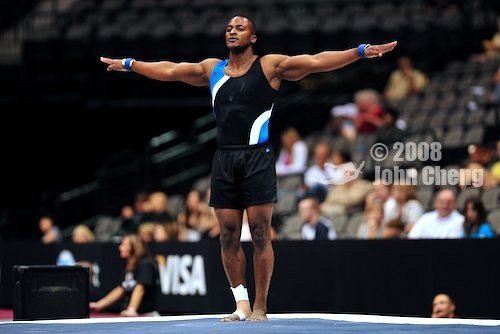
This last weekend I went to see the Kellogg’s Tour of Champions in Boston. It was a great show and the athletes in all disciplines looked great. What started me thinking about this was a podcast by GYMCASTIC a week ago where they interviewed Paul Rugerri. Men’s gymnastics needs a better marketing plan. (or maybe it just needs a plan). On a recent trip to Italy I was surprised how the general public had a basic idea of their men’s olympic team. Yes, it was a “prime time” event on TV but also these men were on TV talk shows and reality shows. They were used in commercials. Let’s face it, Men in gymnastics have beautiful bodies. I am not advocating the sexualization of our sport but at least they are Men and not Boys.
Just my thoughts. 11/13/12
 In the end- it all comes down to marketing.
There have been some great products which failed because of poor marketing. There have been some incredibly crappy products that made millions because of good marketing (and some luck).
In my opinion- such is the state of Men’s gymnastics in the USA. I have just returned from USA Gymnastics National Congress and Trade show that was held with the VISA Championships. As a coach of women’s (girls) gymnastics, I don’t often get a chance to see a men’s competition. After watching the first day of competition I was so impressed. What a GREAT PRODUCT on the floor. The sad part was- there were very few spectators to see it. OK, it was a Wednesday night. Maybe the 2nd day, Friday night, would bring in more spectators. It was better, but still not good.
Face it- Gymnastics is the original X GAME. The original extreme sport.
You want to see people fly? We’ve got that.
You want to see people flip? We’ve got that.
You want to see guys risk their lives? Yea, we’ve got that too.
For girls gymnastics, we want to market the “All American Girl”. But that doesn’t work for guys. We don’t want the “All American” image. We want to Rebel, the bad ass. Look at the movies that are popular, look at the TV shows and even comic books. The Bad Boy image works.
Market that Image everywhere-
- On a cooking show
- On the Travel Channel
- On the Speednetwork
- On ESPN commercials during the X-games.
As a coach and former gymnast, I know (and believe) that gymnastics is the real base for all sports. Especially X-Game type stuff. THIS SHOULD BE OUR CALLING CARD.
Let’s see the men’s team roll up to workout on motor cycles. Go into the gym and show Shawn White how to do a triple-triple.
OK- time for me to breathe again
US NEWS
Catching Up with the USA
Article by Lauren Hopkins
Join in the conversation on Facebook on The Couch Gymnast’s News Page.
The biggest news to hit the US circuit this month was USA Gymnastics’ announcement regarding the restructuring of the women’s elite program, set to take effect in January 2013.
Martha Karolyi’s “national team coordinator” title will stick, though it’s now more true to form, as her sole job will revolve around the national team rather than everything else that goes on in terms of elite development. This side will now be managed by WOGA director/head coach Valeri Liukin as the “elite athlete development coordinator.” He was noted earlier this year for spending more time at the ranch and there was talk of him working on programs with so it’s no big surprise to see him headed in this direction. He will be in charge of all development camps, will direct the educational structure, and will head up the Talent Opportunity Program (TOPs), which focuses on the development of young gymnasts (aged seven to ten) who show talent and promise. Steve Rybacki, known as chairman of the International Elite Coaches Committee and a member of the USA Gymnastics Board of Directors, is now the “director of elite athlete programs,” essentially an administrative role.
Many want to better understand what’s changing and how this will affect the team and its athletes. Essentially, Martha Karolyi is still running the show. She’ll continue her reign until at least 2016, but I think it’s safe to say that with 64 World and Olympic medals garnered since 2001, USA Gym’ll keep her as long as they can. With Liukin now heading the development side, he’ll clearly have to work closely with Karolyi in order to ensure cohesion between the two halves.
We won’t see any major changes to the way elite development is managed, especially as it’s been proven to work incredibly well over the last decade. The restructuring is more of an effort to both take a load off of Karolyi’s back (believe it or not, this sprightly old gal is seventy!) while simultaneously giving Liukin a taste of the national team coordinator job; he could very well be the one they’re prepping to take hold of the reins when Karolyi does decide to retire.
Before the restructuring hubbub, USAG announced Indianapolis as the host city for the 2015 U.S. Gymnastics Championships (formerly Visa Championships). It’s a little odd to see 2015 announced before 2014, but since Indianapolis is USAG’s home turf and a city that has hosted many U.S. events in the past, we’re happy to see that the logistics worked out so quickly for something so far away! Hartford, the site for 2013, was announced several months ago; USAG finalized the schedule last week with competition beginning on August 15 and lasting over a four-day period. It seems there’s a bit of a reversal from the 2009-2012 quad, with the women beginning the competition on day one rather than the men; the days have shifted from Wednesday-Saturday to Thursday-Sunday, however, so the women will still be competing first on Thursday and then on Saturday.
Now that business is out of the way, here’s a bit of fun info – first-year senior elite Abigail Milliet successfully vaulted an Amanar onto a resi at her gym! The video Milliet posted to her Facebook page over the weekend quickly got a lot of attention from fans after it was discovered…because not only did she land it, but she looks good doing it. This is pretty cool, especially as Milliet was only competing a Yurchenko 1.5 as of this summer…she’s clearly working hard with the goal to take over as a major player for next year when a good chunk of the current senior national team will likely retire. She’ll have to worry about the crazy talented upcoming juniors like Lexie Priessman, Madison Desch, Simone Biles, and Katelyn Ohashi…but if the rest of Milliet’s upgrades are going as well as her vault? I’d say she has a shot!
Last but not least…we’re less than two months away from the start of NCAA competition! Keep your eyes peeled in the coming weeks, especially if you’re new to collegiate gymnastics. We’ll be introducing you to the top teams and athletes, gushing over our favorite incoming freshmen, and sharing reports of preseason intrasquad meets really soon! We’ll also keep you updated with new recruits…two recent big verbal commits include WOGA’s Madison Kocian to UCLA and Texas Dreams’ Peyton Ernst to Florida.
Oh, and you guys remember the fun of Olympic Fantasy Gymnastics this summer, right? Get ready for NCAA Fantasy Gymanstics! It’ll be bigger, better, and more user-friendly. We’re hoping to start recruiting around December 1st, so keep checking back for information on how to get involved.
Article by Lauren Hopkins
Photo from USA Gymnastics
Join in the conversation on Facebook on The Couch Gymnast’s News Page.
Kellogg’s Tour of Champions Review
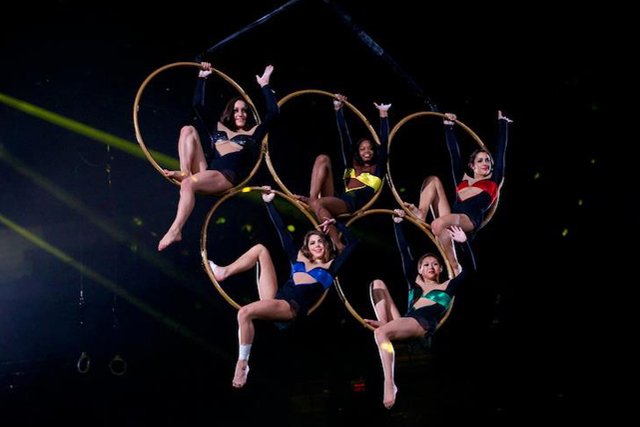
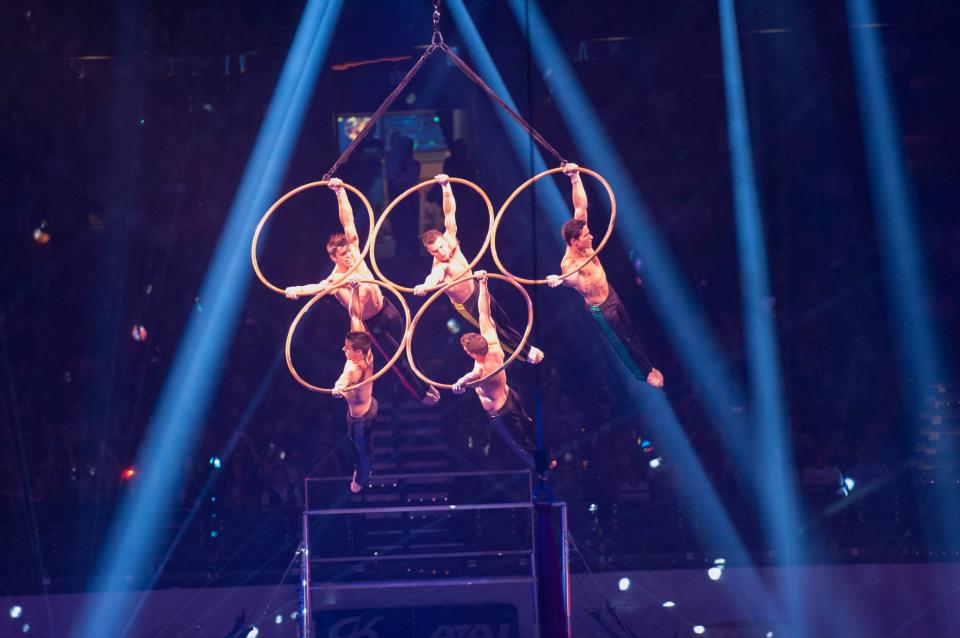 Sorry to all the other cities out there but there really is no better place to watch gymnastics than in the North East of the USA and the Boston area in particular. I had the great opportunity to watch the Kellogg’s Tour of Championships at the Boston Garden (Ok, it’s technically called the TD BANK NORTH GARDEN).
As my daughter pointed out this was our 4th “Tour of Champions” together and it may actually have been our 5th. I know I went to the Post Olympic Tour in 96 but she was only 1 year old. So I can’t remember if she was there. This was by far the Best SHOW I had been to see. With the Boston show being one of the last shows they did, it was hard to predict if people would show up. What the energy of the cast would be, If ANOTHER athlete injury would cancel the show.
In the end, BOSTON GARDEN SOLD OUT (16,000+)! It was the largest show on the tour and the energy of the gymnasts and cast rose to the occasion. From the pre show “Chalk Talk” to the post show “Meet and Greet” the energy was great! I really don’t know how they do it. I was tired watching them just sign autographs! With Ali Raisman and Alicia Sacramone from the Boston area I figured there would be decent turn out but this was really over the top.
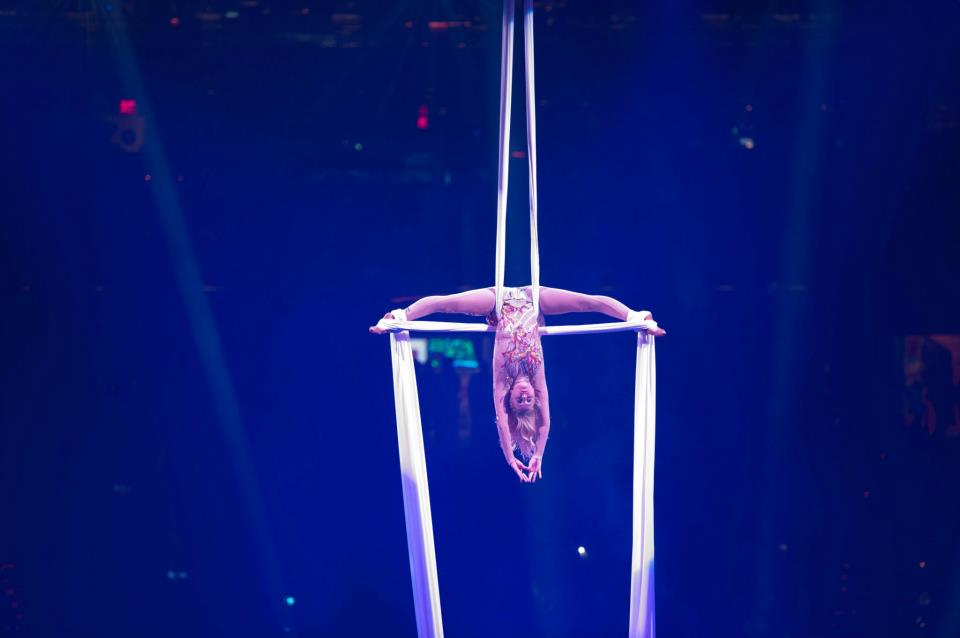 Cirque du Soleil provides an obvious model for the current tour. With the gymnasts performing routines in beautiful costumes using rings, curtains and ropes with stage lighting, popular music, and comedy sketches to break up the program. You get to see the entire cast get their Party Rock Anthem on, dressed up in their neon t-shirts and animal print pants with big black glasses a la LMFAO. It’s admittedly fun to see the gymnasts cutting loose like normal teens, and this routine is one of the most successful in the show.
The gymnasts also perform limited routines on all of the apparatus: the uneven bars and balance beam for the women, high bar, rings and parallel bars for men, floor exercise for both. No vault or pommel horse in this show. It’s enjoyable to watch the men all performing on parallel bars in a choreographed routine together, but my personal favorites were watching 4 High Bar routines going on at the same time and when they had all (or at least most) of the gymnasts cross tumbling.
Tandem trampoline team members Steven Gluckstein and Savannah Vinsant, the four-time U.S. trampoline champions and 2012 Olympic competitors, are able to perform much of their competitive routines. They were spectacular, flying and spinning with impressive speed and precision.
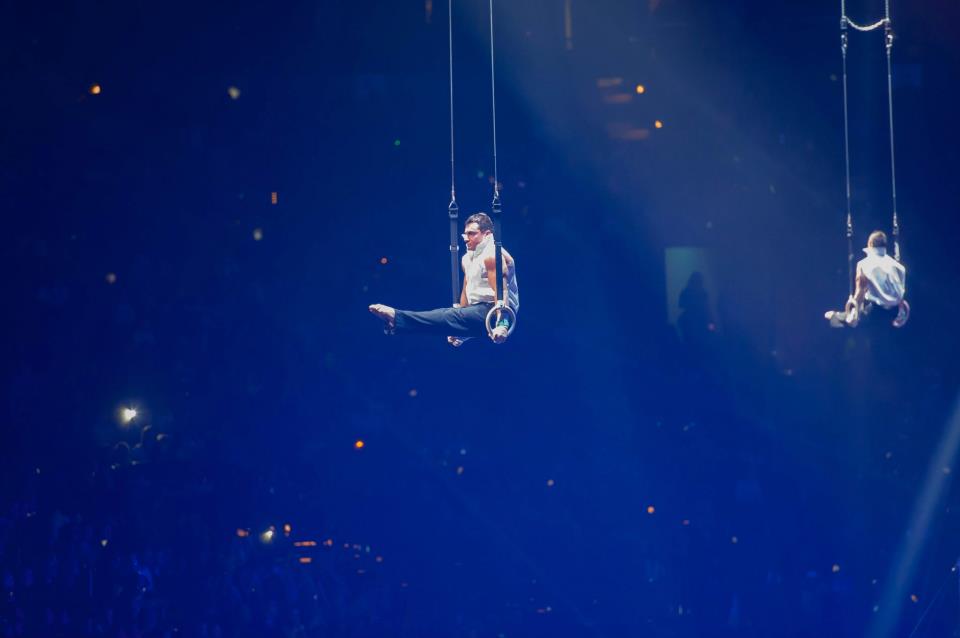 This show was GREAT for the committed gymnasts or casual observer alike. Parents loved it, Kids loved it. Can’t wait for practice today to see how that energy carries over.
What the Parents are Saying.
Thanks for the opportunity. It was so great for the girls to enjoy this event together. They all loved it. And the brothers got to see guys doing gymnastics! That made a real impact. Thank you
Two words – fabulous, and thank you. Well, that’s 4 words. Anyway, I wanted to thank everybody for a great experience for myself and Sarah. Thank you for organizing the tickets (Dina) and the bus (Jacqui), letting us park at Atlantic (Tony). Sarah thought the show was awesome and was inspired by it. What a great experience for the girls to see their idols perform in person.

It is pretty exciting for The North East to have 2 shows this year. One in Boston and one in Hartford. Coming up later this spring will be AMERICAN CUP in Worcester, MA and then in the summer USA CHAMPIONSHIPS and USA National Congress. It is a great time to be involved in gymnastics and live in New England!
What was your impression of the show? SHARE your thought with Gym Momentum.
Thank you Christine Bricket for the use of your photos!
1 year at Gym Momentum
1 year ago I began Gym Momentum. Wow, a year already!
 In the last 12 months I have posted a few hundred articles, blogs, videos, crashes and drills.
I have given probably 20 different clinics, spoken at many Congresses and Conferences throughout North America AND hosted the first annual GYM MOMENTUM TRAINING CAMP which was a HUGE success. (Photos from Gym Momentum Camp)
I want to thank everyone who has contributed articles and videos as well as thank everyone who has let me bounce ideas off them.
Thanks to Tumbl Trak, Mancino and DGS for supplying equipment and gifts for Gym Momentum Training Camp as well prizes for our contests.
Someone asked me the other day how I come up with some of my ideas for articles and videos. Truthfully, sometimes it is a struggle. Often I will get a question from someone looking for a drill to help with a specific skill or group. As I am answering the question I realize that more people may have that same question and that is how an article is born.
I also follow quiet a few different Blogs and websites to try to stay current and see what questions others are answering.
In no particular order
I am sure there are a few more but these are the basics.
My biggest disappointment with Gym Momentum has been the lack of other coaches and gymnastics enthusiasts sharing their insight and knowledge. I really don’t ever want Gym Momentum to become just my soap box. I really want the involvement of others.
Take the time NOW and let me know:
1- what was your favorite post of the last 12 months.
2- what was your least favorite post?
3- Do you have a Blog that you follow that you think I should?
And remember, to keep the momentum going, YOU MUST SHARE.
What will the coming year bring?
Gym Momentum Training Camp June 21-23 in Huguenot, NY
More Clinics and Conferences! I am working very hard at updating my lecture topics and lecture videos/slides.
Items for sale in the “pro shop” section. DVDs, Books and lesson plans.
KEEP IN MIND- I TAKE REQUESTS!
Handstand Flat Back to Front Handspring Vault
In the current (2012) USA Gymnastics program gymnasts compete a Handstand Flat Back on Vault. There is a lot I like about this vault because it is pretty easy you can concentrate on positioning on the vault board AND it gives you time to work “other stuff”.
It is a pretty big jump (no pun intended) from the Level 4 Handstand Flat Back to the Level 5 Front Handspring. So it is important to establish drills with these athletes that will help them with the transition. Here are some of the drills we do to help them with the transition.
Level 4 Conditioning
The other day I was asked by a friend and colleague what my “PLAN” was for our USAG Level 4-6 conditioning. In the developmental groups I like to focus on Big Muscle Groups and Big Movements. I subscribe to the KISS philosophy. (Keep It Simple, Stupid). I think a mistake many coaches make is by making the conditioning program too complicated. That just encourages the kids to cheat their numbers or not have their best form. I very rarely add any weights to compulsory kids conditioning. Instead I try to increase intensity by being more demanding on form.
I switch the conditioning about every month to 6 weeks to keep the kids from getting bored.
Tips for Choreographing a Competitive Gymnastics Floor Routine
Tips for Choreographing a Competitive Gymnastics Floor Routine
Cori Cunningham from Atlantic Gymnastics in NH shares her Tips on Choreography. Cori has choreographed routines at the JO level, Elite Level and NCAA level.
After 25 years of choreographing floor routines I have developed many strategies for creating choreography that fits the style of the gymnast, maintains the artistic quality of women’s gymnastics, and allows the gymnast to be competitive at their level.
#1 – Music Choice
- I allow the gymnast to choose a musical piece that excites them. Often times their parents or other coaches are concerned that the music style may not match the gymnast’s style. I have found that when a gymnast is passionate about a piece of music they will be passionate about the routine we create when it comes to performing it. My job as a choreographer is to create dance combinations that match the music but also look good on the gymnast doing the dancing.
- I very rarely tell a gymnast no when it comes to their music choice. Their ownership over that choice is very important as they are the person who will need to go out on that 40×40 floor in front of an audience and perform a solo.
#2 – What the gymnast/coach should tell the choreographer once music is chosen
- List the dance skills that the gymnast is proficient at
- List the dance skills that the gymnast is working towards
- List the tumbling passes from previous routine that the gymnast is proficient at
- List the tumbling passes that the gymnast is working towards for this routine
- identify any particular strengths that the gymnast displays (i.e. very flexible, very bouncy, strong tumbler, strong at leaps and jumps, knows how to project)
- identify any particular weaknesses (i.e. not flexible, lacking in endurance, not comfortable showing off) We want to showcase their best features!
- ask the gymnast if she has any ideas she wants to contribute (i.e. has she been playing at home with dance that goes to the music, has she seen dance from other routines that she admires, does she have parts of her old routine that she loves doing and wants to work into the new routine
#3 – What the choreographer should do once the music is chosen
- LISTEN TO THE MUSIC over and over again. The music should lead the way when it comes to creating a routine. The music will have parts that “sound” like a tumbling pass or “sound” like a toe turn. Ask yourself,” what movement does that sound bring to mind and how can it be expressed in motion?”
- After mapping out in general terms where a tumbling pass or toe turn could go listen to the music for places to create dance combinations. I will often create parts in the middle of the routine where the music makes me “feel” like dancing a certain way before I move onto the beginning.
- Do some research regarding the style of music you are working with. If the music is Eastern Indian or Swing the style should be honored by trying to incorporate some of the basic dance moves that define that style. If it is a more general style like hip hop or jazz there is a lot of different ways to interpret the music that can be viewed and spark ideas for the choreographer.
- Before meeting with a gymnast to teach them choreography I map out 95% of the routine and videotape myself doing it so that I can remember the more intricate details.
#4 Things to consider when teaching choreography
- Try to stay within the comfort zone of the gymnast. If the choreography I have created makes them uncomfortable in some way ( too intricate, too many hip or shoulder movements) the gymnast may have trouble learning and retaining what I am trying to teach them. They may also be unable to put 100% into eventually performing the routine because the choreography causes them stress.
- Introduce and then demonstrate a combination around ten times with the gymnast. After doing it together ten times watch them do it alone around five times, once they can perform it alone try to add the music to the combination. If you get stuck on step one and the gymnast is still unable to manage the combination it is time for the choreographer to change gears and create something on the spot that the gymnast can handle. I do always remind my students that it took me between 15 and 20 tries to master each part and I made it up….it should take them a few more tries at it than me!
- My choreography and ability to dance is very different from every gymnast I work with. I have a vision of how I want the dance to fit the music but as a choreographer I have to leave room for the personal style of the gymnast to show through. As I teach a routine I use my basic framework that I mapped out prior to choreogaphy and change it based on the needs of the gymnast. She may feel more comfortable performing poses on the other side, she may not be able to do more intricate work, she may pick it up on the first try and already be bored, she may have ideas of her own – my job as a choreographer is to work together with her to meet those needs and create choreography that will be challenging and fun to work on for the next year or two.
#5 Once the Choreography is Complete
- Practice, Practice, Practice!
- The exercises we use to practice choreography in our program are as follows:
-watch yourself in the mirror for a full body dance through
-arm routines in the mirror (only arms and chin and face perform a routine)
– leg routines in the mirror (only legs and feet perform a routine)
-teach someone else your routine (works well for people trying to remember their routine
because they are forced to explain it to someone else)
– have a partner walk through the poses and fix them for certain qualities (fingers, head
position, foot position, show off qualities)
– performance quality routines where they have to make eye contact with a group of
people stationed around the floor. Once they make eye contact the person around the
the perimeter sits down until the performer has made contact with all of them.
– routines with arm weights on to remind them of exactly what their arms are doing
-routines with leg weights on to remind them of exactly what their legs are doing