Gym Momentum Camp 2013.
[Read more…]
Thoughts from Gym Momentum Camp 2013
This post is a little over due. It was started when I had just returned from Gym Momentum Camp in NY where we had a great group of kids and coaches. The Gym Momentum staff we had this year were-
- Ivan Ivanov
- Rick McCharles
- John Wojczuk
- Brock Freehling
- Rebecca Sykes
- Carly Meyer
- Daire Oceallag
- Matt Yellis
- James Parent
- Rob Murray
- and me- Tony Retrosi
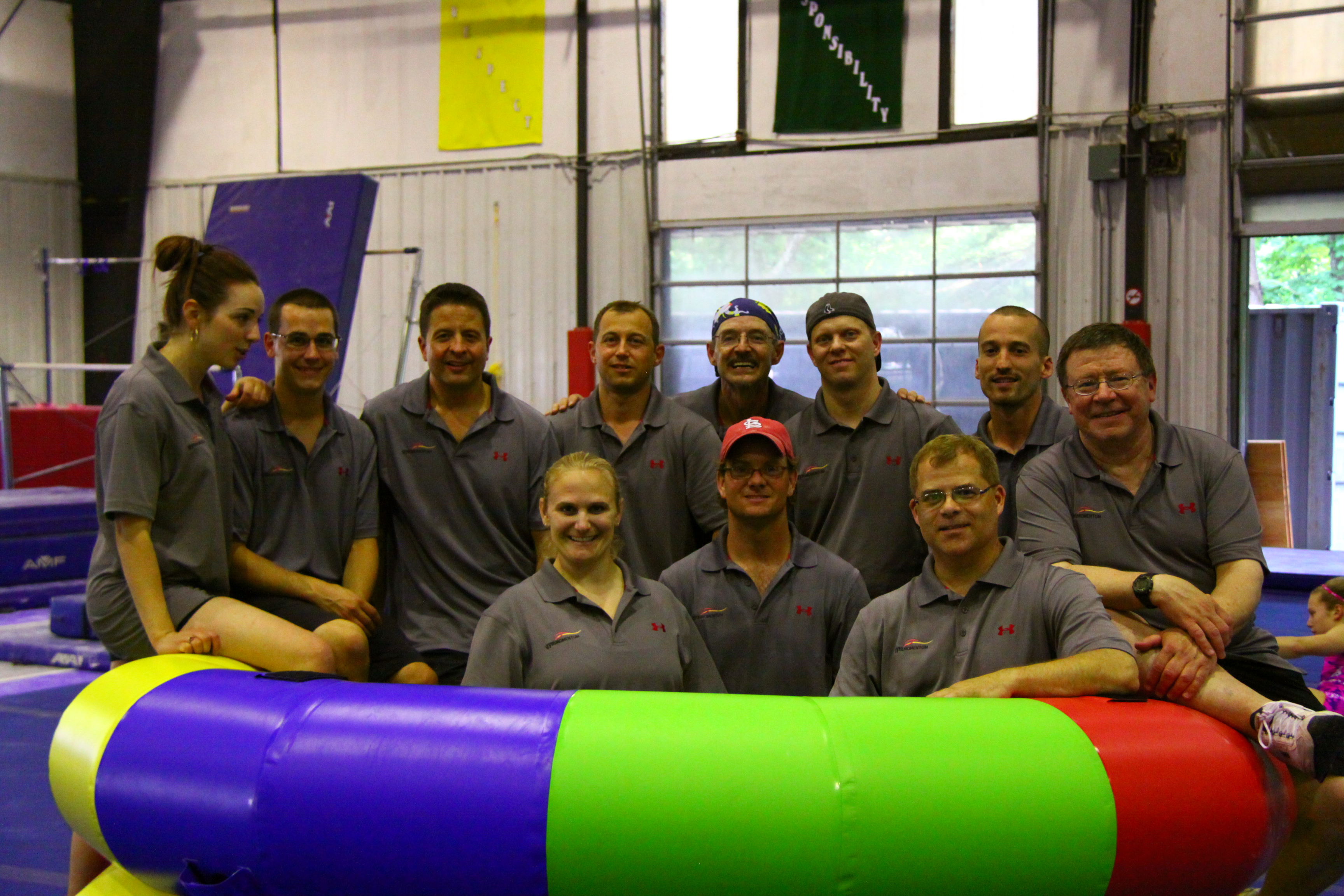
Gym Momentum Staff
One of the things I love about camps is getting together with other coaches in a social setting. Typically all conversations lead back to the gym. What we are doing with a particular group that is working and what isn’t working. Hoping for some help from some of the other coaches. This year we seemed to get a little bogged down with coaches looking for quicker ways. In the end- There are no shortcuts, crash programs or quick fixes that will get you there faster. You will always have to pay the piper whether it is sooner or later. It is better to pay up front by being very thorough in the development process with a balanced program that builds a solid foundation. All components of fitness must be trained at all times of the training year and the career, just the proportion and emphasis changes with advancing training age and proficiency. At younger training ages, especially during periods of rapid growth and development it is tempting to try to accelerate the process, because they can but they will pay for it later on. My concern today is that young athletes over compete and under prepare in terms of sound fundamental training. They can continue to advance on talent and competitiveness and then the roof caves in either with serous injuries, performance stagnation or performance decrement. Pay the piper, take care of fundamentals heed the wisdom of the body and train appropriate for the athlete’s level of development. Rome was not built in a day; training accumulates day-to-day, week-to-week, month-to-month and year-to-year. Take time and do it and teach it right the first time.
It is a given that to achieve any level of success in gymnastics demands hard work. That being said ANYONE can work hard. Champions are the ones who work smart. They know how to balance the work in order to get full benefit from the time and effort in training. Some gymnasts and coaches make the choice to try to go hard all the time with the HOPE that they will survive. It is just that hope. And hope does not win medals. In reality more often than not it is this athlete who is seldom there when it counts the most. They either get hurt or spend all their time managing nagging injuries that keep them from achieving results. The alternative is to train smart, understand their capabilities and recoverability so that they can thrive and be at their best when the stakes are highest. Smart training balances the hard with the easy, it takes into account individual differences and allows for differing adaptation times to different training demands. To train smart listen to your gymnasts and have them listen to their body. Follow what it is telling you. Training accumulates over time so recognize that you are in it for the long term.
To be a Good and effective coach – it demands a careful blend of art AND science. It is not an either or proposition. Modern coaching necessitates that the coach have a sound foundation in sports science which means the coach is educated in sports science, but is not a sport scientist (I leave it up to Dr. Sands and Dr. George!) You can learn the science in school or by reading, you can’t really learn to coach in a classroom, online or in a book. You must get out and practice coaching. Coaching is something YOU ARE not something you do. Day to day coaching demands artistry to achieve results. In today’s world, with the stress on science and technology it is too easy to forget the art and focus on the science. The words of Bill Sweetenham from the Global Coaching House last summer in London sum it all up quite nicely: “ Science is only useful if it makes the coach a better artist.”
Packing List For Gym Momentum Camp
Packing List For Gym Momentum Camp
Camp can be warm during the day and cool at night. Bring what you need.
Bedding
Campers are required to bring the following bedding with them: pillow with case, warm sleeping bag or twin size sheets and a blanket.
- Sneakers (preferably old sneakers)
- Sandals
- Pajamas
- Socks
- Underwear/sports bras
- T-shirt
- Shorts
- Sweat shirts/sweat pants
- Bath and hand towels, wash cloth
- Bathing suits (I do not have any swimming time scheduled. But if it is really hot I may be able to fit it in)
- Leotards (at least 3). I will have some Leotards, T-shirts and Shorts for sale.
- Umbrella/rain jacket
- Grip/tape (if used)
- Water bottle
- Hand and body lotion
- Cookies for Tony
- Journal
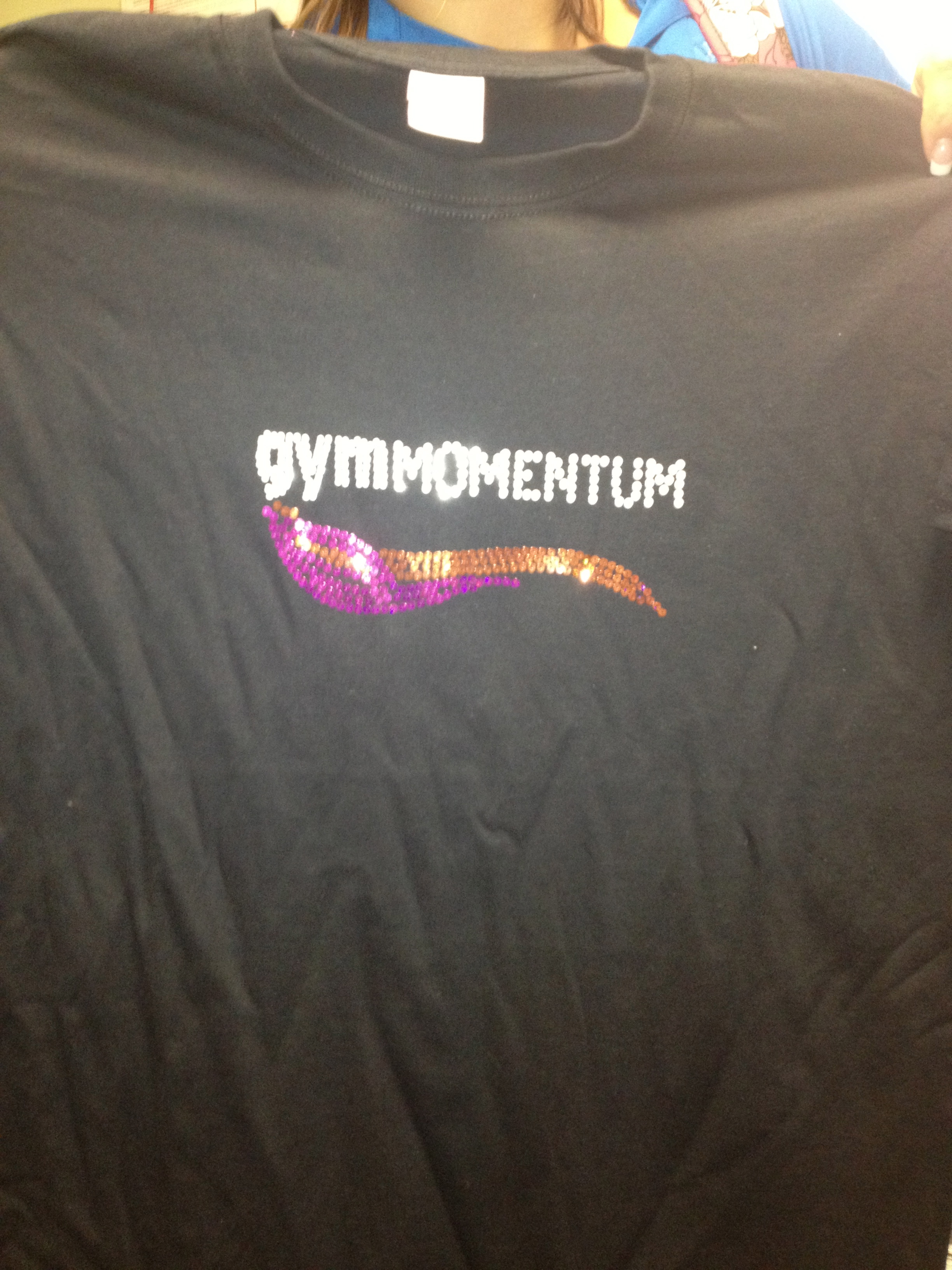
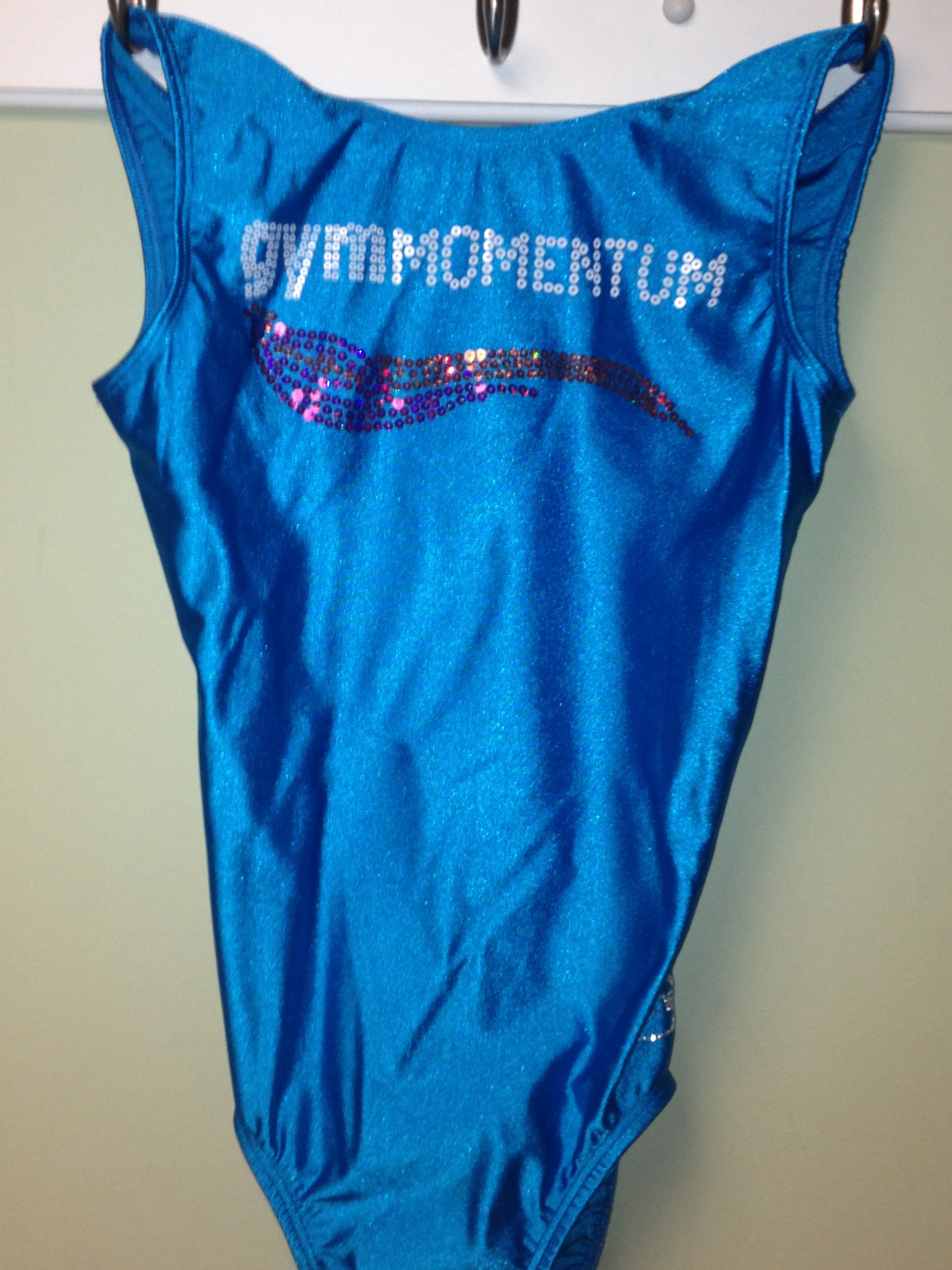
GYM MOMENTUM LEOTARDS, T-SHIRTS and SHORTS
I have ordered a limited amount of GYM MOMENTUM Leotards, T-shirts and Shorts for sale at Gym Momentum Camp.
The Cost of the Leotard is $40.
T-Shirts $15
Shorts $18
If your gymnast buys all 3 the cost is $65.
They will have to pay with a check as I will not be set up for credit Card Payment.
Swing Half Turn Dismount Progression
With the amount of quality videos Jason Mortimer puts out, you wonder if he has a life out of the gym. LOL- who are we kidding. Of course he doesn’t have a life! You should follow him on youtube.
And if you want to see him in person- he will be at Gym Momentum week long camp this summer.
Underswing Dismount
Jason Mortimer from Bounce Gymnastics in Michigan shares a great video and drill for undershoot dismount. You should really follow him on youtube.
The undershoot is a very important step in a clear hip progression.
Jason will be working at my gymnastics camp this summer! I am very excited to have him on staff.
Flow state
Recently, I attended a rock concert by The Who. In the middle of one of their classic songs, “Teenage Wasteland,” (Baba O’Riely) lead singer Roger Daltry, stopped singing, stepped back from the front of the stage and looked around the arena in amazement. Everyone in the standing-room-only audience of was singing, standing, swaying, and singing the song together. All were lost in the moment, thinking of nothing but the present . . . [Read more…]
Professional Development
Professional Development
Continual professional development is a necessity. I encourage you to honestly answer the following questions to see what path you are on with your professional development.
- Where and how are learning and growing professionally?
- Do you know the classics and know history?
- How influenced are you by fads and instant information?
- Are you addicted to Internet training porn?
- Do you have a mentor who is a guide not a guru, preferably someone who has been there before?
Through this website and through the clinics that I do I spend hours each week researching skills, talking to coaches, developing plans. It has made me a much better coach in the gym.
USA Gymnastics University is a great jumping off point for coaches education. I am sure all professional members have received all the e-mail. 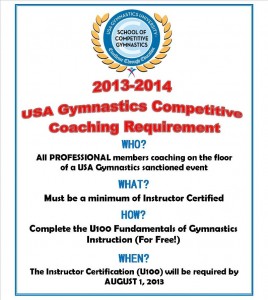
There are a ton of great educational opportunities. Regional and National Congresses, private clinics and training camps. YOU NEED TO GET GOING!
Do you know YOUR history? Are you doomed to repeat it? I start many of my lectures by asking the coaches what their history in gymnastics was.
- What did they like about their coach?
- What did they dislike about their coach?
- What would their gymnasts say they liked about them?
- What would their gymnasts say they didn’t like about them?
How about the history of our sport?
How influenced are you by fads? I remember back in the early 90s a number of gymnastics clubs were not allowing their gymnasts to use grips. I asked why and their response was that it is because the Romanians and Russians didn’t use grips. I had the opportunity to travel to Europe for a competition shortly after this conversation and we were in the same hotel with a team from Russia. So I asked, “Why don’t your gymnasts where grips?” The immediate reply, “Leather shortage made grips too expensive and Chalk was difficult to get.”
Just because someone else is doing it, it may not be the best idea!
Are you addicted to Internet Training Porn? The GYMTERNET has made finding training ideas and models pretty accessible. BUT, who is it that you are watching on YOUTUBE? My first group of elite gymnasts I coached were unbelievably good at BARS and BEAM. Of course, I took all the credit for this. It was because of my program and my “expert” coaching. Since they I have realized they it was THEM not ME that made them good on Bars and Beam. When I go back and look at my training notes and notes on my lectures from that time, I realize that all my drills were really specific to those athletes and probably would not translate to other gymnasts.
I have learned some great things and picked up some good drills from the GYMTERNET but I stay pretty skeptical and so should you.
Do you have a mentor to guide you? Lets face it very few of us are in uncharted territory. Someone else has been here. Learn from what they did right and wrong.
How often do you speak to that person? When I was getting started I spent countless hours visiting other coaches and gyms. Picking out the best of what they were doing and finding things that translated into my program. Frank DeFrancesco from Arena, Kip Reed who was at NEGX at the time, were always helpful. Doc Massimo always had sound advice. Muriel Grossfeld mentored me through that first group and kept me from freaking out.
Find your mentor. Learn from them. Then pass is on.
Hey Tony,
Read your post today – sounds a little like what I’ve been trying to pass on for years now. Here’s a little out-take from several past articles.
The Physics Problem
It’s always good to have a perfect model of a skill in your mind. It really helps you keep to the physical requirements – both strength and flexibility – as well as stay consistent with your drills and progressions. But there is also a pitfall here.
Think back to when you had physics in high school. Very often you had a problem whose real purpose was to demonstrate a basic law of physics – so, in the instructions for the problem it would state that, “For this problem you may ignore the force of friction and air resistance” or something like that. All well and good to demonstrate the principle, but in the real world, there IS friction; there IS air resistance. It doesn’t always come to down to a nice neat problem, or in our case progression or drill.
I may have the perfect drill to teach a Stalder, but it may only work with kids of a specific body type or flexibility – or strength for that matter. It may not be a “one size fits all” drill. I may need to make changes that fit the individual to whom I am trying to teach the skill. In some cases this could be a positive.
What if I have someone very strong and fast? If you have read Dr. George’s new book, “Championship Gymnastics”, you’ve seen a diagram of a Stalder circle that is a little outside the ability of most every gymnast – it drops almost like a giant and then pulls in at horizontal. It is presented in this fashion to demonstrate a principle; fall as far straight body as you can before you shorten the body to increase angular momentum/speed. But I’ll swear I saw Mustafina start to drop at least a little bit like that before breaking in the shoulders to perform that Stalder and toe shoot Shaposhnikova 1/2 turn to HB in her bar routine.
Most kids aren’t physically capable of performing the skill that way, but she is able to do so. Does that mean we try to teach every kid to do it exactly like that? Or do we adapt and change the timing, even the technique of style in order for them to be successful?
Having that model is important, since I think it keeps us focused on the important details to be successful. We may have to perfect model, but we rarely have the perfect gymnast. To be successful across a large number of gymnasts, we need to be able to:
“Adapt. Improvise. Overcome.”PS ( I’ll leave this quote as an exercise for the reader to find. Hint: Clint.)
John Wojtczuk
ENA Paramus, NJ
1 year at Gym Momentum
1 year ago I began Gym Momentum. Wow, a year already!
 In the last 12 months I have posted a few hundred articles, blogs, videos, crashes and drills.
I have given probably 20 different clinics, spoken at many Congresses and Conferences throughout North America AND hosted the first annual GYM MOMENTUM TRAINING CAMP which was a HUGE success. (Photos from Gym Momentum Camp)
I want to thank everyone who has contributed articles and videos as well as thank everyone who has let me bounce ideas off them.
Thanks to Tumbl Trak, Mancino and DGS for supplying equipment and gifts for Gym Momentum Training Camp as well prizes for our contests.
Someone asked me the other day how I come up with some of my ideas for articles and videos. Truthfully, sometimes it is a struggle. Often I will get a question from someone looking for a drill to help with a specific skill or group. As I am answering the question I realize that more people may have that same question and that is how an article is born.
I also follow quiet a few different Blogs and websites to try to stay current and see what questions others are answering.
In no particular order
I am sure there are a few more but these are the basics.
My biggest disappointment with Gym Momentum has been the lack of other coaches and gymnastics enthusiasts sharing their insight and knowledge. I really don’t ever want Gym Momentum to become just my soap box. I really want the involvement of others.
Take the time NOW and let me know:
1- what was your favorite post of the last 12 months.
2- what was your least favorite post?
3- Do you have a Blog that you follow that you think I should?
And remember, to keep the momentum going, YOU MUST SHARE.
What will the coming year bring?
Gym Momentum Training Camp June 21-23 in Huguenot, NY
More Clinics and Conferences! I am working very hard at updating my lecture topics and lecture videos/slides.
Items for sale in the “pro shop” section. DVDs, Books and lesson plans.
KEEP IN MIND- I TAKE REQUESTS!
CHANGE
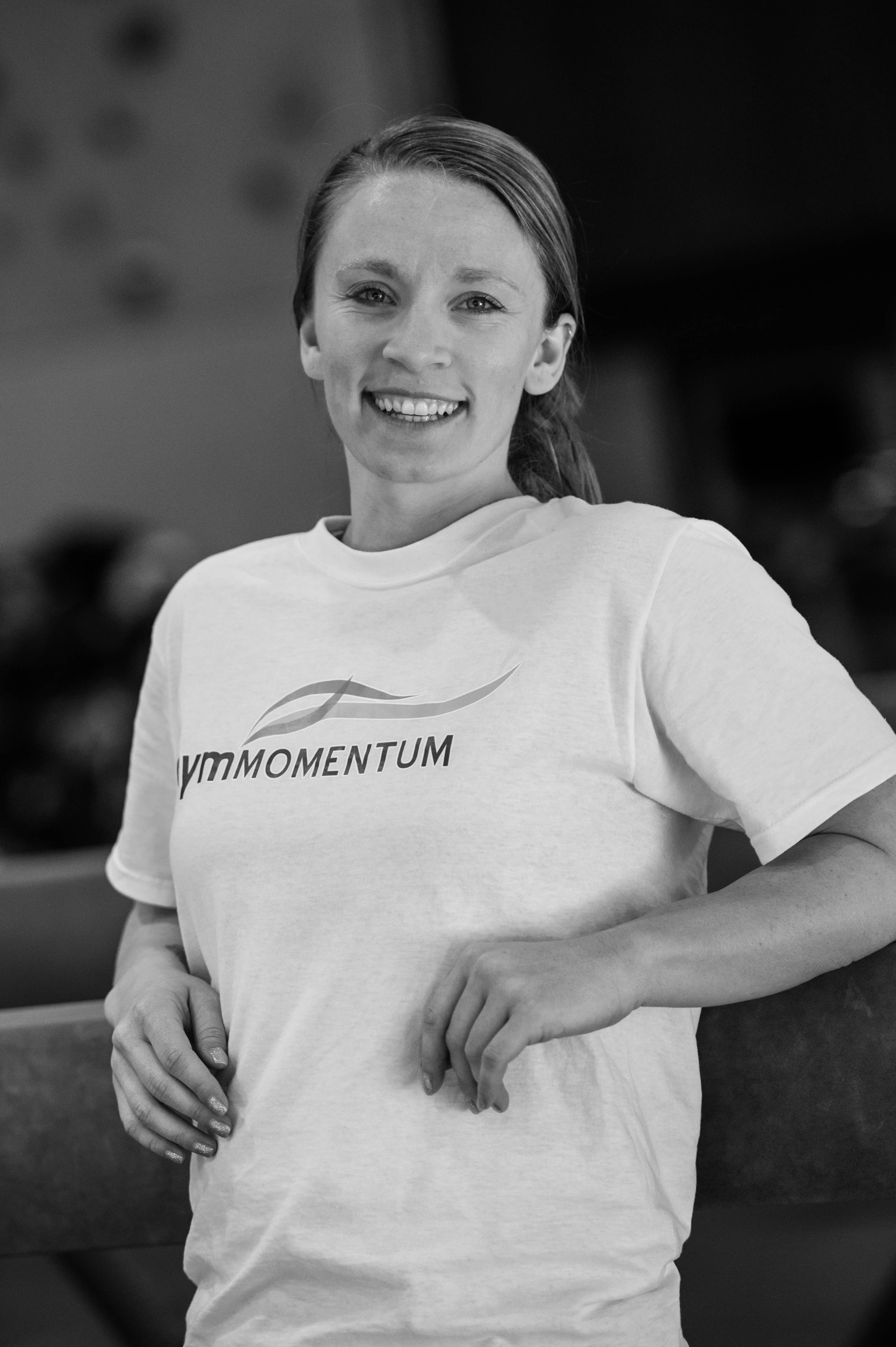
Jamie Donkin
I am a very lucky person. I get to combine two of my favorite things, gymnastics and traveling, and live it everyday. Up until this fall I had always done so from the safety of my hometown. I’d get to explore, seek out new people and new places, new schools and new ways of thinking, and then go back to my comfortable place where these experiences would enhance my life in some magical way. Eventually I realized that these small ventures out into the world could only make me happy to a certain extent; I knew that I could not maintain such complacency with a soul that is continually seeking out more. More experiences. More knowledge. More relationships. More adventures. More of life.
When approached with the opportunity to coach at a new university in a new town outside of my beloved California, I experienced a moment of hesitation. This newness was far more permanent than my weekend or weeklong jaunts for recruiting or camps. This was a pack the U-Haul and get a new drivers license kind of change. This is also me acting completely different than that excited explorer I described in the previous paragraph. And that realization was all it took. What was I waiting for? Life is full of adventures, exploring and change. I cannot sit around in my cozy corner of the world and expect it to come to me. In honor of the upcoming election I pull a quote from Barack Obama, who said, “Change will not come if we wait for some other person, or if we wait for some other time. We are the ones we’ve been waiting for. We are the change we seek.” This was my moment! My next big adventure. And to balk at this chance was to ignore that inner voice screaming for the unknown. An unknown that could possibly change my life.
So whether it is a new job, new school, or a new team, we are exposed to change at some point in time. But it is in that change that we grow. We get the opportunity to learn who we are, or, almost equally important, what we want out of life. I miss my old team terribly – they are what shaped me into the coach I am now. But this new group and new environment is giving me a chance to grow as a coach, expand my ways of thinking, and test that gut reaction to hesitate at the unknown. Have I felt lost at times? Sure. Is it taking a while to feel like I have control? Well, did I ever have it in the first place?! Probably not. So in the end, I accept that this change as part of what makes me lucky. I may be in a new place but in the end I still get to do what I love!
Jamie Donkin
Assistant Coach Utah State University
I had the extreme pleasure of working with Jamie at Gym Momentum Camp as well as The National Gymnastics Training Camp in 2012. She was loved by the gymnasts and coaches alike. Her work ethic, attention to detail and creativity made her a favorite. I look forward to having her back 2013.
Tony
Have something you want to SHARE with GYM MOMENTUM? Keep the Momentum going!