Once again as I explore how to be a better Educator I see that I must also become better at being educated. A better “learner”. In my quest I have explored Neuroscience Myths and Asking The Right Questions. Today I share a video on, in part, having to UN LEARN.
[Read more…]
What it’s like to Coach and Own a Gymnastics Club
 Coaching gymnastics is 80% technique & 20% picking up scraps of tape on the floor.
Coaching gymnastics is basically just listening to yourself talk because nobody else is.
Has anyone ever noticed that coaching and owning a gym is more like an exercise in crisis management?
Coaching gymnastics is juggling chainsaws and wondering why it’s so loud and why your shoulders are so sore.
90% of coaching gymnastics is just walking around saying “WHERE ARE YOUR GRIPS? WE’RE ALREADY LATE! FIND YOUR GRIPS!”
Coaching and Owning a Gymnastics Club is a conglomeration of everything I’ve never learned.
Coaching gymnastics could be a lot like a Tarantino film. Lot of questions and violent screaming.
Coaching Gymnastics is a journey except it’s just traveling from event to event moving the same mat all day long.
I am saddened by the fact that I am no longer alarmed when my fingers smell like someone else’s sweat. This, my friends, is Coaching Gymnastics.
Owning a gym is 50% love, 10% dealing with parents, 10% dealing with kids and 30% unclogging toilets.
WHAT WOULD YOU ADD? Share with Gym Momentum!
Learn To Ask The Right Questions
In my opinion, to be a great gymnastics coach you need to learn to ask the right questions. Be willing to ask the hard questions others are unwilling to ask. Here are some questions I find myself asking quite often:
What is the difference?
Can I replicate that?
Will that work in a different environment and situation?
Is that result an outlier?
Where do I go from here?
How do you dial it up or dial it down?
Is what I am doing dependent on the facilities, equipment and technology?
Can I do it without facilities, equipment or technology?
How can I measure the effectiveness of my training program?
Where can I get new ideas?
Who or what inspired me today?
Where do I want these gymnasts to be in a year? 5 years? 10 years?
What am I personally doing to get better as a coach?
Where will the biggest gains in our sports come from?
Have I mastered the basics as a coach? Have the gymnasts mastered the basics?
Do I review the basics everyday?
Is my technical model sound?
Who is my alter ego? Who keeps me on track and honest?
Is what I am doing proactive or reactive? Why?
Who are my role models?

Back Layout Drill
My friend Arun Kumar Jayan (ALL THE WAY FROM INDIA!) shares another drill. This time for basic body shaping for back layout position.
Folding Towels
When my wife and I first moved in together I was doing laundry and folding towels to Putting them away.
I returned later that day to see her refolding all the towels. Apparently I had folded them “wrong“. I am not sure how they were wrong, they were folded, they were away, they were not hanging out of the cabinet. But she assured me, they were wrong. She then proceeded to show me the correct way to fold the towels.
(For the record, a triangle is not the accepted way. )
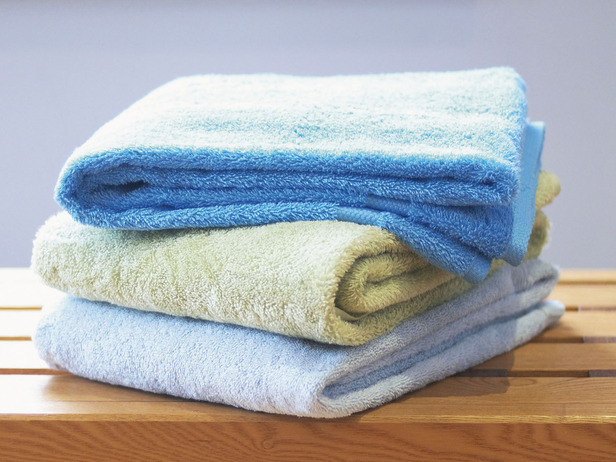
I am eager to please the women I love. I want to do this right. But I had to ask “WHY ?” was this wrong.
She told me that this is the way her mother taught her.
A year later I got up the nerve to ask her mother how to fold a towel. She showed me. I asked “WHY ?”. She said that was the way her mother had taught her.
As luck would have it, my grandmother-in-law was coming for dinner.
After dinner as we were sitting enjoying a glass of wine I asked her how to fold a towel. She showed me.
I asked “WHY?”
She told me that when she first got married they had a very small apartment in Austria and that she found that this way was the only way her towels fit in her cabinet. After a decade in that apartment it had just become habit. She then said, “There is no right or wrong way. As long as they fit.”
As coaches, how many things do we teach, not based on mechanics and technique but on a habit passed on by our coach and possibly their coach before them?
I do approximately 50 lectures a year in a variety of countries. Some at formal congresses, some in gymnastics clubs, and some informal discussions in the bar following competitions or clinics. I am used to professionals asking me “WHY?” Questioning technique or a drill or progression I’ve used. It is those questions that have made me a better coach. I have had to justify nearly everything I do, hundreds of times a year.
Your coaches may have been brilliant and correct with their drills. But they also could have come up with a drill or technique just to fit a situation.
Learn from everybody, questions others, question yourself.
Coaching Thoughts from Iceland
In my apartment here in Iceland I have a TV but there are few shows for me to watch in English. So I watch a lot of sporting events and cooking shows. (I guess my TV experience isn’t that different that when I am back in USA!)
FOOD FOR THOUGHT
Yesterday I caught the end an interview with noted chef Bobby Flay. He offered two pearls of wisdom that I found very appropriate for coaches. The first one was to never rest on your laurels, constantly strive to get better, keep an edge. The second was to stress the fundamentals everyday. He reminds his chefs everyday to salt and pepper both sides of the meat. Everything is based on repetition of sound fundamentals. Food for thought and action as you begin your week.
THE JOB OF COACHING?
Watching a variety of different sports while not understanding the commentators gives you time to see more. Watching plays develop, watching what players are doing while they are not involved in a play or rush, and watching how coaches interact with the athletes. What occurred to me is that coaching is not a job it is not an industry! It is a way of life, a lifestyle, a profession. It is fueled by passion and driven by dedication to improving the lives of the athletes we work with work. To adopt this lifestyle is not for the faint of heart or the dilettante. Extrinsic rewards are few, fame and recognition is minimal and fleeting. The joy of coaching is not in the championships and the world-class athletes it is the day-to-day and week to week satisfaction of seeing athletes focus and dedicate themselves to excellence. My greatest accomplishments were not the talented athletes who achieved success at JO Nationals or at the Elite level. It was the marginally talented gymnasts who I was able to get them to believe in themselves, to compete skills that seemed “above their ability” to shave a few tenths of a point in execution and get them to JO Nationals (or even State or Regional Championships depending on the level). No one notices that but you and the athlete, but that is enough. Those are the intrinsic rewards, the things that make it all worthwhile. At the end of the day it is the satisfaction of knowing that you the coach can make a real difference. To those gymnasts- I dedicate my career to you.
Neuroscience Myths That May Be Getting In Your Way Of Being A Great Gymnastics Coach
As gymnastics coaches we are educators first. What we teach is the science of movement. How we teach is an art. Knowing this I tend to read many science bases educational journals (to improve my art). I recently did a little follow up reading on research in neuroscience.
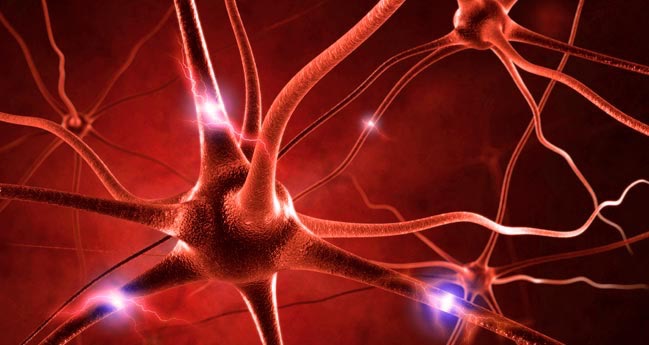
It is important to cut through the neuroscience buzz and extract real information that can improve any learning program. Paul Howard-Jones, a researcher at the Centre for Mind and Brain in Educational and Social Contexts at Bristol University in the United Kingdom, cautions that neuromyths, or the “misconception generated by a misunderstanding, a misreading, or a misquoting of facts scientifically established by brain research to make a case for use of brain research in education or other contexts” are more pervasive in the educational field than we might think—and that these neuromyths may, ultimately, work against educational achievement.
In a survey of educators across the United Kingdom, the Netherlands, Turkey, Greece, and China, Howard-Jones found that teachers were quite susceptible to neuromyths, including the idea that humans only use 10 percent of their brains and that children are less attentive after consuming sugary snacks. The results were published in a Perspectives piece in Nature Review Neuroscience in October of 2014. And while Howard-Jones’ survey did not include American educators, he believes he would find similar results in the United States, as these ideas have become quite commonplace across the globe.
To help out with the process, Ann Herrmann-Nehdi, CEO of thinking research and learning organization Herrmann International, said there are a few neuroscience myths that learning leaders should recognize right away as false:
Myth: We only use 10 percent of our brains, and it’s slowing us down.
Fact: As much as Hollywood would like us to believe through movies like “Lucy” and “Limitless” that we could all be superhuman if we unlocked 90 percent of our brain capacity, Ann Herrmann-Nehdi, CEO of thinking research and learning organization Herrmann International, said that’s simply not true. We have full use of our brain but only so much of it needs to be working at a time for us to fully function.
Marcus Raichle, a neuroscientist at Washington University in St. Louis and a member of the Dana Alliance for Brain Initiatives (DABI), was one of the first scientists to suggest that, even at rest, the brain is working at full capacity. Since then, most neuroscientists have accepted that the brain has a so-called “default mode,” a sophisticated network of brain areas that remain active even when the brain is resting.
“When I’m asked what the brain’s job is, if I can sum it up in one sentence or so, I always say the brain is in the prediction business. We’ve learned that it’s always on—and most of its energy is devoted to trying to predict what’s going to happen to you next,” says Raichle. “And I don’t see how the brain could be in the prediction business if it was working at only 10 percent capacity.”
Myth: We can multitask.
Fact: A simple examination of how many car accidents happen because of people eating, texting, talking or otherwise not devoting all their attention to the road can discredit this theory. We feel like we can do many things at the same time, but really we’re just switching between the different parts of the brain handling each task. Herrmann-Nehdi, said “The brain is not a parallel processer, There’s at least a 50 percent increase in error rate and it takes you 50 percent longer to do something while multitasking.”
Myth: The right puzzles and classical music can boost intelligence.
Fact: Although there are short-term benefits of using mind-strengthening games and listening to classical music, there’s no long-term efficacy, Herrmann-Nehdi said. But hey, if you like Beethoven, it can’t hurt to listen to the fifth symphony every so often. Personally, I’m more of a Gershwin fan — “Rhapsody in Blue” is my jam.
Myth:Eating sugary snacks results in hyperactivity and reduced focus and attention.
Where It Comes From:As researchers study the effect of diet on cognition, one thing is becoming abundantly clear: diet matters. Understanding how, where, and why, however, remains a bit elusive. In the 1970’s, many researchers believed that sugary foods and food additives were linked to cognitive deficits—particularly in school-aged children. Several correlational studies showed a link between sugar intake and hyperactive behavior. These results were only fueled by parental and teacher anecdotes. They consistently reported that children are less attentive (and more active) after consuming sugar. Even today, if you offer elementary schoolers a cookie near bedtime, you’ll likely get an earful from a parent about how that sugary snack will only rile them up.
FACT:This particular neuromyth has been around for quite some time—and Harris Lieberman, a researcher who studies diet and cognition at the U.S. Army Research Institute of Environmental Medicine, says that, despite several studies debunking it, it still remains a popular belief among both parents and educators. It’s a case where anecdote seems to have a stronger pull than sound scientific experimentation.
“For some reason, nutrition and behavior generates a lot of mythology. But in the controlled studies that investigated whether sugar versus placebo made children more hyperactive and interfered with their ability to concentrate, it’s clear that sugar was not linked to hyperactivity in kids,” he says. “But it’s very difficult to convince people once they think they are observing a relationship that it doesn’t exist, regardless of how many scientists say so and how many studies have been done.”
Myth:Hemispheric dominance (whether you are “left-brained” or “right-brained”) determines how you learn.
Where It Comes From: In the 1960’s, Roger Sperry, Joseph Bogen, and Michael Gazzaniga undertook what are now known as the “split-brain” studies. The group studied patients, usually epileptics, who had undergone a surgical procedure that severed the corpus callosum, or the white matter neural fibers that link the two hemispheres of the brain. The group discovered that this procedure resulted in some striking hemispheric differences on cognition. Gazzaniga, in an essay written for Nature Reviews Neuroscience about his split-brain research, says, “Nothing can possibly replace a singular memory of mine: that of the moment when I discovered that case W.J. could no longer verbally describe (from his left hemisphere) stimuli presented to his freshly disconnected right hemisphere.” The group went on to demonstrate that severing the corpus callosum in its entirety blocks interhemispheric communication—influencing a patient’s ability to perceive and describe information, depending on which side of the brain it was presented to.
More than four decades later, the split-brain work has undergone a metamorphosis in popular culture. It has been co-opted to describe visual and verbal learning styles, as well as different personality types. Books and popular periodicals argue that “hemispheric dominance,” or which side of the brain is more active, tells us about who we are as people. That “left-brainers” are your more analytical types—while “right-brainers” are more creative and expressive. And today, you’ll find all manner of educational books instructing teachers on how to harness the two different hemispheres to encourage optimal learning in the classroom.
Fact: Gazzaniga, now director of the Sage Center for the Study of Mind at University of California Santa Barbara (as well as a DABI member), says he couldn’t have predicted that his split-brain work could have become such a part of popular culture when he started the work more than 40 years ago.
“It took off and really had its own life,” he chuckled. “And it makes sense if you think about it in terms of a very easy way to explain what you knew about brain mechanisms and cognitive abilities. But it’s overly simplified and overstated.”
Gazzaniga says that the split-brain work has become “mixed up” with sound psychological and educational work that demonstrates that children use a variety of cognitive strategies to solve problems. “There are some kids who visualize problems and other kids who verbalize them. And some educators use those terms, visualizers and verbalizers,” he says. “That reality has been mapped on the right brain/left brain anatomy as an explanation. But that’s where it falls down. Because the actual neural mechanisms for how these cognitive strategies work are much more complex than that. Cognition, in general, is much more complex than that. That’s what we’ve learned over the years and continue to learn as we study hemispheric differences. It’s all just a lot more complicated than we ever thought.”
Myth: After a certain point, the brain is permanently wired and cannot change.
Fact: Herrmann-Nehdi said this is her favorite myth to debunk. Originally scientists believed the brain stopped growing at a certain age, but in the last 15 years researchers have found that it changes throughout life. “Learning can produce new connections, but it takes energy to do that,” she said. “That’s an important implication for corporate learning because it means all dogs can learn new tricks.”

————————————————————————————————————-
Howard-Jones PA. Neuroscience and education: myths and messages. Nature Reviews Neuroscience, 2014. 15(12): 817-824.
James W. The Powers Of Men: The Keys Which Unlock Hidden Energies, and Stir Men to Achieve—Such Keys as Love, Anger, War, Duty, the Temperance ‘Pledge,’ Despair, Crowd-Contagion, Christian Science, Conversion, Prayer, Resistance of Temptation and Other Excitements, Ideas and Efforts. The American Magazine, 1907. 65: 57-65.
Penfield WP. The Mystery of Mind. Princeton: Princeton University Press; 1975.
Lashley KS. In search of the engram. Physiological mechanisms in animal behavior. 1950, Society for Experimental Biology, 454-482.
Raichle ME. The restless brain. Brain Connect, 2011. 1(1): 3-12.
Raichle ME, MacLeod AM, Snyder AZ, Powers WJ, Gusnard DA and
Shulman GL. A default mode of brain function. Proc Natl Acad Sci, 2001. 98(2): 676-682.
Langseth L and Dowd J. Glucose tolerance and hyperkinesis: A Meta-Analysis. Fed J Cosmetic Toxicol, 1978. 16: 120-133.
Wolraich ML, Wilson DB and White JW. The Effect of Sugar on Behavior or Cognition in Children. JAMA, November 22/29, 1995. 274 (20): 1617-1621.
Gordon HW, Bogen JE and Sperry RW. Absence of deconnexion syndrome in two patients with partial section of the neocommissures. Brain, 1971. 94: 327-336.
Gazzaniga MS. Forty-five years of split-brain research and still going strong. Nature Reviews Neuroscience, August 2005. 6: 653-659.
Shiny Objects
As the ancient Greeks understood, great athletes not only accept the ordeal of competition and the trial of strength inherent in it, but also show us a connection between what we do each day and something that is larger than we are and lasts longer than we do.
Bill Bradley via Bill Sands

Crows are attracted to shining objects. Are you a crow? Are you immediately attracted to shining objects? Crows in coaching are those who are constantly attracted to the newest shining object in the form of fads, they believe the hype and marketing, they are always looking for the latest greatest shortcut.
In all my years of gymnastics I have never really found a shortcut. If anything every time I teach a new skill to a gymnast I find myself using more and more drills.
Hopefully you are not a crow but a critical thinker with a sound foundation in training principles and finely tuned BS filter so that you can ignore the shining objects.
Fly Away Drill for High Bar or Uneven Bars
Another good drill from friend Arun Kumar Jayan (Colin Zand).
I really like the emphasis on the release point.
Because Gymnastics should be enjoyed not endured
I found an article in the Huffington Post on ways to Inject JOY into Youth Sports. I adapted it to fit gymnastics.
I’ll preface this post by saying that I don’t have many answers. I’m simply asking questions and making observations as we navigate one aspect of our lives: youth sports.
Another preface is that my wife and I were both fairly decent gymnasts in our youth.We weren’t unbelievable, but we were athletic. A few more caveats:
I love coaching. I never really enjoyed coaching my kids. Watching and just being DAD was so much better.
I believe that competition is a good thing.
I believe sports in general and gymnastics specifically have the ability to teach valuable life lessons.
I want my kids to do their best and I will support them however I can.
I always remind myself in the gym that I am teaching WAY more than gymnastics. I want the kids to create some positive lasting memories.
Here’s the big question I’m wrestling with regarding youth sports: Where is the joy?
Have we traded it in for competition? Or preparation? Or even comparison?
I’m not talking about International gymnastics or truthfully even college gymnastics, that’s not reality yet.
With regards to families- I’ve seen it all.
Angry parents. Frustrated coaches. Bitter kids. Schedules on the brink of disaster.
Screaming, hustling, shuffling.
Demanding, spending, comparing.
More dinners out of a bag in the back of the car than around a table. More time apart than together. More chaos than peace.
For the love of our kids, can we please inject some more joy into gymnastics?
After all, are our children competing in gymnastics because they love it or because we want them to love it?
Because it teaches them something about themselves or because it validates something about ourselves?
Because competition brings out the best in them or the worst in us?
Chances are very small that any of our five children will ever earn a penny from playing a sport. (Unless they hustle younger kids on the playground. “Hey- I’ll do a back flip for a dollar!”)
In light of that reality, wouldn’t it be amazing if our youth gymnastics coaches and parents filled these kids up with joy for the sport instead of over-competition? Joy instead of frustration?
With encouragement instead of criticism?
With a slap on the back instead of chastising them?
I’m not pretending to know all the answers. But I do know that, in the name of giving our kids an opportunity, we’ve stolen joy and replaced it with anger many times.
This isn’t a battle we’re shying away from and youth sports aren’t something we’re going to stop pursuing. After all, our kids love it for now.
So practically, here are ways to inject more joy into youth sports:
- Give kids permission to quit a sport if they don’t love it. Not in the middle of a season. But if they gave it their best shot and didn’t enjoy it, they can quit no questions asked.
- As a coach and/or parent, be aware of anger. Yelling so kids can hear, speaking loudly and demanding attention is part of a healthy and respectful view of sport. But man, it’s a fine line between yelling and screaming. Authority and anger. My goal is to ensure that when my voice is raised it’s to encourage them, not berate them.
- Eat dinner around your own table as often as possible. Realistically it doesn’t happen every night and it’s not always glamorous, but fight like hell for more time together not less.
- Choose one sport per season. Especially bigger families with multiple kids, it’s impossible to juggle even one sport per kid let alone multiple sports. Let’s not over-commit, over-extend and burn our kids out.
- They don’t need extra lessons. At least not yet. Our son doesn’t need a swing coach at five. Our daughters don’t need private soccer lessons before middle school. Maybe there’s a time for that, but it’s not yet.
- Don’t feel pressure to attend every kid’s every activity. Prepare your kids for that time when mom and/or dad won’t be at that practice, meet, tournament, recital, whatever.
This is a sensitive conversation that I’m sure isn’t fully exhausted here, but it’s one I think we should start having more honestly and openly. I’m hopeful we can all start to play a part in the solution.
Because Gymnastics should be enjoyed not endured.
This post was adapted from Justin Ricklefs’ blog.
Follow Justin Ricklefs on Twitter: www.twitter.com/justinricklefs