I am always amazed by the creativity of gymnastics coaches. Rebecca Sykes from Salto Gymnastics in Edmonton sent me a good video of a drill she started doing in her morning training.
[Read more…]
Talk Less
I have always believed in a few cliches
Actions speak louder than words
Lead by action
When I was teaching in an elementary school I told the kids to BE A VERB.
A very clever student said asked if “delinquent” was a verb.
I said NO, it was an adjective. But, I pointed out, that “detention” could be used as a verb.
The moral is that we need to be active in our coaching. Our gymnasts do not want us to just talk and talk. Drs Joe and Sue Massimo point out that one of the things our athletes want out of us is MINIMAL VERBIAGE. I do not know if it is an AMERICAN thing or just a coaching thing but we seem to believe that why should we say something in 5 words when we can use 50?
So for New Years- Try Being a TWITTER COACH.
Twitter Coaching:
As you know the goal of Twitter is get your message across in 140 characters or less. Over the years some of the best coaches I have seen are what I now call Twitter Coaches. Great coaches are great teachers. They get their message across in a very succinct on point manner. Seldom do great coaches speak in paragraphs, they speak in sentences that are very direct and intended to elicit a specific behavior.
– Tell your gymnasts what correction they need to make without a lengthy speech.
– Give them a correction NOT an observation.
example: A professional says “you need to squeeze your left knee”.
v.
A parent says “Your leg was bent”
– Keep your corrections to a minimum- A GOOD gymnast will only be able to make 1 correction in a routine.
-A GREAT gymnast may possibly be able to make 2.
If you give more, they probably won’t make ANY or each one a little.
As a rule, take your gymnasts AGE and realize you have you have that in SECONDS to make your correction. A 12 year old has about 12 seconds of attention to make a correction. A 5 year old has about 5 seconds. (ALL BOYS are 5!)
Be a twitter coach and improve your coaching effectiveness. By the way follow me on Twitter @gym_momentum and @tretrosi.
Practice Makers and Breakers
In all my years of coaching I have never heard a coach say that the problem was TOO MUCH practice time. Everyone complains about not having enough time in the gym. Wishing they could get the gymnasts there earlier, stay later, didn’t miss practices due to illness or school functions.
In the end, too many coaches waste a great deal of time by not having a plan as they approach practice. Many also do things within practice that undermines their overall goal of athlete development.
I was thinking about this when I stumbled across Functional Path Training Blog. I have used a series of his blogs as an outline.
PRACTICE
The key to getting better is practice. Up to a point when an athlete is beginning their career virtually anything they do will make them better, in fact the more they do the better they get. Then there comes a point when practice must be guided and have a specific purpose. The mantra the practice makes perfect is passé. We know that PRACTICE MAKES PERMANENT. Therefore how you practice is extremely important
PRACTICE MAKER- CONSISTENCY
The first consideration in effective practice is consistency. A set routine is the basis for consistent practice. Great athletes and great teams have set routines for training that do not vary. In fact with individual athletes training routines sometimes border on ritual. Routine allows the athlete to focus on the task at hand. There is security in having a routine. Your gymnasts know what to expect. It gives an anchor point to build the training session upon. Start on time, have specific objectives and stay on task, then practice will be meaningful. The best gymnasts I worked with were the ones most consistent in workout and competitions. You did not need a watch to tell what time it was, when they showed up to training it was 2:30 PM for afternoon workouts! They came in went to the same spot on the floor and did their own stretching until it was time for our organized warm up. We did the same warm-up, and it hardly ever varied. It did not matter if it was hot or cold we did the same thing. When we went to competitions we followed the same routine. There is a powerful message here, find a routine that works and live by it. As coaches we need to set routines for our athletes, we need to teach young developing athletes the necessity of routine as part of their daily preparation. When I change training cycles my first objective is always routine. As training cycles change routines sometimes have to change, so having it as an up front object underscores it’s importance.
PRACTICE MAKER- REPETITION
Repetition is the mother of learning. We are what we repeatedly do. I doubt anyone would argue with those points. The task then becomes to carefully choose what we repeat. It is necessary to have a clear idea of the technical model you wish to achieve and a plan to achieve the desired technique. We know that practice makes permanent so repeating incorrect or flawed movements will ingrain the faults. It is very important to fit the technique to the person not the person to the technique. Certainly more is not better. Quality is the goal and quality is a measure of perfect. Therefore the ultimate goal of repetition in training is mastery. To achieve mastery demands progression, from easy to hard and simple to complex.
Practice Maker – Refinement
Refinement is fine tuning the practice after the basic technical model has been mastered. Often we are in a hurry and try to do this too early in the process and the whole technical model erodes. Refinement does not have to pertain to just technique or skill it also can refer to development of physical qualities. Keep in mind that every group you have will be slightly different and every gymnast will have their own needs. Start with the BIG PICTURE then refine as they get older. Simply – refinement follows repetition in the development of the athlete.
Practice Breaker – Laps OR conditioning as punishment.
Here are two of my favorites: “Let’s go – take 10 laps around the floor and then we will get started with training.” “If you miss this flight series then you will have to climb the rope.” Think about it, you see this all the time at all levels of our sport, talk about a practice killer! Practice time is precious; it is a daily opportunity to improve skill, tactics and sport specific fitness, and wasting time slogging laps to “warm-up” or extra rope for punishment does not optimize the opportunity to improve. It does nothing to make the athlete better and a lot to make them tired and diminish motivation. Be creative how you start practice what you do to start practice sets the tempo for the practice. Start with a brief explanation of the days practice and then do something that is meaningful and mindful to get them into the practice. The same with mindless stretching for a cooldown, do something that will set-up tomorrows training session. Make what you do meaningful and motivational; every step of practice should be directed to making the athlete better.
I understand that everything in the gym should have consequences and sometimes those consequences will have a physical nature to them. BUT make them specific. – If you hit your feet on floor after a clear hip circle, You need to go and do 3 back extension rolls to push up holding the correct position.
Practice Breaker – Lectures
Starting practice with a long lecture is a surefire way to ruin the training session. Coaches are good at talking and love to talk, but the start of practice is not the time and place. Recognize that the athletes are there to train, not to listen to a lecture. My rule of thumb is no more that 2 minutes of talking that consists of very specific instructions pertaining to the training session. We know how long we can hold someone’s attention – not long – so use that knowledge. Make it short, sharp filled with action words that are directed to the desired actions during the training session. It should be information rich and positive. If you don’t know what to say then don’t say anything. Think of it this way: Know your point, make your point, stay on point and summarize with a clear call to action based on the points of emphasis. Coaches like to talk, that does mean you should.
Some of the best advice I got early in my career was to remember that we have two eyes, two ears and one mouth for a reason. Watch and listen more and talk less.
Have an idea you want to share? Keep the momentum going! Share your thoughts and ideas
Advice for NEW Head Coaches
Brand-new HEAD COACH? Don’t let the sudden clout go to your head: Newly powerful people are more likely to punish others, finds new research from Australia.
When those who have never possessed power before suddenly have it, two things are at play, explains study author Peter Strelan, Ph.D.: They often think—sometimes mistakenly—that powerful people abuse their authority because they can, so the newbie leaders now have the opportunity to use the same trump card. But there’s also a paranoia left over from being the “low man” on the totem pole that can make new bosses more defensive against a perceived threat, adds Strelan.
Are you in charge of people for the first time in your career? Starting off on the right foot could mean the difference between earning your team’s respect and being shown the door. Here are five things every new head coach should know:
1. You can always learn from your other coaches AND gymnasts.
“It’s likely that some—if not most—of the people who report to you have been in their roles prior to your arrival or promotion,” says Ken Tucker, coauthor of The Leadership Triangle. “Presenting yourself as the expert on a topic is discounting their years on the job and the experiences that come with that, and will earn you disdain and ridicule.” Position yourself as a co-learner to foster collaboration and still retain your authority. Admit that everyone has a lot to learn from one another: You seek their knowledge on the tasks, and you can teach them how to achieve their desired outcomes.
2. Deliver instructions, not questions.
When you start your new position, people need to perceive you as the person in charge—but some will still view you as a peer, says Jeremy Lazarus, founder of The Lazarus Consultancy in London. If a command sounds like a question, people may think you’re unconfident in your role. The good news is there’s a 2-second fix: Lowering your tone at the end of a sentence gives an air of authority and instruction, so no one can mistake the request as optional, Lazarus says.
3. Don’t play favorites.
Being friendly and being authoritative aren’t mutually exclusive—as long as you’re consistently cordial with everyone. “Playing favorites or providing exceptions to certain people—especially friends from your old role—is a big mistake and will destroy trust within your team,” says Steve McClatchy, president of Alleer Training & Consulting in Pennsylvania. If your friends are looking for perks, be straight with them: Tell them bending the rules would threaten your new position. Friends should want the best for you—and that includes success in your role, says McClatchy.
4. Discover people’s strengths.
You’re no longer responsible for just completing your own tasks, but managing others’ success as well, says Lazarus. “People learn and are motivated in different ways,” he says. “Taking the time to figure out who is motivated by challenges, or by variety, or by personal development will lead to a far more successful team.” Sit down with each person individually and ask what drives them, Lazarus suggests. Then incorporate these incentives into rewards for their work goals.
5. Be available, but not overbearing.
“New Head Coaches often think that their first responsibility is to micro-manage others, but this turns managing into mothering,” says Tucker. “Effective managing today is not about ensuring everyone is on task, but instead about unleashing people to do and own their best work.” In fact, when Google began to analyze their internal performance and feedback data to create better bosses a few years ago, the company found that workers most valued bosses who made time for one-on-one meetings, helped employees work through problems by asking questions instead of giving the answers, and were otherwise hands-off until an issue arose.
6. Make the HARD decisions. You are getting paid to make the tough decisions. Not to be mean- But because it’s RIGHT. Sometime you have to do what is right for the TEAM. It may be difficult for some individuals. Learn to say YES without guilt and say NO with out regret.
Family Isn’t Always Blood…
So many things to be Thankful for, my family. My gyms, My side projects. I am not going to bore you with much of that crap.
 I had a great Thanksgiving yesterday. My family spent it with Ivan Ivanov and his family. Lots of laughs, stories, and of course food.
I consider Ivan a brother. Although we grew up continents apart, our lives share similarities. His friendship is something I am very thankful for.

Last Week I was able to have breakfast with another friend who has recently moved to the area.She and I share many of the same tastes in music, humor and literature. I am Very Thankful that she has moved to the East Coast where I get to see her more often. I look forward to many more conversations with Jamie.
Just over a week ago Rebecca Sykes was here with her daughter and a few of her gymnasts. We had a great week of training and I was so happy to show them the area. Becca is an amazing coach, photographer and friend.
At my camp I try very hard to put together a great staff. I am VERY, VERY selective with the coaches I hire. I need not just great technical coaches and good spotters, I need personality. I need a TEAM. We are all a little crazy, a little off. BUT we get it. We are all there for each other. We have a poster up that says “We put the FUN in DysFUNctional”. It was all really summed up when one of our new coaches, Katie Ouelette, said, “I have always felt like I didn’t fit in. No one understood my passion for gymnastics, my dedication to the kids. But here, I fit.” All I could reply was “Welcome to the Island of Misfit Toys”.
I am so very Thankful for my camp family. You know I love each one of you. You know I think you are amazing coaches but more important, AMAZING PEOPLE. I am very lucky to have you in my life. You inspire me to work hard. Your presence raises the bar.
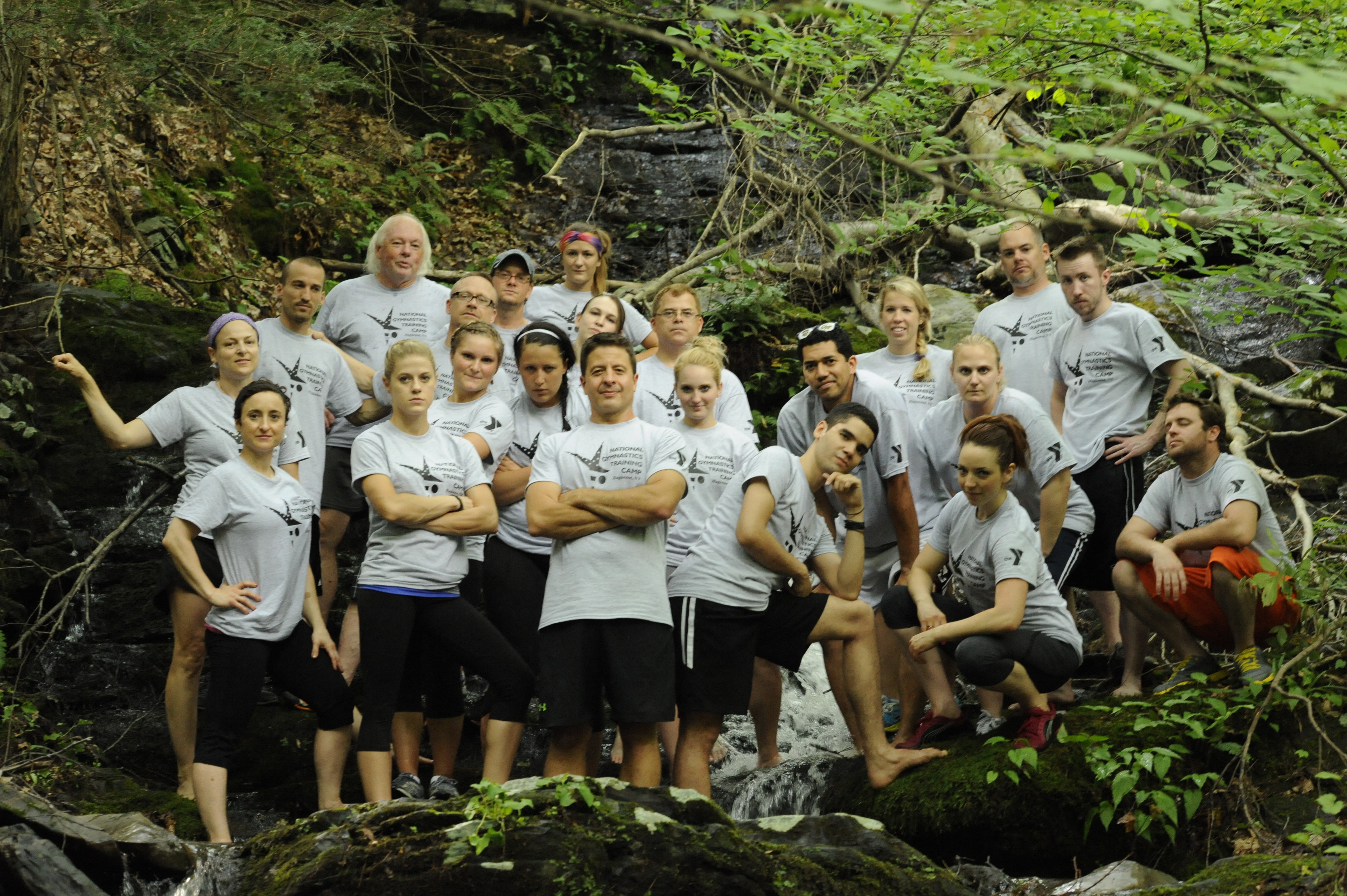
Thank you to everyone. Now, Go be Amazing.
Accept these things for a better day in and out of your gymnastics club.
Along with the crisp fall breeze that runs through the air in the months following summer comes the stress from the hurriedness of life and the chaos of work at the gym. From the moment we get up in the morning to the moment we hit the bed at night, there’s something about the months of fall that make our day feel overwhelming.
Perhaps it’s the tinge of guilt from an unproductive summer or the worry from an overthinking mind that constantly wonders about how the year will end — we find ourselves unable to understand how to deal with the chaos of our day. We have scheduled upcoming competitions, holiday workouts and still try to find time with our family.
I believe there is hope. Here are three things that we can ACCEPT right now that will make our day better:
1. Nothing is going to be perfect.
One of the reasons we find ourselves so stressed and overwhelmed with the day is the notion that things ought to be neat and orderly. We expect things not to go wrong. But when they do, we get upset. We cry foul. We look for blame on the economy, in an interconnected world and in others.
The reality is that this concept of perfection is an illusion. We are living in a world where there are millions of tiny little actions all happening at once, impacting millions of others. Things are fast, complicated, uncertain and unpredictable. That’s just life.
There is no perfect job. No perfect relationship. No perfect career or business. From the richest person to the poorest person, chaos of life spares no one. And so let’s stop trying to expect things to be perfect. And accept things as they are… crazy, random, wonderful, awful and everything in between. Life isn’t good or bad. It just is.
By accepting that nothing is perfect, we can begin to feel free in recognizing that the craziness that happens in life is not our fault or the fault of others but just the way life is… imperfect.
2. We cannot control the chaos. But we can control ourselves.
Much of our inability to deal with the unpredictability of life rests with this notion of control. We are affected by the chaos of life because we feel helpless to it, having felt a loss of control over things.
We attempt to control where we live but we cannot control our neighbors. We control the seat on the plane but cannot control who sits next to us. We might even control where we work but cannot control our boss or our customers. We have a tough time controlling our kids so how can we possibly control life?
By accepting that the only control we really have during the day is how we handle the chaos. So why stress trying to control things that are not in our realm of control? Let’s redirect that effort to control the lives of the kids outside the gym or the attitude of our coaches- back towards us — and the way we think about the situation and the way we handle it.
Dr Massimo always told me when I called him stressed- “Tony, control the controllable.”
3. Action create positive emotion.
With so much information coming at us from all of our devices and in the news, from our friends and our coworkers, parents at the gym, we can easily get overwhelmed and paralyzed by it all. We get stuck over analyzing situations hoping that more information will help us make decisions. But the way forward is not necessarily more information but more action.
However small, taking action can make us feel great. This happens because instead of things happening to us, we make them happen. Ultimately, by taking action, we get a feeling of certainty and control that we often lose during the course of a hectic day. Seeing the fruit of our results immediately also help to give us the positive reinforcement to keep moving forward.
During the course of a busy day, we end up facing so many challenges that test our strength, our knowledge and our resilience. By accepting that no matter what the challenge, no matter what the uncertainty, we are still able to make choices that impact how great of a day we have and that choice is not up to others who challenge our day but is really up to us.
I am NOT an optimist like one of my coaches (Matt Yellis). He always takes a positive look at what is going on around him. I think I have a lot to learn from him. I do believe in a good positive attitude and hard work. When I look back, I also focus on the positive.
My question to you is:
WHAT WAS THE BEST PART OF YOUR DAY?
Share your answer.
Then Ask someone else.
TRAINING vs WORKING and CHANGE in Gymnastics
Training is not about the hurt or pain; it is not about puking and being at the max in each workout. That is not training.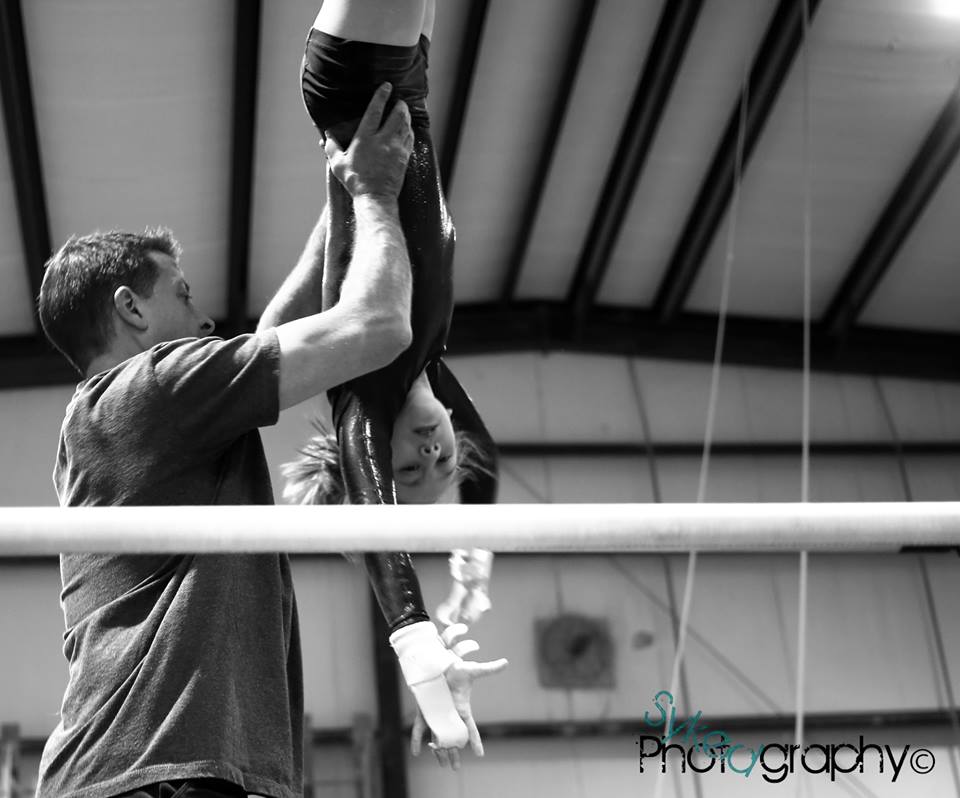
Training must be systematic, sequential and progressive; it should incorporate hard workouts and easy workouts to allow the body to adapt.
Work is easy training is hard.
Anyone can do mindless work that wears out the body; not very many can focus and put the pieces together to systematically improve gymnastics performance over time.
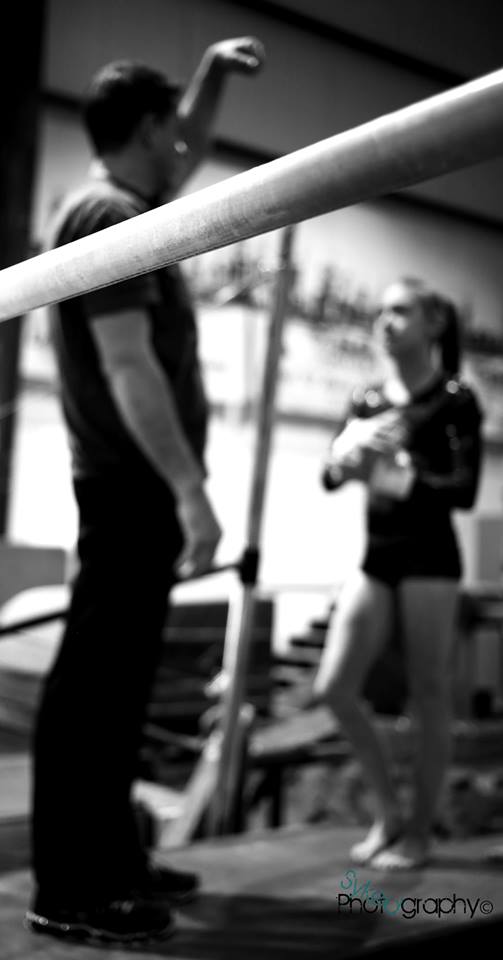 To understand what good training is, it is important to be able to separate fact from fiction and style and marketing claims from programs that have substance and produce consistent results. I have seen too many coaches approach training like an ADHD kid in a candy store. Switching thoughts and plans all too often to see if one was really working. They hear a coach talking about the “Insanity Workout” and the results they have had and decide to jump in to that. Only to start a YOGA workout 2 weeks later. Along the same line of thought beware of false prophets bearing gifts. Nothing easily attained is ever worthwhile and nothing worthwhile is easily attained. Focus on fundamentals and build on the basics. Good training is built upon scientific laws, empirical evidence and best practices that has stood the test of time. Adaptation takes time; the process is predictable based on the demands imposed on the body. Nothing exotic here, it is all very basic, if someone tells you otherwise, don’t listen. Take your time and stay on the functional path to the destination – optimum performance in the competitive arena.
Sometimes things need to change.
Everyone likes to think of innovation and change as major things you have to do. A Radical departure from what you have been doing. I like think of change as a constant, if you are not continually changing and adapting then you are not growing. The same with innovation, it is an ongoing process. If you want to stay ahead of the competition then change and innovation needs to part of your daily routine. You have to see your world with different eyes. You have to use all your senses and heighten your powers of observation.
The opportunities for change and innovation are often right before our eyes and we do not see them because we are too busy repeating what we have done before. Change starts with daily evaluation and self-reflection. Make that part of your daily coaching process to give yourself an opportunity to change. You don’t change and innovate by just copying others, rather learn from others and go beyond what they have done. Your athletes are changing and adapting everyday, why not you the coach?
To paraphrase Gandhi you must be the change or innovation you want to be. So lead change, don’t follow and make change and innovation a habit.
Like anything else in the gym, you need a plan. Even for change.
Just saw this on Rick McCharles Site, Gymnastics Coaching.com
I visit 40-50 gyms a year. Within 60 seconds I get a pretty accurate first impression. John Geddert shares his ideas on changing the “culture” of a Gymnastics Club: …
READ MORE FROM JOHN GEDDERT’S BLOG
10 Things I’ve learned that have helped me be a better coach
Going through the recent issue of Inside Gymnastics Magazine There was a great article where Mary Lee Tracy shared her insight. I want to share her “10 things” and add my own insight. [Read more…]
In Memory of my Brother. Jeffery Edmonds
UPDATE:
In lieu of flowers, Bridget is setting up an education fund for children
Fiona and Oliver Edmonds Education Fund,
c/o Atlantic Regional Credit Union,
55 Cushing St., Brunswick, ME 04011.
10/13/2013 Today at 12:30 PM my youngest brother JEFFERY EDMONDS lost his battle with cancer.
“Even the strong show signs of fatigue.” Friedrich Nietzsche
My brother said this to me once. At the moment, I have a deep and un-abiding understanding of it.
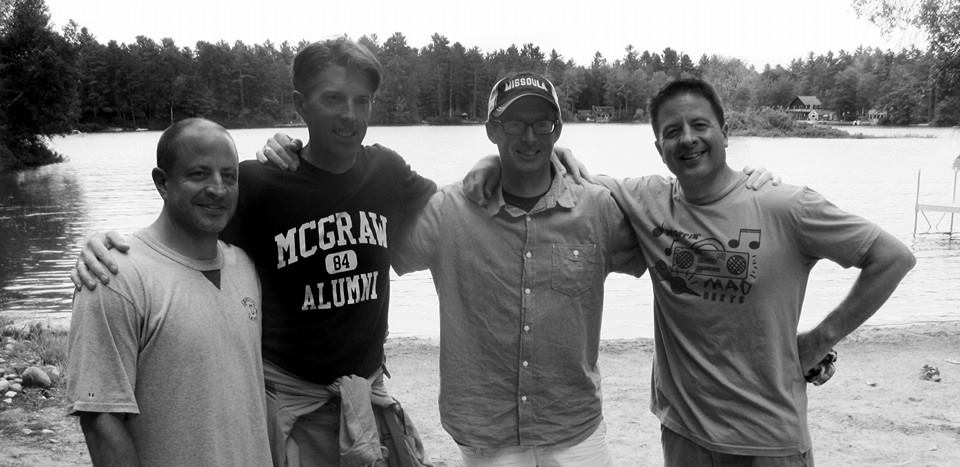
Chris, Thom, JEFF, Tony
Things I’ve earned from my brother Jeffery Lee Edmonds
People don’t actually change that much. Since Jeff was younger than me, I got to see him grow up a little. Obviously he’s changed a lot. But in many ways, he’s also very much the same. The sensitive, gentle demeanor he’s had since he was younger never left him. He’s always had a dry sense of humor, a deep love of food, an infectious laugh, and a tendency to get lost in his own world.
I think this a good reminder for everyone, especially when we get stuck in the toxic pattern of wishing we were different or more like so-and-so, that many of our personality traits and preferences seem to be hardwired from a very young age, and that’s pretty cool.
You can be smart, cultured, and mature, and still think nothing in the world is funnier than a poop joke. If there’s anything I’ve learned from my three smart, funny, well-informed, sensitive, thoughtful brothers, it’s that there is no shame in scatological humor. Jeff, specifically, is capable of discussing the nuances of philosophical belief systems, building a super computer, and writing a dystopian novel, and he still cracks up at the mere mention of the words “poop” or “butt.” The lesson here? Let your poop joke flag fly!
Appreciate Nature. No one I know had a bigger and better appreciation of the world around him. Spot the natural beauty of the mountains, the trees, the ocean, everything. Beauty surrounds you. Slow down and appreciate it.
LAUGH at yourself. At Thanksgiving one year in front of the entire family and his girlfriend (soon to be fiancee) I managed to spill my entire plate of food onto my lap. I was horrified. Our eyes made contact and we both just started laughing. Sometimes in life things are going to be messy and not go the way you want. Laugh at it and move on. Today- just about the time of Jeff’s last breath, I dropped a potato on the floor in a restaurant. I said, “that one’s for Jeff.”
Stop procrastinating. When Jeff first moved with his family to Maine from St. Louis my wife went up to help paint some rooms in his house. They were up nearly all night painting and Jeff spoke of his goal of writing a novel. His time on this planet expired before he was able to finish. Get off your ass and finish your goals. Jeff was a writer.
He always wanted to write a novel. He just ran out of time. We have have things we wanted to do but come up with excuses on why we can’t do it.
No excuses, promise me you will follow through with your goals.

Jeff
This moment is your life.– Your life is not between the moments of your birth and death. Your life is between now and your next breath. The present – the here and now – is all the life you ever get. So live each moment in full, in kindness and peace, without fear and regret. And do the best you can with what you have in this moment; because that is all you can ever expect of anyone, including yourself.
I have just learned that A lifetime isn’t very long.– This is your life, and you’ve got to fight for it. Fight for what’s right. Fight for what you believe in. Fight for what’s important to you. Fight for the people you love, and never forget to tell them how much they mean to you. Realize that right now you’re lucky because you still have a chance. So stop for a moment and think. Whatever you still need to do, start doing it today. There are only so many tomorrows.

I stand upon the ocean shore.
As a ship at my side opens her sail
to the morning breeze and begins to glide
across the water blue.
She is a beautiful sight.
I stand and watch her as she glides
with grace and strength into the clouds
on the horizon.
Just where the sky and the ocean meet
and come to mingle with one another.
When I hear someone cry out,
“She is gone.” and I must turn and say to them,
“Yes, but gone only from sight.”
For within the mind and heart she can always
be found.
For life is eternal,
Love is immortal,
and death is only a horizon,
and a horizon is nothing save the limits of our sight.
And, just at the moment when someone says, “There, she is gone,”
there are other eyes watching her coming, and other voices
ready to take up the glad shout, “Here she comes!”
And that is dying…
Death comes in its own time, in its own way.
Death is as unique as the individual experiencing it.
Obituary for Jeff
Upcoming Courses

USAG Safety and Risk Management Course (U101) Saturday October 5th 2:00PM Atlantic Gymnastics Portsmouth, NH
Course Code TR10052013NH
Register through USA Gymnastics
USAG SCHOOL AGE HANDS ON TRAINING COURSE (R103) Sunday November 10th 9 AM. Atlantic Gymnastics Portsmouth, NH
Course Code TR11102013NH
Register through USA Gymnastics [Read more…]