Mary Lee shares a great drill for Releve training using a small medicine ball.
[Read more…]
Lessons from 2012
Each year at this time of year I look back on the previous year just completed and as I get older I find myself looking back increasingly over years gone past. I do this not for nostalgic reason rather I do it to gain perspective to more forward. Much like a rower in a single scull sits facing away from the direction they row, they must look back to move forward effectively. The end of the year is a time for reflection and analysis. Each day is special, so do something to make each day special for yourself and for someone else.
Lessons from 2012
Being ready to deliver on the day – The ability to have your athletes ready to perform at their best at the required time is most important. That can be the final of the Olympic games or a Level 4 local meet. Everything is directed to this goal.
Coaching is a careful blend of art and science – No more explanation is necessary
Emotional intelligence is the key to effective coaching – It is all about people and how we as coaches grow and develop ourselves and the people we work with.
An overemphasis on injury prevention will lead to injuries – Good injury prevention is a transparent part of a sound training program. What is happening today is an over emphasis on so-called corrective exercise and special injury prevention exercises. Normal training is being ignored. When training is ignored then the athlete is predisposed to injury because they are not ready to perform.
It is imperative to develop and refine physical literacy in parallel with skill development – Physical literacy slightly leads skill and technical development; it is impossible to have one without the other.
We must take a giant step back and look at what we are doing with recovery – I think we need to learn to use recovery methods more judiciously. Not necessary just ice baths after every workout. We need to understand that the inflammatory cascade is part of the adaptation process. We must educate the body to take advantage of this not interfere with this all the time. Incorporating recovery into your workout plan can not be ignored. Here is an article by BILL SANDS- The importance of planning rest periods in the weekly training plan. Includes a sample recovery program.
Little things count – Big things are a given, they are hard to overlook but it is the little things that quickly add up. Attention to detail in each part of your practice will make the difference.
Coaching men and women is different. “Men battle to bond. Women bond to battle.” Nigel Redman – I think this is pretty self-explanatory.
FEEDING THE BEAST
Q
Q stands for quality. Quality is a measure of perfect. Each day, each training session we should strive for the highest quality possible. Start with perfect effort that should not be difficult. Effort sets up the outcome. Quality effort and intention leads to quality outcome. Quality training outcomes in turn yield quality competition results. To asses progress in training at the conclusion of each training session rate you quality of training on a scale of one to ten. One being the poorest and ten being perfection. Focus on the process to achieve the desired outcome. Quality is the key to optimizing the process.
Feeding the Beast
The beast – The Internet, cable television, YouTube all have an insatiable appetite for training porn. There is no filter, no checks and balances. Quote a scientific study out of context and you have the “evidence based” research needed to validate the misinformation. The fundamental training principles that I learned over twenty years still hold true. We need to follow them – not some wacked fad based pseudo scientific training that hurts more people than it helps. Even if it doesn’t hurt, ask yourself does it help? For validation look at results that are consistent over time, methods that top coaches and athletes have used to win medals and set records. Those things do not happen by chance and by chasing Internet training fantasies. Certainly we should innovate and challenge conventional wisdom, but start with a clear understanding of the basics and build from there. Let’s stop feeding the beast, except at prescribed feeding times, much like the animals at the zoo.
Leadership
Thoughts on Leading
The best way to lead is always by example. But in order to be that leader you must:
- Know the Way – To be effective make sure you and everyone involved knows the final destination.
- Show the Way – Lead from from the front, set the example.
- Go the Way – Get it down, meet obstacles head on and overcome.
What do you coach?
Do you coach Track & Field, Football, Gymnastics or diving? Yes you do but more importantly you coach the people who compete in those sports. The human element transcends all. Anyone can learn the techniques and strategies, but to be truly effective as a coach you must coach the person. Know what makes your athletes tick. Take an interest in them as people, they are not machines, they have feeling and emotions, they have lives outside of sport. I think of the great coaches I have been privileged to be around, this is a characteristic they all shared. They were emotionally intelligent; they took the time to understand their athletes as people and coached the person who did the sport. At the end of the day I always ask myself did you coach today the way you would have wanted to be coached?
Advice to Young Coaches
Advice to Young Coaches
Here is some advice for young coaches from my experiences. This advice reflects lessons that I learned, no need to make the same the same mistakes I made. AND I MADE MANY!
- Be prepared to pay your dues, you don’t enlist in the army as a general.
- Practice humility – No matter what your athletic or academic accomplishments you are going to have to prove yourself as a coach. Check you ego at the door.
- Keep Learning – Keep a note book of your ideas and observations. Write in it as often as possible. It will be an invaluable reference as you progress through your career. Those who have attended clinics or lectures with me (whether I am the one lecturing or the one learning) have seen me with a note book. I have filled close to 100 of these!
- Listen and watch – You have two eyes, two ears and one mouth for a reason.
- Dress Professionally – That should not need explanation.
- Be fit, look the part.
- Learn the culture of the sport you are working with ASAP. Do your homework.
- Be the first to arrive and the last to learn – Earn your stripes. ALL practices start ON TIME.
- Never let anyone outwork you. Forget what you are being paid work until you get the job done.
- Do the grunt work, in fact volunteer for it. Someone will notice.
- Don’t expect a bonus for doing your job.
- If you are working with athletes that don’t speak English learn the language, it will open doors for you.
- File the theoretical peer reviewed stuff you learned in class. You are in the real world now, on the job it is about producing results, make the athletes better.
- Maintain professional distance from your athletes you are not their friend you are their coach.
- Rome wasn’t built in a day learn patience it takes time.
- Coaching is a profession – Never lose sight of that.
- The head coach is the boss. Be loyal and respectful.
- Never forget coaching is not about sets and reps or X’s and O’s it is about people.
When it is all said and done be sure that you have had as many experiences as possible not one experience many times. Enjoy the journey, we are fortunate to be coaches
Professional Development
Professional Development
Continual professional development is a necessity. I encourage you to honestly answer the following questions to see what path you are on with your professional development.
- Where and how are learning and growing professionally?
- Do you know the classics and know history?
- How influenced are you by fads and instant information?
- Are you addicted to Internet training porn?
- Do you have a mentor who is a guide not a guru, preferably someone who has been there before?
Through this website and through the clinics that I do I spend hours each week researching skills, talking to coaches, developing plans. It has made me a much better coach in the gym.
USA Gymnastics University is a great jumping off point for coaches education. I am sure all professional members have received all the e-mail. 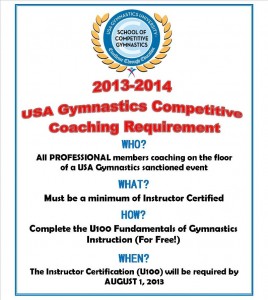
There are a ton of great educational opportunities. Regional and National Congresses, private clinics and training camps. YOU NEED TO GET GOING!
Do you know YOUR history? Are you doomed to repeat it? I start many of my lectures by asking the coaches what their history in gymnastics was.
- What did they like about their coach?
- What did they dislike about their coach?
- What would their gymnasts say they liked about them?
- What would their gymnasts say they didn’t like about them?
How about the history of our sport?
How influenced are you by fads? I remember back in the early 90s a number of gymnastics clubs were not allowing their gymnasts to use grips. I asked why and their response was that it is because the Romanians and Russians didn’t use grips. I had the opportunity to travel to Europe for a competition shortly after this conversation and we were in the same hotel with a team from Russia. So I asked, “Why don’t your gymnasts where grips?” The immediate reply, “Leather shortage made grips too expensive and Chalk was difficult to get.”
Just because someone else is doing it, it may not be the best idea!
Are you addicted to Internet Training Porn? The GYMTERNET has made finding training ideas and models pretty accessible. BUT, who is it that you are watching on YOUTUBE? My first group of elite gymnasts I coached were unbelievably good at BARS and BEAM. Of course, I took all the credit for this. It was because of my program and my “expert” coaching. Since they I have realized they it was THEM not ME that made them good on Bars and Beam. When I go back and look at my training notes and notes on my lectures from that time, I realize that all my drills were really specific to those athletes and probably would not translate to other gymnasts.
I have learned some great things and picked up some good drills from the GYMTERNET but I stay pretty skeptical and so should you.
Do you have a mentor to guide you? Lets face it very few of us are in uncharted territory. Someone else has been here. Learn from what they did right and wrong.
How often do you speak to that person? When I was getting started I spent countless hours visiting other coaches and gyms. Picking out the best of what they were doing and finding things that translated into my program. Frank DeFrancesco from Arena, Kip Reed who was at NEGX at the time, were always helpful. Doc Massimo always had sound advice. Muriel Grossfeld mentored me through that first group and kept me from freaking out.
Find your mentor. Learn from them. Then pass is on.
Hey Tony,
Read your post today – sounds a little like what I’ve been trying to pass on for years now. Here’s a little out-take from several past articles.
The Physics Problem
It’s always good to have a perfect model of a skill in your mind. It really helps you keep to the physical requirements – both strength and flexibility – as well as stay consistent with your drills and progressions. But there is also a pitfall here.
Think back to when you had physics in high school. Very often you had a problem whose real purpose was to demonstrate a basic law of physics – so, in the instructions for the problem it would state that, “For this problem you may ignore the force of friction and air resistance” or something like that. All well and good to demonstrate the principle, but in the real world, there IS friction; there IS air resistance. It doesn’t always come to down to a nice neat problem, or in our case progression or drill.
I may have the perfect drill to teach a Stalder, but it may only work with kids of a specific body type or flexibility – or strength for that matter. It may not be a “one size fits all” drill. I may need to make changes that fit the individual to whom I am trying to teach the skill. In some cases this could be a positive.
What if I have someone very strong and fast? If you have read Dr. George’s new book, “Championship Gymnastics”, you’ve seen a diagram of a Stalder circle that is a little outside the ability of most every gymnast – it drops almost like a giant and then pulls in at horizontal. It is presented in this fashion to demonstrate a principle; fall as far straight body as you can before you shorten the body to increase angular momentum/speed. But I’ll swear I saw Mustafina start to drop at least a little bit like that before breaking in the shoulders to perform that Stalder and toe shoot Shaposhnikova 1/2 turn to HB in her bar routine.
Most kids aren’t physically capable of performing the skill that way, but she is able to do so. Does that mean we try to teach every kid to do it exactly like that? Or do we adapt and change the timing, even the technique of style in order for them to be successful?
Having that model is important, since I think it keeps us focused on the important details to be successful. We may have to perfect model, but we rarely have the perfect gymnast. To be successful across a large number of gymnasts, we need to be able to:
“Adapt. Improvise. Overcome.”PS ( I’ll leave this quote as an exercise for the reader to find. Hint: Clint.)
John Wojtczuk
ENA Paramus, NJ
Gifts For Your Coach: 10 Gifts For Your Coach Under $50
Coaches are nearly impossible to shop for. They give you so much (and we’re not talking about presents!), how can you find the perfect gift in return? Even though you may wish you could splurge on a nice Corvette or a tropical vacation to show how much you love them, there are awesome, affordable alternatives that are even more thoughtful.

Calendar
A wall calendar with black and white photography by Ansel Adams is an elegant choice. It’s almost like buying your parents art, but you don’t have to spend a fortune.

“Cloud Atlas”
Cloud Atlas is a novel-turned-movie that was a huge hit at the box office this year. If your Mom or Dad loved the movie, it’s a safe bet your coach will love the book, too.
 Picture Frame
For the ultimate sentimental gift, opt a picture frame filled with a favorite gym photo. (CVS and Walgreens both will print photos for under a dollar each.)

Slippers
Slippers are a cozy choice and will be appreciated for winters to come.
 iPad Speaker
Your parents will appreciate the retro-meets-modern feel of this iPad speaker, styled after an old-fashioned gramophone. The speaker doubles as a charger and is available in four colors.
College Sweatshirt
Seniors, if you know where you’re going to college next year, get a head start and deck out your coach in college gear! Sweatshirts, t-shirts, and car decals are all awesome choices.
 Holiday Coffee Sampler
If your coaches are useless before their first cup of coffee, this set of six coffees should be at the top of your shopping list. Now you KNOW, I am huge on buying local! So first see if you can get a coffee sampler from a local cafe. It will make you, your coach AND the local economy happy!
 Hulu Plus
If your coaches are TV junkies, gift them with a Hulu Plus account for unlimited access to the site’s TV and movies.
 Art
Art
Spruce up your coaches office with a piece of art from Art.com, a site that sells famous prints for as low as $25. This work is called “Long Distance Romance” by Irene Suchocki.
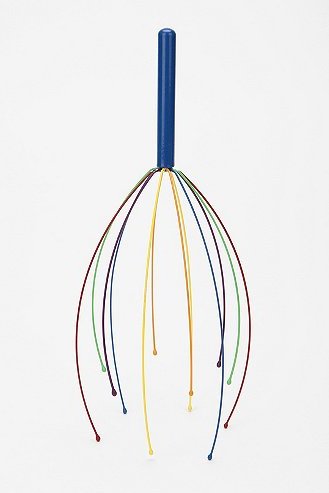 Head Massager
This head massager may look funny, but it brings pure bliss to your scalp. It’s perfect for a stocking stuffer. And it might help your coach relax and be in a better mood in the gym!
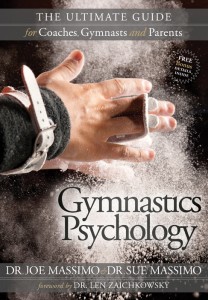 Truly a fantastic book that every coach should have.
And on the outside chance that any of my gymnasts are reading this, I’ll take the Corvette.
What’s on your Christmas list?
How to Deal with a Bad Week
According to my daughter, “This week, so far, has sucked.”
Yesterday, she cracked the screen of her phone for the third time this year. she broke her favorite sunglasses today, and a malevolent bird decided to relieve itself on the windshield of her car. Later, she decided to cheer herself up with her favorite smoothie, only to spill nearly all of it down the front or her shirt once she got home. All of these unfortunate events, compounded with the fact that she is doing much more poorly in her favorite class than I would like. This week it is enough to make her feel like a walking Murphy’s Law. While these events may not seem very significant or even that bad, they have made for an absolutely miserable week in the life of this melodramatic teenager.
Usually, if this string of events were to happen, she’d react with the typical teenage quick fix: mope and whine and make angsty tweets about her misfortune. This approach, while cathartic, is not a very healthy way to deal with the effects of a bad week. So this time, I have not let her unhappiness get the better of me, and I have come up with three key ways to help her keep her cool.
1) Gratitude. If you stop for a moment and force yourself to feel genuinely thankful for everything you DO have in your life, the small problems will seem even smaller.
2) Unwind. Cooking always helps me calm down, so I bought her a box of Ghirardelli double chocolate brownie mix today. Even if you still feel badly afterwards, at least you now have a batch of delicious brownies.
3) Laugh at yourself. I mean, it just gets comical eventually. You trip and fall on your face, realize you forgot your homework at home, spill all of your lunch on the ground, get a terrible grade on a test… After a certain point, it seems like you’re starring in a remake of “Just My Luck,” except Chris Pine isn’t your boyfriend.
The bottom line is that we all have bad days. There is always a day where everything goes completely against your will, and you can’t help it. But we all have good days as well. What makes the biggest difference is staying levelheaded and keeping perspective, so that you don’t lose sight of those good days that already happened and the ones that are to come. I’ll end with a quote from the wise Lemony Snicket, who wrote, “At times, the world may seem an unfriendly and sinister place, but believe that there is much more good in it than bad. All you have to do is look hard enough.” So look hard!
Contemporary Coaching Challenges
If You do not follow VERN GAMBETTA’s Blog, Functional Path Training. YOU SHOULD
Contemporary Coaching Challenges
Coaching in 2012 has some different demands that when I started coaching in 1969. In so many ways how we meet those demands and adapt to the changes in society and sporting culture will determine our effectiveness as coaches. Here are three areas that I see as particular challenges today:
Increasing Specialization – For whatever reason there seems to be more coaches who are specializing in narrower and narrower areas. I still maintain that it is best to specialize in being a generalist. To ultimately prepare your athletes it is important to have command of the big picture, to know how all the pieces fit. Narrow specialization does not allow this.
More Emphasis on Science and Technology – Science has given us the ability to measure & see things as never before but the challenge is to determine what is relevant and what is a curiosity. Coaching demands a balance between art and science. We must be careful that we do not become so dependent on science and technology that we lose sight of the art. Remember that coaches, like artists hone their craft, they practice and adapt constantly. They achieve greatness through attention to detail. Constant challenge and refinement fuels their passion.
More Management Responsibilities – Certainly the world around the coach and athlete has become more complex. There are more people involved in the process of athlete development than ever before. In many cases the effectiveness of the coach is measured by how effectively the coach can manage all the external factors so that they can effectively coach the athlete. Today when the athlete is near or at the elite level there is an entourage that must be constantly reminded that the goal is to help the athlete perform at their optimum in the competitive arena not to get more endorsements or a larger contract. That will come with performance. It is imperative that the coach has command of this. It is not the most fun part of coaching or the most gratifying but in today’s world it may be most important.
Vern Gambetta.
WHAT MATTERS
WHAT MATTERS
When searching for solutions to a problem It is not WHAT is the matter, that is evident, rather focus on WHAT MATTERS. In order to get meaningful results from training and competition it is imperative to focus on what matters. It is how you do what you do when you do it that counts.
Never discount passion and emotion, as they are integral parts of the human spirit.
Coach and teach with passion and emotion based on knowledge and reason that is what really matters. It is amazing how problems will then be minimized and when they do occur the solutions will be much clearer.
Short Term Thinking
If you only think of the short term and immediate results from training something will always be missing in the long term. Short-term thinking yields immediate results and long term stagnation. Always consider potential second and third order effects. What happens when the initial training effect wears off? Now what? Think process and big picture. Training is cumulative.