Here are the slides from the Newfoundland and Labrador Clinic.
Related:
7 ways to go from a BOSS to a Leader
Here are the slides from the Newfoundland and Labrador Clinic.
Related:
7 ways to go from a BOSS to a Leader
I returned late last night from a conference in Canada put on by Gymnastics Newfoundland and Labrador. One of my longest presentations was on LEADERSHIP and CONFLICT RESOLUTION (a 3 hour lecture! Bless those poor people who had to sit there and listen to me for 3 hours!). The analogy I came up with was that having a plan to resolve conflict was like having an airbag for your car. It’s good to know you have one. But its better to avoid the situation that causes you to need it. I believe a good leader can avoid conflict.
There are many leaders in your gym. The Head Coach is a leader. Your Program Directors are leaders. The Owner must certainly be a leader.
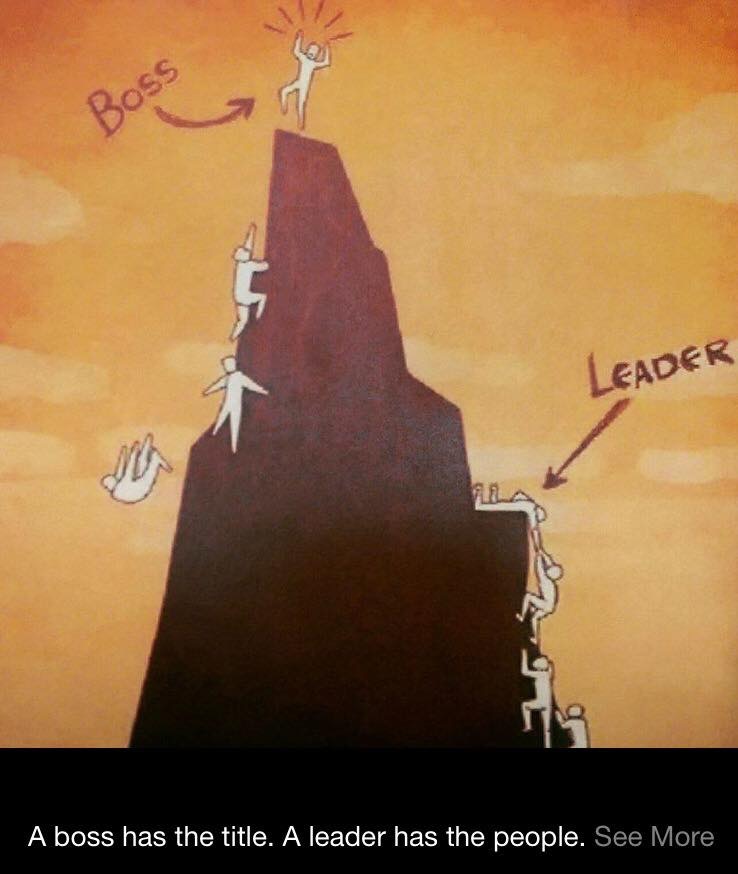
Are YOU a leader or are you just a BOSS?
Bosses like to play it safe — leaders practice taking risks
Many people view the terms “boss” and “leader” as interchangeable — but they are vastly different. To determine which one you are, I encourage you to honestly answer this question:
Do you:
a) see the people you work with as an aggravating necessity that you have to put up with in order to accomplish day-to-day activities and achieve goals?
Or, do you:
b) truly enjoy working with people on your “team” to meet your goals and deliverables?
If you chose a), you’re probably more of a boss; if you chose b), you’re probably more of a leader.
I view the people who work in my gyms as part of a TEAM. We are working towards a common goal. Based on my work in the gym for the past 25 years — and, of course, common sense — I can confidently say that the teams which produce the most effective and long-lasting results are the ones directed by leaders, not bosses. So, how do you move from “boss” to “leader”?
Here are seven key ways:
1. Love people.
No one can lead a team well unless he or she truly enjoys working with people. People are not minions; they are individuals with unique personalities, traits and talents. As a leader, you must enjoy helping people and watching them succeed. You need to know their likes and dislikes! (my Saturday morning team LOVES donuts!)
2. Guide, don’t control, your team.
Bosses feel the need to control every action; they’re micromanagers. Leaders know that their team will accomplish great things if they receive direction and support rather than control. A good leader will establish frameworks and structure, then empower their team to get the work done, providing support along the way.
3. Be adaptable.
Bosses tend to be very rigid in the way they want things done, but leaders understand that they must adapt their personal style to their team members’ needs. They understand and value each team member’s individuality, establish expectations clearly and adapt their leadership approach as necessary. If you share a common goal with your staff, IT IS OK if they take a slightly different path to get there.
4. Delegate.
Bosses may feel they are delegators, but because they don’t trust anyone else to do the job as well as they can, they never fully delegate anything. Leaders truly delegate. They assign tasks, and then let go (though they still follow up periodically to ensure their team members are on track to achieve the desired results). This was the most difficult thing for ME! I would delegate but still try to be TOO involved with the job. It was not until I truly gave responsibility away that I saw the real potential of my team.
5. Give credit, accept blame.
Bosses love to take credit for their teams’ successful results — and they’re the first to throw them under the bus when those goals are not achieved as desired. Leaders, in contrast, know their success comes from their teams’ efforts, so they keep their egos in check: They showcase their teams’ efforts when they succeed, and they accept personal responsibility when they fail. Personal motto: Praise publicly, punish privately.
6. Practice risk acceptance.
Bosses avoid risks at all costs because they are fearful that going out on a limb might produce a perceived failure — they like to play it safe. But leaders know that the greatest successes come from taking risks. Leaders enable and encourage their teams to try new things, and they see every so-called mistake or failure as an opportunity to make improvements.
7. Motivate.
Bosses motivate through fear. Leaders, in contrast, motivate by figuring out what sparks their individual team members to perform at their highest potential, and by expecting greatness from their teams even when those individuals don’t see greatness in themselves. Leaders also cheer and celebrate successes, small and large, because they know they are their teams’ biggest fans.
Going from “boss” to “leader” is a challenging personal development experience — but it’s extremely rewarding, too! If you act like a leader, your staff members will produce long-lasting effective results. They tend to be more engaged at work, and more fulfilled in their personal lives, too. In that way, developing from boss to leader is an act of kindness and service to your fellow human beings — and to yourself, as well.
Source: The Rat Race: An Open Letter to Competitive Parents, from the Parent who Concedes | JAG GYM Blog
Dear fellow parents,
I am writing to you because I give up. Your child is better than mine. You win. I am throwing in the cards. I will no longer play the game of competitive parenting.
I’ll admit it. I am a little scared. What if by quitting the competitive parent game I am dooming my kids to a life a mediocrity?
On the other hand, what if by continuing to run the race I am giving my girls a chance to grow into the people they were meant to be? If that means that they are not sufficiently impressive for me to experience the raised eyebrows of “wow, you must be a great parent” at the next cocktail party I attend, so be it.
I, like I suspect most people, became a parent because I wanted the privilege of being the guardian of and guide to another human being. I wanted the gift of unwrapping each stage of my daughters’ development, including those that made me wonder if I was raising people destined to steal my sanity. Parenting has been, by far, the greatest challenge I have ever undertaken. And it is the constant rising to that challenge that has made me a better employer, friend and person.
I also hoped that parenting would bring into my life and the lives of my children a caring and supportive network, a village if you will, where we could all be interdependent, supportive of one another when things go wrong and celebratory when successes big and small are achieved.
And, in time (and by time I mean over two decades of parenting), I discovered that village. What surprised me is the game that I was sucked into along the way, a game that I am choosing to withdraw from effective immediately: competitive parenting.
Look, I am no better than anyone else who is caught playing this game. I am one of the most competitive people I know (and that is saying a lot given that I exist in the world of sports). I like to win everything, but I now realize that parenting isn’t a round robin tournament. Or at least it shouldn’t be.
Please understand, I don’t know that any of us entered into the realm of competitive parenting with the express purpose of turning what is supposed to be a relationship with another human being (parent and child) into a marker for our proof of worthiness as people. In fact, I am quite sure none of us did. I would find it surprising that anyone would undertake the responsibility of raising a child with the intention of using her as a measuring stick of one’s performance in life.
But somehow parental pride has crossed a dangerous line for so many of us morphing into a competition between parents over whose child is most talented, brilliant and unique. So when did parenting become a competitive sport? How did we get from a point of parenting being a part we play in another human being’s life to it being a report card on our success and the value of our child to society?
As best as I can tell, it begins at conception.
We don’t even realize that we were drafted into the game when it is happening. It is all innocent enough. But from the start, we slowly wade into the competitive parenting pool. It starts with assuring that we consume the “best odds” diet in pregnancy and continues with the “natural” birth vs. a birth assisted by an epidural vs. a C-section. It moves into the breast fed vs. bottle fed camps which are quickly followed by the stay at home vs. working mom debate. Instead of looking at the options as matters of personal choice and being sympathetic that we are all trying to do the best we can, we pass judgement on one another for what are private and intimate decisions.
In baby and toddler class it is the subtle “oh, is she not yet sitting up?,” “Grace gave up her bottle at 10 months.” “She’s three and not potty trained?” and “I just cannot believe that Pierre is reading in English and French at four years old.” It is the judgement of the parent whose kid has a meltdown at the mall candy store (can you even believe that there are parents who let their kids eat sugar?), whose parent allow a binky past age two (that child will never speak clearly, so there goes being head of Moot Court when she is at Yale Law), who chooses to breast feed not at all (poor thing’s brain will not develop correctly, assuming she lives without the necessary antibodies that only breast milk supplies) or for five years (deep psychological issues, obviously) or who gives plastic toys to her child (why don’t you just inject radiation in her to bring the cancer on faster?).
We are rounding the first lap of the parenting rat race…
It’s sad to say but In our quest to be and stress over whether we are good parents, we boost our parental self-esteem by stepping on those of others. And having been on both ends of the vitriol, it does no one any good, with the possible exception of companies like Baby Einstein and Kumon. They get a handsome profit off our anxiety.
In the preschool and elementary school years there are the competitions over reading and math groups, GATE programs, All-Star sports teams for kids who are still young enough to believe in the Tooth Fairy and Santa Claus, peer popularity and the list goes on. And, while parenting experts and educators assure us that development is on a continuum if you happen to be the parent of a child who is on the later end of the developmental curve…well then clearly something you did in her early development caused her to be, GASP, average.
Get moving on those extracurriculars while you are at it. Is your 10 year old child still dabbling in various activities? You’ve dropped the ball. Didn’t you know that it’s your job as a good parent is to help your child find her “thing?”
Yep, guilty as charged. Private gymnastics lessons for a 5 year-old, a math tutor for a first grader who wasn’t immediately grasping division (did we even learn division when we were in the first grade?) and private singing coaching for an 8 year old so she might land the lead role in her after school drama class. Don’t even get me started on the violin, flute, clarinet, oboe and piano lessons because why try one instrument when you can try five?
And the second lap is complete…
If by middle school, heaven forbid if a child isn’t on track for either high academic, athletic or artistic achievement, and, of course, all three are most preferable. Don’t you dare let your child go through a pudgy phase or have a few pimples—solve those normal developmental quirks immediately lest she lose social standing.
Moving into the final stretch…
By high school, the gloves come off as the competition to enter into Varsity athletics as a freshman, take as many AP courses that exist (who cares if your child doesn’t like music—there is an AP Music Theory course and by golly she is taking it as her “elective.”) and beginning the sprint toward the finish line of the competitive parenting challenge: admission into a highly competitive college.
For those of you not yet to this level of the game, a highly competitive college is not necessarily the one that is most academically rigorous. No, in this case “highly competitive college” means a school that rejects significantly more kids than it accepts. With the ultimate validation of your worthiness of a parent being your (I mean, your child’s) admission into an Ivy League school.
You think that you are saving for your child’s college fund? You better also be saving for your child’s trying-to-get-into-college fund, as well. You must take your child on extensive pre-college trips so she can decide on where to apply. (Not to mention that you must be prepared to spring the equivalent of a nice down payment on a car for SAT tutoring.)
Gone are the days when your mother would wake you up too early on a Saturday morning, handed you an apple, a piece of toast, a number two pencil and send you on your way to take the SAT. Now, a complete tactical plan must be created and executed including simulated practice exams before your child sits for that three and half hour test. And seriously? What was your mother thinking giving you a breakfast that lacked protein? Tantamount to child abuse. Also, it’s your own social suicide. After all, your child’s SAT score is a direct measure of your efficacy as a parent.
And heading into the final straight away…
Mid-August of each year, the Guidebook to Ultimate Parenting Success is released: The U.S. News and World Report College Rankings. If your kid gets into one of the top 10 schools, you are a highly successful parent. Schools 11-20 will rank you as an average parent. Schools that people have “heard of” but are not in 1-20, a fair parent. And, if your child attends a college not in the top 20 AND the total stranger in line at Starbucks has never heard of, well, do I really need to say it?
Instead of college being a match to be made, it is a prize to be won. The “best” college for your child isn’t one where she will most thrive academically and socially, one that you can afford to pay for or even one where she will have the college experience she wants. Instead, the best college is the one that she is admitted to that admitted the fewest number of her peers. It is the one that provides the crown jewel of the parenting rat race: the most prestigious college static cling for your car.
Across the finish line you go… #winning
So I concede fellow parents. I am removing myself and by proxy my four children from the race. And by doing so, I am choosing to honor them, and all of the children in my community, for being exactly who they are: human beings in and of their own right, not proof of my worthiness. Their achievements are their achievements, not a sign of their value as people.
I also apologize to those of you whom I might have made feel less than, whose parenting I judged or who simply feel that no matter what they do as a parent that it is never enough. I am deeply sorry. By doing the best you can, you are enough. By being her essential self, your child is enough. Let’s join together to support ourselves, our kids and our community and recognize that we all love our kids fiercely but that parenting from a place of competition and anxiety does no one any good.
Finally, to those who take glee that there is one fewer parent in the race, you are welcome. After all, I am comforted by what one of the world’s great philosophers, Lily Tomlin, said, “The problem with the rat race is, even if you win, you’re still a rat.”
xoxo,
Anne
Your seasons training plan
By the time you get this, your gymnasts will be back in school. Some of your lower levels may already be preparing for their first competition. It’s going to be a long seasons and you need be be prepared. You know all the basics. You know about about how many routines you would like them to do each week. You have your conditioning plan.
BUT WHAT ELSE DO YOU NEED TO PUT INTO YOUR PLAN?
Start with the basics and never stray far from the basics.
No matter how many routines you need to do, hit basics every day.
Don’t try to replicate the stress of the sport in training, instead prepare for the stress of the sport.
Gymnastics takes a toll on the body and the mind. If everyday you go in and beat up the body and the mind, how long do you think the gymnasts are going to last?
Have a plan, execute it and constantly evaluate the plan.
Even the BEST plan needs to be tweaked as the season goes on. Have some TEST events. Pick a competition and a goal. evaluate your plan, tweak what is necessary and move on to the next test.
Coach the person not the athlete.
Each gymnast you work with is going to be a little different. You are coaching gymnasts, not robots. Along the same line, it doesn’t matter if a 10 year old is a level 5 or a level 10. What matters is that they are a 10 year old! Coach their age, not their level!
Teach skills not drills.
When you break down a skill into its smaller parts make sure YOU and the gymnast know each part. Make sure the gymnasts know what skills the drills are for.
Build on strengths and minimize weaknesses. (Favorite quote from Dr. George, “Take your worst event, make it your best, then take your worst event, make IT your best…”)
Train fast to be fast. You are what you train to be.
Adaptation is not just about time; it is the timing of the appropriate training stimulus to achieve the desired training response.
You compete the way you train. Understand the demands of the sport and train to exceed those demands.
Don’t try to replicate competitions in training, distort it.
Never allow equipment or facilities to dictate your training.
As you are coming up with YOUR Plan, here are some thoughts that make a difference.
– It’s not good enough to just show up you must be there in mind, body and spirit. Be PRESENT.
– Just talking about commitment is not enough; be committed through your actions.
– This year, try to Communicate by listening more and talking less.
– Take responsibility and use it to grow and expand your abilities.No excuses.
– Failure and adversity represent an opportunity to grow and learn. Failure is a prerequisite to success.
– Define yourself constantly don’t let others define you.
You want to really be the best? Don’t just Be the first there and the last to leave. Make the most of every minute.
Good luck with your season
Tony
Yes, she is a good bar worker.
Yes, she chalks up like a freak.
Yes, she was last weeks CRASH OF THE WEEK
How Do Your Gymnasts Chalk Up?
Crash of the Week. Yurchenko Gone Wrong!
[Read more…]
Great podcast. And NOT just because I am interviewed!
Source: Episode 158 | GymCastic
SUPPORT GYMCASTIC!!
This Week’s Interview
Ariana Berlin is happy, goofy, surprising, unique, beautiful and partially made of steel. She made her mark on college gymnastics by bringing her professional hip hop dance background onto the competition floor. Her floor routines were something totally new and sometimes controversial but always entertaining. But the road to NCAA finals almost went through the grave. “Ari” went from a being a promising level 10 gymnast, about to test for elite, to a girl in a coma, told when she woke up that she would never do gymnastics again. Though a car accident almost killed her and her mother, losing gymnastics was heartbreaking. She found solace in dance with the world famous hip hop troupe Culture Shock. A dance performance in front of UCLA head coach, Valorie Kondos-Field led her back to gymnastics. After years away from the sport, with a rod holding her femur together, Ari walked onto the UCLA gymnastics team, earned a scholarship and became one of their most consistent gymnasts of all time. While at UCLA she hit 175 of her 182 career routines (96%) without a fall, never missed a competition in 57 consecutive meets. In the final competition of her career, the former walk-on, placed fourth all-around at the 2009 NCAA Championships. We talk about the movie based on her life called, Full Out, staring Flashdance star, Jennifer Beals. We discuss:
GymMyth Busters Full Out edition; we separate fact from fiction and talk about the liberties taken with her story in order to deliver a dramatic message of inspiration.
Being star struck and all of the cameos: Alicia Sacramone, Jordyn Weiber, Victoria Moors, Samantha Peszek and Elfie Schlegel are all in the movie!
Ariana’s advice for walk-on (non-scholarship) athletes, how to get onto your dream team and what to do even if finances won’t make it easy.
How she became so consistent and her mental game.
Dealing with the haters who claimed her ground breaking hip-hop floor choreography was cultural appropriation or racially inappropriate.
In the News
In the news this week, Evan Heiter and Jessica chat about:
Simone Biles going pro: Is it too soon or the perfect time to turn pro? If this will affect her preparation for Rio and which brands we want her to endorse!
The first ever all adult gymnastics camp took place in July at Atlantic Gymnastics in New Hampshire. We talked to the camp director Gina Paulhus, gym owner Tony Retrosi and two campers to find out what made this weekend such a sucess.
The clinics by the pool that made this camp unique: dealing with fear and mental blocks, physical therapy sessions, and a class on nutrition for the adult gymnast with tips on balancing snacks and meals between work and family on the way to the gym.
Why Tony Retrosi, gym owner and coach, supports adult gymnastics and the adult camp.
Campers Ryan and Stefane explain how the camp accommodated:
different gymnastics and fitness levels
people who didn’t do every event
made the schedule reasonable for all levels
helped everyone feel welcome by hosting everything from dinners to beach trips
The fun awards Gina created to make each camper feel special.
Tony’s advice on the best student to coach ratio for adult gymnastics classes.
How to identify the right coach for an adult gymnastics class.
Afraid to try adult gymnastics? Stefane and Ryan explain how adult gymnastics has helped them find their community and why they recommend it to others.
Related Links
Find out how to watch P&G Championships (the US National Gymnastics Championships) and hear Samantha Peszek and Evan Heiter do reprise last year’s commentary fabulousness on the official website pgchamps.com
Find out more about Adult Gymnastics Camp Director, competitive adult gymnast and personal trainer, Gina Paulhus here.
Tony Retrosi’s website is gymmomentum.com
Here is Gina’s article with details on the schedule, costs, demographics, staffing and photos of adult gymnastics camp!
Source: 10 Things Parents Want Coaches to Know | JAG GYM Blog
1. I love my child so much it hurts. It makes me a little irrational. Please bare with me. Be gentle. My heart is walking around outside of me, and I entrust it to you. I am not asking for a free pass, just a little empathy.
2. And of course, I want you to love my child too. I realize you have many kids to love, but let’s admit it…mine is really awesome.
3. Despite what my actions might suggest, I want to be a good parent. I really do. So much so that I am prone to making mistakes because I over think things. I need your help in guiding me on how to be the best support for my child-athlete. If you think I am doing something that isn’t good for my child (like watching every practice or constantly bailing her out when she leaves her gym bag at home), communicate that with me. I am all for help from the village.
4. I need more information. I don’t understand things and that make me anxious. I need to understand how kids move up. I need to understand how to explain to my child what she needs to do to move on with her friends or to know that she won’t be so I can explain that to her. When I don’t have information from you, I rely on other parents, the internet or I make things up myself. We both know that this is hardly a good thing…
5. Because remember: I don’t speak gymnastics. To me a giant is a character in a fairy tale. Kip is a guy with top siders and a country club membership. And don’t get me started on Tsukahara or Yurchenko… Then, once I think I have the hang of what the levels all mean, things change, and I am confused again. Is level 6 easier than level 5 or is that just my imagination?
6. Just because I ask you a question, does not mean I am questioning your competence. I genuinely don’t understand things and need clarification. Please try not to be defensive. I am working hard to assume good faith and hope you will assume the same in me.
7. Big surprises freak me out. They freak everyone out. If my child isn’t going to move up or is missing a major skill she needs for competition, please tell me in time for me to prepare her or better yet help her achieve her goal. I know that delivering bad news is not fun for you, but if you tell me in advance I can maybe do something about it. And if bad news is unavoidable, be sensitive in how you deliver bad news but tell me the truth. In private, please.
8. Please understand we are juggling a variety of commitments and that means sometimes we might be late or even miss practice. I understand that gymnastics is your career and it makes it harder for you to do your job if my child isn’t in the gym. But occasionally a sibling’s first communion or grandma’s 90th birthday will fall on a day of practice or even a meet. And, once a year we travel to visit family and once another time we will actually scape enough cash together to go on a vacation. Sometimes the carpool falls through and I cannot get her little brother from soccer at 5pm and be on the other side of town to drop her at practice at the same exact time. We accept any logical consequences that arise because of her absence from the gym and will do our best to notify you in advance, but please do not take your anger or disappointment out on her.
9. You are the expert on the sport and my child as an athlete, but I am the expert on my child. Please know that I will always defer to you on what to teach my child, but I can provide insight to you on who she is. For instance, if one of my children says she’s not feeling well, I might take it with a grain of salt. If my other who has never missed a day of school in her life and never gets sick says that, I am certain its true. Let’s work together to share what we know so we can best understand her.
10. If you have a chance, can you encourage my kid to read, straighten our her room and be nice to her parents and siblings? You see, you have a magical influence over my child. She worships you and wants you to be proud of her. You are her role model. And I am grateful for that and am happy to bring you Starbucks whenever you need a caffeine boost.
Source: Functional Path Training: Coach John Wooden – A Twitter Coach
John Wooden died June 4, 2010 at age 99. Twitter was founded in 2006. He retired in 1975 thirty-one years before Twitter yet he was a twitter coach. Why? How? We know that Coach Wooden is acknowledged as one of the greatest coaches of all time in any sport. Fortunately during his last season coaching in 1974-75 two psychologists Roland Tharp & Ronald Gallimore studied his methods and reported on his coaching style. (Tharp, R. G. and Gallimore, R. (1976). Basketballs John Wooden: What a coach can teach a teacher. Psychology Today, 9 (8), 74-78. (Tharp & Gallimore, 1976)) In their observations of 2,326 discrete acts of teaching during thirty hours of practice they observed the following:
6.9% were compliments
6.6% were expressions of discipline
75% was PURE INFORMATION
They were short, punctuated, numerous and seldom longer that twenty seconds! There were no lectures or long drawn out harangues. There was minimal use of praise and reproofs. What does this have to with Twitter, not much directly until you think about what Twitter is intended to do – Get you message across in 140 Characters. That is what John Wooden did and he was doing it years before Twitter was invented. He was a Twitter coach before there was Twitter. There is a powerful lesson here for all of us to be Twitter coaches, know your message and convey that message in 20 seconds or less (140 Characters). If it is longer than that forget it, because the athlete is not going to get it. Be a Twitter coach and improve your effectiveness as a teacher.
If you want to learn more Wooden’s teaching methods I suggest you read Yo Haven’t Taught Until They Have Learnedby Swen Nater & Gallimore and a 2004 follow-up to Gallimore & Tharp’s original study in the Sport Psychologist journal (Gallimore & Tharp, 2004). For additional insights into his growth as a coach I suggest you read: Wooden: A Coaches Life by Seth Davis. His success did not happen by chance. It was an unbeatable combination of impeccable preparation and sound teaching.