Here are the slides from the Newfoundland and Labrador Clinic.
Related:
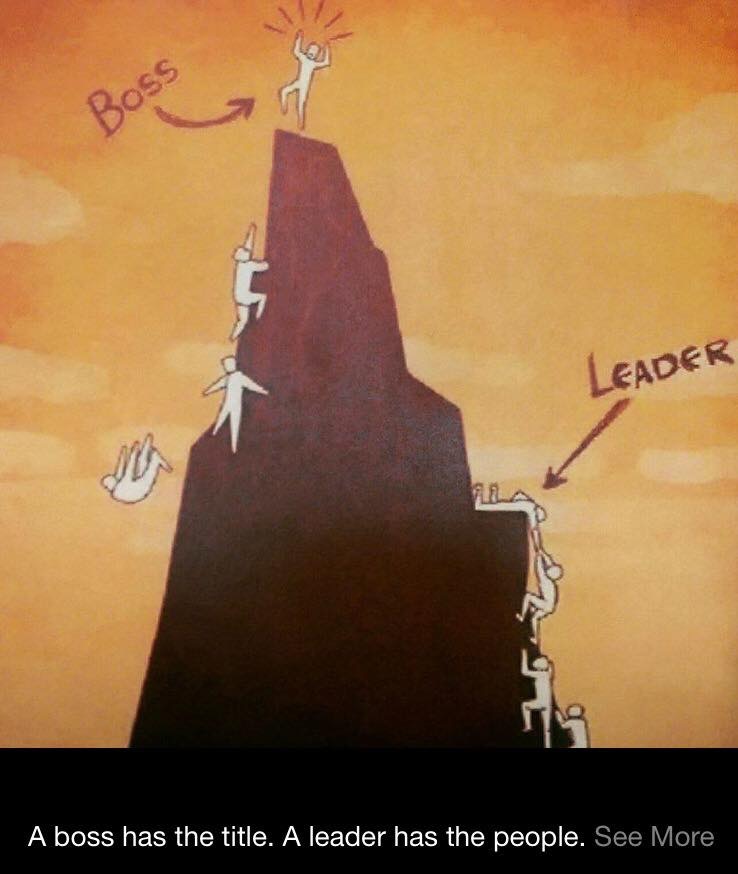
7 ways to go from a BOSS to a Leader
Here are the slides from the Newfoundland and Labrador Clinic.
Related:
7 ways to go from a BOSS to a Leader
I returned late last night from a conference in Canada put on by Gymnastics Newfoundland and Labrador. One of my longest presentations was on LEADERSHIP and CONFLICT RESOLUTION (a 3 hour lecture! Bless those poor people who had to sit there and listen to me for 3 hours!). The analogy I came up with was that having a plan to resolve conflict was like having an airbag for your car. It’s good to know you have one. But its better to avoid the situation that causes you to need it. I believe a good leader can avoid conflict.
There are many leaders in your gym. The Head Coach is a leader. Your Program Directors are leaders. The Owner must certainly be a leader.
Are YOU a leader or are you just a BOSS?
Bosses like to play it safe — leaders practice taking risks
Many people view the terms “boss” and “leader” as interchangeable — but they are vastly different. To determine which one you are, I encourage you to honestly answer this question:
Do you:
a) see the people you work with as an aggravating necessity that you have to put up with in order to accomplish day-to-day activities and achieve goals?
Or, do you:
b) truly enjoy working with people on your “team” to meet your goals and deliverables?
If you chose a), you’re probably more of a boss; if you chose b), you’re probably more of a leader.
I view the people who work in my gyms as part of a TEAM. We are working towards a common goal. Based on my work in the gym for the past 25 years — and, of course, common sense — I can confidently say that the teams which produce the most effective and long-lasting results are the ones directed by leaders, not bosses. So, how do you move from “boss” to “leader”?
Here are seven key ways:
1. Love people.
No one can lead a team well unless he or she truly enjoys working with people. People are not minions; they are individuals with unique personalities, traits and talents. As a leader, you must enjoy helping people and watching them succeed. You need to know their likes and dislikes! (my Saturday morning team LOVES donuts!)
2. Guide, don’t control, your team.
Bosses feel the need to control every action; they’re micromanagers. Leaders know that their team will accomplish great things if they receive direction and support rather than control. A good leader will establish frameworks and structure, then empower their team to get the work done, providing support along the way.
3. Be adaptable.
Bosses tend to be very rigid in the way they want things done, but leaders understand that they must adapt their personal style to their team members’ needs. They understand and value each team member’s individuality, establish expectations clearly and adapt their leadership approach as necessary. If you share a common goal with your staff, IT IS OK if they take a slightly different path to get there.
4. Delegate.
Bosses may feel they are delegators, but because they don’t trust anyone else to do the job as well as they can, they never fully delegate anything. Leaders truly delegate. They assign tasks, and then let go (though they still follow up periodically to ensure their team members are on track to achieve the desired results). This was the most difficult thing for ME! I would delegate but still try to be TOO involved with the job. It was not until I truly gave responsibility away that I saw the real potential of my team.
5. Give credit, accept blame.
Bosses love to take credit for their teams’ successful results — and they’re the first to throw them under the bus when those goals are not achieved as desired. Leaders, in contrast, know their success comes from their teams’ efforts, so they keep their egos in check: They showcase their teams’ efforts when they succeed, and they accept personal responsibility when they fail. Personal motto: Praise publicly, punish privately.
6. Practice risk acceptance.
Bosses avoid risks at all costs because they are fearful that going out on a limb might produce a perceived failure — they like to play it safe. But leaders know that the greatest successes come from taking risks. Leaders enable and encourage their teams to try new things, and they see every so-called mistake or failure as an opportunity to make improvements.
7. Motivate.
Bosses motivate through fear. Leaders, in contrast, motivate by figuring out what sparks their individual team members to perform at their highest potential, and by expecting greatness from their teams even when those individuals don’t see greatness in themselves. Leaders also cheer and celebrate successes, small and large, because they know they are their teams’ biggest fans.
Going from “boss” to “leader” is a challenging personal development experience — but it’s extremely rewarding, too! If you act like a leader, your staff members will produce long-lasting effective results. They tend to be more engaged at work, and more fulfilled in their personal lives, too. In that way, developing from boss to leader is an act of kindness and service to your fellow human beings — and to yourself, as well.
Great podcast. And NOT just because I am interviewed!
Source: Episode 158 | GymCastic
SUPPORT GYMCASTIC!!
This Week’s Interview
Ariana Berlin is happy, goofy, surprising, unique, beautiful and partially made of steel. She made her mark on college gymnastics by bringing her professional hip hop dance background onto the competition floor. Her floor routines were something totally new and sometimes controversial but always entertaining. But the road to NCAA finals almost went through the grave. “Ari” went from a being a promising level 10 gymnast, about to test for elite, to a girl in a coma, told when she woke up that she would never do gymnastics again. Though a car accident almost killed her and her mother, losing gymnastics was heartbreaking. She found solace in dance with the world famous hip hop troupe Culture Shock. A dance performance in front of UCLA head coach, Valorie Kondos-Field led her back to gymnastics. After years away from the sport, with a rod holding her femur together, Ari walked onto the UCLA gymnastics team, earned a scholarship and became one of their most consistent gymnasts of all time. While at UCLA she hit 175 of her 182 career routines (96%) without a fall, never missed a competition in 57 consecutive meets. In the final competition of her career, the former walk-on, placed fourth all-around at the 2009 NCAA Championships. We talk about the movie based on her life called, Full Out, staring Flashdance star, Jennifer Beals. We discuss:
GymMyth Busters Full Out edition; we separate fact from fiction and talk about the liberties taken with her story in order to deliver a dramatic message of inspiration.
Being star struck and all of the cameos: Alicia Sacramone, Jordyn Weiber, Victoria Moors, Samantha Peszek and Elfie Schlegel are all in the movie!
Ariana’s advice for walk-on (non-scholarship) athletes, how to get onto your dream team and what to do even if finances won’t make it easy.
How she became so consistent and her mental game.
Dealing with the haters who claimed her ground breaking hip-hop floor choreography was cultural appropriation or racially inappropriate.
In the News
In the news this week, Evan Heiter and Jessica chat about:
Simone Biles going pro: Is it too soon or the perfect time to turn pro? If this will affect her preparation for Rio and which brands we want her to endorse!
The first ever all adult gymnastics camp took place in July at Atlantic Gymnastics in New Hampshire. We talked to the camp director Gina Paulhus, gym owner Tony Retrosi and two campers to find out what made this weekend such a sucess.
The clinics by the pool that made this camp unique: dealing with fear and mental blocks, physical therapy sessions, and a class on nutrition for the adult gymnast with tips on balancing snacks and meals between work and family on the way to the gym.
Why Tony Retrosi, gym owner and coach, supports adult gymnastics and the adult camp.
Campers Ryan and Stefane explain how the camp accommodated:
different gymnastics and fitness levels
people who didn’t do every event
made the schedule reasonable for all levels
helped everyone feel welcome by hosting everything from dinners to beach trips
The fun awards Gina created to make each camper feel special.
Tony’s advice on the best student to coach ratio for adult gymnastics classes.
How to identify the right coach for an adult gymnastics class.
Afraid to try adult gymnastics? Stefane and Ryan explain how adult gymnastics has helped them find their community and why they recommend it to others.
Related Links
Find out how to watch P&G Championships (the US National Gymnastics Championships) and hear Samantha Peszek and Evan Heiter do reprise last year’s commentary fabulousness on the official website pgchamps.com
Find out more about Adult Gymnastics Camp Director, competitive adult gymnast and personal trainer, Gina Paulhus here.
Tony Retrosi’s website is gymmomentum.com
Here is Gina’s article with details on the schedule, costs, demographics, staffing and photos of adult gymnastics camp!
I graduated from college in 1989 and got married in 1990. To me this does not seem like a long time ago But to many of you r eading this it is a different world. I can tell you: the world has changed an awful lot in just 25 years. My word processor was a joke. Computers were HUGE. Online classes were a fantasy. Computer hackers and the internet were things that worked in movies like WAR-GAMES but not real life. And CELL PHONES? ha! A phone that fits in your pocket that almost anywhere in the world people can call you? Send you a TEXT MESSAGE? why would anyone want to write you a message when they could just call? Let’s not even get into smart phones and their capabilities.

The world we live in today is one I could not have imagined when I graduated. I am sitting at a table at my fairly remote lake house. Cell phone service is delightfully weak (it is good to disconnect) but I have fast wifi. I am typing on my Macbook Pro that (I have heard) is “smarter” than the computers that helped us land on the moon. 25 years from now where will things be? What now seems like science fiction will be boring and slow. To my younger readers- This will be up to you! You will have helped shape your generation’s world.
It doesn’t matter what country you live in. Because countries do not lead. People lead.
Everyday you must start your path toward leadership. What kind of leader will you be? How much impact on others will you have? What will be your mark on the world?
I have heard that at companies like Facebook, they have posters on the walls to remind them to THINK BIG — to challenge themselves to do more each and every day. There are important leadership lessons reflected in these posters . I try to emulate that in my gyms. To encourage each manager to not just lead but to encourage others to lead. To help the coaches realize that they are not just creating the masterpiece, they must first prepare the canvas. To be excited about what they do and get the gymnasts excited about what they do.
Here are some lessons I learned from Sheryl Sandberg the Chief Operating Officer of Facebook
Fortune favors the bold.
Facebook exists because Mark Zuckerberg believed that the world would be a better place if people could use technology to connect as individuals. He believed it so much that he dropped out of Harvard College to pursue that mission and he fought to hold onto it over the years. What Mark did was not lucky. It was bold.
It’s unusual to find your passion as early as Mark. It took me far longer to figure out what I wanted to do. I love coaching and I pretty much have been coaching my entire life. When I was sitting in a graduation robe, I could not have considered that I would actually be making a good living on coaching and owning a gym. Every coach I knew was just getting by. Their passion for the sport kept them alive. Every gym owner was struggling day in and day out. They loved the sport and they loved the kids but did not have enough business sense. Thinking that I could survive and raise a family as a coach then club owner was a dream (much like cell phones).
I taught school for a few years and coached every afternoon. Taking kids to JO Nationals. When the gymnasts were at a point where they were ready to make the jump into International Elite Level, I needed to stop teaching. It was the only way to make it work. I had learned the ropes about the gymnastics business, I had some great people help me know what to do next with these talented gymnast. It was then that I knew it was time to go out on my own and open up my own gym. In retrospect, this seems like a shrewd move. But in 1994, it was questionable at best. It was a struggle and a fight but I KNEW I COULD DO IT. 21 years later- I still love working in the gym and coaching. It was not my original plan, but I got there — eventually.
I hope if you find yourself on one path but longing for something else, you find a way to get there. And if that isn’t right, try again. Try until you find something that stirs your passion, a job that matters to you and matters to others. It’s a luxury to combine passion and contribution. It’s also a clear path to happiness.
Feedback is a gift.
As a manager or club owner- sometimes it is hard to tell if you are doing a good job. I have always looked at feedback- EVEN NEGATIVE FEEDBACK as an opportunity to learn and grow. If people care enough about you and your organization, they will tell you when you fall short of their expectations. If they tell you- and you make corrections- THEY WILL TELL EVERYONE.
If you are a manager, getting feedback from your boss is one thing, but it’s every bit as important to get feedback from those who work for you. This is not an easy thing to do as employees are often eager to please those above them and don’t want to criticize or question their higher-ups.
One of my favorite examples of this comes from Wall Street. In 1990, Bob Rubin became the CEO of Goldman Sachs. At the end of his first week, he looked at Goldman’s books and noticed large investments in gold. He asked someone why. The answer? “That was you, sir.” “Me?” he replied. Apparently, the day before he had been walking around on the trading floor and he commented to someone that “gold looks interesting.” This got repeated as “Rubin likes gold” and someone spent hundreds of millions of dollars to make the new boss happy.
On a smaller scale, I have faced a similar challenge. I was watching a group of gymnasts vault in a “day before the meet workout”. I noticed that they were all leaning forward on the board. I had to put a band-aid on this so I told the coach to move the board back a little bit. The kids the next day vaulted well. Monday back in the gym- I noticed that vault was a disaster. Kids were eating it. I went to see why- Well the vault coach had moved everyones board back. Not realizing that I was just putting a band-aid on a problem that needed to be fixed on Monday.
At my next staff meeting I said “One, I wanted you to move the board back for that one group that one day. And two, next time you hear a bad idea — like not staying on the kids about proper technique– speak up. Even if you think it is what I have asked for, tell me I am wrong!”
A good leader recognizes that most employees won’t feel comfortable challenging authority, so it falls upon authority to solicit feedback. I learned from my vaulting mistake. I now ask my coaches “What could I do better?” And “What can the gym do to help you meet your goals” I always thank the person who has the guts to answer me honestly, often by praising them publicly. I firmly believe that you lead best when you walk side-by-side with your colleagues. When you don’t just talk but you also listen.
Nothing is someone’s else’s problem.
When I started coaching, I observed people in leadership roles and thought, “They’re so lucky. They have so much control.” So imagine my surprise when I had my first head coaches job and realized that the higher up you go, the more dependent you become on other people. At the time, I thought I was doing it wrong.
But I was right. I am dependent on my team. From the part time person in the office and college student who can only work on Saturdays to my full time Team Coaches and my Gym Managers. not the other way around. If they fall short, it is my mistake. As a leader, what I can accomplish is not just what I can do myself but what everyone on my team does.
Companies in every country operate in ways that are right for their cultures. But I believe that there are some principles of leadership that are universal — and one of those is that it is better to inspire than to direct. Yes, people will do what their bosses tell them to do (at least they better) in most organizations. But great leaders do not just want to secure compliance. They want to elicit genuine enthusiasm, complete trust, and real dedication. They don’t just win the minds of their teams, they win their hearts. If they believe in your gym’s mission and they believe in you, they will not only do their daily tasks well, but they will do them with true passion.
Harvard Business School Professor Frances Frei has said “leadership is about making others better as a result of your presence and making sure that impact lasts in your absence.”
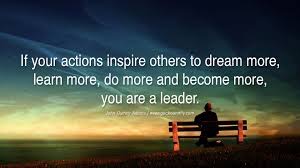
1. That you are bold and have good fortune. Fortune favors the bold.
2. That you give and get the feedback you need. Feedback is a gift.
3. That you empower everyone. Nothing is somebody else’s problem.

Social Media
Tony Retrosi
Gym Momentum
tony@gymmomentum.com
Twitter
@gym_momentum
@tretrosi
@atlanticgym
Facebook
Tony Retrosi (tretrosi)
Gym Momentum (GYM-Momentum)
Atlantic Gymnastics (atlanticgym)
THE
LAST
THING YOU NEED
IS…
Social Media
Stop giving me that pop-up ad for facebook.com! There’s a reason you don’t talk to people for 25 years. Because you don’t particularly like them! Besides, I already know what the captain of the football team is doing these days: mowing my lawn!
So what do YOU need?
Brand Story
The first thing
you need is a
SOLID BRAND
but what is a brand?
So you don’t really have a brand.
you have customers that have a perception of you.
are you happy with what they think of you?
do you even know what they think of you?
maybe its time you started…
LISTENing
This should be your social media strategy
Social doesn’t fix real problems, it exposes them
Who is managing your social media presence? Your assistant? Nephew? Mistress? is it this guy…
WTF?
OBLIGATORY
BULLET POINTS.
Social Media = Human Interaction
Groups are built of like minded individuals
That follow trends
Make buying decisions
Trust opinions
and ultimately…
Become communities
DO YOU KNOW YOUR
COMMUNITY?
Pros of Using Social Media
FREE!!!!!
Quick Communication
Interactive.
CONS of SOCIAL MEDIA
Life span of Social Media is SHORT
TRENDY
What you say once could live FOREVER
Easy to loose control of your message
Worlds Largest Cocktail Party
“A great analogy for social media is the world’s largest cocktail party, only without the drinking and at incredible scale,”
At a cocktail party, you wouldn’t walk up to someone and say, ‘Hey, I’m Dave. My stuff is 20 percent off.’ What you do is ask questions, tell stories, listen and relate to people.
Key Technical Matters
Stay positive.
“Thanks” is not a rich enough social media message on Twitter or elsewhere.
“Thx” isn’t either. But it’s easier to type.
Your “special social media language” is the language of your audience. For instance, if you’re marketing to English speakers, your special social media language would be English.
Awesome is not a language.
Never attempt to use slang on social media that you would not use in real life.
Reread your tweet. Do not respond in an official capacity via social media while drinking.
Do not respond in a nonofficial capacity via social media while drinking.
Still, your company’s social media personality should be your company’s corporate personality after exactly one beer.
If your gym’s annual revenue is more than $2 million, you may not abbreviate “great” as “gr8.”
If your gym’s annual revenue is less than $2 million, you may not abbreviate “great” as “gr8.”
Like this: light, amusing, useful.
Not like this: languid, ponderous, moralizing.
No grammatical errors.
Funny only if you’re funny.
No lawsuit threats via social media.
If it involves “tips” of any kind, people will click.
Especially “simple tips.”
Also, “giveaway.”
WAYS TO INCREASE TRAFFIC
Post about GENERAL THINGS that your clientele would be interested in.
Things going on in your community
Parenting information
School Information
PHOTOS
VIDEOS
Funny
ASK questions
ANSWER questions
comment back to everyone
Trends
Diversify. You’ve probably seen headlines about Facebook’s algorithm changes. If you currently operate a brand or business page, one study found that only six percent of followers currently see your posts. Experts suggest that that number will continue to plummet, eventually reaching one percent.
Google+ is for real. If there’s one social network businesses should pay specific attention to, it’s Google+, which is already playing a more important role in Google’s organic ranking algorithm. I expect this trend will continue.
Visual content will win. An estimated 63 percent of social media comprises imagery. As such, visual platforms are playing an increasing role in social media for businesses. One study found that 29 percent of Pinterest users bought an item after posting or re-pinning it on the network.
Last weekend I hosted our Xcel State Championships at a local high school. It was a great competition. What I love about this level is the pure joy of gymnastics. The first day saw about 350 competitors. There was laughter. There was cheering (not just for teammates but also for other competitors). What I didn’t see- any crying out of frustration or disappointment. (I will save these thoughts for another blog).
I sat at the table facing the crowd playing floor music and making announcements. Nearly every team of parents could be identified in their group by their T-shirts, banners and cheering (I feel Another blog on crowd/parent behavior). At the end of each session as the parents filed out and headed to awards some teams of parents just got up and left leaving pop corn boxes, news papers, various bottles and coffee cups. The area staked out by other teams were so clean it was as if they were never there. I watched a few parents on their way down the bleachers picking up stuff left by other groups.
At the end of the weekend when we finished loading everything back on the DGS truck I had parents in the bleachers cleaning everything left behind then sweeping the bleachers. I had parents dry mopping the vinyl cover over floor before another group helped the custodians fold it up. The custodians were very thankful for our help with things that was “their job”. I remarked, “My goal was to run a successful competition for the kids and to be good guests. You are obviously proud of your facility and you were gracious enough to let us use it so I am proud of the facility as well.”
Polish the floor and you polish your soul
-Zen saying
I try to impress upon my staff and all the gymnasts at Atlantic Gymnastics (Rec and Team) to treat the gym as your second home. Take pride in your surroundings. Pick up the garbage instead of stepping over it. I rarely am offended and usually very thankful when a parent takes the time to point out where we have failed to meet their expectations. Some people get upset with these “complaints” but I look at them as a chance for us to improve our product. Whether a parent has concerns over heat/ ac (my second floor observation room is very warm in the winter and penguins would be comfortable up there when the AC is on), trash in the parking lot or when one of our teachers doesn’t deliver at the level we expect. In general for every parent that takes the time to say something there are 10 who feel the same and do not say anything.
There are NO small jobs. Each job is important and in order for this ship to sail smoothly everyone must work together and be willing to pick up the slack when necessary.
I was doing some research to expand on this article when I came across the blog GYMNAST CROSSING. They cover the same topic (even using the same zen saying). Please visit their blog. Instead of trying to rewrite what they have done such a good job on, I will repost their article.
From Gymnast Crossing:
Polish the floor and you polish your soul
-Zen sayingWhile out for my morning run to the park this cloudy morning, I was doing sit-ups at a station and watched a woman randomly picking up trash as she was walking. As she passed by me, I told her she was awesome and thanked her for the act and the inspiration. I was done running, and walked to the next station for push-ups, picking up some litter along the way. Not much of a trouble, either, considering there are trash cans conveniently placed throughout the park.
During summer and winter camp in previous years, other coaches and myself would on occasion, give a speech to the girls after noticing how not everyone was pulling her own weight in cleaning up after lunch. Some girls would be pretending to clean; or making a concerted effort to not put in much effort. Other gymnasts would occupy cleanup time with mostly socializing.
And then there were the few teammates who were actually engaged in quality work on cleaning.
Is this fair to the teammates who are shouldering most of the workload? Does the job get done more efficiently when more people help or when less people help?
Is it ever fair when a person has to clean up after herself, and the mess left behind by others? Who benefits? The person working hard, disciplining herself to do the right thing? The person being lazy and inconsiderate of others, not pulling her own weight?
When I phrase it in those terms, the answer is quite obvious.
The girls have been talked to as well, regarding the state of the gym, in general. At the end of the day, used athletic tape is discarded in a twisted mangle; paper wrappings to chalk blocks litter the floor by bars; defrosted peas in plastic ziplocs mine the gym like IEDs, ready to be stepped on and exploded….
The gym is like a second home. How do you treat your home?
If you see trash lying around, do you pick it up? Or wait in hopes that the responsible party will return to do it, himself? Or trust that someone else will do it? Just not you?
When it’s time to move mats, either to set up drill stations or clear some space; or to move mats to make it easier for the evening clean-up crew to do their job of cleaning up after us, I notice who is helping and who is not helping. Your coaches might not always say something. But they notice.
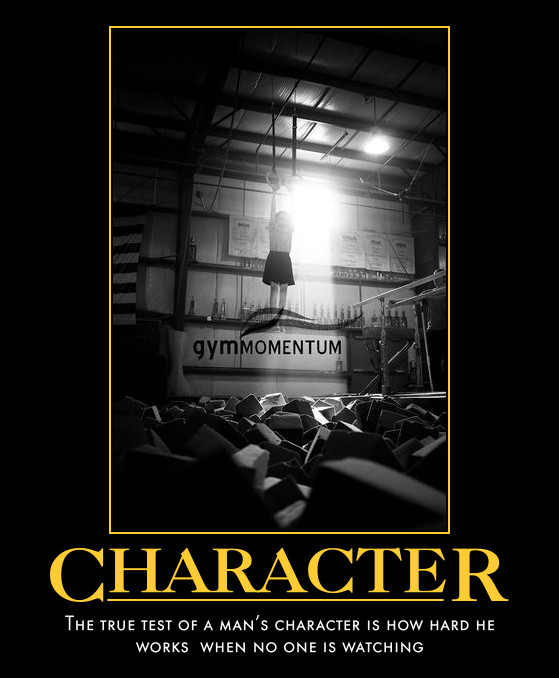
Have some character and integrity: Do the right thing. Clean up after yourself and others. Don’t wait around for a coach to tell you; don’t expect to be recognized or praised, either. Do it because it’s the right thing to do- and do it especially when you think no one is looking.
 At the beginning of every year, we make a promise to change something in the gym. We want to make improvements every year.
We think about how to succeed in the coming school year and have high hopes for becoming a better manager and meeting the best expectations we have for ourselves.
Unfortunately, we don’t always follow through on our plans during the year. So many of them fall through the cracks, never to materialize. We start with a bang but end with a whimper. Apparently, we are doing something wrong — over and over.
How do we make our dreams for the gym a reality? How do we implement all of our plans? How do we move from words to actions? Where should we start? There is no secret to business success.
First, to have the answers to these questions, you need to understand whether or not your goals are realistic or inline with the overall business plan. Once you are clear on the goals, it’s never too late to follow through on them. Even though the year is almost over, you can take advantage of this remaining month to achieve at least some of your goals.
1. Strengthen your sense of urgency
No matter how beautiful the dream is, you need to be motivated to start acting. However, you can’t wait for motivation to just show up. That’s why you must create the necessity for change.
Implementation:
2. Find new emotions
Perhaps, everyone has experienced this — you start to follow through on your ideas, and then you burn out. The reason for this is that you disconnect from the positive emotions that inspired you in the first place. The emotions behind the dream or goal are the fuel that propels you to take action and move forward. Without that fuel, you fizzle out. Sometimes you need to manufacture more emotional fuel to relaunch your plans.
Implementation:
3. Find a support
Friends, colleagues, a coach or manager from a different gym — these are the people who could play an important role in achieving your success. Talk more often to people who are ready to support you and inspire you.
Implementation:
4. Eliminate obstacles
Often it happens that at first everything is going smoothly with your plans, then your life begins to present obstacles to the changes. At the time of difficulties, you are ready to give up all the plans and dreams.
Implementation:
5. Learn new habits
Most people can’t start implementing their plans because they are accustomed to their old habits. A huge part of making real and lasting change in your life is learning new habits that support your goals of the program. In order to make a real change you need to get out of your comfort zone. (Read FOLDING TOWELS) If your goal is to increase staff morale you may need to learn a variety of small habits such as getting to the gym earlier, create an incentive program, or try to catch your coaches doing something right. Implementation:
6. Reward yourself
Every step along the way, celebrate your accomplishments. It’s hard to commit to on-going action and habit change. Remind yourself that you are doing the work necessary to create a better life and reward yourself for your efforts.
Implementation:
Remember, dreaming, setting goals and making plans isn’t enough to succeed. You need to act today, tomorrow, and every day after to make your plans materialize. Don’t hesitate, think of some motivation that will help you to move forward and begin to follow through on your plans right now.
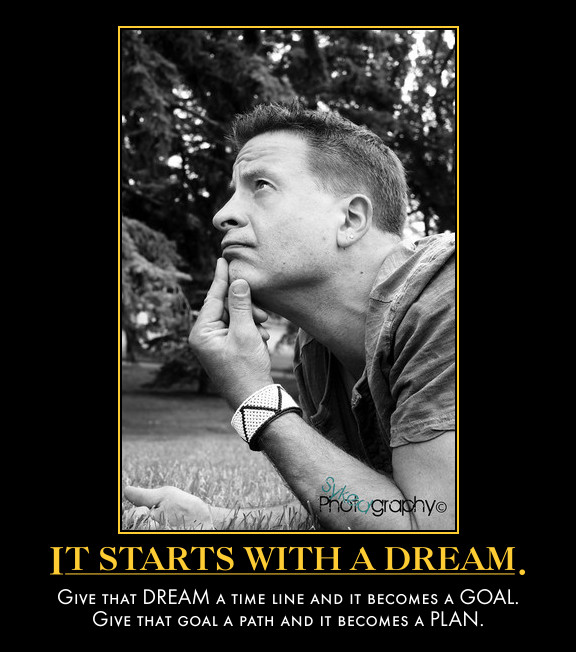
 Photo Credit. Christine Bricket. CG Photography.
Gymnasts from Atlantic Gymnastics Training Center. Portsmouth, NH
“The best boss I ever had.” That’s a phrase most of us have said or heard at some point, but what does it mean? And what can we do to have our employees say this about us?
The first thing we need to do is answer a few key questions:
What sets the great boss apart from the average boss?
What do great managers actually do?
While there are as many styles of management as there are managers, there is one quality that sets truly great managers apart from the rest:They discover what is unique about each person and then capitalize on it.
Average managers play checkers, while great managers play chess.
The difference? In checkers, all the pieces are uniform and move in the same way; they are interchangeable. You need to plan and coordinate their movements, certainly, but they all move at the same pace, on parallel paths. In chess, each type of piece moves in a different way, and you can’t play if you don’t know how each piece moves. More important, you won’t win if you don’t think carefully about how you move the pieces. Great managers know and value the unique abilities and even the eccentricities of their employees, and they learn how best to integrate them into a coordinated plan of attack.
Think about some of the techniques you used in the gym when you were “just a coach”.
You had some go to drills for certain skills to get you started but then you had to individualize training based on the physical and psychological needs of each gymnast. The longer you were in the gym you were able to spot trends. “Paige reminds me a lot of Lexa. Her shapes are similar. I will take the same path on her Tkatchev”. Then as you get further down the road you individualize even more. Possibly based on new pieces of equipment now available or just things that meet Paige’s needs better.
Managing your gym is no different. You need to know what makes each person tick. A critical part of you job, therefore, is to put people into roles and shifts that will allow them to shine—and to avoid putting clashing personalities together. At the same time, you need to find ways for individuals to grow.
Emma is a former level 10 gymnast who competed through college. I almost didn’t hire her because I thought she was a bit of a “princess”. During our cleaning week before we started our fall classes I asked her to clean and straighten up the bar area. A job which should have taken a few hours took her ALL DAY and it was not done that well. The next day I asked her to clean out the pre-school closet (where we keep all the props and things for lesson plans). In a very short period of time she had that closet organized with the props that were used the most in the front, everything in a very logical and easy to get order. Give Emma a generic task, and she would struggle. Give her one that forced her to be accurate and analytical, and she would excel.
3 important steps
First, identifying and capitalizing on each person’s uniqueness saves time. No employee, however talented, is perfectly well-rounded. Find the right job for that person. Time is much better spent carving out a role that takes advantage of someone’s natural abilities than to try to turn your preschool teacher into your head team coach.
Second, capitalizing on uniqueness makes each person more accountable. I didn’t just praise Emma for her ability to execute specific assignments. I challenged her to make this ability the cornerstone of her time in the gym. To take ownership for this ability and to teach others. Emma’s confidence bloomed and has become one of the strongest and most organized teachers in my program.
Third, capitalizing on what is unique about each person builds a stronger sense of team, because it creates interdependency. It helps people appreciate one anothers’ particular skills and learn that their coworkers can fill in where they are lacking. In short, it makes people need one another. The old cliché is that there’s no “I” in “team.” But as Michael Jordan once said, “There may be no ‘I’ in ‘team,’ but there is in ‘win.’”
To excel at managing others, you must bring that insight to your actions and interactions. Always remember that great managing is about release, not transformation. It’s about constantly tweaking your environment so that the unique contribution, the unique needs, and the unique style of each employee can be given free rein. Your success as a manager will depend almost entirely on your ability to do this.

 Many gymnastics clubs use twitter to try to increase traffic to their website, get information out and market their club.
Gym Momentum posts all articles on twitter but also to send out quick information and link to other articles that and posts that I think Gym Momentum followers may be interested in. As a middle age guy- I am never 100% confident that I am using Twitter most effectively to generate interest and traffic.
Hootsuite is the platform that I use to schedule tweets. It is easy and pretty intuitive. As a bonus- they post some great articles on marketing. Kristina Cisnero is Hootsuite’s Inbound Marketing Specialist. Each day she focuses on bringing small businesses valuable content on social media marketing. She posted a great piece recently on ways to increase twitter engagement.
A study done by researchers at Cornell University, backed by the National Science Foundation and Google, found that style may trump substance when it comes to Twitter popularity. This research found that including an engaging call to action at the beginning of the Tweet—for example, “please retweet, retweet, plz, pls”—can increase people’s engagement rate on Twitter. Now, what does this mean for US?
Recently, Hootsuite (HS) conducted its own Twitter experiment to see what its followers found engaging. They found that knowing more about their audience, using images, and taking some risks really helped boost its Twitter engagement rate (TER). This helped them increase their TER by 180% in two months.
How well do YOU know your audience?
Researchers at Cornell gathered their findings and created a tool that uses an algorithm to automatically learn what kind of wording works better for Tweets. This tool, however, may not work for everyone because it still doesn’t factor in humor or personality—which they (HS) found was a key factor in how we increased our own TER.
Cornell University’s tool is a great start on learning what kind of content to use in your Tweets. But since Hootsuite’s experiment yielded some findings that weren’t accounted for by university researchers, they decided to add to this research. They’ve put together a template to help you know how to write a tweet that people will want to engage with.
Here’s a template demonstrating how to write a Tweet:

Breaking down this how to write a Tweet template:
You’re probably thinking, “Great, a template, but what does this template mean?” Don’t worry, I’ve put together 4 key takeaways that will explain the graphic and teach you to write engaging Tweets.
Write engaging content that speaks to your audience
The first part of your Tweet should be around 90-100 characters. This text should be engaging, show off your brand personality, and include a call to action. Yes, Twitter’s character limit is 140; however, if you’re going to ask people to retweet your Tweet, make sure you leave enough room for them to add ‘RT’ to the body of the Tweet.
Include a URL (or a shortened URL)
For majority of businesses, Twitter is used to drive their followers to their website, or to a landing page. If this is your goal, make sure to include a URL in your Tweet. Better yet, include a shortened URL, using a URL shortener like ow.ly, so you can track click-through rate and save your character count. Make it easy for people to get to your gym’s web page or the event you are hosting.
Wrap up your Tweet with a hashtag
Increase the reach of your Tweet by using a relevant hashtag. Hashtags will increase your Tweet’s visibility on the network, and help you join the bigger discussion going on around the topic. For most reading this you are going to be tweeting about GYMNASTICS. #gymnastics, #preschool, #tonyisfunny
Include an image, a GIF or a video
Still images, GIFs, and now videos can dramatically increase the engagement rate for your Tweets. Make sure the images that accompany your Tweet are relevant and high-quality. There is really no more VISIBLE sport than gymnastics. Include photos and videos in your tweets.
Crafting Tweets doesn’t have to be as daunting as it seems. Just remember to always have your audience in mind whenever you’re writing a Tweet, and you’ll see your Twitter engagement rate rise. The best way to know how to write a Tweet to suit your audience is through practice, tracking, and constant improvement based on your engagement metrics. Happy tweeting!
How do you compose your Tweets? Hit me on twitter @gym_momentum and let me know!