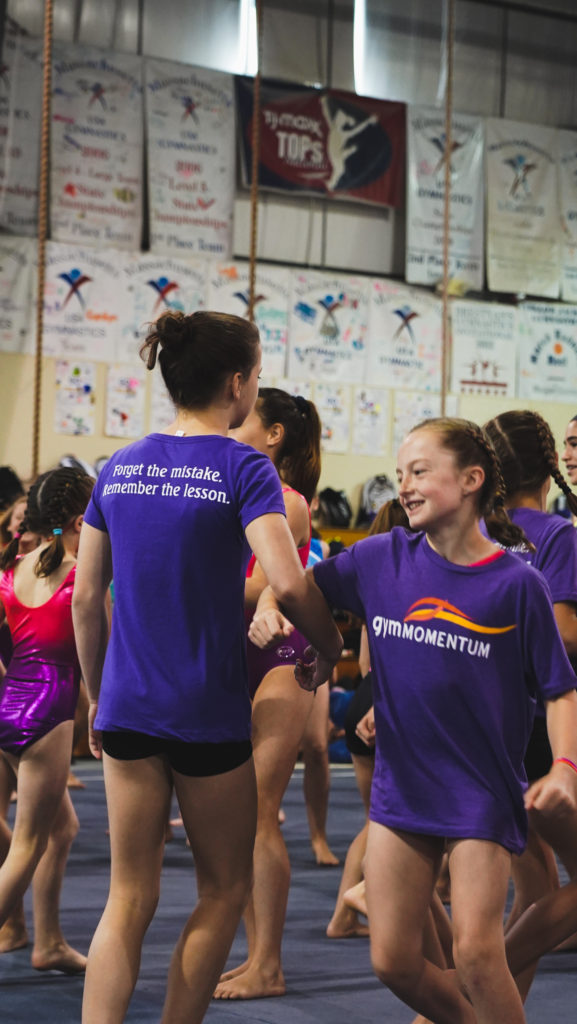
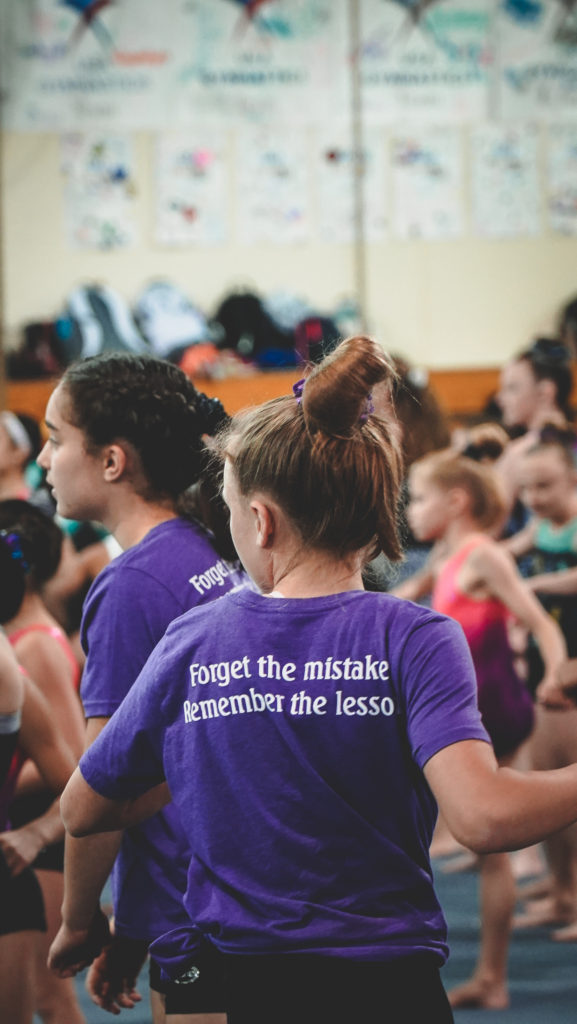

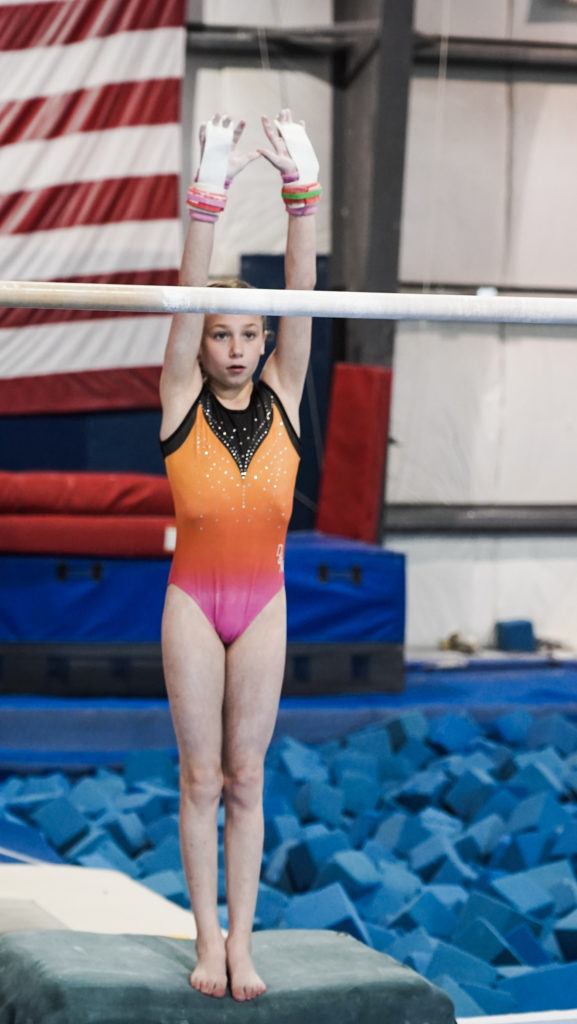
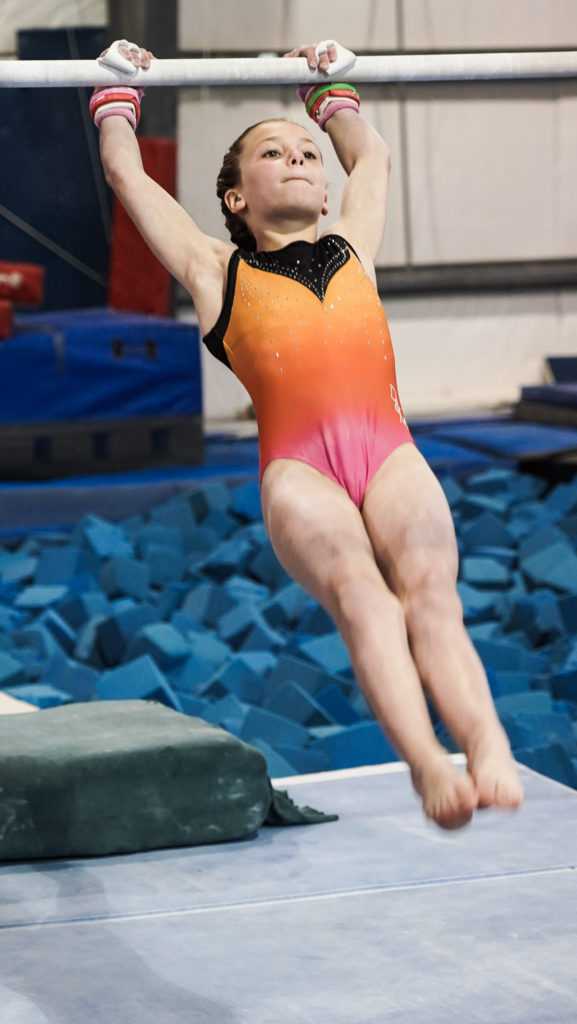
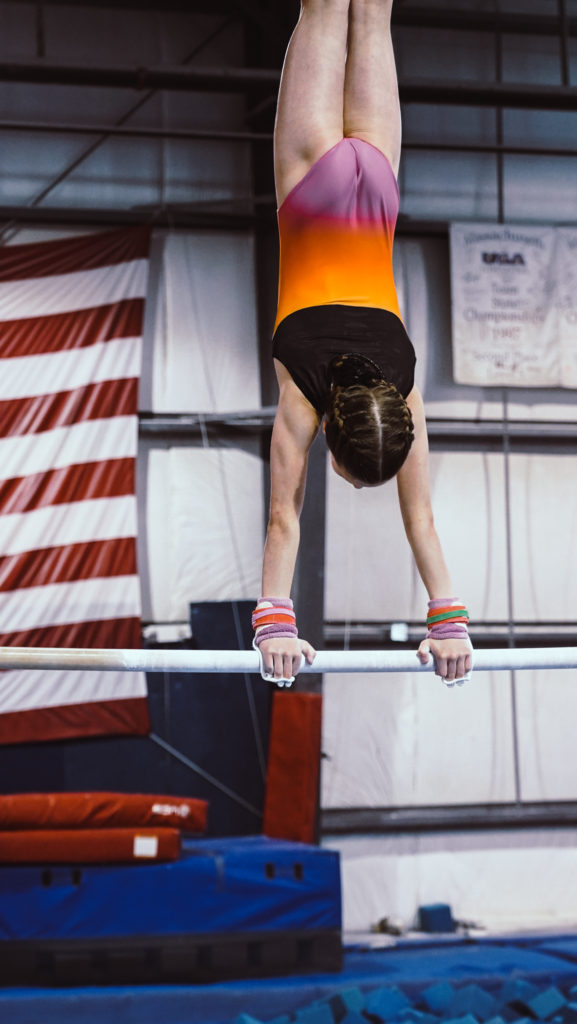
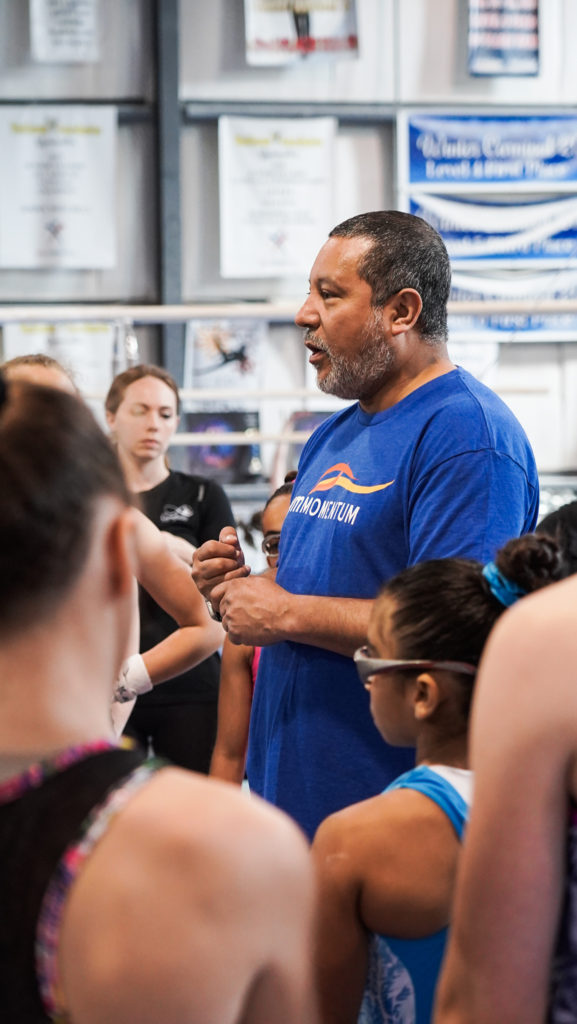
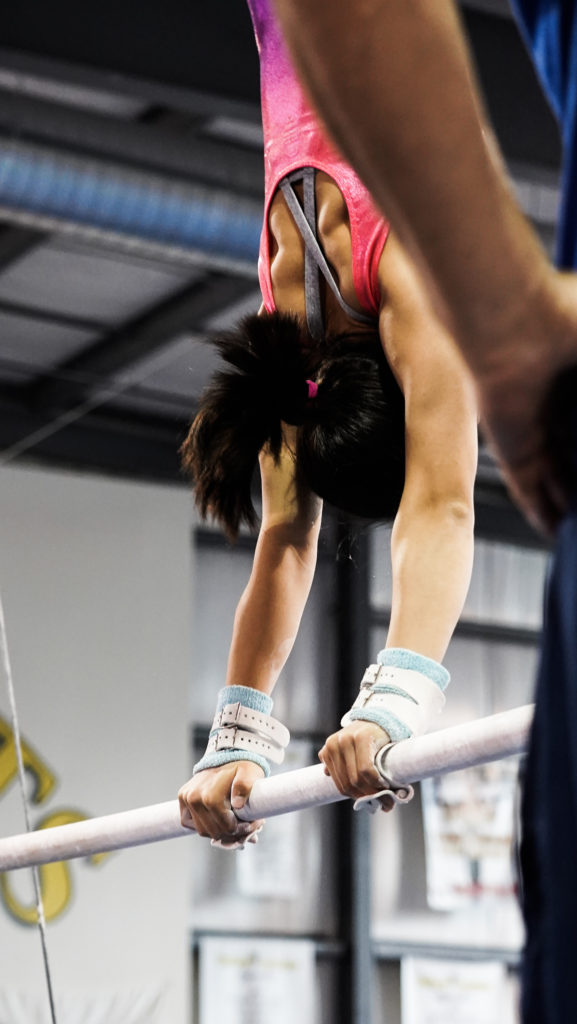
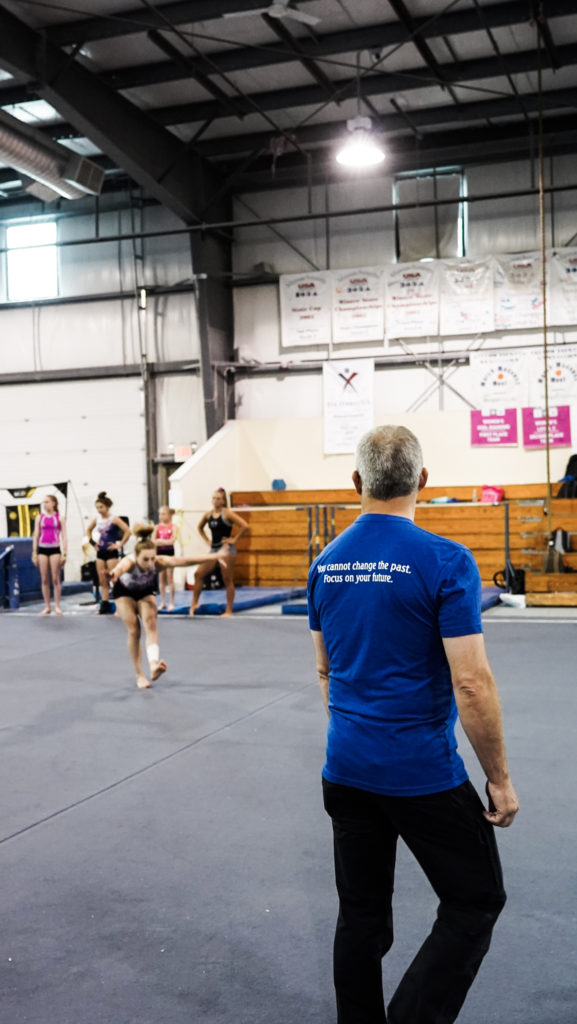


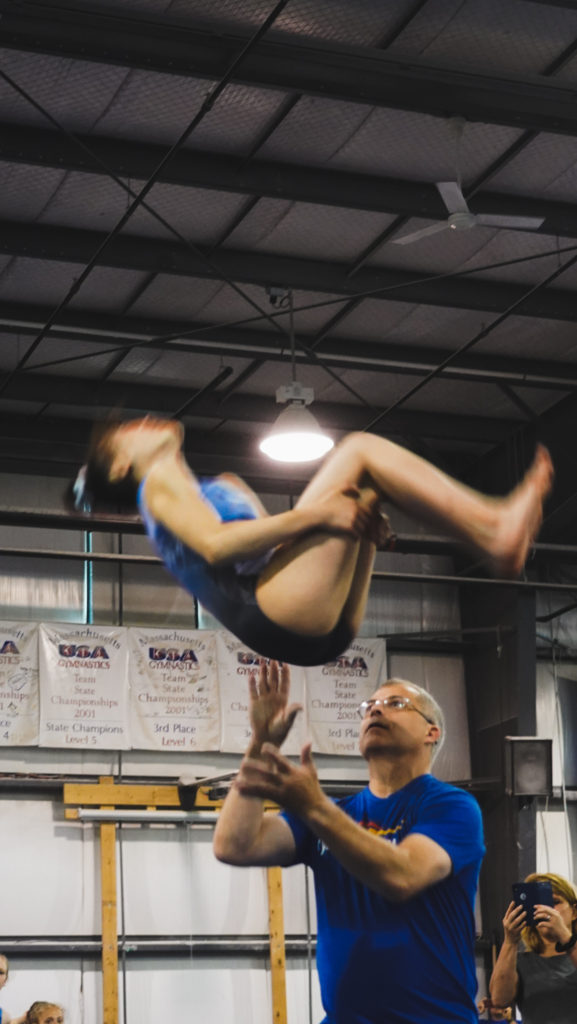
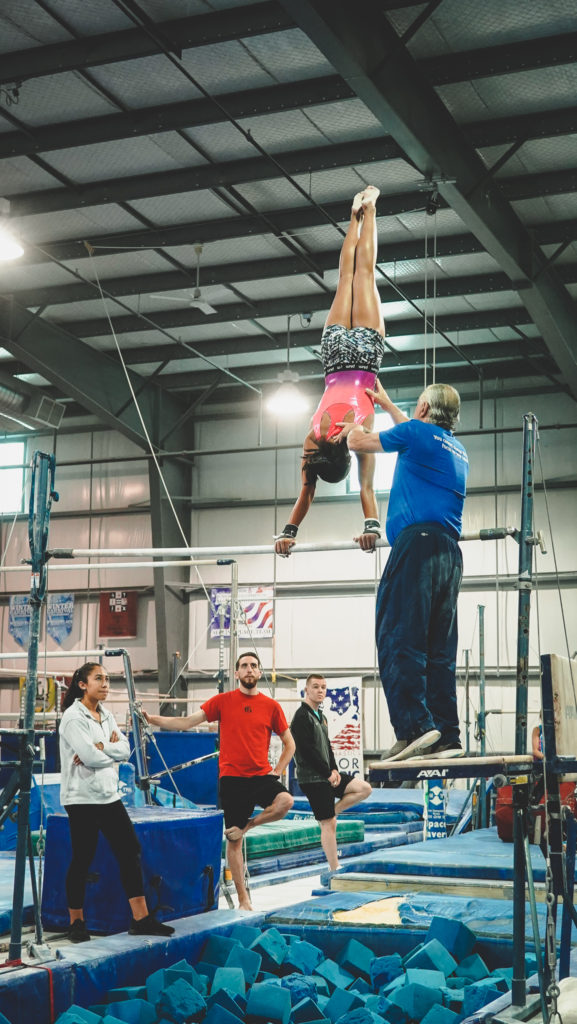
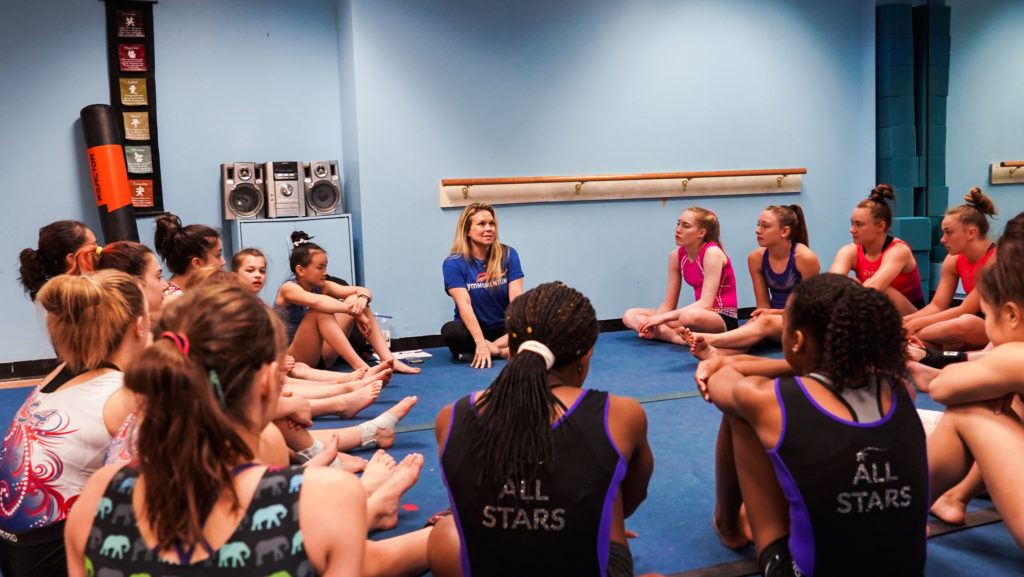
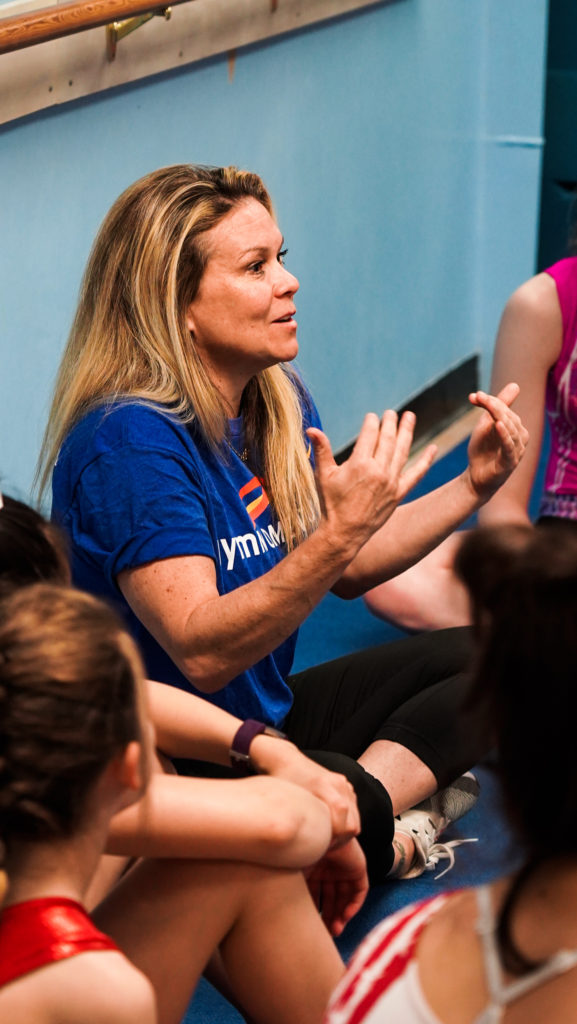



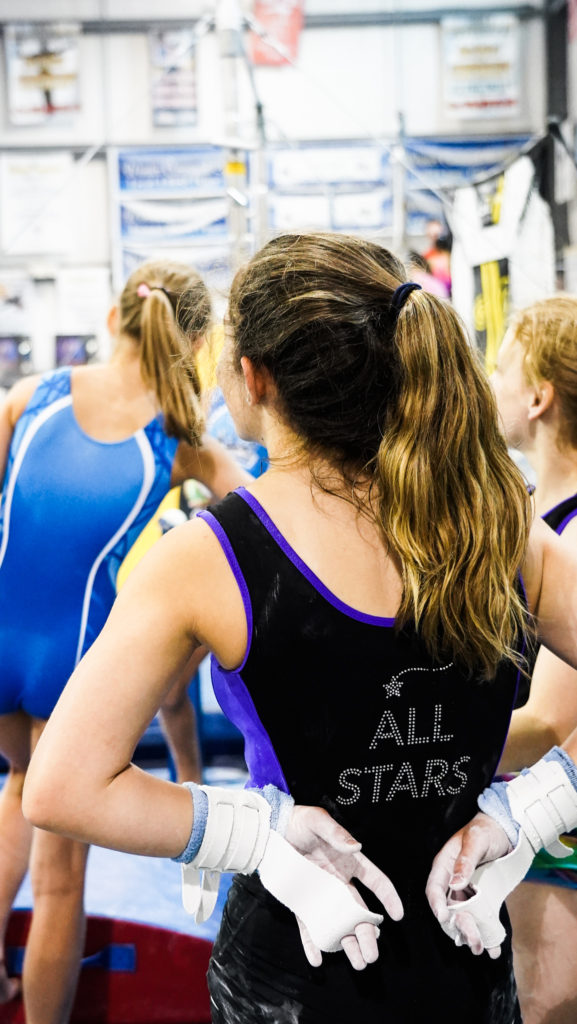
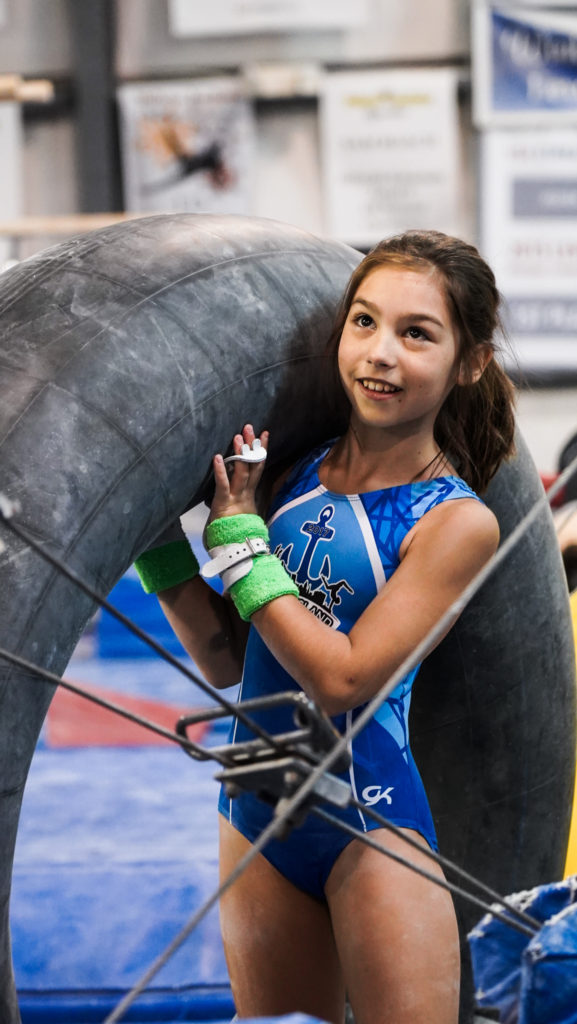
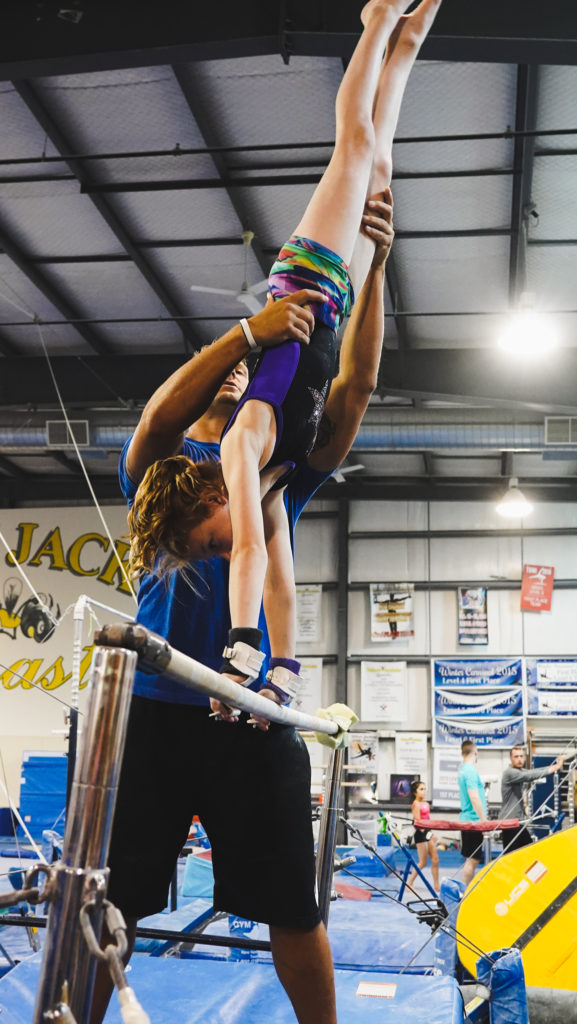
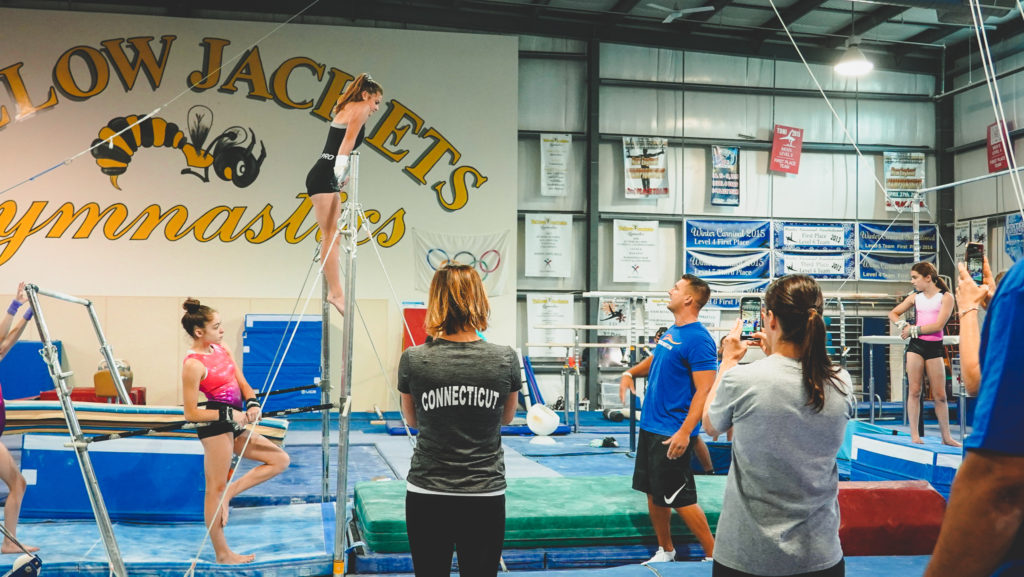

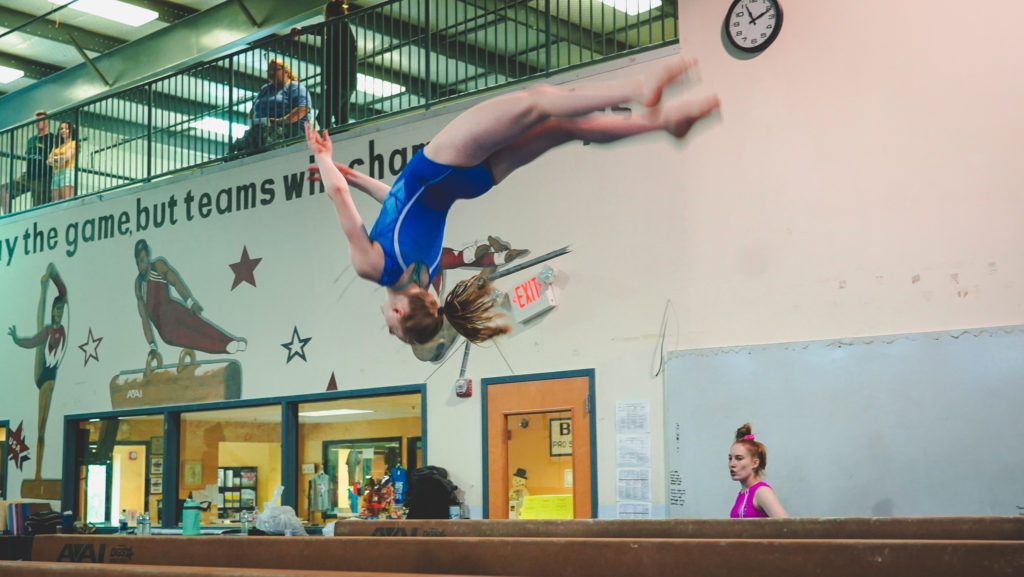


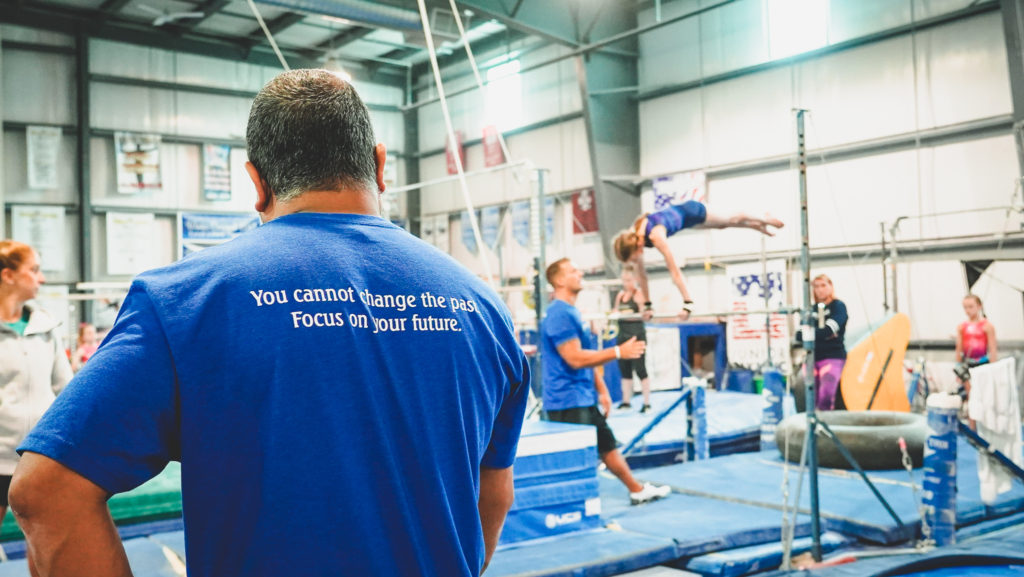
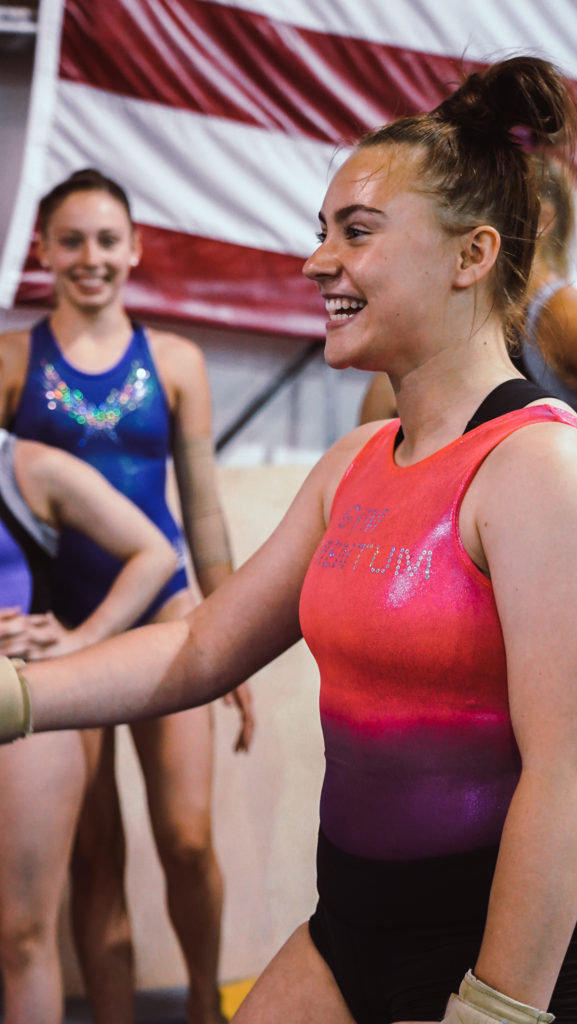

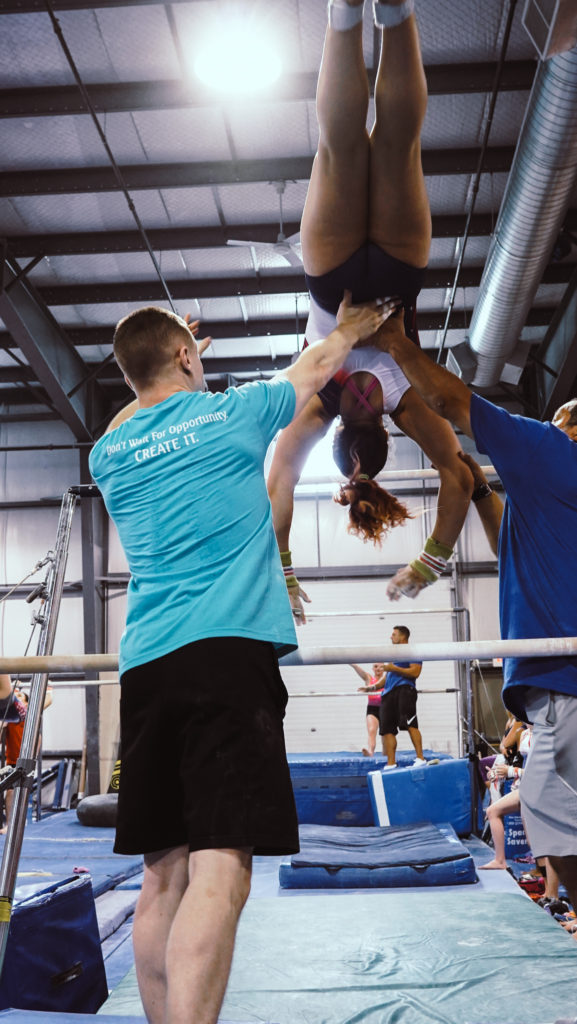
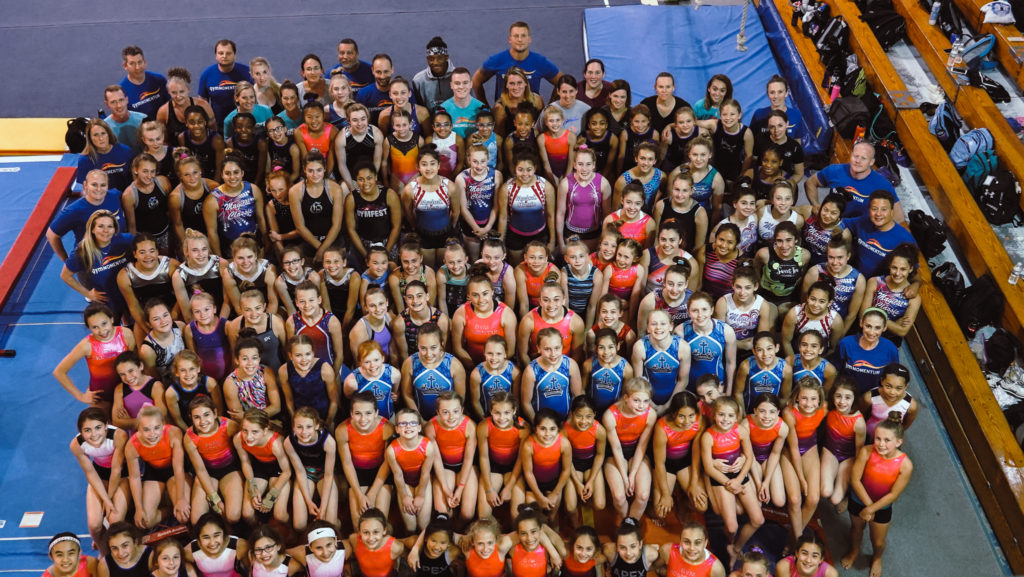
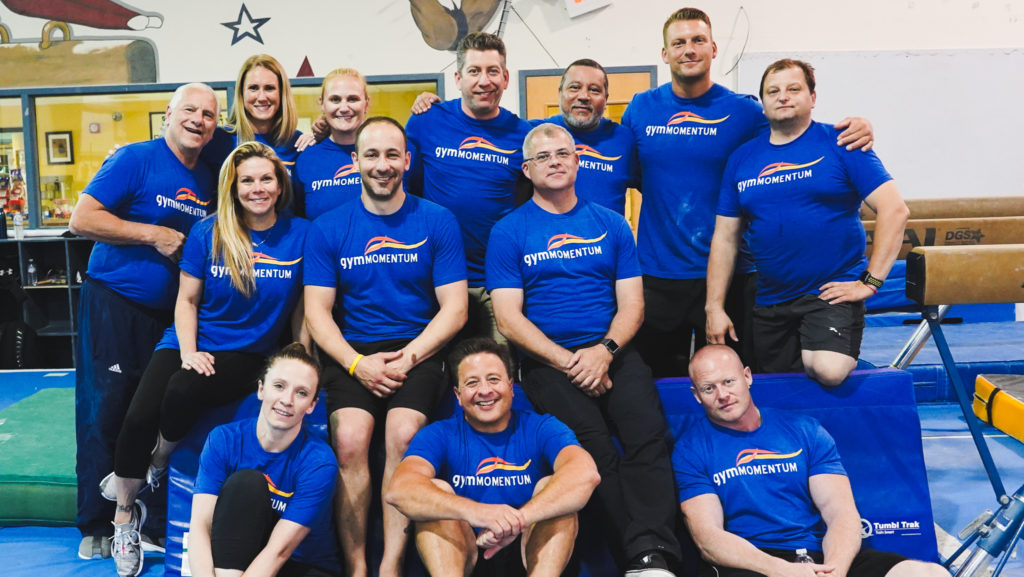



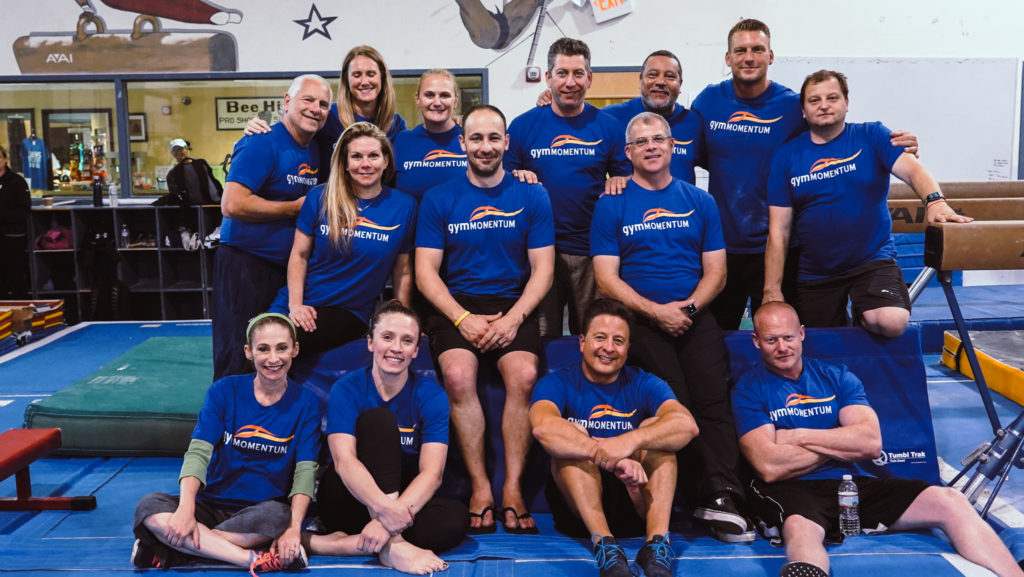


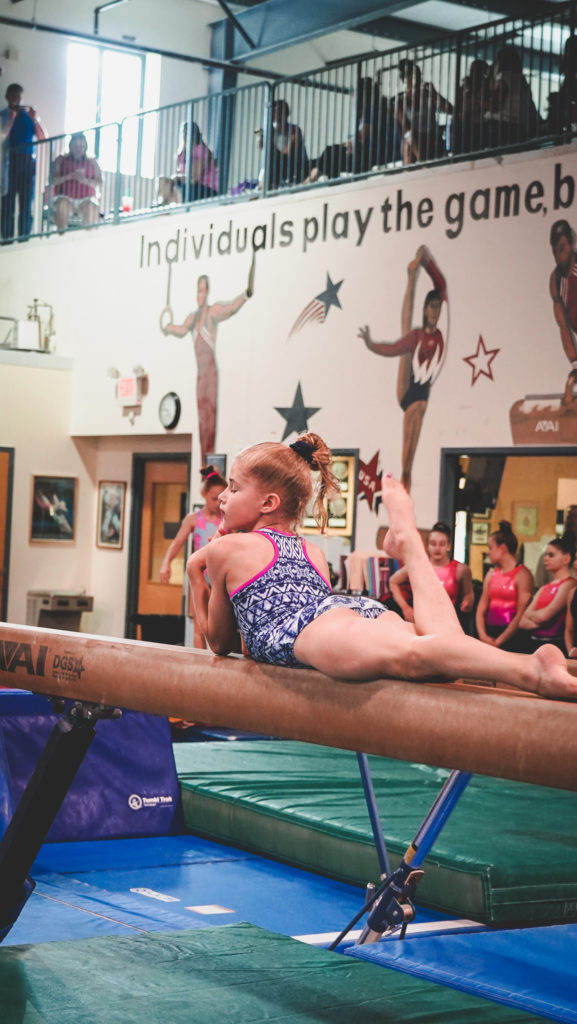

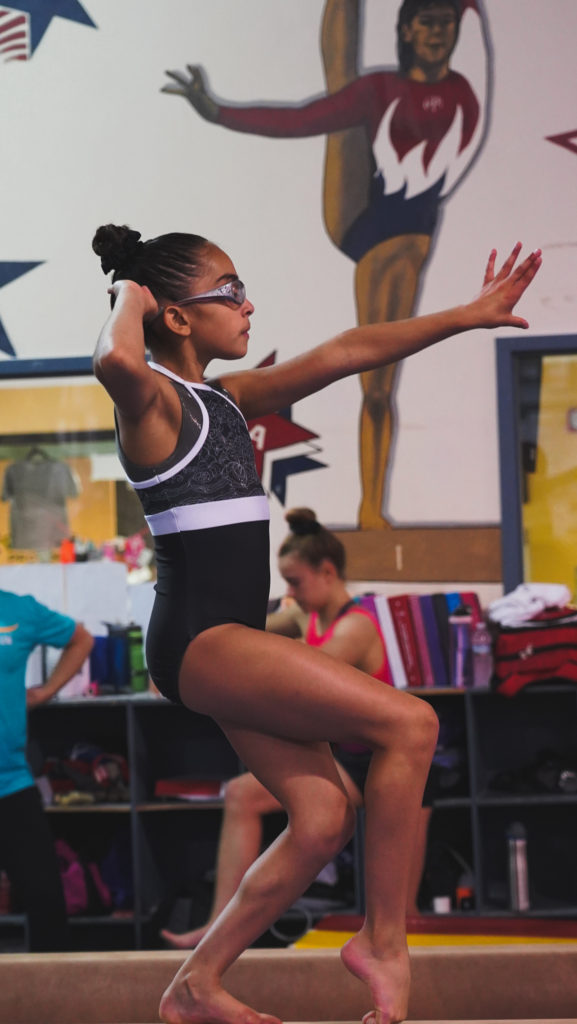
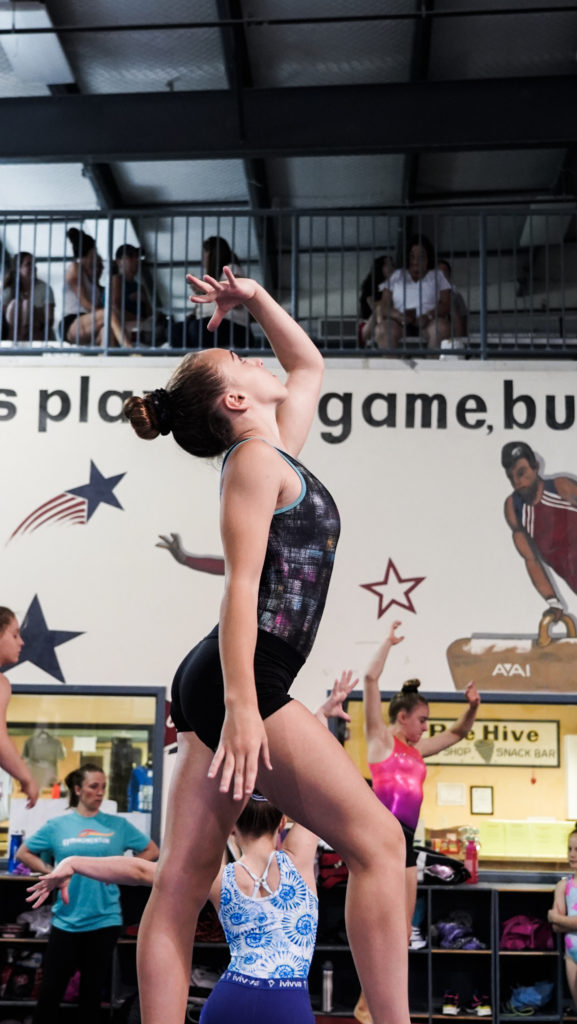
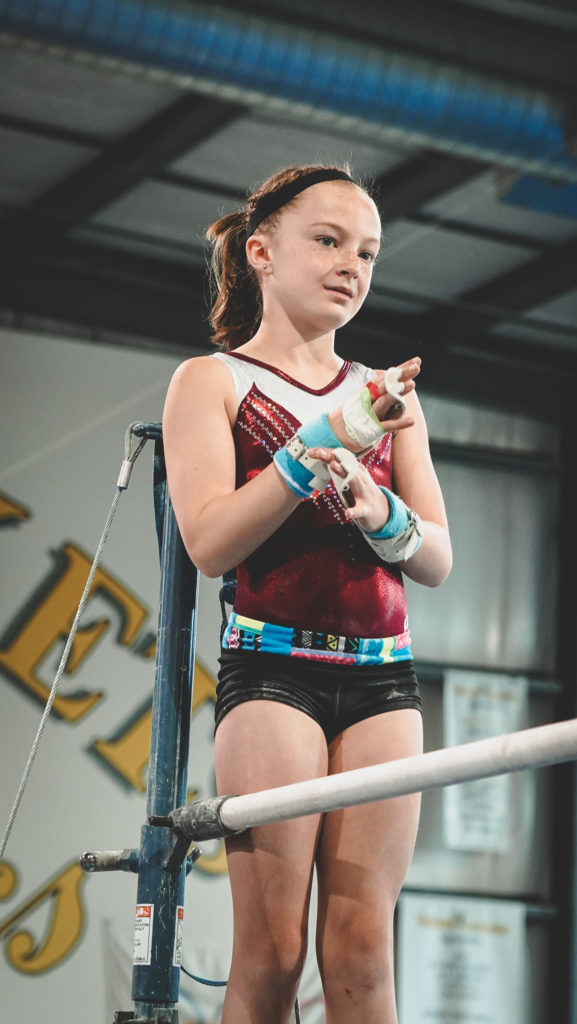
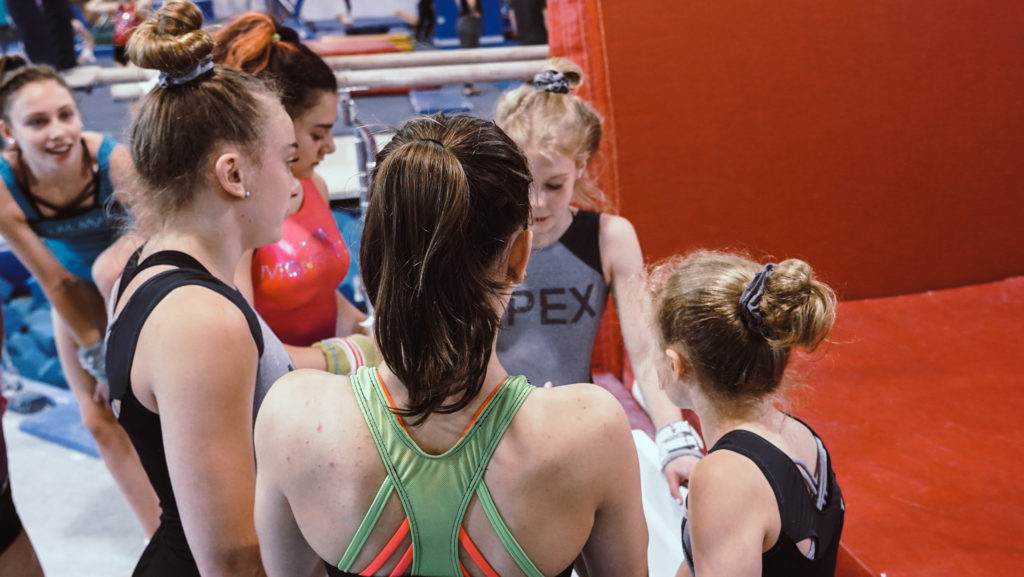
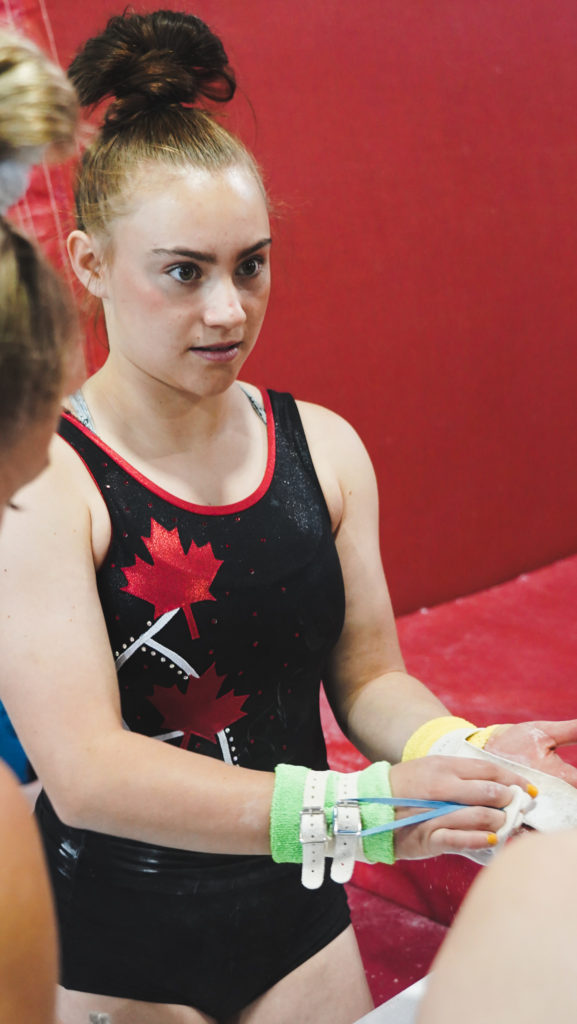
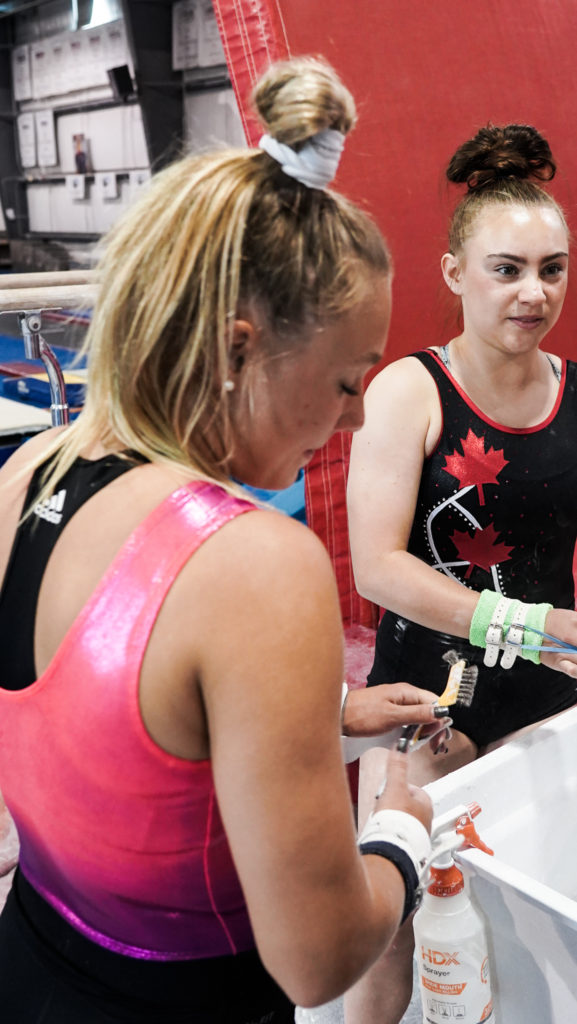
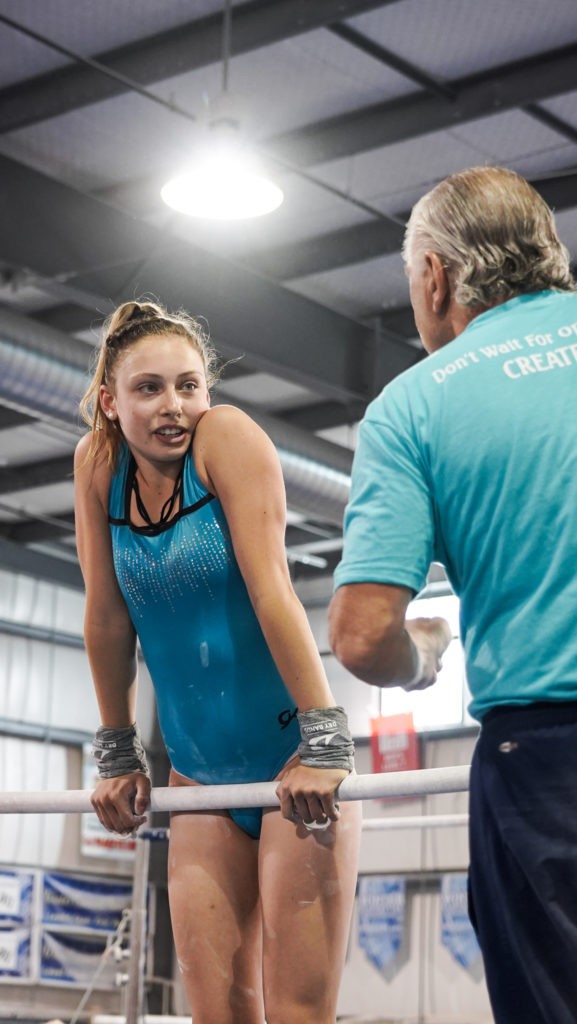
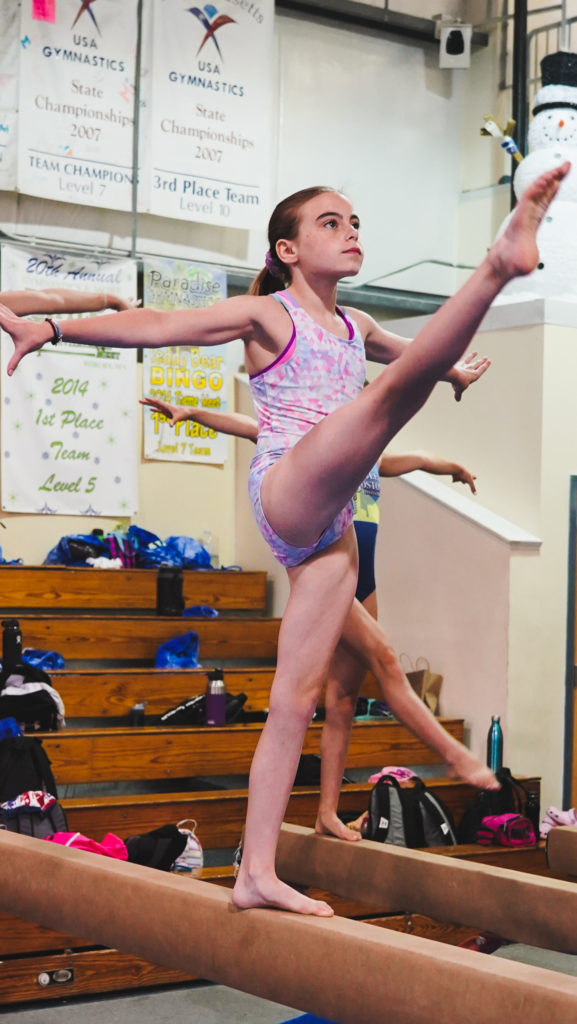
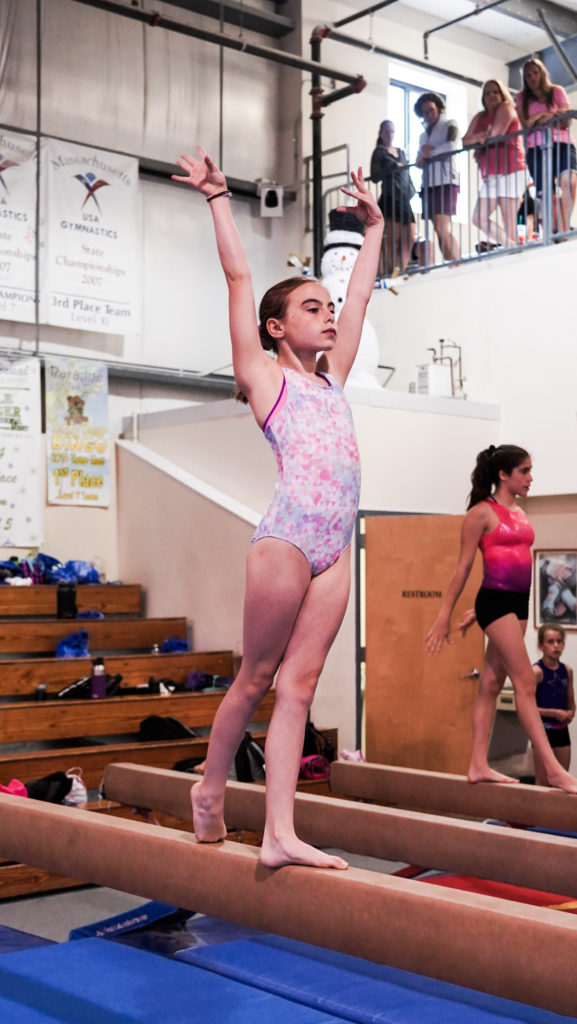

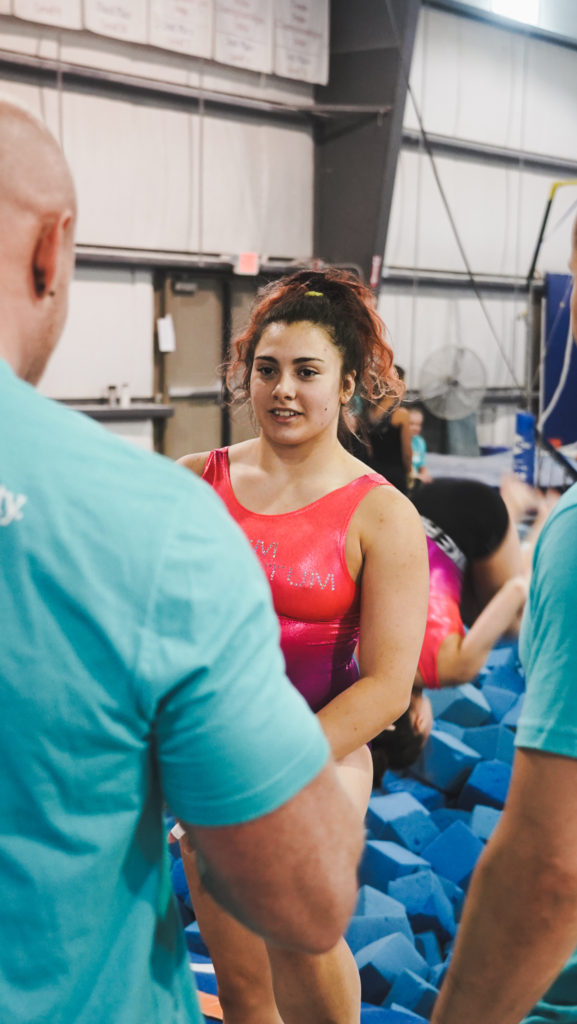
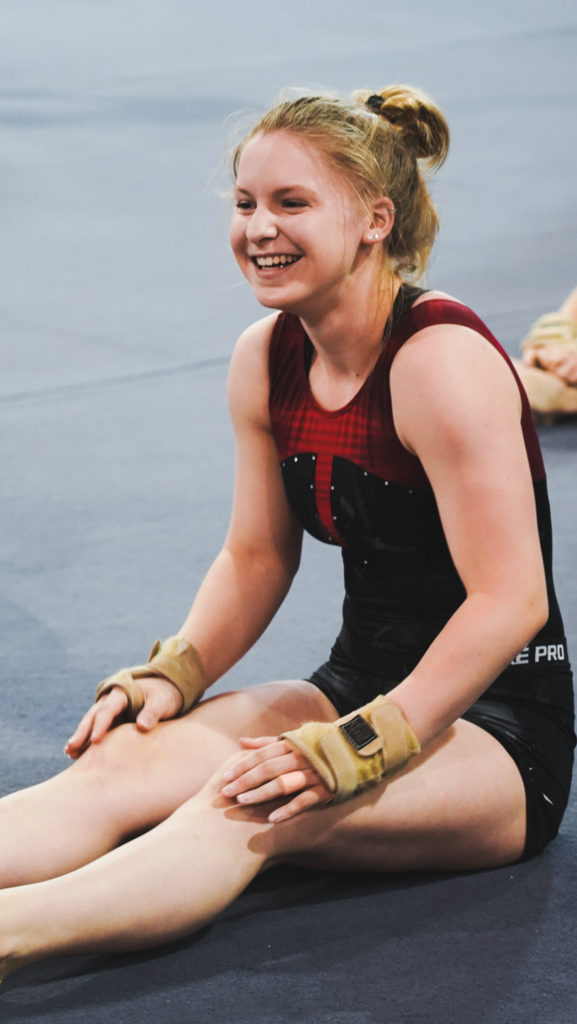



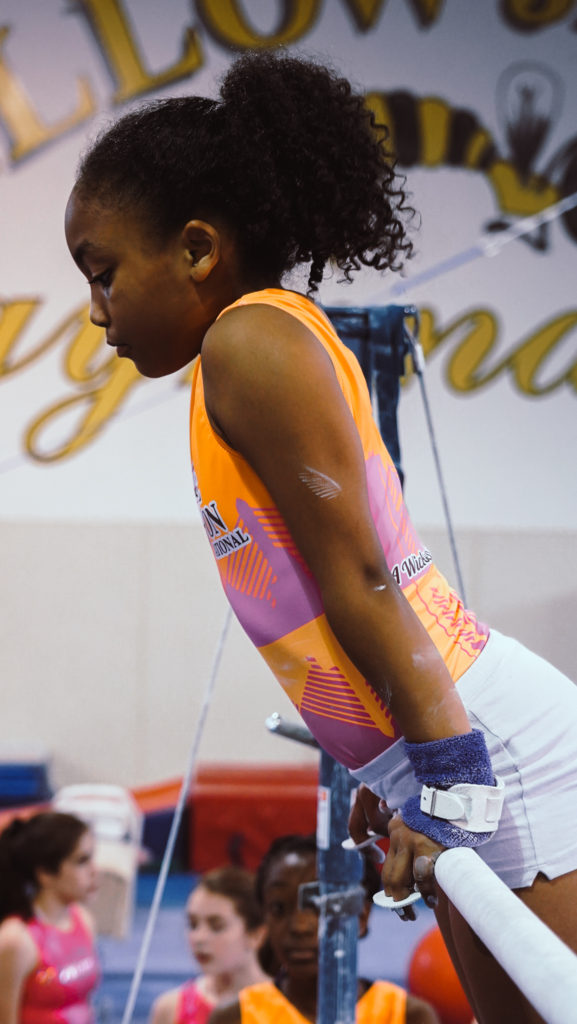


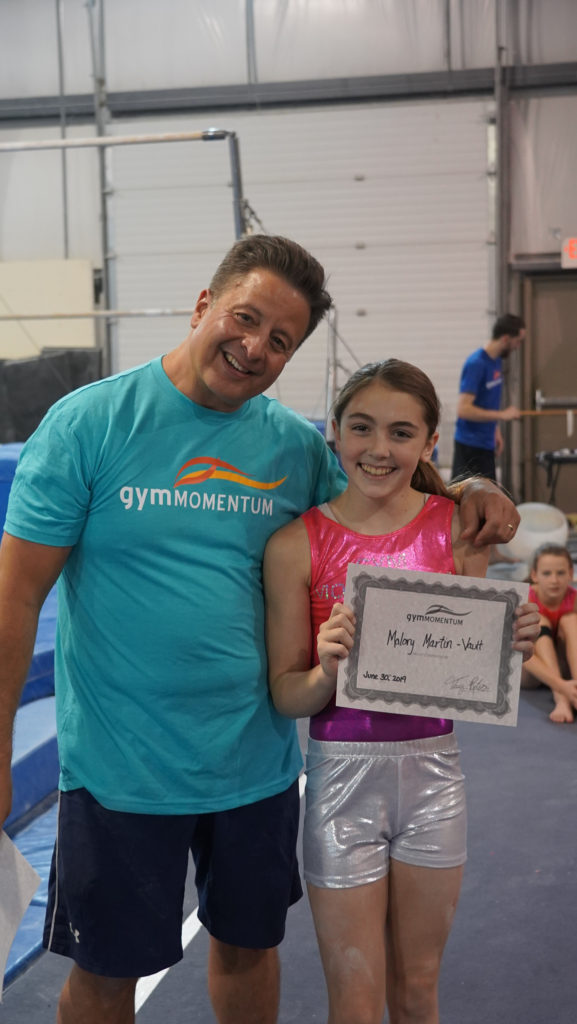
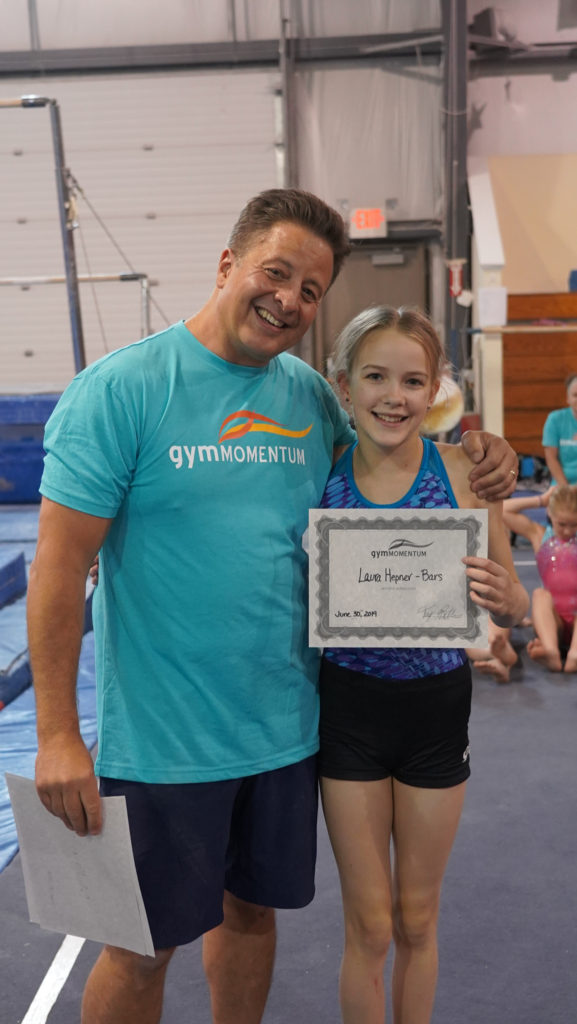
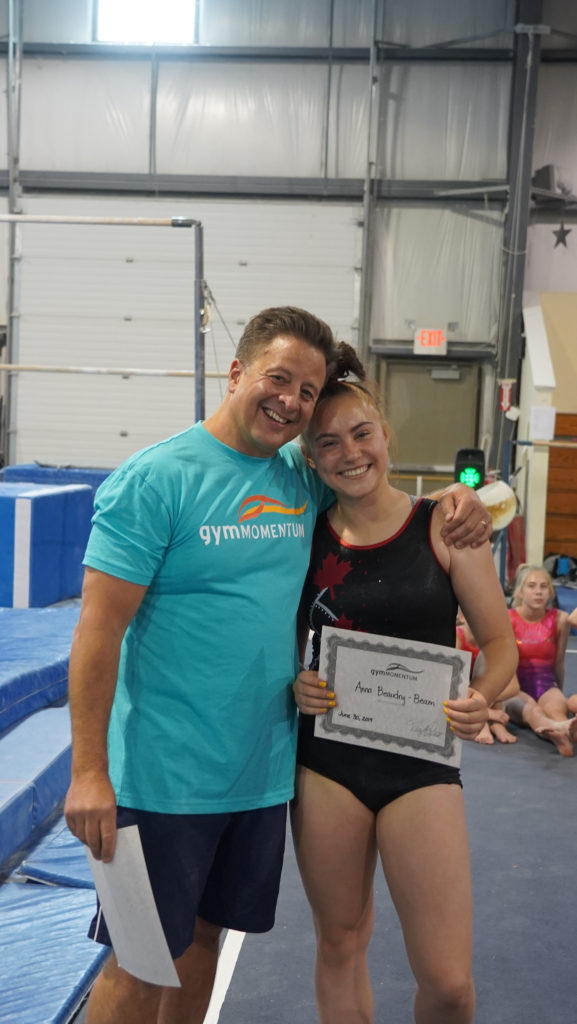
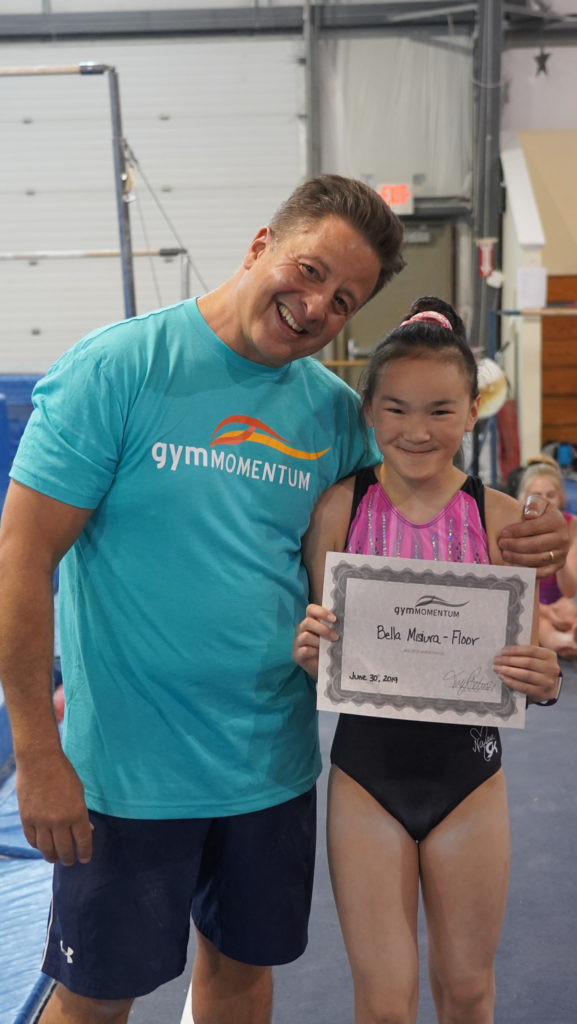
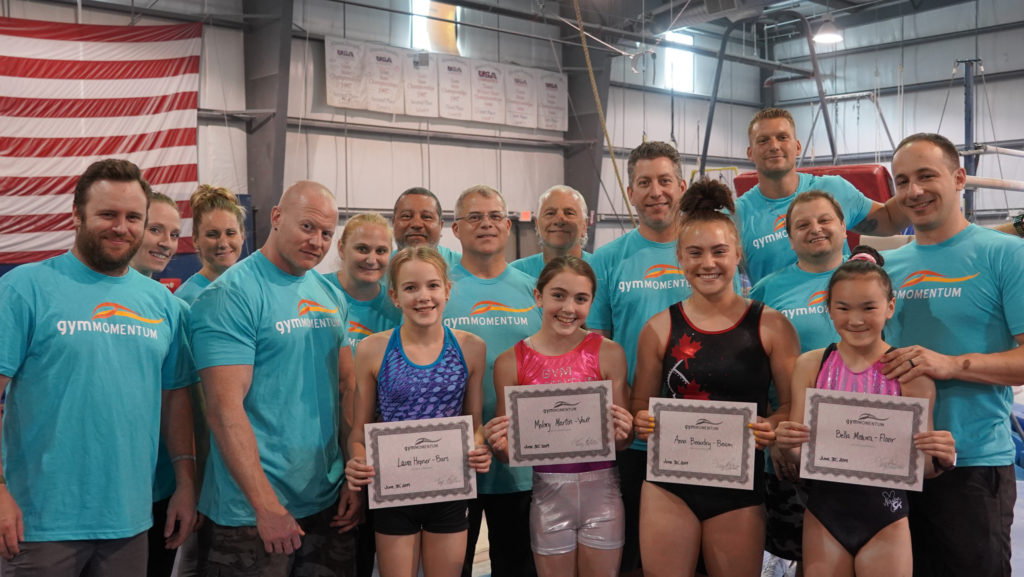
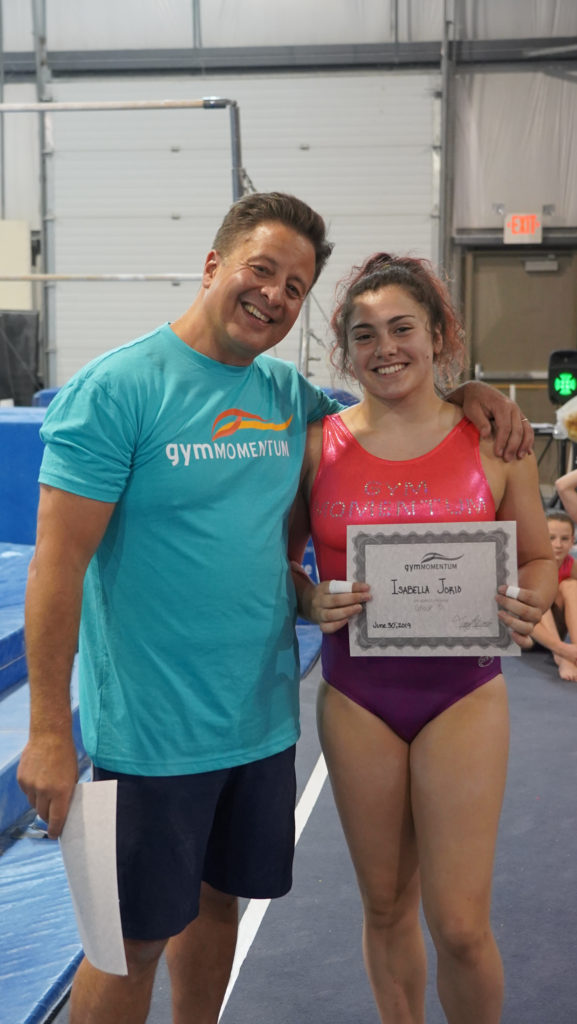

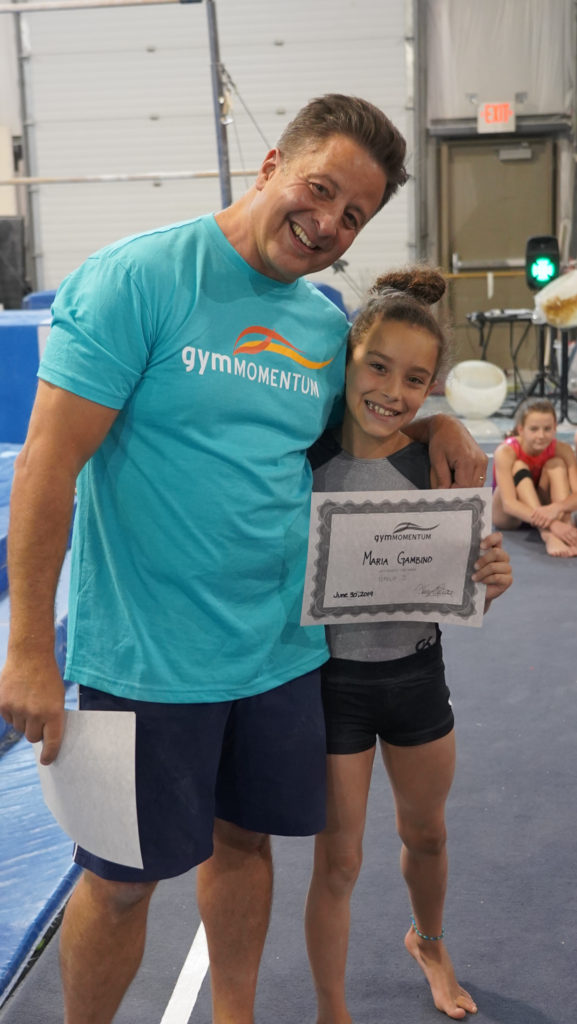
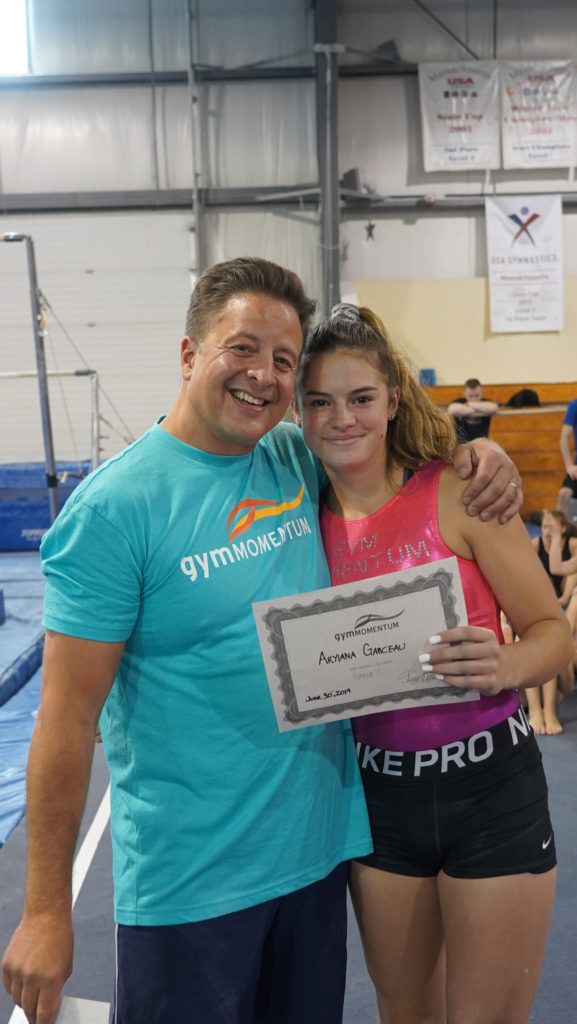
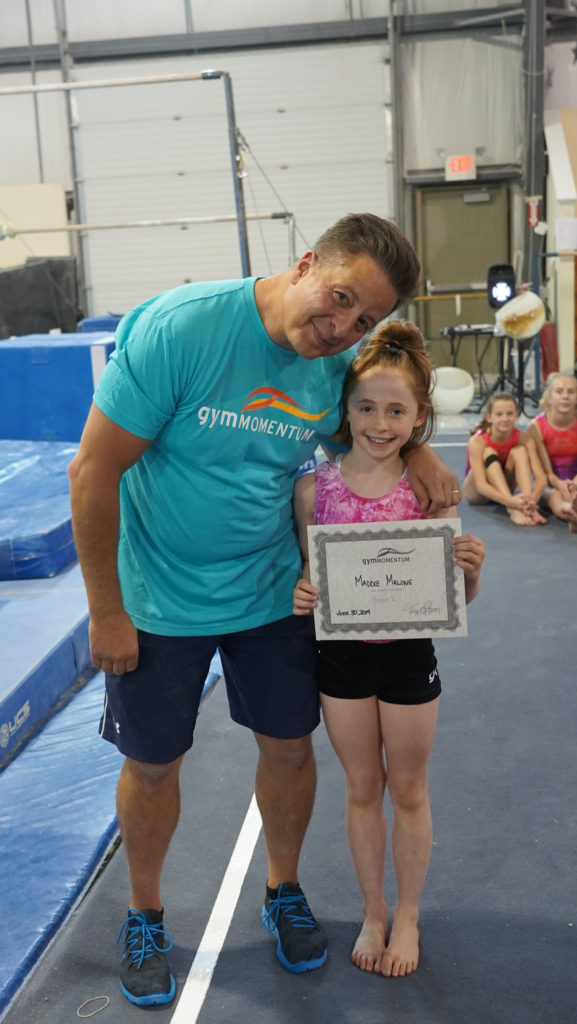
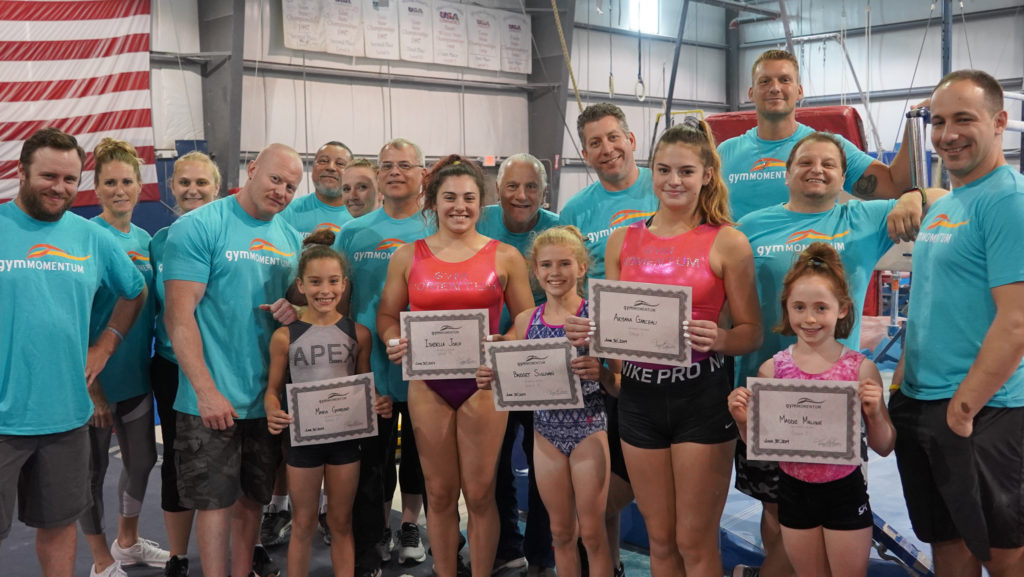
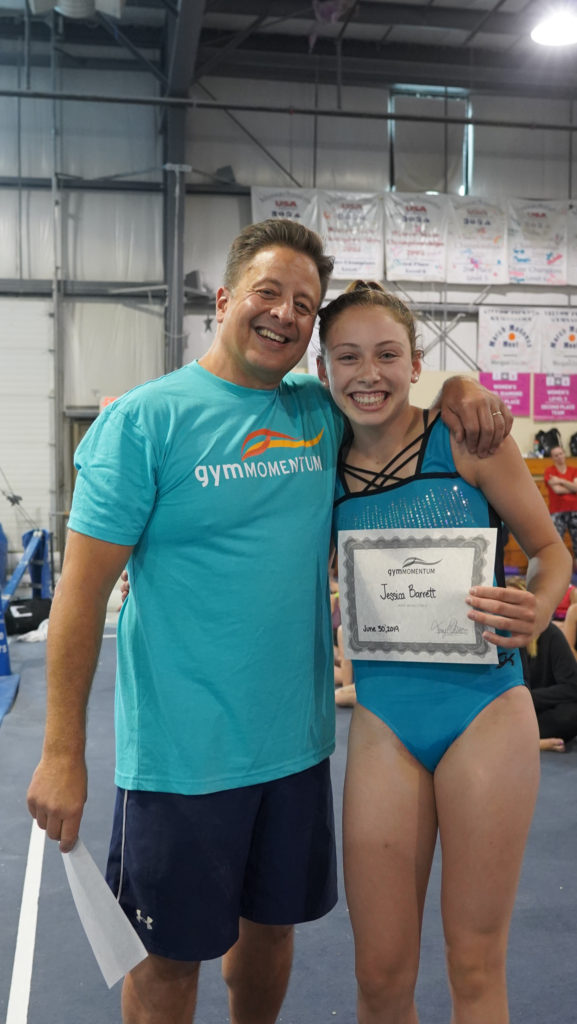
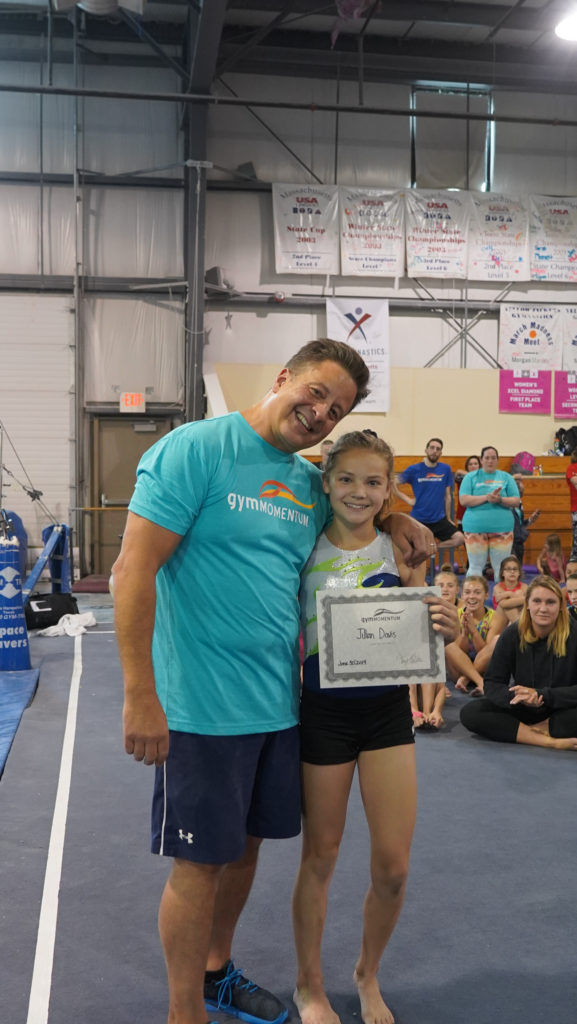
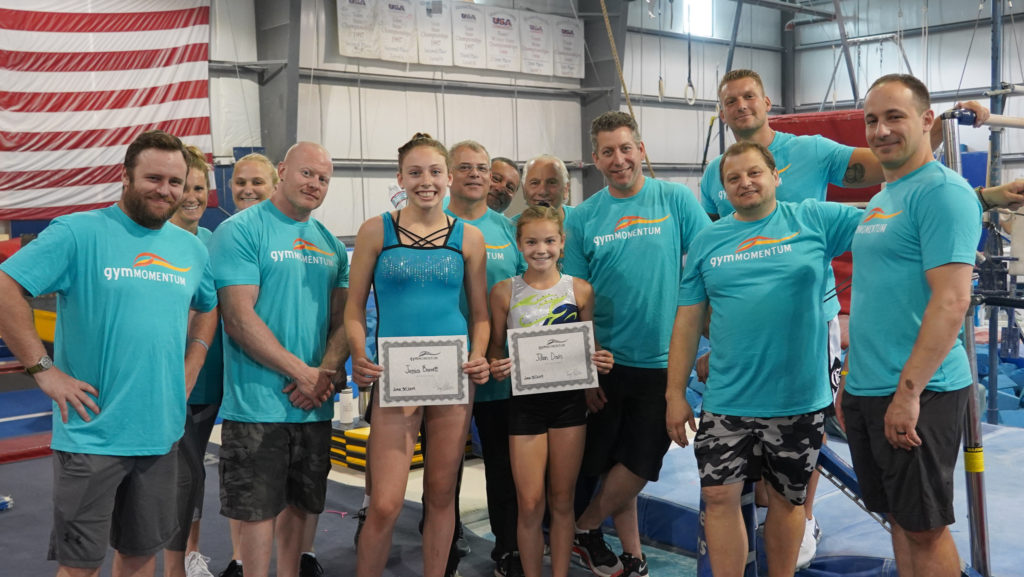
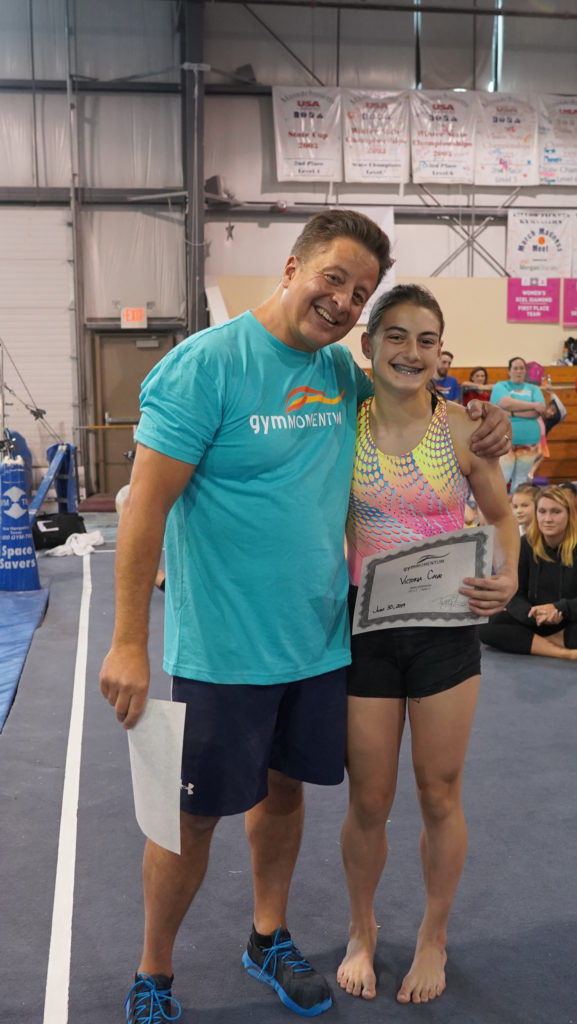
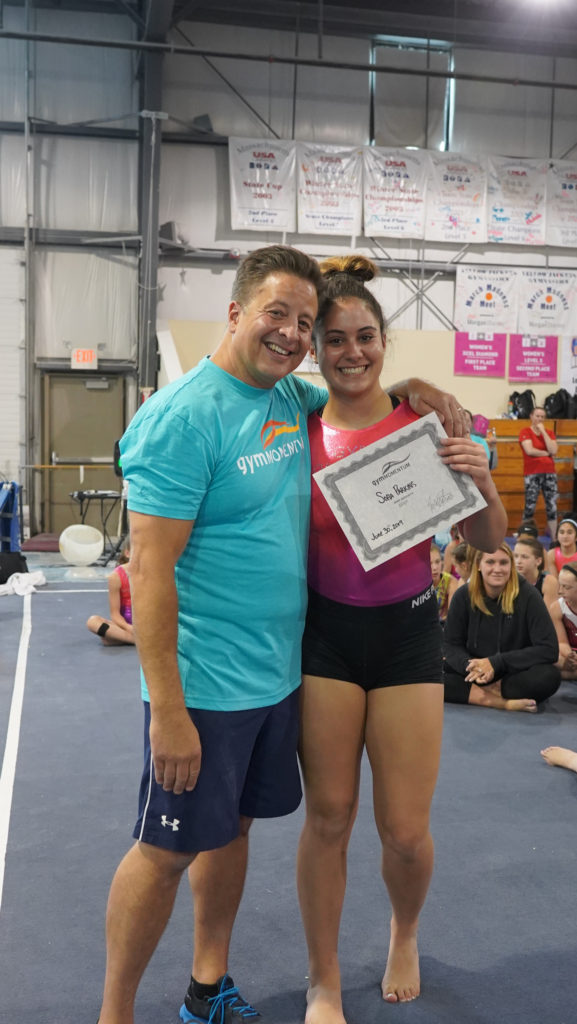
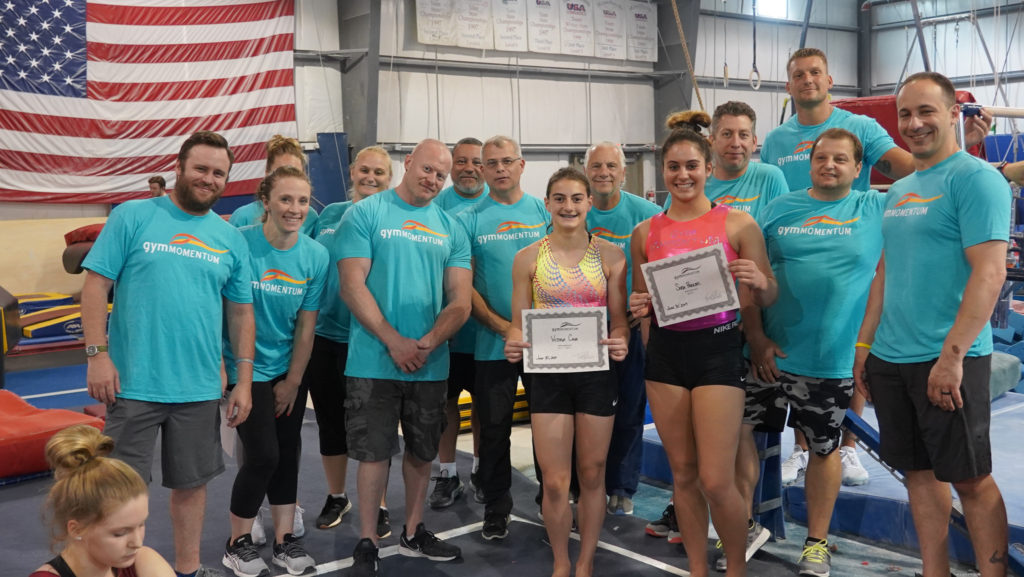
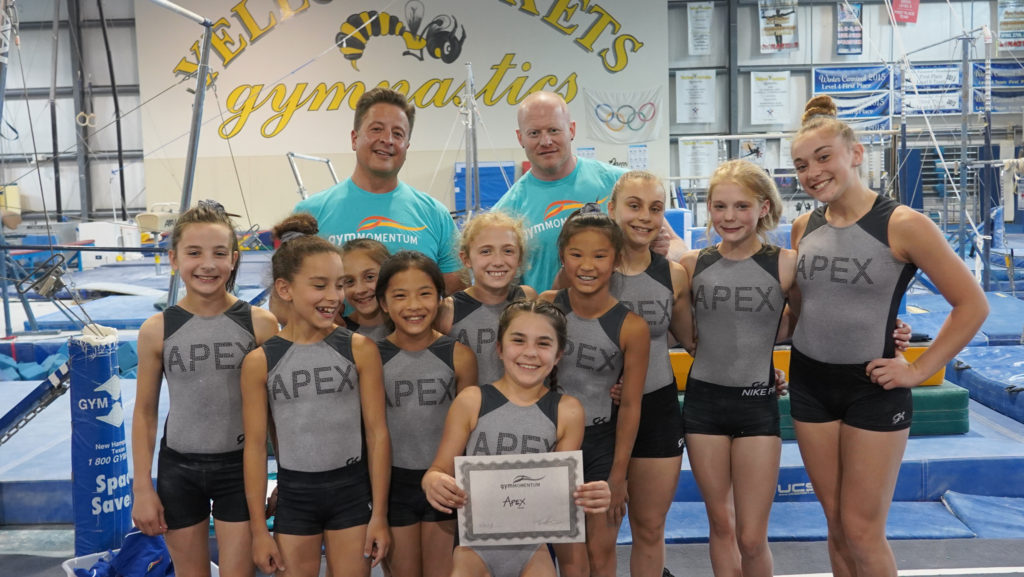
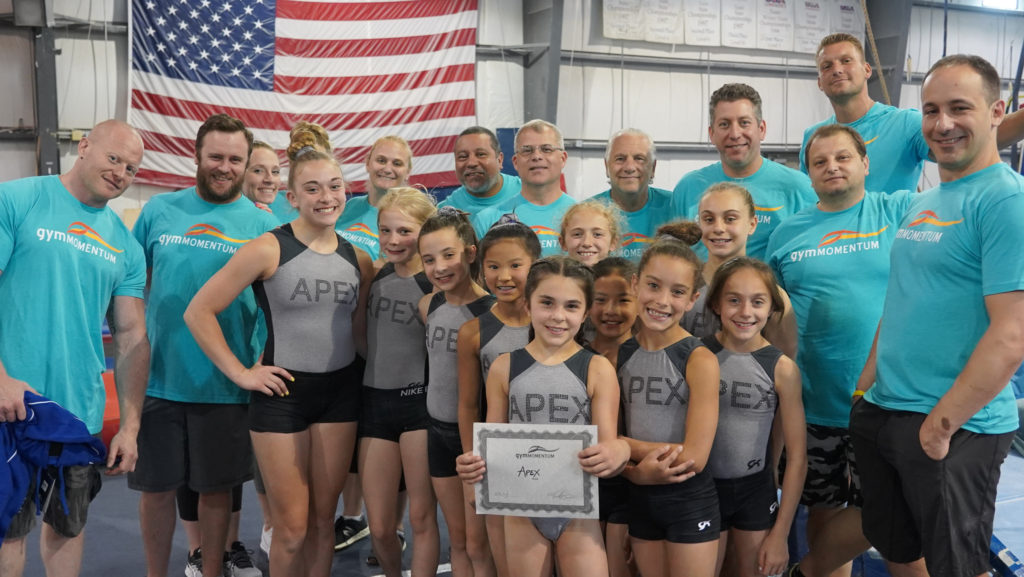
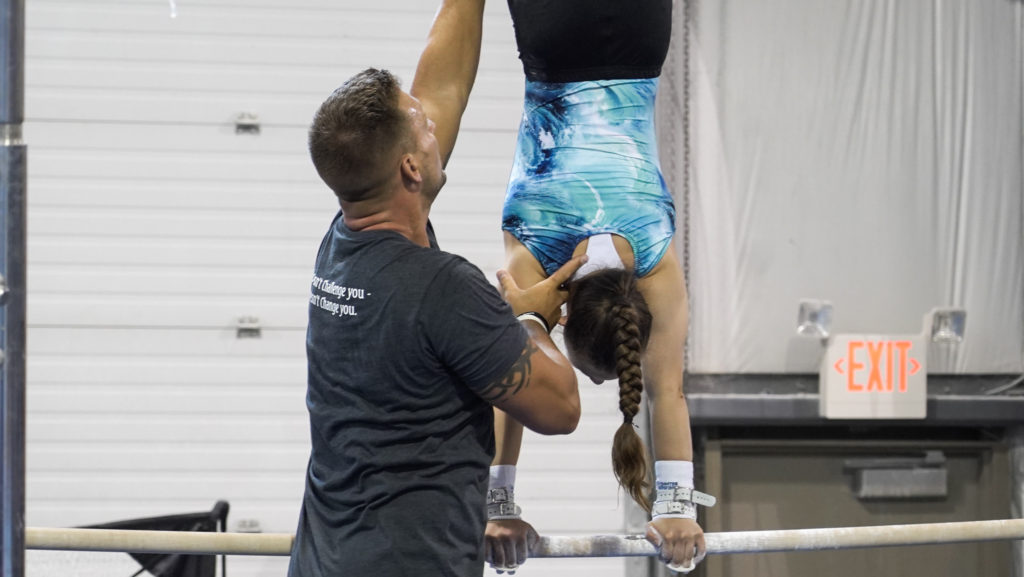
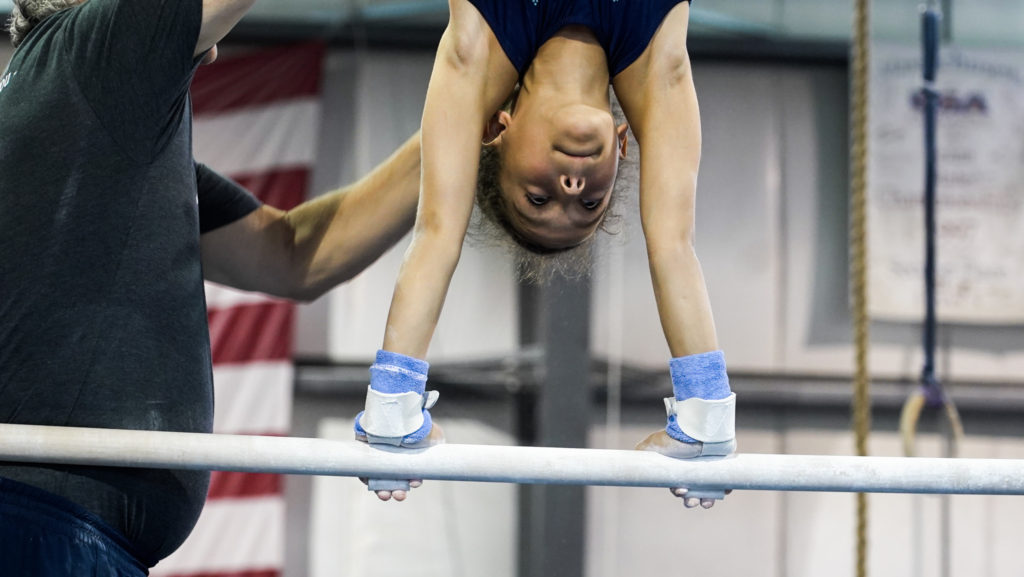
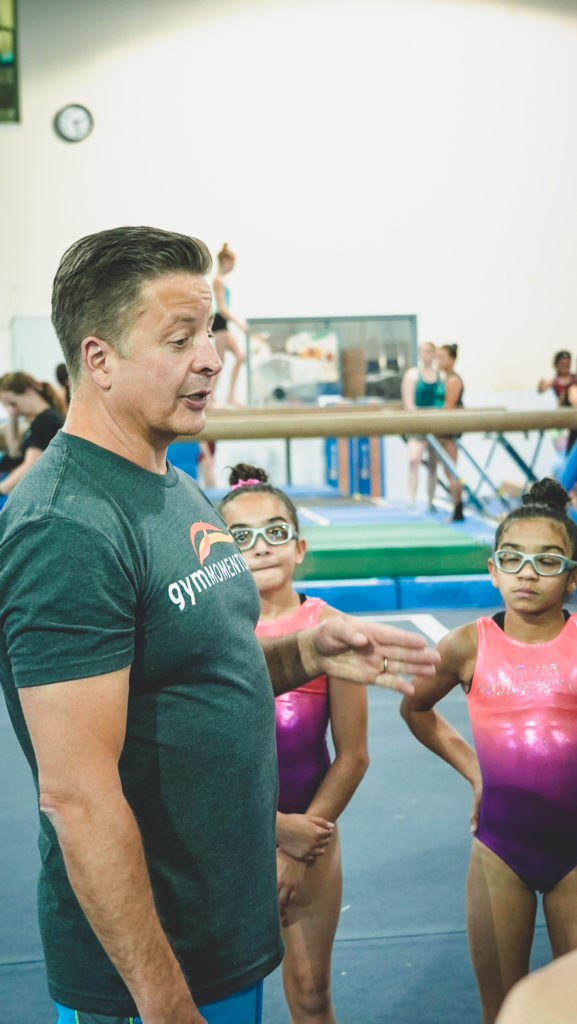
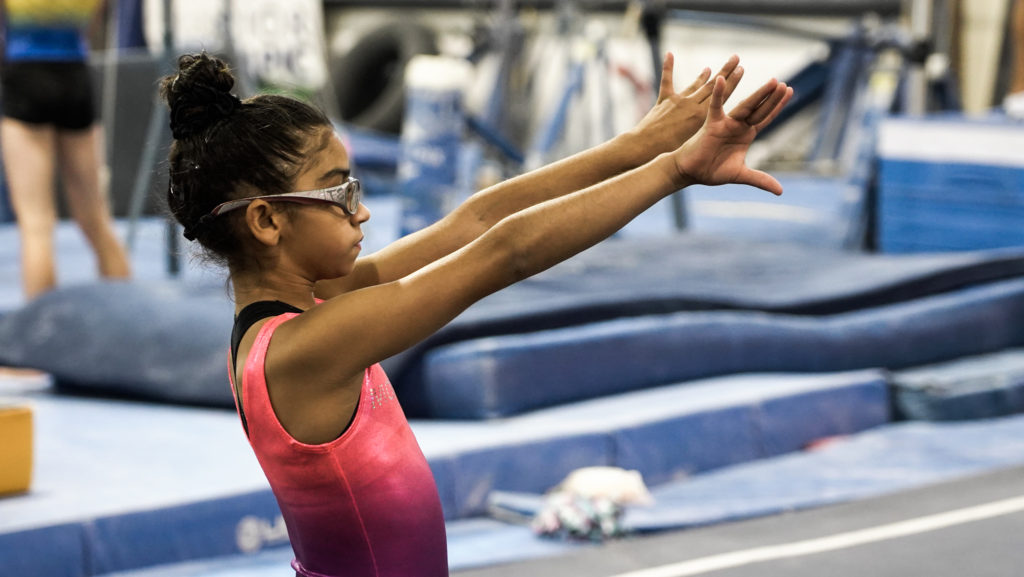
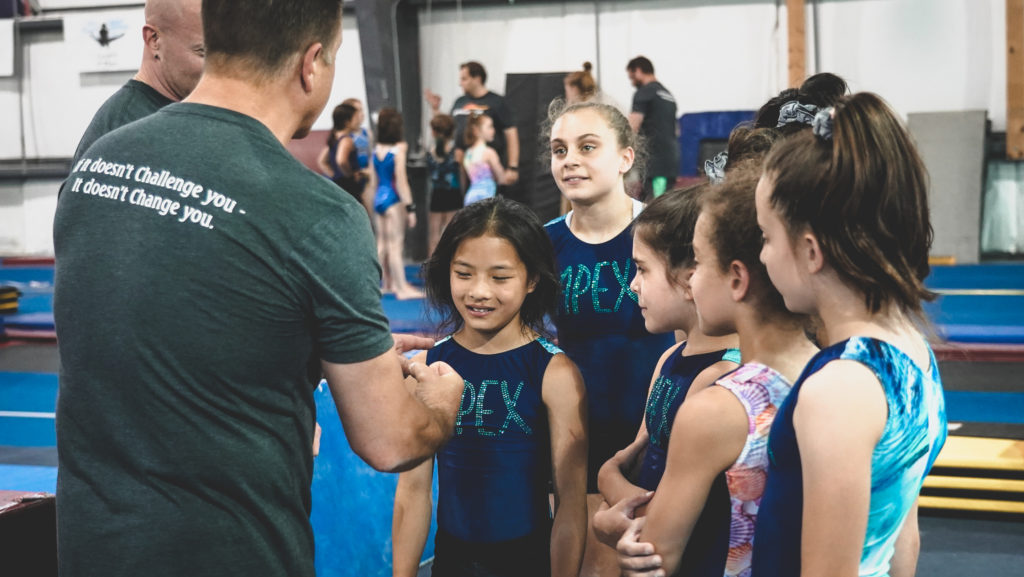
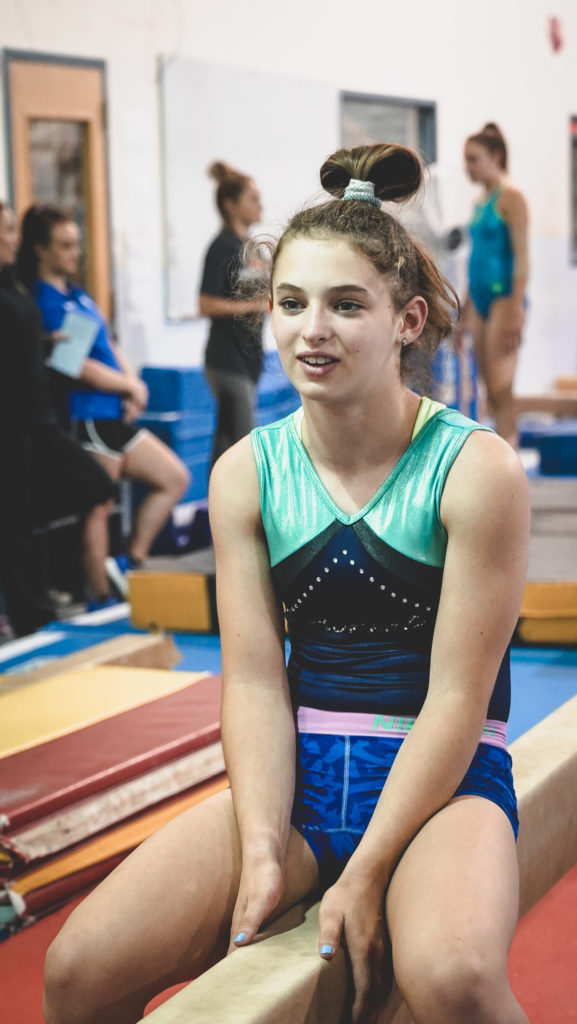
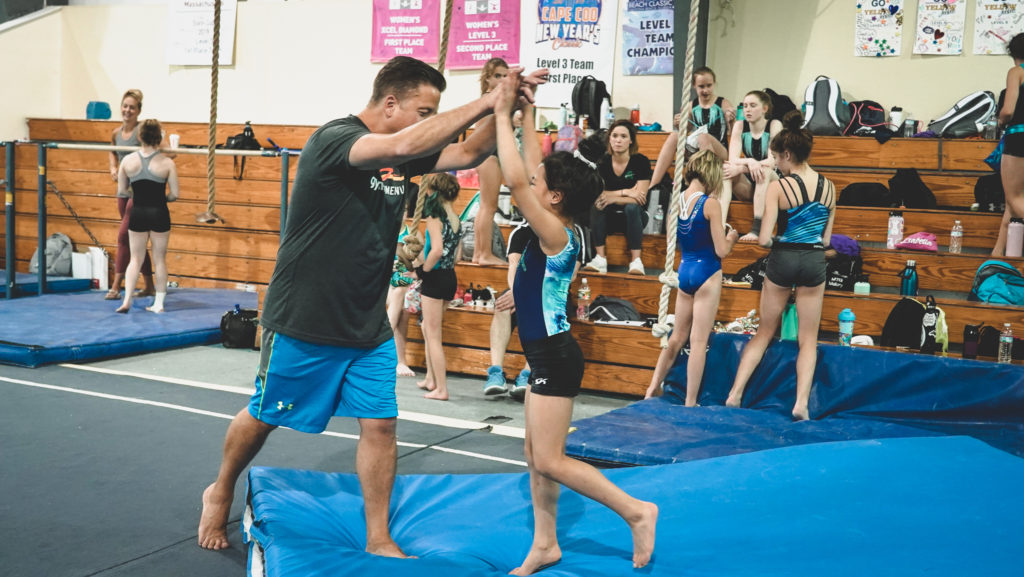
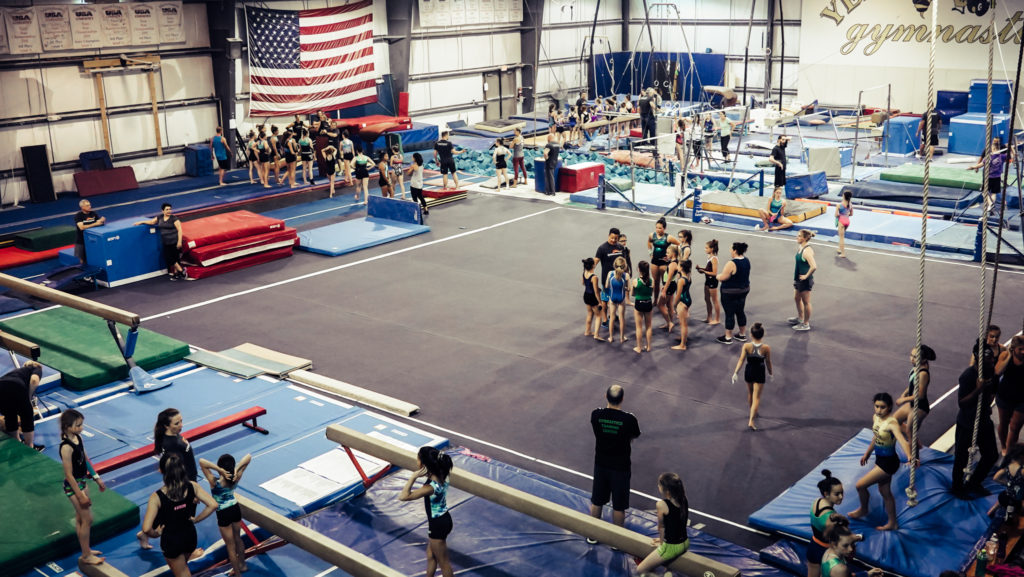
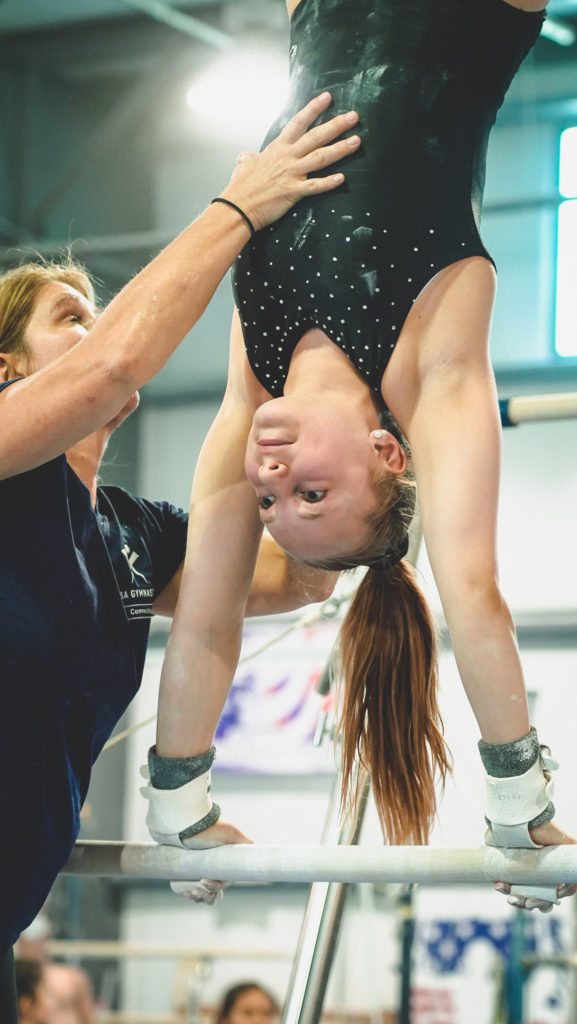
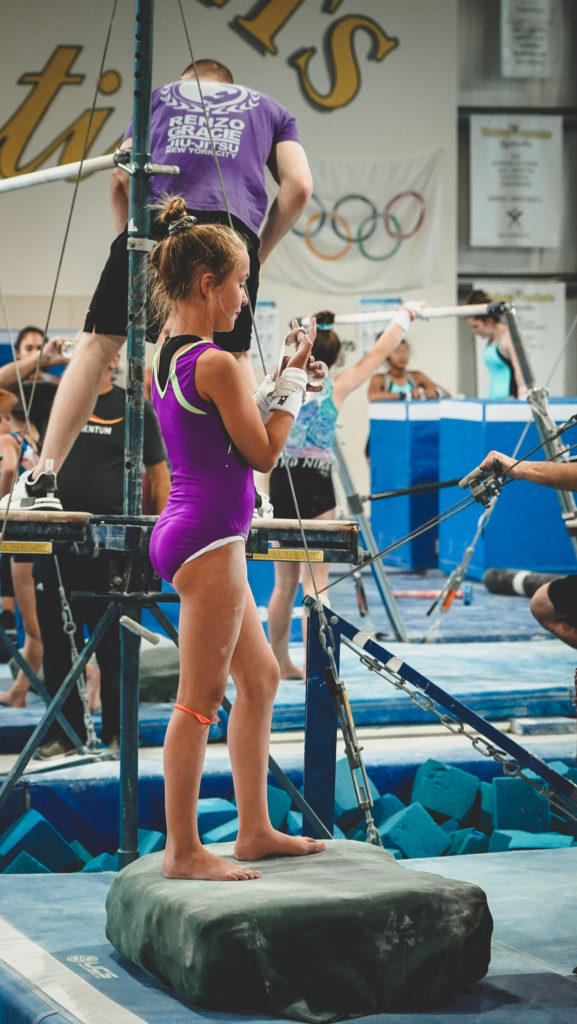
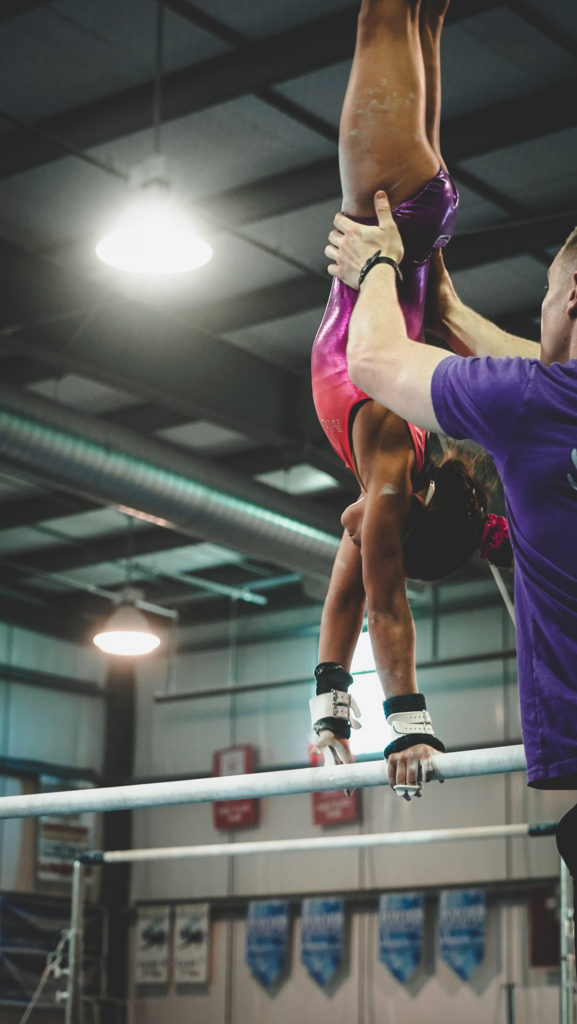
Photos of the Day: Gym Momentum Camp Day 2

















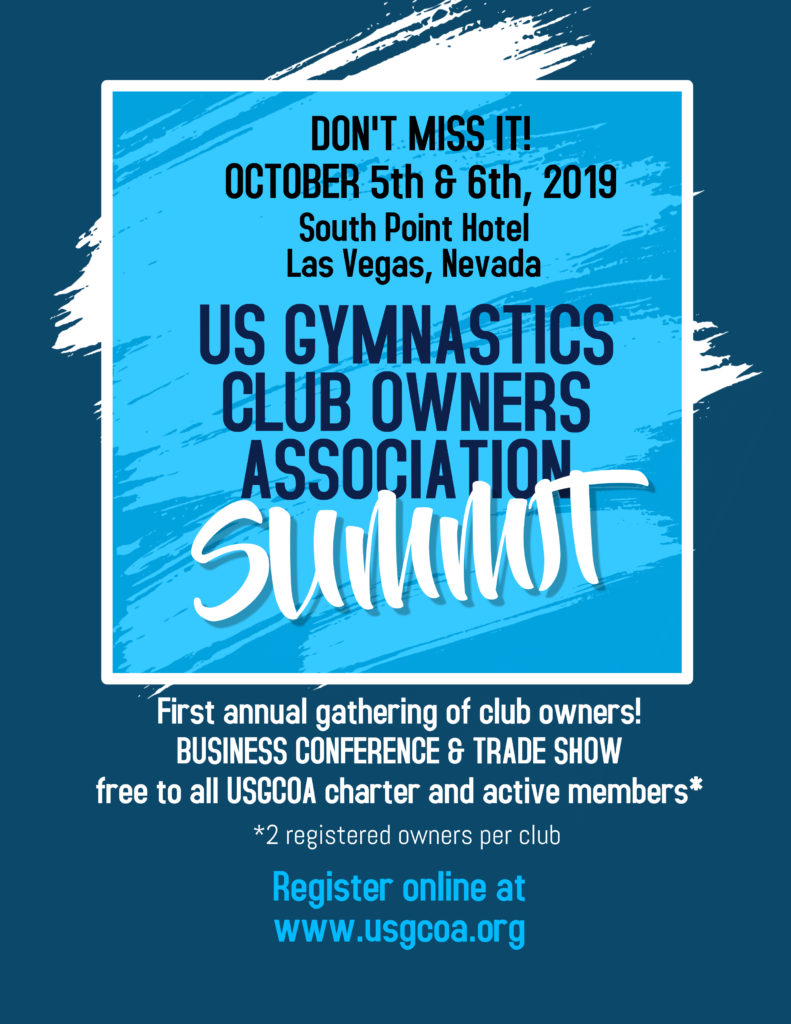
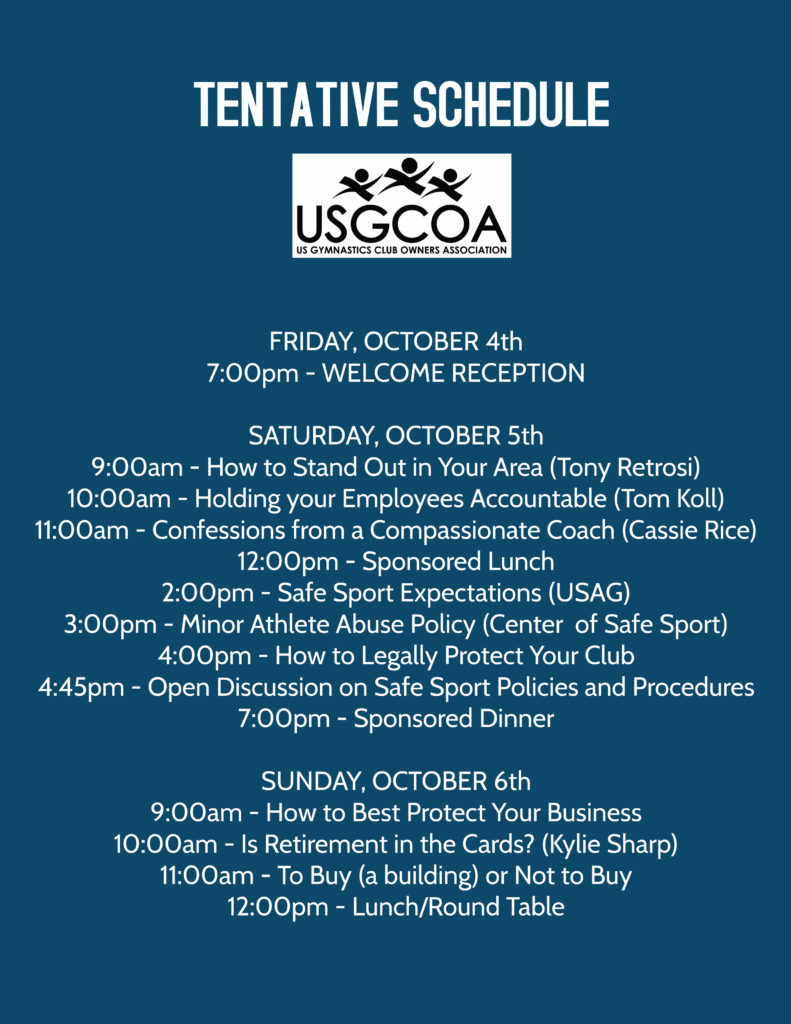
USGCOA SUMMIT. October 4-6. Las Vegas
Going The Extra Yard.
Last week I wrote about customer service. In gymnastics we need to do something to stand out against the competition. Whether that competition is another gym, another youth sport or recreation activity.
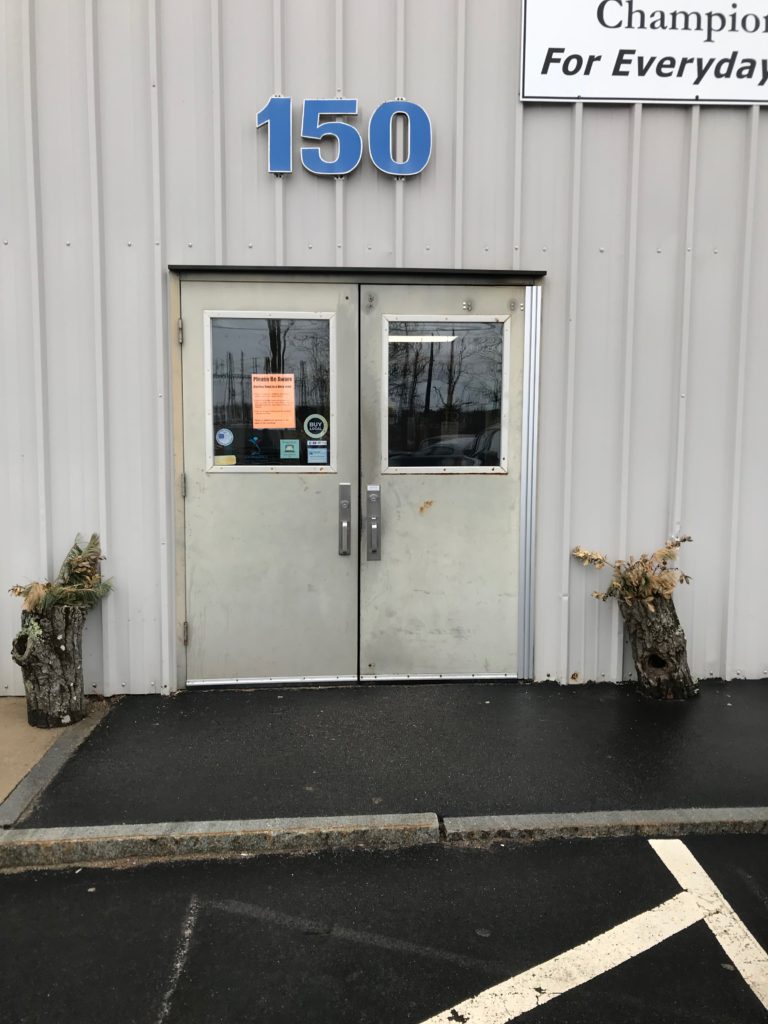
The other night while closing up the gym the front door wouldn’t close properly. I was able to figure out that a hinge had broken. We had had a pretty windy couple of days and I am sure the wind just slammed the door open breaking the hinge. I was able to get the door closed and secured and have a plan for opening the gym the next morning.
The door (and probably the hinge) are going on 25 years old. I knew I was going to need to replace the 2 doors in front. It being 9:30 PM I had to wait until morning to begin making my phone calls.
I got in touch with a company 2 towns away. All Door & Lock. Their receptionist said they would have someone there within 2-3 hours. Less than an hour later their tech came in. Took measurements, talked about what my options were for the door and then headed back to the shop to work up a quote. 45 minutes later I had a phone call that said the door I needed was going to take 4 weeks to come in. They knew that this was going to be a problem so they were sending a another tech back to the gym to jury rig the hinge so that we had a working front door.
When the tech showed up he got right to work doing his best at keeping the door mostly closed most of the time so that my customers did not freeze in out lobby. Although it says April on the calendar- It was snowing here!
The bill came today for the work done. I was not worried about the cost. It is simply the price of doing business. The bill was at least 20% LESS than what I thought it was going to be.
Now I am thinking- What can I do in my facilities to offer this kind of service?
- Make sure my customers are called/ e-mailed back in a timely manner
- Deliver what is expected When it is expected
- Find solutions instead of problems
- Offer a service that people are happy to pay because it exceeded their expectations
USAIGC/IAIGC Clarifications
USAIGC -IAIGC CLARIFICATION
FROM MARY – USAIGC-IAIGC TECHNICAL DIRECTOR
The DIAMOND division was introduced and voted upon at last year’s Worlds in Orlando by all clubs in attendance. The vote also remained OPEN for 6-8 weeks for any clubs not in attendance or for those who needed time to review and absorb all additional updates. The prior Bronze Diamond level was created to separate those stronger bronze level gymnasts who scored 35.8 twice during the season. NOW instated and in use is the DIAMOND division which is a level open to ANY gymnast. It does NOT have a score needed to enter it, just like any other division. It also does NOT have ANY new Special Requirements. ( as a matter of fact NO LEVEL HAS ANY NEW SPECIAL REQUIREMENTS) However there ARE new OPTIONAL elements that may be performed IN ADDITION TO the listed SR.in order to enhance the content of routines and help to differentiate gymnasts. NO SPECIAL REQUIREMENTS HAVE CHANGED.
The Diamond Division allows for a smoother transition from BRONZE TO SILVER.
IE: VAULT: options have been added ( all group 1 vaults with no more than 360 degree turn in post flight ( just like Silver) however …….. no 3.1 Yurchenko timer NOT
BARS: SAME AS BRONZE THEREFORE A BRONZE AA GYMNAST WOULD SPECIALIZE AND COMPETE SILVER BARS
BEAM: SAME SR AS BRONZE BUT MAY ALSO ADD AN ISOLATED ACRO FLIGHT SKILL SUCH AS ROUNDOFF, FORWARD OR BACK HANDSPRING DIVE ROLLS OR DIVE CARTWHEELS.
FX: SAME SR AS BRONZE BUT MAY ADD UP TO 2 SALTOS ( N0 TWISTS) BRONZE CANNOT DO SALTOS………THEREFOR NOW INSTEAD OF BRONZE ATTAINING A 35.8 TWICE AS IN THE PAST TO MOVE OUT TO BZ/DIAM THE BRONZE GYMNAST NOW WHO SCORES A 36.4 (WHICH IS .6 MORE!) ONCE BY APRIL 15th then they MUST MOVE TODIAMONDAND COMPETE IN THAT LEVEL AT STATES, REGIONALS AND WORLDS ****SEE PAGE 8 IN THE R&P IN RED PRINT
MARY
SAFE SPORT REQUIREMENTS for GYMNAST at REGIONALS and NATIONALS
FROM USA GYMNASTICS
The U.S. Center for Safe Sport has created a new requirement that all athletes, age 18 or older, must complete the U110 to be in the field of play. The course is free and must be completed prior to March 23, 2019. This is a mandate from the USOC for all National Governing Bodies, not just USA Gymnastics.
Please see below the message that was sent to the membership Monday.
USA Gymnastics will not begin auditing athlete membership records for compliance until April 23, 2019. This is after L9/10 Regionals but before E/W and JO Nationals. I DO NOT want to tell an athlete who qualifies to any post season Championship meets that she cannot compete in that competition. Please help me remind these athletes that this needs to be completed asap. I certainly don’t expect them to do this before this weekend’s competitions but definitely before the championship meets roll around.
Please share this messaging to any clubs, coaches or athlete that may reach out to you with any question or concerns or direct them to contact the Member Services Department directly at 800.345.4719 or via email atmembership@usagym.org.
| Every athlete receiving this email is impacted by the U.S. Center for SafeSport’s recent update to its education policy, in accordance with federal law, regarding USA Gymnastics athlete members who are 18 years of age or older. The U.S. Center for SafeSport mandates the SafeSport training requirements for all national governing bodies, including USA Gymnastics. The center requires all adult professional members of USA Gymnastics to complete the U110: SafeSport Course. The Center’s policy changes and the specific structure of USA Gymnastics requires that adult athlete members now must also complete this training. Effective immediately, all USA Gymnastics adult (18+) athlete members are required to complete the U110: SafeSport Course. The U.S. Center for SafeSport’s deadline for athlete compliance is March 23, 2019. The course is free and takes approximately 90 minutes to complete. USA Gymnastics has developed step-by-step instructions to help you to access and take the course. Click here for the instructions. Victims/survivors of any type of abuse may qualify, on a case-by-case basis, for an exemption from this education and training policy. Athletes may make their requests directly with the U.S. Center for SafeSport at ngbservices@safesport.org. The Center’s goal is to increase awareness of athlete safety, not only with you as an athlete member of USA Gymnastics, but also athletes in all amateur sports and affiliated organizations. The U.S. Center for SafeSport course is an important educational tool toward building a strong community effort for safety. Increasing awareness with you, our athletes, is a critical step in protecting you and the people around you. If you need assistance in registering for the course, please contact the Member Services Department at 800.345.4719 or via email at membership@usagym.org. We thank you in advance for completing the course by the deadline of March 23, 2019, and we hope this course will be a beneficial part of your continued safe sport education. |
A letter to the new CEO of USA Gymnastics
A letter to the new CEO of USAG;
I have heard that a new CEO has been chosen and that they are in the vetting and negotiating process. USAG has NOT been on a winning streak recently and I am hoping that we are going to turn this around.
Dear Madam (or Sir); February 13, 2019
The federation has faced a pretty rough few months and there are still rocky roads ahead. Although the growth of registered athletes, despite the recent scandal looks good. It is a reflection of where gymnastics was 6 years ago. The overall feeling inside and outside the gymnastics community is hard to read. I believe that the professional community of coaches and club owners has never felt more vulnerable. It is as if the whole country is waiting for the other shoe to drop. On the whole, I think we can safely assume we’ve weathered the current storm. However, while we can all be grateful for the recent signs of an upturn in our performance, I suspect the next year or two will hold many challenges.
Indeed, the stabilization of our situation offers only a brief reprieve, if any at all. Many of the clubs in the country are still on fragile ground. We operate in an industry that still has many needs. The needs of the gymnasts, parents, coaches, and club owners. The need to perform exceptionally well at international competitions, the need to continue to develop new talent in all the disciplines and build a place where they can train successful and safely. The need to market each discipline. The need to secure sponsors and Television contracts. All this AND we going to be embroiled in lawsuits for at least the immediate future.
It is my feeling that the gymnastics community needs a leader we can rally behind. Someone who can give us hope that we will get through this together. If the professional community doesn’t believe you (or in you) I do not feel that USAG will be long for this world.
In short, you’ll have your hands full indefinitely.
The pressure of achieving results: Meeting targets of any kind can cause immense pressure. As CEO, you will be constantly conscious of these targets…in fact, they will almost consume you.
Solution: Set realistic targets for yourself, for people in the office and for our teams. Assess what’s doable and what’s not. Have a core group of people you can rely on but involve everyone in the plans from day one, so that they are on the same page, and aware of what needs to be done. You will need to deploy a diverse set of people with different competencies to achieve the targets… Successful gymnastics clubs always have individuals with complementary competencies and skills, rather than similar ones, not only does that make a well rounded program in the gym but they are also then able to view and solve problems with a different approach. You will need to get people “on the ground” involved. It can be a motivating force moving toward a shared vision, and not just a gold medal or number
The pressure of always being right: As CEO you will be constantly looked upon as a role model, someone who will not err or fumble, someone who is fair and looks at a problem from different angles. This pressure will often put you in doubt — doubt about the direction the federation is moving in, the decisions you’re taking, and your own capabilities and worth as a leader. ‘To be or not to be’ was not just a dilemma for Hamlet…it’s a dilemma every coach goes through. You may even feel reluctant to continue in your position…
Solution: Realize that all the burden of responsibility is not your own. As CEO, you are largely a facilitator, and you should focus instead on growing your teams, rather than doing everything yourself. It is not essential for you to know and direct on every detail of every aspect … All you need to do is focus on the vision set out, and then nurture great teams to execute them. The more you empower those around you, the less stress you will feel.
Grow a circle of advisors who you can reach out to when in doubt. These should be your confidantes…those you can pour your heart out to, and share your problems with. Take ideas and solutions from them and find strength from their support.
Many people have called for USAG to become more Transparent. What is Transparency? Can you have it without accountability? Too often, leaders don’t know what accountability looks like, much less how to implement accountability in an organization. In order to set the team at USAG on the path to greater accountability and greater results there are a few things that I have found have helped me in my businesses.
Set clear expectations.
Achieving results requires clarity around expectations and outcomes–so it’s on you as a leader to affirm (and reaffirm) that everyone understands what they need to do to achieve success.
Be realistic about what people in the office or out in the field can handle. Avoid overburdening them just to get the results you want, when you want them.
Measure and report progress.
Doc Massimo told me that all my goals as an athlete and as a coach should be clear and measurable. If I can’t measure them, they shouldn’t be a goal. You will need to be transparent and open when measuring and reporting progress. The board may need to be reminded that a change in priorities may mean a change in the Key Results in the short term that will define success for the organization in the long term.
Give and receive feedback.
Keeping the feedback loop open is crucial to great leadership. In my gyms I do not want “Yes men”. I need people around me who can give and take feedback. I have a policy of “catch them doing something right”. It’s easy to fall into the trap of giving feedback only when something goes wrong, but that conditions employees to associate feedback with failure or punishment. And always ask for feedback as often as you give it.
Encourage risk taking.
Collaboration and innovation is fostered in an environment where risk-taking is encouraged–even when a project or action isn’t guaranteed to succeed. I have written many articles on Failure being a prerequisite for success. In too many organizations, the fear of punishment strongly deters risk-taking. Sometimes the only way to achieve success is to take risks along the way. Build a culture of trust, collaboration, and transparency by letting those in the National office or in the field take risks and learn from failures. Encourage people to engage in creative problem-solving so they can learn what it feels like to overcome obstacles together.
Inspire gymnastics professionals to take ownership.
Accountability is all about ownership. Right now I think about 80% of the coaches out there want the National office to swoop in and fix all the problems. When the office does make a decision all they do is complain. There needs to be accountability through out the gymnastics community. A professional who skirts their responsibilities, expecting others pick up the slack, does little to encourage a proactive, dynamic culture. Everyone must be focused by ensuring that everyone is on board with the federations objectives.
These are just a few of my ideas to help you keep your balance and beat the pressures you will face daily as CEO. Of course there will be many more, as the leadership role is vast…
Today’s times are rightly described as VUCA — volatile, uncertain, complex and ambiguous. These factors will play havoc in the life of the leader too.
But as CEO, if you decide to face these situations with calm and equanimity you will be an inspiration to many.
Tony Retrosi
Want to Raise Successful Kids? Science Says Teach Them Any 1 of These 7 Things. Or better yet, help your kids learn them all.
I recently read this in INC Magazine. Definitely something to share at your gym.
How can you teach your kids to be successful — and more important, live happy and fulfilled lives?
1. Teach them to seek small wins first.
According to research, gaining agreement has an effect — even if only over the short term.
Teach your kids that, instead of jumping to the end of their argument, they should start with statements or premises they know their audience will agree with. Teach them to build a foundation for further agreement.
A body in motion tends to remain in motion, and that also applies to a head that nods in agreement.
2. Teach them to focus on positive outcomes.
While it’s tempting to use scare tactics, positive-outcome statements tend to be more persuasive. (Researchers hypothesize that most people respond negatively to feeling bullied into changing a behavior.)
So if your kids are trying to create a change, tell them to focus on sharing the positives of that change. They want to take their audience to a better place, not tell their audience what to avoid.
3. Teach them to dare to take a stand.
You would assume data and reasoning always win the day, right? Nope. Research shows humans prefer cockiness to expertise. We naturally assume confidence equates with skill.
Even the most skeptical people tend to be at least partly persuaded by a confident speaker. In fact, we prefer advice from a confident source, even to the point that we will forgive a poor track record.
So teach your kids to be bold. Teach them to stop saying “I think” or “I believe.” Teach them to stop adding qualifiers to their speech. Tell them, “If you think something will work, just say it will work. If you believe something will work, just say it will work.”
Teach your kids to stand behind their opinions — even if they are just opinions — and to let their enthusiasm show. People will naturally gravitate to their side.
4. Teach them to understand the way others prefer to process information.
A fellow supervisor used to frustrate the crap out of me. (Read the next paragraph to see how that swearing thing works.)
I was young and enthusiastic and would burst into his office with an awesome idea, lay out all my facts and figures, wait breathlessly for him to agree with me — and he would disagree.
Every time.
Finally — it took way longer than it should have — I realized that he wasn’t the problem. My approach was the problem.
Not to go all Myers-Briggs on you, but he was an “I.” He instinctively wanted time to think. He liked to process. By demanding an immediate answer, I put him on the defensive, which led him to fall back on the safe choice: Saying “no.”
So I tried a different approach. “I have an idea that I think makes sense,” I said, “but I feel sure there are things I’m missing. If I run it by you, could you think about it for a day or two and then tell me what you think?”
He loved that. One, I implicitly showed I valued his wisdom and experience. Two, I implicitly showed I didn’t just want him to agree. I really did wanted his opinion.
And most important, I gave him time to process my idea his way.
Teach your kids not to push for instant agreement when an individual’s information-processing preference makes that unlikely.
And teach them not to ask for thought and reflection if their audience loves to make quick decisions.
5. Teach them not to be afraid to show a little emotion.
Cursing for no reason is just cursing. But say a team needs to pull together immediately pull together.
Tossing in an occasional — and heartfelt — curse word can actually help instill a sense of urgency because it shows you care. (And of course it never hurts when a leader lets a little frustration or anger show, too.)
In short, teach your kids to be themselves. Authenticity is always more persuasive. If your teenager feels strongly enough to slip in a mild curse word, he or she should feel free (in the right setting, of course). Research shows they’re likely to be a little more persuasive.
(And don’t tell me your teenagers never curse. Didn’t you?)
6. Teach them to share the bad with the good.
According to University of Illinois professor Daniel O’Keefe, sharing an opposing viewpoint or two is more persuasive than sticking solely to your argument.
Why? Very few ideas or proposals are perfect. Your audience knows that. They know there are other perspectives and potential outcomes.
So teach your kids to meet objections head on. Tell them to talk about the things their audience may already be considering. Teach them to discuss potential negatives and show how they will mitigate or overcome those problems.
Teach your kids to talk about the other side of the argument — and then do their best to show why they’re still right.
7. Teach them to not just say they’re right. Teach them to be right.
Persuasive people understand how to frame and deliver their messages, but most important, they embrace the fact that the message is what matters most.
Teach your kids to be clear, concise, and to the point. Teach them to win the day because their data, reasoning, and conclusions are beyond reproach.
What’s true for your kids applies to all of us: The art of persuasion should always be the icing on a logical cake.
USGCOA Report from Board of Directors Meeting
Report from USGCOA Board of Directors Year End Meeting.
As a new organization we are still trying to get things off the ground while making sure bylaws and Rules and Policies are in-order. I will post minutes here as soon as they are approved.
The agenda was pretty full but truthfully nothing exciting.
Our priority is the safety and well being of all those involved in the sport of gymnastics. Our goal remains to be a transparent organization created to serve as a voice, advocate, and partner for owners of gymnastics clubs located in the United States.
This organization is also open to presidents/directors of community and non profit organizations like YMCAs, JCCs, etc. For the record, we were asked if we could take on clubs from other countries (Canadian clubs contacted us). Unfortunately we cannot. It complicates our 501c3 status.
With the new makeup of the USA Gymnastics Board of Directors (something mandated by the USOC) the voice of coaches and club owners in our sport has been diminished. Unlike most other Olympic sports, the gymnastics community is by and large comprised of privately owned clubs. Our livelihood is affected by many of the decisions made by USOC, USA Gymnastics, and US Congress.
The board is all in agreement that we want USA Gymnastics to weather this current storm, but our organization will not be affected by decertification. We do not want this to happen. But, if it does, we will carry on with our role supporting gymnastics clubs and trying to be the voice to what ever comes next.
There is a rumor out there that the USGCOA is positioning itself to take over USA Gymnastics or become the new National Governing Body. This is NOT why we started this and not what the plan is. Our current structure and bylaws do not even take this into account.
I have been contacted by more than a few people trying to understand this organization. Some wanting the organization to move faster, some wanting it to slow down and some wanting it to go away. There are times I get frustrated that we are not moving fast enough and getting things done. The reality is that the organization is starting at ZERO. It started as an idea. A number of clubs from through out the USA believed in the idea enough to put up $1000 to get the organization off the ground. As you can imagine there is a lot of leg work involved. Everything from the design of the logo and getting the website up to, 501c3 status, legal and financial compliance. None of it is terribly exciting or what any of us really want to do- but it needs to get done just the same.
At our October meeting we wrote out the bylaws, job descriptions, term limits etc. Regional reps will be elected by their regions but we needed to stagger the the first reps so that their is continuity on the board.
Other things we covered were the dates of elections, adding industry and supplier members, date for USGCOA summit.
A great deal of time was spent on cleaning up language (so that it was easily understood) and making sure different parts of the bylaws were in agreement.
Cassie spoke eloquently and passionately that each of us must model the behavior we want the rest of the country to follow. To not bully or intimidate the gymnasts we work with.
Committees were formed and an e-mail will be sent out to membership to get their input and encourage their participation on committees. If you would like to be part of a committee – please contact us.
- USGCOA summit- Sandy and Kim
- US Congress safe sport act– Tony
I have stated before that the strength of our organization is the diversity of our board. We have representatives for each of the 8 regions (currently based upon USAG women’s program). We have representatives who have coached at the Olympic level and coaches who work primarily in recreational programs. TOM KOLL (yes- That TOM KOLL) has recently joined the board as the Program Advisor.
As soon as the minutes are approved (reality is that will be after the first of the year) I will post the minutes.
The Bylaws have been reviewed and approved.
For the record- NO USGCOA funds have been used for the transportation, housing or meals (other than lunch during meetings) at Board of Director meetings. USGCOA secures and pays for the meeting space. Every Board member pays their own travel, lodging and food. At sometime in the future we hope that funds will be used to reimburse these expenses. The Board does not feel we are there yet.