Sometimes the most important decision a leader makes is knowing when to stop.
When the FAA shuts down air traffic because of a safety concern, the consequences are enormous. Flights are delayed, passengers are stranded, schedules fall apart, and thousands of people are affected by a decision made to prevent a potentially larger problem.
It’s a dramatic example of what happens when a complex system can no longer operate with an acceptable level of risk.
As I followed the discussion about the airspace shutdown, I couldn’t help thinking about gymnastics.
No, running a gymnastics practice isn’t quite the same as managing the national airspace. Although, if you’ve ever tried to organize 40 team gymnasts, six coaches, 2 recreational classes , and a parent who wants to know why their daughter isn’t learning a double back yet, you might see some similarities.
Both involve complicated systems. Both require communication, planning, and constant adjustments. And both can go terribly wrong when leaders fail to recognize warning signs.
There are three important lessons here for coaches and educators.
1. Sometimes You Have to Stop Everything
A system-wide shutdown is an extraordinary response. It may be necessary to contain a risk when leaders cannot be confident that normal operations are safe.
In gymnastics, we face smaller versions of this decision all the time.
- An athlete is exhausted.
- A skill or drill isn’t working.
- A workout is just falling apart.
- The emotional temperature in the gym is rising.
What do we do?
Too often, we push harder.
One more turn. One more repetition. One more correction.
There is an old saying that I’ve always appreciated:
“The number one rule when you find yourself in a hole is to stop digging.”
It sounds simple enough. Yet how many times have we watched a coach continue down the wrong path simply because they had already committed to it?
The workout isn’t going well, but it’s written on the lesson plan. The athlete is exhausted, but there are still five assignments left. The coach knows something isn’t right, but changing direction might look like admitting a mistake.
So we keep digging. And the hole gets deeper.
One of the ideas I explore in my new book, Coaches as Educators, is the importance of reading the room.
A lesson plan is a tool, not a contract.
You need to recognize when your athletes are physically, mentally, or emotionally unable to accomplish what you’ve planned. Sometimes that means adjusting the workout. Sometimes it means changing events. Sometimes it means ending the event and starting conditioning early. Not as a punishment but because you need to STOP DIGGING.
The point is that changing direction isn’t failure.
The goal isn’t to prove that your original plan was right. The goal is to help your athletes succeed.
2. Understand the System, Not Just the Skill
When a complex system breaks down, it can expose problems that existed long before the actual failure.
Aging equipment. Poor communication. Inadequate preparation. Small warning signs that were overlooked because everything appeared to be working.
Sound familiar?
A coach can understand the mechanics of a back handspring perfectly and still fail to understand why an athlete can’t perform one.
Maybe they’re tired. Maybe they’re afraid. Maybe they had a terrible day at school. Maybe they’ve lost confidence. Or maybe the progression we chose simply isn’t appropriate for that athlete.
The problem isn’t always where we see the mistake.
In Coaches as Educators, I spend a great deal of time discussing communication, emotional intelligence, and the importance of understanding the individual athlete.
A gymnast is not simply a collection of physical skills. They are a person operating within a much larger system. And so are we.
If one gymnast is struggling, we probably need to look at that gymnast. If the entire group is struggling, we probably need to look at ourselves.
I’ve walked into the gym with what I thought was a brilliant workout. Everything was planned. Every station had a purpose. Every assignment built toward the next.
Then reality showed up. The athletes were tired. The focus was non and the energy was terrible. Nobody seemed particularly interested in participating in my brilliant plan.
At that point, I had two choices.
I could force the workout because I had spent time writing it. Or I could recognize that the system wasn’t responding the way I expected and make an adjustment.
Experience has taught me that the second option is usually more productive.
It has also taught me that my brilliant plans aren’t always quite as brilliant as I think they are.
3. Leadership Means Recognizing Risk Before It Becomes a Crisis
This is where I believe the most important lesson lies.
A shutdown may be the correct safety decision. It does not automatically mean leadership has failed. But it should prompt an examination of what happened before the shutdown became necessary.
- Were there warning signs?
- Did people recognize them?
- Were concerns communicated?
- Did anyone have the authority, or the courage, to act?
These questions are just as important in a gym as they are in any large organization.
In my book, I discuss leadership as something much more meaningful than simply being the person in charge.
A leader creates an environment where information flows freely.
- Can your assistant coaches question your decisions?
- Can an athlete tell you they’re afraid?
- Can a young coach admit they don’t understand something?
- Can someone say, “I don’t think this is working,” without worrying about the consequences?
If the answer is no, you have a problem. And you may not know how serious that problem is until something goes wrong.
Silence is not the same as agreement. And compliance is not the same as understanding.
One of the most dangerous situations in any organization is when the person in charge believes everything is fine because nobody is telling them otherwise.
That isn’t leadership. That’s operating without reliable information.
⸻
It’s More Than Just a Cartwheel
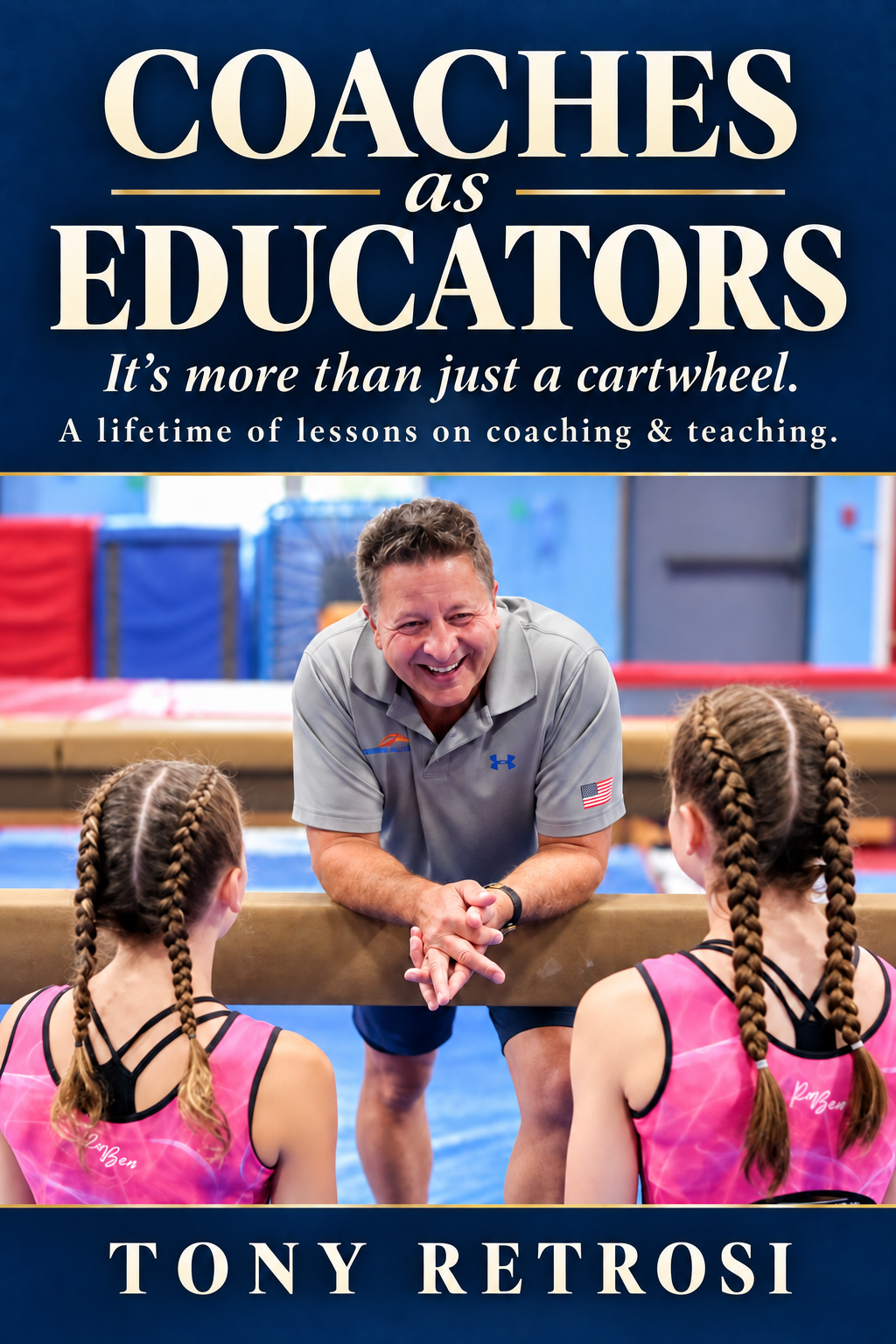
After more than four decades in gymnastics, I’ve come to believe that our greatest responsibility isn’t simply teaching skills. It’s understanding people, building trust, communicating effectively, and creating environments where athletes can succeed.
Throughout the book, I share stories, lessons, mistakes, and practical tools I’ve collected while coaching athletes and working with coaches around the world.
The themes in this article connect directly to several sections of the book:
- Reading the Room: Recognizing when to change the plan and understanding what your athletes need.
- Communication and Emotional Intelligence: Listening, observing, and understanding what isn’t always being said.
- Leadership: Building trust, encouraging honest feedback, and taking responsibility for the environment we create.
- The Coach’s Toolbox: Having multiple approaches to solving problems instead of reaching for the same solution every time.
The English e-book is available now, with the paperback edition arriving MONDAY November 16. An Italian edition is planned for January, with a Spanish edition to follow.
I wrote this book for gymnastics coaches, but I believe the lessons apply to teachers, administrators, business leaders, and anyone responsible for helping others learn and grow.
Reading a book won’t automatically make someone a better coach. Neither will attending a lecture or listening to a podcast.
Those things can give us ideas.
Putting those ideas into practice is what makes us better.
Words are easy. Action is where it matters.
And sometimes the first action we need to take is simply to stop digging.


