The future of gymnastics, artificial intelligence, and why I’m not worried about being replaced by a robot. For years, in my lectures and presentations, I have been telling coaches that the way we judge gymnastics is going to change. Dramatically.
I have predicted that eventually our current system of judging will largely be replaced by technology. Not because judges are bad people. I have many friends who are judges. MY MOTHER WAS A JUDGE! Some of them are even nice people.
But because technology is getting better at doing something that humans have never been particularly good at: being completely objective.
We have already seen technology change officiating in sports like tennis. Electronic line calling can determine whether a ball is in or out without relying on a human standing on the sideline squinting at a ball traveling over 100 miles per hour.
Gymnastics is heading in the same direction.
The Robots Are Coming. And They Have a Code of Points.
At the 2026 World Championships in Rotterdam, artificial intelligence took another significant step into our sport.
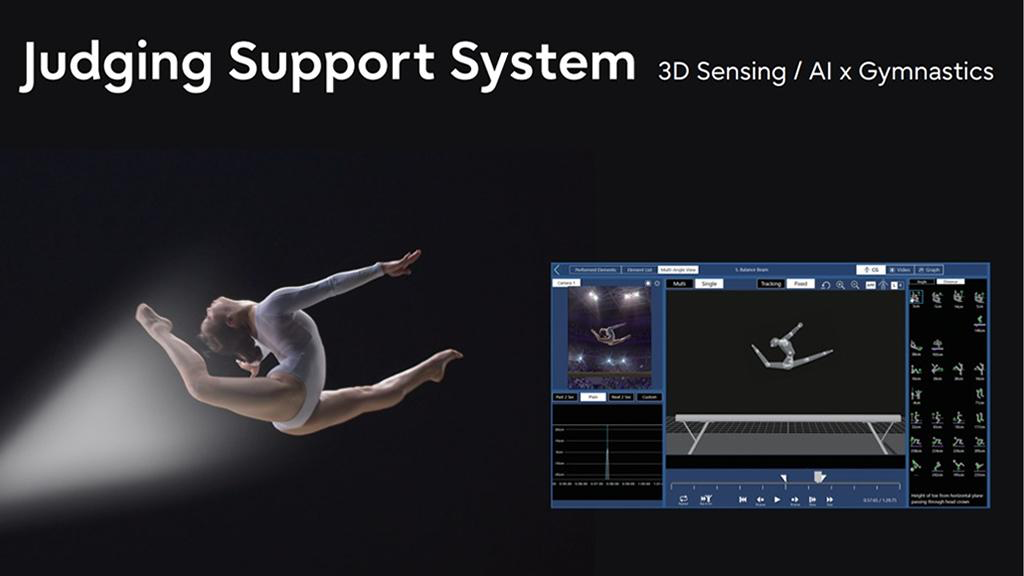
World Gymnastics has been working with Fujitsu on an AI-powered Judging Support System (JSS). The technology uses cameras and sophisticated software to analyze routines, recognize skills, measure body angles, and reconstruct movements in three dimensions.
It can help determine whether a handstand was 10 degrees or 15 degrees from vertical. It can identify elements and assist with difficulty scores. It can analyze movements from angles that a human judge simply cannot see.
And it can do much of this in seconds.
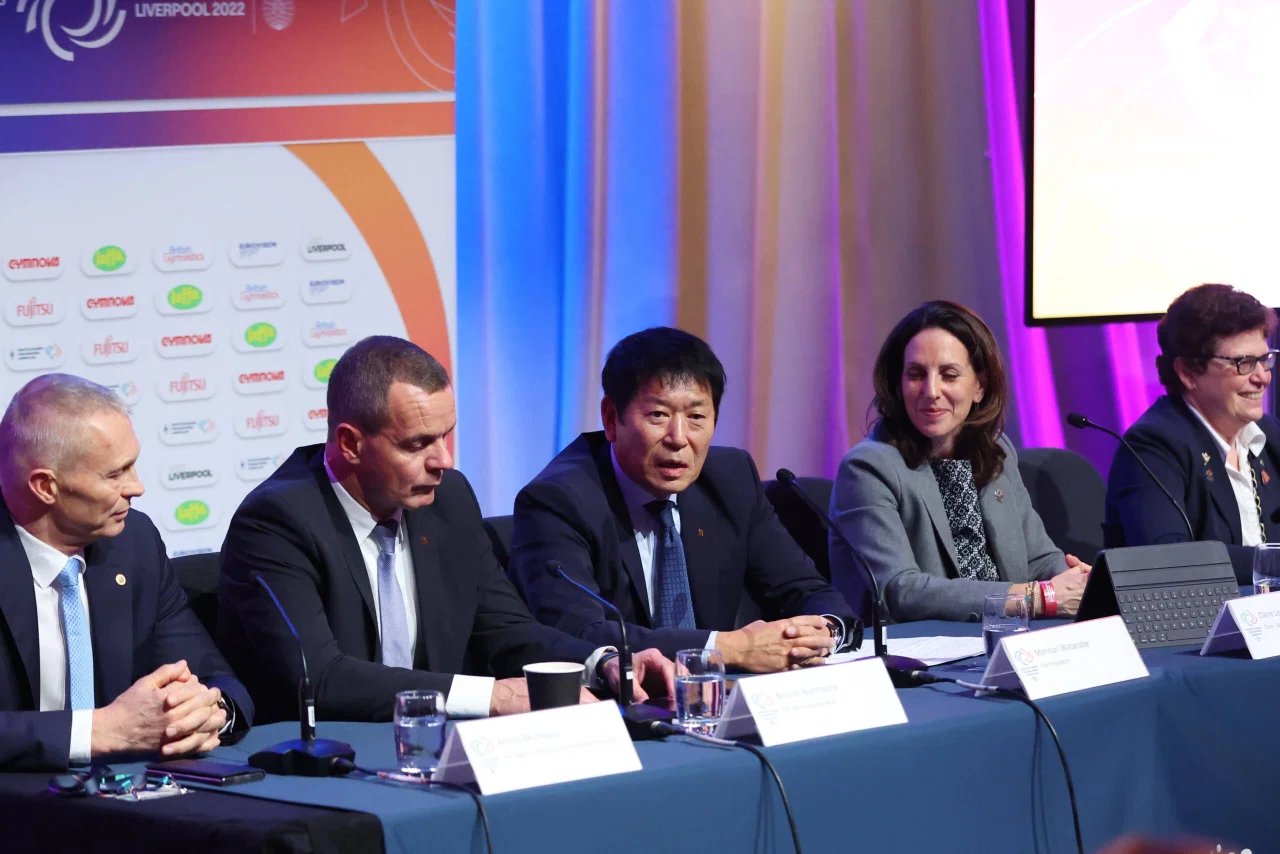
World Gymnastics President Morinari Watanabe recently made a statement that should get everyone’s attention:
“Our dream is to have no judges, only computers and AI awarding scores.”
That’s a pretty bold statement from the president of our sport. He’s right about the direction we’re heading. The technology isn’t perfect yet. There are still questions about artistry, interpretation, and the need for human oversight. Currently, AI assists judges rather than replacing them.
Make no mistake. This is not some science-fiction fantasy about what gymnastics might look like in 2050. This is happening NOW.
So, Should We All Start Looking for New Jobs?
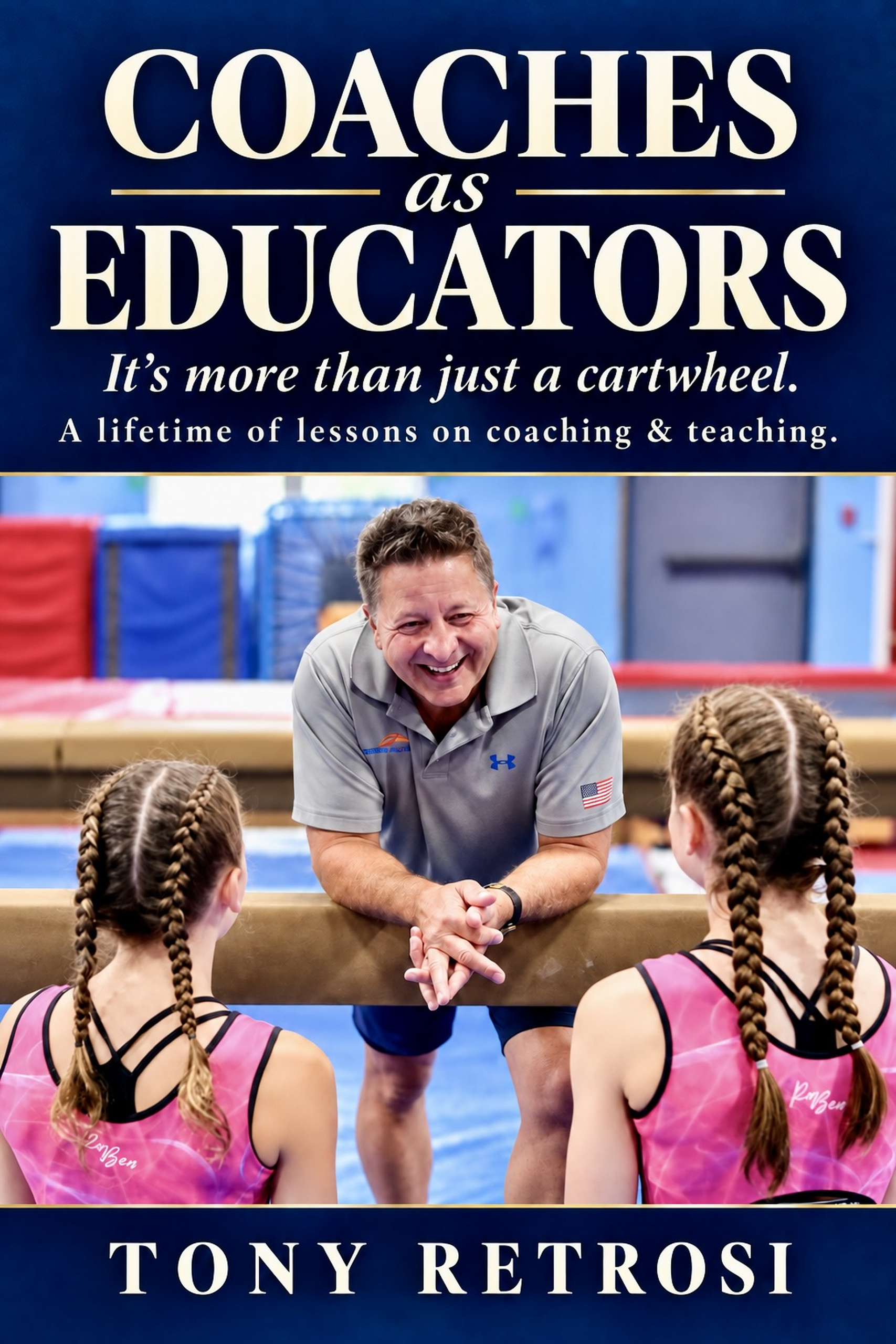
In my upcoming book, Coaches as Educators, I make the argument that gymnastics coaching is one of the relatively few professions that would be extremely difficult to replace with artificial intelligence.
At least the parts of coaching that really matter.
Think about it.
AI can tell you that a gymnast’s handstand was 12 degrees from vertical. It may even be able to tell you WHY. But can it look deeper and realize that we do not coach or teach skills. We coach and teach PEOPLE.
Maybe the gymnast lacks shoulder flexibility. Maybe their body alignment is wrong. Maybe they are afraid of going over the top. Maybe they are physically exhausted.
Or maybe their parents were arguing in the car on the way to practice and they haven’t been able to concentrate on anything since they walked into the gym.
A computer can measure the angle.
A coach needs to understand the athlete.
And those are two very different things.
Coaching Is More Than Identifying Mistakes
I have spent more than 30 years coaching gymnasts at every level, from beginners to Olympians. And one thing I have learned is that identifying a mistake is usually the easy part.
Correcting it is something entirely different. AI may eventually be able to analyze every technical detail of a gymnast’s routine. It may even recommend drills based on the mistakes it identifies.
That’s great. I welcome that technology. But can it recognize that today is NOT the day to push a gymnast to try a new skill?
- Can it recognize the difference between a gymnast who is genuinely afraid and one who simply needs a little encouragement?
- Can it tell when a gymnast needs a technical correction, when they need a confidence boost, and when they just need someone to listen?
- Can it recognize that the athlete who is usually the loudest and funniest in the gym has been unusually quiet for the last three days?
- Can it recognize when a gymnast is physically capable of performing a skill but emotionally not ready?
- Can it convince a gymnast who has failed at something 100 times that attempt number 101 might be the one?
I suppose someday someone will develop a robot that can say, “Come on, you’ve got this!”
But will the gymnast believe it? And more importantly, will the robot know when NOT to say it?
If I Were Starting My Career Today…
If I were a young person just beginning a career in gymnastics, I would focus my energy on coaching, teaching, and athlete development. I would certainly learn the Code of Points. Understanding how our sport is evaluated is essential to being a good coach.
But I would be cautious about building my entire professional future around judging.
To me, that would be a little like deciding to go into the business of making harnesses for horses just as automobiles were becoming popular.
There will probably always be someone who needs a horse harness. I’m just not sure I would want to base my retirement plan on it.
The future belongs to coaches who can combine technical knowledge with emotional intelligence.
Coaches who understand biomechanics AND human behavior.
Coaches who can teach a giant on bars but also recognize when a gymnast needs a break.
Coaches who understand that sometimes the most important thing you do during a three-hour practice has absolutely nothing to do with gymnastics.
The Best Coaches Have Always Been Educators
This is really the central theme of my upcoming book, Coaches as Educators.
We spend enormous amounts of time learning how to teach skills. We attend clinics, watch videos, study biomechanics, and develop progressions.
All important things.
- But how much time do we spend learning how to communicate?
- How much time do we spend understanding motivation, fear, confidence, and emotional development?
- How much time do we spend becoming better teachers instead of simply becoming more knowledgeable coaches?
- I’ve always believed that great coaching is not about how much information you have.
It’s about how effectively you can communicate that information to the person standing in front of you.
Sometimes the best correction is only three words. Sometimes it’s a demonstration. Sometimes it’s a joke. And sometimes it’s knowing when to say absolutely nothing.
That’s a skill that takes years to develop.
And unlike a handstand angle, it isn’t something you can easily measure.
Technology Should Make Us Better Coaches. Not Less Human.
I am genuinely excited about the possibilities of AI in gymnastics.
Imagine having access to immediate biomechanical analysis during training. Imagine being able to compare an athlete’s technique over time with objective measurements. Imagine having technology that can help identify technical issues before they become bad habits.
That’s fantastic.
But I hope coaches don’t confuse having more information with becoming better teachers.
The technology should give us better tools.
It should not replace our judgment, our compassion, or our relationships with athletes. At the end of the day, a gymnast is not a collection of joint angles and difficulty values.
They are a person.
A person with goals, fears, frustrations, insecurities, and dreams.
Our job is to help them become better athletes while also helping them become better people.
And that requires something that artificial intelligence is going to have a very difficult time duplicating.
A genuine human connection.
So, I’m not particularly worried about AI taking my coaching job.
Although, if someone develops a robot that can move mats, adjust bars, put away equipment, deal with the occasional unreasonable parent, AND remember where I left my coffee…
I might be interested.
A Little More on This Subject…
My upcoming book, Coaches as Educators, explores many of the lessons I’ve learned through decades of coaching, teaching, making mistakes, and occasionally getting things right.
It’s not really a book about gymnastics skills. It’s about communication, emotional intelligence, motivation, and becoming the kind of coach who makes a difference long after an athlete has left the gym.
It’s more than just a cartwheel. A lifetime of lessons on coaching & teaching.
More information coming soon.