THANKS TO JEFF GRABA FROM AUBURN UNIVERSITY FOR LETTING ME POST THESE.
These are all up on his Facebook Page
THANKS TO JEFF GRABA FROM AUBURN UNIVERSITY FOR LETTING ME POST THESE.
These are all up on his Facebook Page
“The Issue Of Ethics”
Dr. Joe Massimo & Dr. Sue Massimo
Excerpt from Psychology and Gymnastics by Drs. Joe and Sue Massimo.
In today’s climate of politically correct responses, it is clear that ethics is a concept that is well known and discussed in considerable detail. Many professions have a strict and fairly well monitored code of ethics (lawyers, medical doctors, psychologists, etc.). Many of these directives were a direct consequence of years of planning and deliberation on the issue. Coaching sports as a profession should be no different and coaching young athletes should definitely have a strict code of ethics.
If we look in the past to an issue of “Olympic Coach” published by the U.S. Olympic Committee Division of Coaching Development, an article appeared that dealt with ethics in coaching. A challenge in sport was offered during a presentation at the USOC Coaching Symposium. In this presentation, it was stressed that the coach’s highest priority should be in establishing relationships with athletes that help them develop in positive ways. The most important first step, in this regard, would be the development of a set of principles that would address expectations in the coach-athlete interactions—a code of conduct. In fact, that is the direction that USA Gymnastics took and this organization has made great progress in developing a Code of Ethics to better serve those who participate in gymnastics.
There are many obvious obstacles and resistances that interfere with the development and subsequent adoption of a code of ethics and behavior. One basic difficulty is that not many coaches like to talk about the subject. It is not just that they see it as an infringement on their autonomy and right to manage their own functioning, but also because some of the content is sensitive. Issues that present clear ethical dilemmas are touchy subjects for many coaches. They would prefer to deny the existence of such problems, even knowing that they are out there.
A major contradiction concerning a code of ethics is that sport is often seen through a different set of moral lenses than those used in the rest of our lives. For example, in years past some of us have seen gymnastic coaches treat their athletes in ways that, outside of the training setting, would be grounds for dismissal if not a civil or criminal lawsuit. What to some is acceptable in the gym might not be outside of that setting. Does this mean the behavior in the training setting is above the law in terms of what is right and ethical? Many more athletes participating in sport today are sensitive to the issues of abusive, demeaning, humiliating, or degrading actions of their coaches. A larger than hoped for number of coaches uses the gym as a place to work out their own personal problems around authority and control. These personalized agendas usually involving themes of domination are used to abuse the power the coach has by virtue of their positions and role. A loss of objectivity can often occur and contribute directly to emotional damage in a young gymnast who sometimes holds the coach as a special person and even god-like figure. A code of conduct goes a long way in illuminating what can be expected and accepted by everyone.
Since many coach’s livelihoods depend on production and performance of their athletes, it is understandable that they might tend, to some degree, to take advantage of their student’s time and physical well-being. Safety has always been stressed in gymnastics, but we are all aware of the fact that far too many coaches go for the big “tricks” prematurely, without preparation, in order to produce a winning team. A code of ethics also addresses the issue of over-emphasis on winning to the long range detriment of the gymnast. When it is a question of keeping your job, some resistance to looking at this question is to be expected. Again, however, is that an ethical point of view?
Seven basic attributes have been identified that athletes between the ages of 12 and 20 look for in their coaches. It is suggested that priority by the coach should be in developing positive and helpful relationships with their athletes. Our own research over the years with competitive gymnasts here and abroad has revealed similar findings. These attributes will be discussed in this paper from the perspective of the sport of gymnastics.
Coaching Attributes
Adopting a “Personal” Code of Conduct
In summary, although progress has been made by several sport federations to develop a strict code of ethics, many do not involve the type of desired characteristics nor coach-athlete relationship issues just reviewed. The code of ethics for gymnastics addresses issues such as motivational or training methods which may be considered abusive, has established guidelines for all registered coaches and gymnastics facilities, and continues to monitor and update their ethical code. However, based on the previous seven attributes of competence, approachability, fairness, confidence, motivation, personal concern, and support perhaps we, in the gymnastic community, should strive towards adopting these additional desired characteristics as our own “personal” code of conduct. Refer to “Abuses of Anger in the Gym,” “Male Coach-Female Gymnast,” as well as “I Have a Problem with My Coach” found in Psychology and Gymnastics for a more in-depth look at this important issue.
Works Cited
Massimo, J. & Massimo, S., (2012). “Abuses of Anger in the Gym,” in Psychology and Gymnastics, NY, NY: Morgan James.
Massimo, J. & Massimo, S., (2012). “Male Coach-Female Gymnast,” in Psychology and Gymnastics, NY, NY: Morgan James.
Massimo, J. &. Massimo, S., (2012). Psychology and Gymnastics. NY, NY: Morgan James.
Nielsen, W., (1994). “Ethics,” in Olympic Coach: U.S. Olympic Committee Division of Coaching Development, Winter 1994, Volume 4, Number 1.
USA Gymnastics Code of Ethics. October, 2011. http://usagym.org/pages/aboutus/pages/code_of_ethics.html
 Thanks to Mary Lee Tracy from Cincinnati Gymnastics Academy for sharing this drill. And Thank you to John Macready from FLIP FEST for sharing this drill with her!
Mary Lee has some great drills up on her YOU TUBE Channel
Thanks to Karen Dabritz Tosti for sending this along.
Maroon Team
Gold Team
Thanks to contributor Owen Field from Nebraska for sharing. You can follow his Blog at: Coach Owen Field
The Nebraska women’s gymnastics team held its intrasquad meet Friday to prepare for the 2012 season. The Huskers worked through vault, bars, beam and floor before an estimated 200 people at Mabel Lee Hall where they posted a team score of 195.75.
Head Coach Dan Kendig was pleased with the performances of each gymnast and the great support shown by the fans.
“What a great day,” Kendig said. “There was a huge crowd. I was really, really pleased with the turnout here. I’m pleased with the effort our gymnasts gave tonight and how they acted as a team. This is the start of a great season and we’re really looking forward to it.”
The Huskers return a solid nucleus of gymnasts that include six girls who have earned All-America honors in their careers. Kendig said the Huskers have set the bar and now look to continue off that as they prepare for the upcoming season.
“We have so much more to give,” Kendig said. “You get a starting point and that’s what we’ve just gotten. Now we have Thanksgiving break, which interrupts things, then Christmas break, then we have an extra week when we come back. We don’t have a meet that first week. The couple tweaks we have injury wise we just have to get those healed up a little bit and stay healthy. Our top six in each event are scary good, but those top six have to stay healthy.”
Kendig and his staff are encouraged by the depth of the team and the experience each girl will bring. With several girls sitting out because of injuries, Kendig and staff got a chance to see several of the gymnasts fighting for a spot in the lineup perform.
“We showed tonight that we have some backups that we can count on a little more,” Kendig said “That’s the thing that I took away from tonight; some of our 7, 8 and 9 girls in the lineup went out there and did the job tonight. It’s pretty encouraging.”
The Huskers will hold a second intrasquad on Dec. 9 at 6 p.m. and open the season at home against Denver on Jan. 13 at 7 p.m. The second intrasquad meet and the Huskers’ home opener will take place at the Devaney Center. NU will look to capture its 21st conference title and make its 29th consecutive postseason appearance at the NCAA Championships in April.
COACHES BEING STUPID.
You probably didn’t expect that. Did you?
Have something you want to share?
e-mail me at tony@gymmomentum.com or use the handy CONTACT PAGE
Like any coach I HATE to see any gymnast get hurt.
Unfortunately Injuries are a reality in any sport and it is not a matter of IF a gymnast is going to get hurt, it is a matter of WHEN. Knowing that every gymnast is going to experience some kind of injury that will prevent her from optimal performance in practice or competition should encourage us (as gymnastics professionals) to have a plan. I have told the athletes I work with, There are only 2 guarantees in gymnastics:
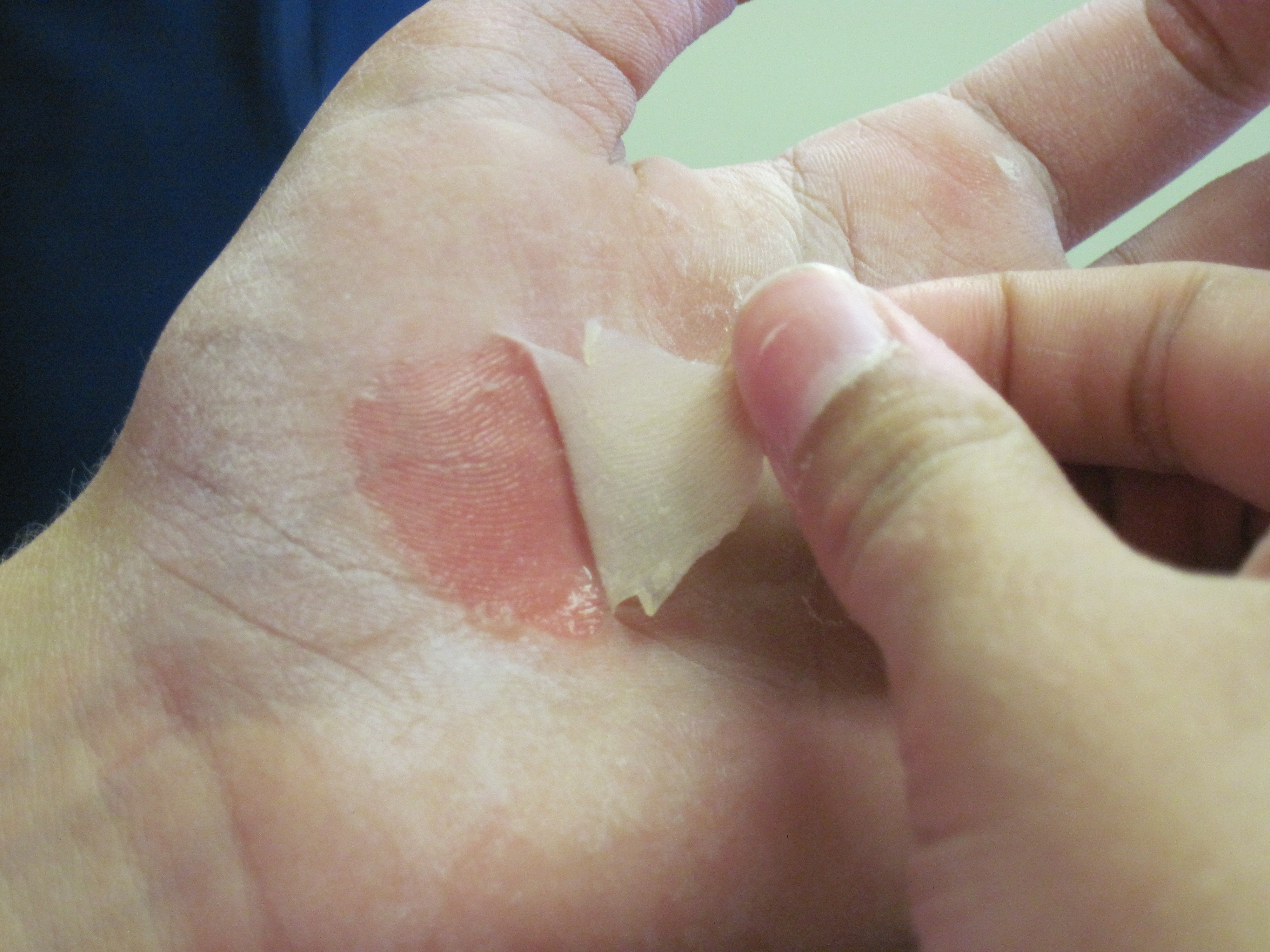 Injuries can range from as small as a rip to the obvious fractures and torn ligaments and ruptured tendons. Each athlete will deal with their injury differently. Some have a very high tolerance for pain while others have a relatively low threshold. I have had gymnasts who when they ripped you would have thought that someone had taken a blow torch to their hand and other gymnasts who continued to work out on what we discovered was a broken bone in her ankle.
HOW ARE YOU GOING TO REACT TO AN INJURY?
A coaches attitude towards an injury is so important. You want the gymnast to be able to tell you if something hurts BUT they should also tell you how much they think they can do.
“My ankle really hurts, I think I am only going to be able to do Vault OR Floor. Which should I do?”
If a coach over reacts to an injury then the gymnast will as well. I have seen coaches under reacts to an injury, the gymnast may learn NOT to tell the coach when they are hurt or feel that the coach doesn’t care. It certainly is a fine line.
RETURNING TO THE GYM
Following an injury we all want the gymnasts to return to practice and be part of the group. It is good for their psychological state, it keeps the desire to return high. We can all think of an athlete who did not return from a relatively minor injury because of too much time off and they felt that the group moved on with out them.
I like to see the girls back at their normal practice schedule even if hours are reduced. Speaking to an athlete on their return is a crucial part of their rehab. What is the plan? Because of the nature of women’s gymnastics leg injuries are the most prevalent as well as the most limiting in the gym. If an athlete hurts her leg, This is an opportunity for them to really make improvements on bars. They can learn to be more subtle with their arm movements on dance. I have had a great deal of success with gymnasts practicing “mental choreography” for leg events that they can not do (I will write more in this later).
If she has injured her arm, there really is a lot they can do in the gym. Tramp will become their new best friend! There are literally thousands of drills and skills that kids can do on tramp for every event. (Who knows maybe that will be the topic of another dvd!)
It is important that the gymnasts know that EVERYTHING WILL BE OK. This is a set back, but it is also a time to let other things heal. This is also an opportunity to make improvements in other areas.
Your relationship with the medical community is another aspect often overlooked. Face it, there are some out there who HATE gymnastics.They think gymnastics is a form of abuse. My daughter had a Dr who was a hater. Can you imagine the arguments we had? We are talking serious fireworks in the office. Needless to say- he is no longer her Dr. I will save my tirade against those closed mined individuals for another time. Find a set of DRs who understand sports and children. The fact that gymnastics is a big part of their life and that taking it away can be crushing. Invite them in to your gym. (give their kid a free trial class!). Show them what you do and that you really care about the children. If they know you and your concern for safety and the individual recovery they are more likely to let a gymnast return to limited gymnastics sooner. I actually had a DR put a kid in a cast for a fairly minor sprain because he knew this particular athlete WOULD NOT stay off it. This was a great thing and the DR called me up and told me why.
Find a great Physical Therapist in the area. Invite them in.
Every time an athlete goes to see a DR or a PT they are usually given exercises for their particular injury. Start a big 3 ring binder and divide into body parts. Make a copy of the exercises and keep them in the book.
Have some pre-designed work outs for athletes with limitation. Sort of a “Help my ankle hurts Vault work out” Or Bars, Beam, Floor. This will save you a lot of time and aggravation as you work with your healthy athletes.
Proper nutrition is a key component to injury recovery. Here are 2 good articles.
Nutrition as a key player in injury recovery
Exercise Injuries, A diet for recovery
Part 4 of 4 of a Beginning Trampoline Clinic given by Al Fong of GAGE at a recent Region 4 Training camp. (Fall 2011)
Thanks to contributor Owen Field from Nebraska for sharing this series of videos. You can follow his Blog at: Coach Owen Field [Read more…]
“The only sustainable competitive advantage is the ability to learn faster than your competitors”~Arie de Geus~, Submitted by Daniel Kelly.
“Boldness is a mask for fear, however great” John Dryden, quoted in the Denver Post
“The world is a dangerous place. Not because of the people who are evil, but because of the people who don’t do anything about it.” Albert Einstein
“There is no such thing as bad weather, only inappropriate clothing.” Explorer Sir Ranulph Fiennes
“Anyone can do any amount of work, provided it isn’t the work he is supposed to be doing at that moment.” Humorist Robert Benchley
“Young people need models, not critics.” John Wooden
“Leadership , like coaching, is fighting for the hearts and souls of men and getting them to believe in you” Eddie Robinson, Football coach, Grambling University
“My Mama always said you’ve got to put the past behind you before you can move on.” Forrest Gump
Shared by Yin Alverez, Owner and Head Coach at Universal Gymnastics
Edward Mesa New P. Bar Routine
Danell Leyva 16.6 start value PB Routine. He added a peach half and took out the diamidov.
Let’s see your upgrades! Send them to me at tony@gymmomentum.com