Jenny from NJ NAWGJ asked me to post this video from my lecture.
Will it Ever be Good Enough? I Spent too Much Time being Embarrassed by My Bronze. | Get Psyched!
Source: Will it Ever be Good Enough? I Spent too Much Time being Embarrassed by My Bronze. | Get Psyched!
Back in 1992 my only goal was to make the Olympic Team. When that dream happened my next goal was to hit all my routines during the competition. I didn’t think about medals, or making finals, or even being put on the front of the next Wheaties box. I was intensely focused on my skills and what it took to make them.
My goal did come true and when my competition was over, my routines along with our team’s performance earned us a Bronze Medal. I was elated. First I made the team, then I hit all my routines, and to top it all off I was bringing home a medal. For a minute or even an hour I had accomplished everything I had set out in my career.
Then little by little and day by day my fantastic accomplishment seemed to not be good enough. When I got back home of course my immediate family and friends were ecstatic with my medal. Our local community was loving and supportive because they knew that Bronze was a huge accomplishment for our city. Yet, everyone outside our little town wasn’t so satisfied with third place.
Third place in the eyes of society is pretty much a loss. I would get comments from people saying, “Oh, you got third, better luck next time.” Or “Are you going to go back and try for gold?”.
No agent was interested in third place. Marketing agencies are really good coming up with slogans like “Be like Mike.” They wanted people to look at Michael Jordan and buy Gatorade so they too could be the next member of the Gold Medal Winning Dream Team. They weren’t really interested in promoting hey “Be like Wendy. You too can lose first and have to settle for third in the Olympics.”
Our society makes it clear that the only thing we care about is first place. When someone trains their entire life and becomes the second best athlete on the Earth, the TV commentators, newspaper reporters, and even those in our own sport tear them down and moan and groan about how they just lost it all. If someone is the second best runner on Earth, I am pretty sure they kicked butt and won second. Yet, second and third just aren’t marketable. Not many strive to advertise people who have lost.
After a couple of years of trying to hang on to the last shred of dignity, I finally realized that I had to put my third place medal away for a while. And so I locked it up in my safety deposit box and there it sat.
Winning a bronze came with no fame and fortune. It came with nothing. What I once thought would be the answer to all my dreams really was just a meaningless piece of tin on a ribbon. Somehow the zest of winning a bronze medal had not lasted very long.
It wasn’t until I was in my middle 30’s that I started to “Get it.” I had a few of my friends over my house and after about an hour one of my friends embarrassedly asked if she could see my medal. I laughed and said of course. I took it out, put it around my neck, danced around the house, and had an odd sense of happiness. Something had changed inside me. I felt a sense of pride. I hadn’t felt pride since the first time it was placed around my neck.
My friend asked if she could touch it and then she said, “Do you know how freakin’ cool this is? I have been alive for 40 years and I have never seen or touched a real Olympic Medal before. Do you understand what you did in your life? Do you know how cool this is?” And for the first time in a long time it finally started to sink in.
For many years I was embarrassed about my loss. I had spent my entire life training, hoping, praying for all the stars to align and for me to make it to the Olympics. And then when everything worked out…it wasn’t enough.
I felt guilty that I didn’t do more. I thought that maybe I should have trained harder and won an individual medal. Maybe I should have kept training and tried to make the 1996 team. Maybe I could have been rich and famous and my life could have been full of fame and fortune. My life would have been complete if I could have just won a Gold.
But sitting next to my friends that only knew me as a mother, wife, and coach now wanted to know me as an Olympian. They wanted to hear all about the competition. They wanted me to tell them all my stories. So for hours and hours everything came out. All the memories poured out of me and it felt so good to let them out. For the first time I was happy to tell them and after the night was over I kept my medal out of hiding.
Sometimes we get so caught up in an idea that we need to take a step back and look at the big picture. We can forget to see the truth. Winning doesn’t always mean that we are in first place. Winning for me meant that I overcame injuries, doubt, and a really shaky competition season to make it to the one competition in which I dreamed about my entire life. Winning to me was being the first in my family to be an Olympian. Winning to me was hitting ALL my routines. Winning to me was being a part of something with only 100 other women gymnasts. Winning to me was my Bronze Medal.
So today my medal hangs proudly on my wall. It isn’t a gold, but now I realize that it didn’t have to be. My medal represents all the other athletes out there that think that if only they had won…then their life would be complete. Sometimes we get so caught up with what we could have done or should have done that we forget to appreciate what we did do. We forget to look at our accomplishments whether big or small and feel pride for what we achieved. I had been so caught up with embarrassment of not winning a gold that I forgot to realize that my bronze was more than enough.
My life has been filled with a successful gymnastics career, an amazing family, and wonderful friends. I was already living the life that fame or fortune couldn’t and wouldn’t change. My past had created my future and I wouldn’t have it any other way. For those who don’t win first place at your next competition…that doesn’t mean that you lost. Your success comes from what you did achieve and the wonderful person you are becoming. You and your own personal achievement are and will always be good enough.
Wendy Bruce Martin was a member of the 1992 Olympic team and 5x national team member. She has been involved in gymnastics for 36 years and coaching for 22. She received a degree in psychology and is a certified mental toughness coach. She is married and mother of 2 and enjoying writing about her experiences.
You can visit Wendy at psyched4sports.com or email at gymnasticsmentalcoach.com
COACH WANTED- Helena, Montana
Schedule/Time Commitment
- Afternoon/Evenings 3:30-8 p.m.
- Monday-Fridays, 20-25 hrs/wk.
- Occasional Full-day schedule, 9 a.m.-4 p.m.
- Weekends as determined by team schedules
- Paid prep time/off-site duties/training, etc.Duties
- Provide positive, enthusiastic and interactive supervision and coaching for competitive gymnastics team women’s artistic Levels 3-10
- Develop and implement TOPS and Excel programs
- Plan lessons and daily schedules/rotations for team practices
- Assist with staff training including implementing progression in rec. levels
- Work with other staff to set meet coaching assignmentsPerformances
- Outstanding leadership and interaction with children ages 6-18 in a competitive and driven environment
- Positive student/group management and discipline
- Thoughtful, organized and consistent communication with students and parents
- Consistent self-motivation, self-starter
- Provide engaged coaching, spotting and interaction with team membersQualifications
- Experience coaching within the team environment
- Gymnastics skills/knowledge Levels 1-10 with excellent spotting capability
- First Aid, CPR certification preferred
- USAG Safety Certified, Valid Background CheckCompensation
- Salary commensurate with experience including travel, training and competitions
- Bonuses available for special projects/events
- Other company benefitsApplication
• Please submit resume and letter of interest by mail or email:
HAC Attn: Management, PO Box 5659, Helena, MT 59604 or office@hacmt.com.
Gym Momentum Training Camp Video 2015
Here is the first of what I am sure will be MANY videos from Gym Momentum Camp 2015
[Read more…]
Developmental & Competitive Trampoline Program
At Gym Momentum Camp in Boston, Jeremy Mosier, presented a lecture/ demo on Trampoline. How to use it to help your developmental and competitive team. Many coaches asked for the notes- here they are!
PEGASUS GYMNASTICS
DEVELOPMENTAL and COMPETITIVE TRAMPOLINE PROGRAM
Basics:
Straight Jumps-Arms down
Straight Jumps-Arms up
Straight Jumps-Swing arms
Tuck Jumps
Pike Jumps
Straddle Jumps
Jump ¼ turns with arms up and down
Jump ½ turns with arms up, down and circle
Seat Drops
Doggie Drops
Proper Stomach Drops to mat
Proper Back Drops to mat
30 Straight Jumps with proper arms circle
1/1 turns with arms up, arms down, and swinging into it
Flat back drops with arms at ears
Flat Stomach drops with arms at ears
Proper back drops
Proper stomach drops
Spatial Awareness and Tight Body Drills:
Back Handspring to stomach onto mat
Front support bounces
Rear support bounces
Flat back drops ½ turn to flat stomach drop with arms at ears
Flat stomach drop ½ turn to flat back drop with arms at ears
Flat back drop ½ turn to flat stomach drop ½ turn to flat back drop with arms by ears at all time
Flat stomach drop ½ turn to flat back drop ½ turn to flat stomach drop with arms by ears at all time
2x flat back drop ½ turn 2x flat stomach drop ½ turn 2x flat back drop all done with arms by ears at all time
Jump ½ turn to stomach and back drop with arms at ears the whole time
Handstand hops on trampoline as many times as possible
Long front support bounces (hands and then feet, like a rocker)
2/1 turns with arms up, arms down, and swinging into it
Jump ½ turn to handstand arms at ears the whole time
10 back tucks in a row
10 front tucks in a row
Codi and Bailout Drills:
Back drops in a row (needles)
Stomach drops in a row with proper arm push
Back drop to stomach drop with straight body in the air
Stomach drop to back drop with straight body in the air
¾ front layout
¾ back layout
¾ back layout to stomach drop, pull to back drop with straight body into a pull over
¾ front layout to back drop, porpoise
¾ back layout, codi tuck
¾ front layout, ball out tuck
Front and Back Rotations:
Back handsprings
Front handsprings
Back tucks
Front tucks
Back tucks with kick outs
Front tucks with kick outs
Front pikes
Front pikes with kick outs
back pike with kick outs
Back layout
Front layout
Standing back tucks
Standing front tucks
Back tuck with arms up the entire time
Leaps and Jumps:
Split leap both sides
Switch split both sides
Advanced Spatial Awareness and Tight Body Drills:
Jump 1/1 and 3/2 to stomach drop and back drop with arms at ears the entire times
Long front support bounces snap feet under to stand or over rotated
Flat back pullover to handstand
Jump 2/1 and 3/1 turn to stomach drop and back drop with arms at ears the entire time
Back drop to handstand with arms up (forward)
Stomach drop ½ turn to handstand arms up the entire time (forward and backwards)
Long front support bounces, from hands into back layout with arms at ears
Back drop ½ turn to handstand to feet arms up at all times (forward and backwards)
Stomach drop front layout with arms up
Advanced Front and Back Rotations:
Back layout with arms up the entire time
Front layout with a ½ turn
Front layout with arms up the entire time
Back layout ½ with really late twist spotted if necessary
Back layout 1/1 with really late twisted spotted if necessary
front layout 1/1
1 ¼ front to stomach drop
Standing back ½ in puck position
Back layout 1 ½ twist
Front layout 1 ½ twist
Spotted double backs
Double fronts
Back layout 2/1
Double backs
Double back with arms up the entire time
Don’t put a Fifth Grader in High School Classes. | Get Psyched!
Source: Don’t put a Fifth Grader in High School Classes. | Get Psyched!
Placing the athlete in the correct class seems obvious. Many kids are placed beginner classes if they are a beginner, intermediate when they improve, and advance when they become masters of the sport. But sometimes kids are placed in classes for other reasons.
Some kids can only do certain times or days and so they may be put in a class that is too easy or too hard for their level. Others may want to be with a certain age group even through they are at a different level. And then there was that one time when I put a kid on team because her carpool moved up to team and the only way for her to continue to do gymnastics was to move into the same class.
I had been coaching this child in classes and she was a hard worker and a wonderful kid. I didn’t want her to leave gymnastics so I decided to let her move to level 2 team. I knew it was a big decision, but I thought we both worked a little harder we could make it work.
But placing an athlete in a level higher than they should be in created way more tension and chaos then good.
My little gymnast didn’t know anything about team. She had a lot to learn. She didn’t know how to do a lot of the details. In classes we trained on basic skills, but didn’t focus on head position, body shape, or feet position. All the other kids had spent at least one year on pre-team, a year on level 1, and a year in level 2 before moving to team. They knew all the details and were very good at performing them with precision. But I wasn’t worried. I knew that I could teach her those details.
The problems set in when she felt inferior to all the other athletes. She felt embarrassed when I had to pull her to the side to teach her a lever or a hurdle with the proper arm circle.
She also became embarrassed when she constantly had to do easier skills than her teammates. When they worked on harder skills such as, back walkovers or round off back handsprings, she had to work on back bends and bridge kick overs. I had to set up different stations and always gave her a different workout plan. She become resentful towards me because I couldn’t let her do the same skills as her friends.
I soon became frustrated with having to constantly remind her the names of skills, to put her head in, or to point her toes. After three months I had hoped for her to catch up to the level of the other girls. But after three months it was obvious to me that I had put her in the wrong class.
She didn’t like conditioning and it was hard for her. She didn’t like the constant corrections. She wanted to learn gymnastics but she didn’t care if her legs were straight, toes were pointed, or they were done without deduction.
She eventually didn’t want to do gymnastics anymore and I could see that as well. I knew she needed to be put back in a recreational class, but I didn’t want to hurt her feelings, embarrass her even more, and worse of have have her quit. It was my idea to put her on team and now I had to break the news to her that I had made a mistake. I felt terrible.
In the beginning I didn’t want to see my little gymnast sad. I knew that if she wasn’t able to car pool with her friend who was on team, then she would have to stop doing gymnastics. She loved gymnastics and I loved teaching her. But instead of seeing the lher sad to have to leave the sport, I tried to make everyone happy and move her to a level she simply was not ready to train.
I knew I had to come to terms with the situation. It was bad and I was to blame.
It was no different than putting a fifth grader in high school classes and then expecting them to live up to the same standards.
The reason we have levels in sports is to ensure proper progress both mentally and physically. When placed in the correct level each student can build a solid foundation of basics and confidence.
When the athlete is placed in the correct level, they can try new skills without feeling embarrassed because everyone is trying the same things. They can build strength by starting with conditioning that they can master. Then after they master that conditioning, they can feel proud and exciting to try to do more. They learn the terminology of the skills and they understand the progression of the sport. They move up when they are “ready”, not because it was convenient.
The bottom line is that I should have done that right thing in the first place. I should have told the gymnast that I would miss her and to let her know that anytime she wanted to come back, I would be here for her. That way we could have avoided the pain, embarrassment, and frustration that she had to endure. Our relationship was strained but luckily not destroyed and I am happy that it wasn’t ruined.
In the future I will make sure to do the right thing and place the athlete in the right class even if it causes a little bit of sadness for the athlete. Nothing can replace the proper path of training. And even with the best intentions proper class placement is not only recommended, it is mandatory.
It’s Our Time
“It’s Our Time”
Weberworks Records
Written by Krystal Polychronis (one of my former gymnasts!) and Juliette Goglia
Arranged by Marty Walsh, Peter Tentindo, Ian Walsh
Produced by Marty Walsh, Krystal Polychronis
Engineered by Burleigh Drummond
Mixed by Kenny Lewis at Mixed Emotion Studio, Middleton, MA
Mastered by Jim Brick at Absolute Audio
Lead Vocals – Juliette Goglia
Backing Vocals – Krystal Polychronis
Guitar – Peter Tentindo, Marty Walsh
Drums – Ernie Larouche
Videographer (Juliette Goglia) – Ro Rowan – www.rorowan.com
Videographer (Gymnastics) – Krystal Polychronis
Video Editor – Ro Rowan
WEBSITES:
Krystal: http://gymnst16.wix.com/krystalp
Marty: http://www.martywalsh.com/
Peter: http://venusmarsproject.com/peter/
Juliette: http://www.imdb.com/name/nm1490275/
Kenny: http://www.mixedemotionsmusic.com/
Gymnasts:
Eleanor Almeida
Gracen Belle
Aria Brusch
Amanda Cioli
Olivia Drew
Amelia Hundly
Keara Loughlin
Abigail Matthews
Alanna Murphy
Jessica Nugent
Kaylee Pacunas
Lexie Priessman
Jumping Gymnasts:
Megan Anstiss
Madeline Courtemanche
Hailey & Hope Dinsmore
Molly & Peyton Fitzgerald
Kiera Frazier
Maya & Brielle Hardy
Serena Kim
Kailee McDonald
Nina Morales
Joslyn Panesse
Destiny Rios
Skyla Robson
Abigail Schiebel
Kendra Scott
Mckayla Silva
Kaitlin Stutz
Lorna Wood
Malinda Yim
Coaches: Megan Donahue, Jojo Vergados, Erin Auger, Mistah Ben
Gymnastics filmed on location at:
Walker’s Gymnastics – Lowell, MA – www.walkersgymnasticsdance.com
Cincinnati Gymnastics Academy – Cincinnati, OH
www.cincinnatigymnastics.com
Perfection Gymnastics – West Chester, OH
www.perfectiongymnastics.com
Juliette Goglia filmed at Tin Drum Studio, Thousand Oaks, CA
www.tindrummusic.com
Pak Salto Drills
One of the biggest problems with Pak Salto is controlling the rotation.
TOO MUCH- You skid across the floor on your butt
TOO LITTLE- You eat the bar
Here are drills that I use for control and reach. I try to establish these drills pretty easy because they share some of the same actions with other skills like fly away and over shoot on bars and even the Yurchenko on vault.
I try to make 1 or 2 of these drills an everyday thing.
[Read more…]
Gym Momentum Training Camp Boston- Review
Another training camp is in the books! Every year I pick a motto for camp.
This year was: ‘WE MAKE CORRECTIONS NOT EXCUSES”
Gym Momentum Training Camp Boston had gymnasts and coaches from throughout North America as well as some gymnasts from Iceland.
Thursday night we started with orientation and open training with their personal coaches. I knew right away that this was going to be a great camp. All the gymnasts and coaches were so hungry to learn the Gym Momentum staff was super energized to meet their expectations. Thursday night all coaches and staff met to go over the training plan for the weekend and then we had a round table discussion on establishing a realistic time line for gymnastics success.
Friday, Saturday and Sunday we trained 2 sessions per day getting to each event twice per day while leaving time for open training for the gymnasts (with Gym Momentum Staff) while their coaches had clinic time. Friday night Brian Pickard delivered a lecture to the coaches on Conditioning and Recovery. Saturday night Jeremy Mosier did a lecture on incorporating trampoline drills into workouts.
With ALL the gymnasts working so hard it was honestly difficult to find a “Hardest Worker” in each group. After much deliberation the coaching staff came up with:
Group 1: Elizabeth, Yellowjackets, Massachusetts
Group 2: Rebecca, Acrotex, Texas
Group 3: Sarah, Athletic Edge, New York
Group 4: Katy, Acrotex, Texas
The SPIRIT of MOMENTUM, given to the gymnast who overall made the most corrections and just kept trying went to
Maddie, Spectrum Gymnastics, New Hampshire
As this is our 2nd year running Gym Momentum Training Camp we also gave out awards to the gyms who showed the most improvement over the last year. Those gyms who took the corrections they were given last year and continued to work on them through out the winter. These gyms won a coaches spot FREE for Gym Momentum Camp 2016! (July 14-17, 2016)
- Acrotex, Texas
- Athletic Edge, New York
- River Valley, New Brunswick, Canada
- Jean’s Gym, Massachusetts.
Congratulations to all the gymnasts and Coaches. Keep up the good work,
SEE YOU NEXT YEAR!
The Gym Momentum Staff for 2015 were:
Vaulting
- Jamie Donkin
- Tony Retrosi
- Vasko Vetzev (96, 2000 Olympic Team)
Bars
- Daire Oceallag
- Jeremy Mosier (World Championship Team T&T)
- Brian Pickard
Beam
- Carly Meyer
Tumbling
- Wendy Bruce-Martin (1992 Olympic Team)
- James Parent
Dance
- Jody Nichols
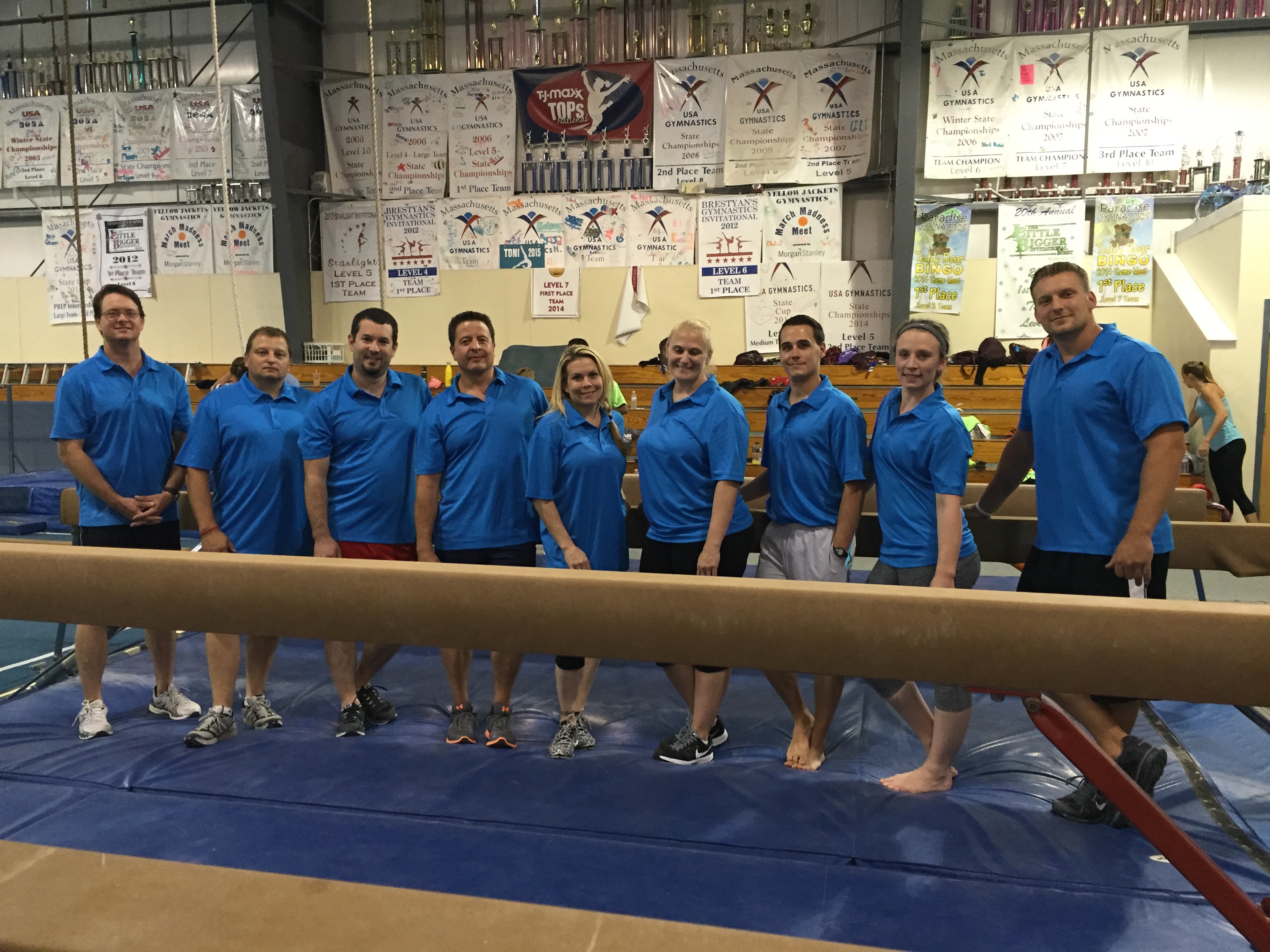
TEAMS ATTENDING GYM MOMENTUM CAMP
- Acrotex. Austin, Texas
- Aerials Gymnastics. Spruce Grove, AB, Canada
- Arlington Aerials. Arlington, VA
- Atlantic Gymnastics, Dover, NH
- Athletic Edge. Staten Island, NY
- Evergreen Gymnastics. Lisbon, NH
- Gymfest Gymnastics. Pittsfield, MA
- Jean’s Gymnastics. Marlboro, MA
- Pegasus Gymnastics. Calgary, AB, Canada
- River Valley Gymnastics. Woodstock, NB, Canada
- Spectrum Gymnastics Academy. Londonderry, NH
- Sterling Academy of Gymnastics. Sterling, MA
- Stjarnan Gymnastics. Reykjavik Iceland
And our wonderful hosts: Yellow Jackets Gymnastics. Middleton MA
I am in the process of editing all the photos and videos. I will have a separate post for all of those. If you have a photo or video that you would like to share- KEEP THE MOMENTUM GOING! Send it to me!
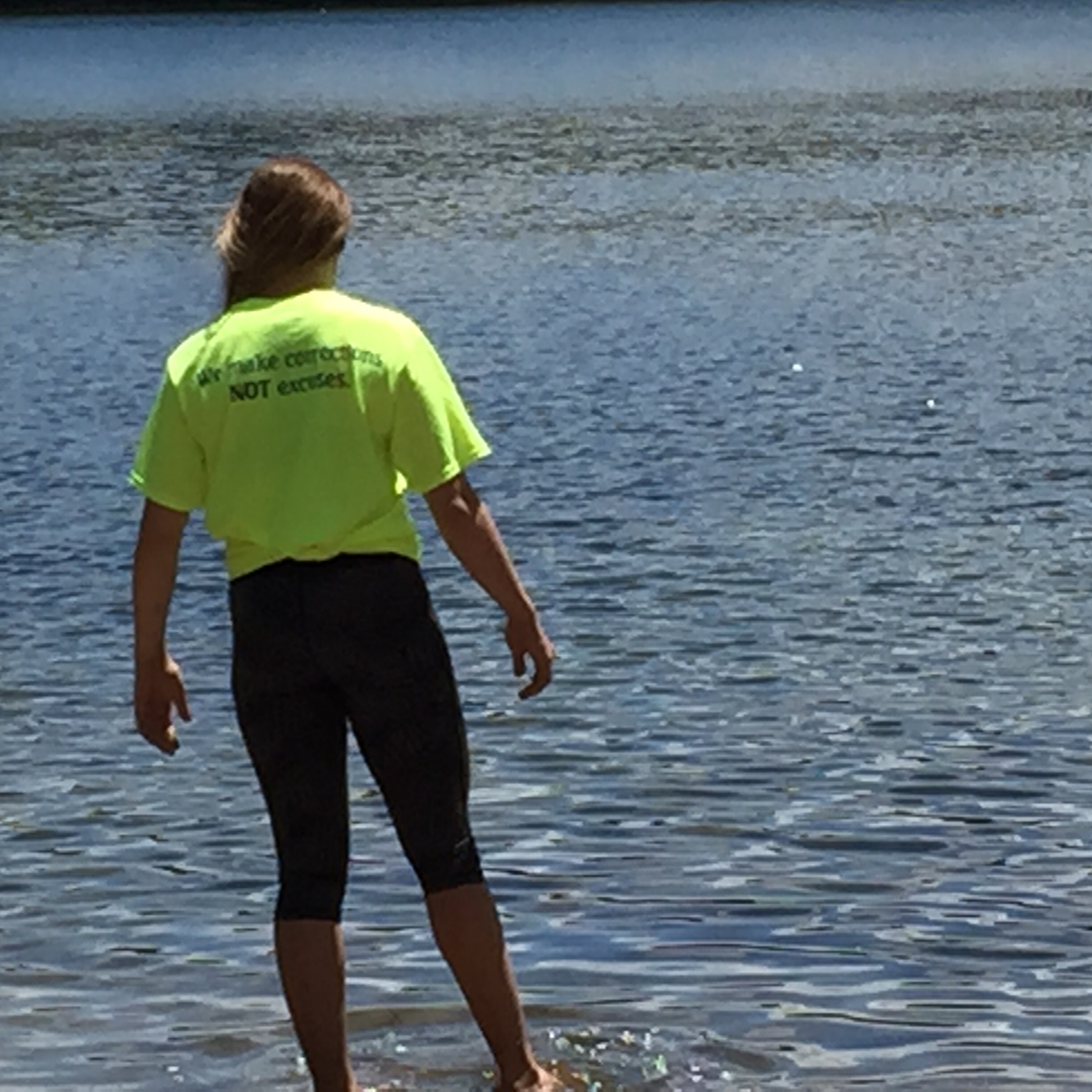
– As many of you know, Tim Korman, lost his battle with cancer a few weeks before Gym Momentum Camp. This was a terrible loss to the gymnastics community and the Yellowjackets gymnastics family. Profits from Gym Momentum Camp this year will be sent to a foundation of his families choice. A few of the Gym Momentum Staff also have RETURNED their pay check so that money can also go into the foundation.
Shoposhnikova Drill
The other day I was listening to some coaches brag about the difficulty and intensity of their workouts leading up to a competition. My question is:
“is that intensity and difficulty contributing to the gymnasts success or is it hard just for the sake of being hard?”
Cramming for an exam is a time-honored practice for most students. Gymnastics competitions like tests are stressful, sure, but you can not cram for a competition.
Excellence in gymnastics is rarely determined the week before the competition. It is determined through consistent training in the WEEKS and MONTHS prior to the competition. This is a lesson many gymnasts and coaches forget. There should be some intense and difficult parts of the training cycle but each training sessions should have attainable goals. Whether that is skill acquisition or a set amount of routines.
Coaches need to remember that there are only 2 guarantees for gymnasts.
You are going to get hurt.
You are going to be frustrated.
If a coach has a plan to deal with injuries they will be able to alleviate some of the frustration. Recently I was working with a gymnast who was coming off a lower body injury. Nothing serious but it reduced the amount of time that she could train and the events she could do. Essentially she was only allowed to do bars.
Realistically how much was she going to accomplish at bars? She could not do 4+ hours of bars every day without risking injury.
I needed to come up with a plan to continue the progress on bars with out burning her out.
It is very important to have the gymnast involved with the plan.
What are her goals?
Short and Long Term?
What is the work load she feels she can handle?
With this gymnast she has a very good clear hip and hecht action. The decision was made to work Tkatchev and Shopashnikova. 2 skills with the same action.
These are basic questions every coach should ask on an ongoing basis as a check to make sure training is on target.
What are you doing?
Who are you doing it with?
Is what you are doing appropriate for who you are doing it with?
Why are you doing it? Is it NEED to do or NICE to do?
How are you doing it? Is there a better way or a better mode?
When are you doing it? Is it appropriate for the time of the training years and even the stage of the athlete’s career?
And always use the KISS strategy. Keep It Simple, Stupid.