If at first you don’t succeed, Try, Try again. (But make a correction please)
If at first you don’t succeed, Try, Try again. (But make a correction please)
There are many reasons why sports are so valuable for our children to play, no matter what age those children may be. Of course, helping kids develop and maintain physical fitness is one extremely important reason why kids should play sports. Playing sports helps kids stay healthy. In an age of almost epidemic numbers of people suffering from diseases and physical ailments related to obesity or not being at their optimal weight, the more opportunities for kids to be healthy and fit, the better it is for all.
On top of the physical benefits, there are many other reasons why kids should play sports, probably too many to cover in a single blog post. We have all heard it many times now, but sports can teach kids so many valuable life lessons. As coaches, many of us focus on intentionally teaching those life lessons to the young people in our care. The booklet and presentation by the same name, Life Lessons for Athletes, by Bruce Brown, the director of Proactive Coaching, highlights 10 behavioral characteristics that we should be helping kids to learn, understand and develop, not only for their involvement in sports, but for all aspects of their lives. The 10 characteristics are:
1. Integrity
2. Teachable Spirit
3. Academic Responsibility
4. Confidence
5. Accountability/ Work Habits
6. Discipline
7. Mental Toughness
8. Pride/Humility
9. Leadership
10. Selflessness
While there are certainly more things that playing sports can teach young people, this list is a prime example of many of the qualities and characteristics we can help young people learn by being involved in sports.
However, there is an extremely important caveat to this. In order for us to make sure that sports are teaching young people these things, we must make sure that we are intentional and purposeful about teaching them to our student-athletes. So often we hear people say that sports teach character, but when we look at the games that kids (and adults) are playing, we do not see examples of great character — and all too often we see the exact opposite. Just because a child runs around on a soccer field or a basketball court for two hours, it does not mean that s/he will learn how to be a better person or learn the value of working hard or any of the other elements on the list above. In fact, too often children are taught (whether intentionally or not) how not to behave. Oftentimes children learn how not to behave from the example of the people who should be teaching them the right way to behave — coaches and parents. But when coaches (and parents) intentionally design lessons and practice plans that include various elements of character, sportsmanship and life lessons, and then go out and work on those things with their teams, children have a much better chance of learning many positive lessons from their involvement in sports.
So how can coaches and athletic administrators do this? It’s quite simple — incorporate into your practice plans daily or weekly themes and lessons that you will teach. This can be done for 10 or 15 minutes prior to or after practice, where you take a theme of the week (for instance, something on the list above) and you read a paragraph or two about that theme and then discuss it. It is helpful to have some quotes by famous (and not-so-famous) people about that quality and discuss those quotes with players. Some of my favorite moments as a coach have been those 15-minute lessons I have had with my teams, to hear how certain ideas or quotes have affected certain players, and to hear the discussions that were then spawned because of it. This can be a very powerful part of any team’s season.
However, it doesn’t end there. If we take 15 minutes for four days in a week to discuss sportsmanship or poise, and then in the game on Friday night, I act like a raving lunatic at every call I disagree with, or I run the score up on a much weaker opponent, the 15-minute lessons were worthless — and possibly even damaging. We must go out and live by the very principles and lessons we are trying to espouse. During the week when we cover sportsmanship, for instance, I will set up moments in practice (that the players don’t know are coming) that will test our sportsmanship. I have purposefully made bad calls in scrimmages to see how we handle ourselves and then stopped the scrimmage to address the right or wrong response that we saw.
Sports can be extremely valuable in the growth and development of young people. However, it is up to us as the adults to do everything we can to make sure that what we want them to learn and enjoy from the experience are the very things that we are teaching them.
For more information on Proactive Coaching, visit www.proactivecoaching.info
It has been said life is equal parts what happens to us and how we process what happens to us.
I think that is very true in gymnastics. The attitudes and beliefs that a gymnast has about herself and the sport will inevitably shape how long she participates, or at least how happy she is while she is involved.
Here are nine beliefs that inevitably lead to a less than stellar gymnastics experience:
My mornings generally start the same.
I get up, turn on NPR, make coffee as I scan the headlines then head to the gym to work out. This morning was no different. After I checked the news and weather I checked Facebook. There was a great status posted by one of my FB Friends from Texas.
I’m watching Katy at gymnastics practice and she is all smiles and so incredibly happy. Can you imagine finding your passion at such a young age?
……People gasp and give me “looks” when I tell them how many hours she is at practice….but if their baby says to them what Katy has said to me “if you take gymnastics away from me it’s like taking food or water away” they too would understand my level of support.
To which I commented:
This is the best thing I could possibly have read first thing in the morning. It is something I try to show each gymnast I work with. That they should do this for the love of the sport. This is something I try to teach each coach. That what we teach is WAY MORE than just gymnastics.
And she responded:
Tony I agree and it absolutely matters that her coaches create a healthy environment for her to thrive. What you and Gym Momentum camp do to train coaches makes a difference. See you in Boston!
Thank You Stacy! You made my day!
This was pretty good.
This is one of my favorite topics. I have written about it with Fear of Failure and Is Change Possible I think not only does it serve as a good reminder of the struggle and give us some hope. It also lets us know that we are not alone.
Original Article from NY Times
8 Myths about Creating Change in Your Life
DESPITE the best intentions for the new year, the reality is that by next month, gym memberships will lapse, chocolate will replace carrots and Candy Crush will edge out Moby Dick.
It’s not (only) that we’re undisciplined slugs. It’s that much of what we know — or think we know — about habits is wrong. Here’s a primer that might help keep you off the couch and on the treadmill.
MYTH 1 We fail to change our habits — or start good new ones — because we lack willpower.
Not really, said Wendy Wood, a professor of psychology and business at the University of Southern California. Willpower, she said, is more about looking at those yummy chocolate chip cookies and refusing them. A good habit ensures you’re rarely around those chocolate chip cookies in the first place.
To create or change a habit, you have to think much more about altering your environment and patterns of living than work on steeling your mind, Professor Wood said, because “behavior is very much a product of environment.”
Habits — at least good ones — exist so we don’t have to resist temptation all the time. Imagine if every morning you had a debate with yourself about eating cake or cereal for breakfast. Instead, most of us form the habit of eating something relatively healthy for breakfast, which bypasses the lure of the cake altogether.
That’s why it’s sometimes easiest to start or break a habit during a major transition. This may sound counterintuitive, but a new house, job or relationship breaks old patterns, said Gretchen Rubin, author of the forthcoming book, “Better Than Before: Mastering the Habits of Our Everyday Lives.”
“People say wait a few days to get settled, but don’t,” she said. “Start right away.”
MYTH 2 We fall back on bad habits when stressed. In fact, good habits persist even in times of high anxiety, Professor Wood said. A study of which Professor Wood was one of the co-authors found that students who already had unhealthy diets would eat junk food when stressed, but those who already had the habit of eating well — or of reading a newspaper or of going to the gym — were just as likely to do that.
MYTH 3 It takes about 21 days to break or make a habit.
That number seems to have cropped up in the 1960s and somehow became “fact” with no real proof. But in 2009, researchers in Britain decided to take a deeper look by studying how long it took participants to learn new habits, such as eating fruit daily or going jogging. The average was 66 days.
But individuals’ times varied greatly, from 18 days to 245 days, depending on temperament and, of course, the task involved. It will most likely take far less time to get into the habit of eating an apple every afternoon than of practicing the piano for an hour a day.
MYTH 4 You need positive thinking to break or make a habit.
“We find positive fantasy is not helpful and may even be hurtful when trying to reach a desired future or fulfill a wish,” said Gabriele Oettingen, a professor of psychology at New York University and the University of Hamburg.
Over years of research, she discovered that people need to pair optimistic daydreams about the future with identifying and imagining the obstacles that prevent them from reaching that goal — something she calls mental contrasting.
Say you want to stop being a procrastinator. The first step is easy. Imagine how it will feel if your work is completed with plenty of time to spare, if you can sleep instead of pulling an all-nighter, said Professor Oettingen, author of “Rethinking Positive Thinking.”
But don’t just resolve to stop procrastinating. The second step is to identify what holds you back from changing yourself. Is it fear that you won’t succeed? Is it the adrenaline rush of frantically working at the last minute? Is it because of negative feelings toward a boss or teacher?
The mental contrasting needs to be in the right order. It’s important to “experience our dreams, then switch gears and mentally face reality,” Professor Oettingen said.
Doing it the opposite way — imagining the obstacles and then fantasizing about changing habits — doesn’t seem to work as well, research shows.
MYTH 5 Doing things by rote, or habit, isn’t good in most cases. It’s better to be mindful of everything we do.
Research shows that most people repeat about 40 percent of their activities almost every day.
“We only have so much room in our brain,” said Ian Newby-Clark, an associate professor of psychology at the University of Guelph in Canada. “It would be incredibly taxing if we had to mindfully plan every step of our day.” Habits free us up so we can think about other things.
And while some habits are objectively bad — smoking, say, or being consistently late — most are subjective. “Habits are only good or bad to the extent they’re consistent or inconsistent with your goals,” Professor Wood of U.S.C. said. It’s a bad habit when “it starts interfering with other goals you have.”
For example, many people said their resolution this year was to cut down the time they spend online.
But why? Because it’s an inherently bad thing to do? Or is it an obstacle to spending more time reading books or riding a bike or learning to knit?
After thinking about it, you may choose to spend less time on your computer or phone. Or you might decide it’s not so terrible in limited doses and shed the habit of feeling guilty about it.
MYTH 6 Everything in moderation.
“There’s a real difference among people about how easily they adapt to habits,” Ms. Rubin said. Some see habits as liberating; some see them as a trap. Some prefer to make a huge change all at once; others proceed step by step.
“I’m in the small minority that loves habits,” Ms. Rubin said, adding that she tends to find it easier to abstain from certain things altogether. For example, she eats no carbohydrates.
“People said I was doomed to failure, but it’s not true,” she said. But, she noted, “it’s a mistake to think the abstainer is more disciplined. For me it’s easier to be an abstainer than have to deliberate each time whether I can eat something or not. Others would go nuts if they abstain.”
That’s why you shouldn’t listen to people who tell you you’re doing it wrong if it works for you, she said.
Also, people shouldn’t fear that their habit will dissolve if they don’t practice it daily.
“If you lapse once or twice, you’re not ruined,” Professor Wood said. “That’s a misconception.”
And that leads to …
MYTH 7 Shame and guilt keep you on track.
No. People need to be kinder to themselves, showing self-compassion if they lapse, Ms. Rubin said. But it’s a fine balance between treating yourself kindly and making endless rationalizations and excuses.
“I might mindfully make an exception,” she said, such as choosing to eat a traditional Christmas cake every year. “But I’m not making excuses in the moment: I’ll hurt the hostesses’ feelings. You only live once. It’s the holidays.”
One last piece of advice: If you want to be in better shape, get a dog. Professor Wood said studies show dog owners have lower body mass indexes. But here’s the catch: That’s only true if you walk the animal.
The mark of a really good coach is the person who can find relatively simple solutions to a difficult problem in the gym. We have all had those moments where a coach may show you a “new” drill and you kick yourself for not thinking of it.
My most recent was working the drop in for in bar stalders.
Functional Fixedness.
According to Wikipedia:
Functional fixedness is a cognitive bias that limits a person to using an object only in the way it is traditionally used. Karl Duncker defined functional fixedness as being a “mental block against using an object in a new way that is required to solve a problem.”[1] This “block” limits the ability of an individual to use components given to them to complete a task, as they cannot move past the original purpose of those components.
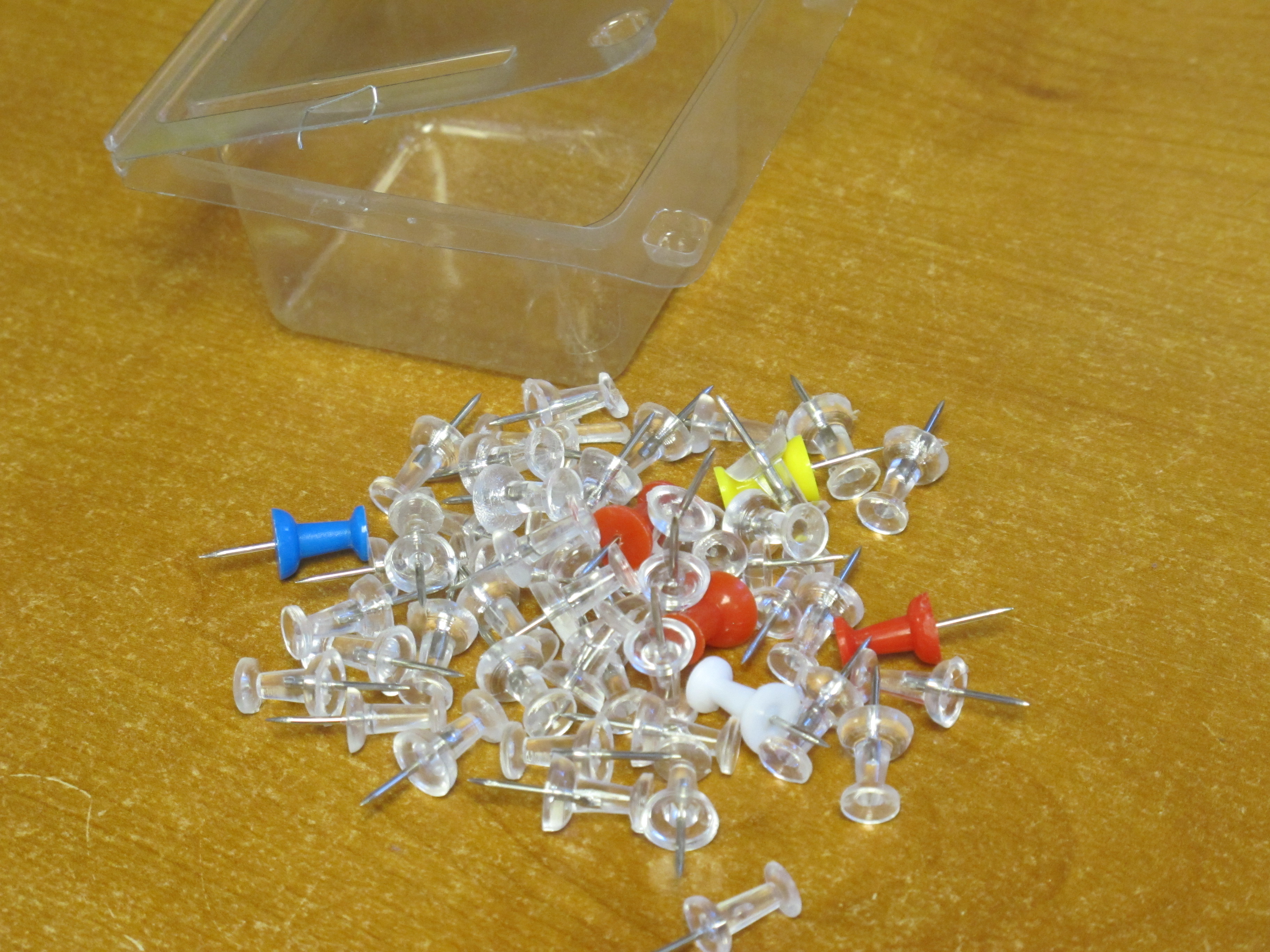
In a classic experiment demonstrating functional fixedness, participants were given a candle, a box of thumbtacks, and a book of matches, and asked to attach the candle to the wall so that it did not drip onto the table below. Duncker found that participants tried to attach the candle directly to the wall with the tacks, or to glue it to the wall by melting it. Very few of them thought of using the inside of the box as a candle-holder and tacking this to the wall. The participants were “fixated” on the box’s normal function of holding thumbtacks and could not re-conceptualize it in a manner that allowed them to solve the problem.
How I approach difficult problems has changed since first reading about Functional Fixedness while I was in college. Now when faced with a difficult problem in or out of the gym I remind myself to “empty out the thumbtacks”.
I have been working with a few different gymnasts on In Bar Stalder. Thanks to Tammy Biggs I was able to fill in the missing link drill.
COMBINATION TUMBLING
TONY RETROSI
tony@gymmomentum.com
TUMBLING BONUS RULES
A+C= +.10
B+B= +.10
B+C= +.20
A+A+C= +.10
A/B+D= +.20
A+A+D= +.20
C+C= +.20
RULES cont.
C+C= +.10
A/B+A/B+C= +.10
A+D= +.10
A+A+D= +.10
C+D= +.20
Tony’s 10 Commandments for tumbling
1. PLAN. Proper planning prevents piss poor performance
2. Teach the big picture. – Don’t be so technical when they are learning.
3. Patience – not everyone learns at the same pace
4. Teach it right the first time
5. Safety rolls. Learn how to fall. It is going to happen, be prepared
6. Small muscles help big muscles Use all of them! Conditioning for success
7. provide training stations, twisting rules etc. and encourage simple basics. — Then let them explore
8. Same direction twisting front and back
9. Spotting is a step not a solution
10. LET THEM PLAY
LONG TERM VS SHORT TERM
NEVER PAINT YOUR SELF INTO A CORNER.
PICK SKILLS THAT ARE PROGRESSIVE.
LAY THE BASE FOR WHERE YOU WANT THEM TO BE IN 2 YEARS
Skills needed for bonus
Whip Back(s)
Front Layout(s)
Whip 1/2
Strength issues
Make the muscle strong. Then train it to be fast.
The use of plyometric conditioning
body shapes
THE “X” FACTOR
Hip flexor and back
Abdominal and gluteus
Leg conditioning
roll back stand (both leg, single leg- progress to roll back jump.)
jump lunges
step up kicks
leg curls
leg extensions
toe raises
ankle pull backs
Laying hip raises both legs and single leg.
Plyometric conditioning
should be done in the early part of work out.
monitor numbers (more is not better)
Keep it specific
WHIP BACK
More than just a High back hand spring
Should accelerate
Is NOT the end! Always do something out of it.
Rows and Rows of Back Hand Springs
BHS over mats
Front Layout –
like a whip. Just front wards.
work body shape. (tight arch)
watch landings.
Front handsprings
front handspring stepouts in a row
step out- step out- together rebound
step out- together extra rebound – bounder
Whip 1/2
Late twist
establish flip first, then twist
Body shape
BHS rebound 1/2 FHS
BHS 1/2 rebound
5 skills every gymnast needs at Bars
(developing a plan for your team at bars)
www.gymmomentum.com
tony@gymmomentum.com
YOU MUST HAVE A PLAN AND SET EXPECTATIONS
TONY’S BAR RULES
1. HAVE A PLAN- Where do you want them to be? When
2. Hit Basics everyday
3. Handstands, Handstands, Handstands
4. Never paint yourself into a corner
5. Teach them how to fall
6. Tony’s rules continued
7. Everyone needs goals. Gymnasts and coaches
8. Have clear expectations and requirements
9. Condition for Success. Tell the kids what they are conditioning for.
10. Establish the basics for harder skills early and give them drills for those skills.
Don’t just coach “to the code” but make sure things get covered.
LET THEM PLAY
Weekly schedule
Our weekly outline AFTER warm up. (OFF SEASON)
Monday- Hard. ½ routines then dismounts and release moves.
Tuesday- Medium. ½ routines. Release moves and pirouettes
Wednesday – OFF or Elite compulsory and parts
Thursday- Hard. ½ routines. Pirouettes and dismounts.
Friday 1 routine then goals. (In competition season it has to be a hit routine) med. (make up all falls)
Saturday- medium. Mostly good stuff from routines then goals.
To be successful at bars you really only need to have 5 things.
1. Kip
– back up rise
2. Cast HS
– pirouette
3. Clear Hip HS/ Other in bar skill
low and high bar each way
pirouette
4. Giant
front and back (“L” grip)
both ways (towards and away from the low bar)
5. Fly away.
– front and back
FIRST TURN:
FULL ROUTINE!
Warm Up A
(while you wait)
Floor bar Handstands
:30 each grip (over, under, “L” grip)
:10 1 arm handstands each arm each grip
3 full pirouettes, 3 blind change full, some Higgens
3 back extension roll, 3 B.E.R . blind
After 1st Routine
8 tap candle sticks, 8 tap swings each grip
5 Glides to kip. 5 tap swings each way.
Full routine (or 1/2 routine) followed by hanging up rises. Cast handstands, another dismount, etc.
Warm Up B (second time around)
Kip Cast HS, Clear hip/ Toe on/ Stalder HS add pirouettes
Sets of giants each way to a fly away
Seat circles each way and giants each way
Problem Part
Kip
Glide swings
Rock kips
Kip swing w/ spot
Kip w/ rope
P.bar swinging
Stem rise both legs then single leg
Short kip (remember this?)
½ leg lifts on wall bar from sit.
Kip pull with elastic
Pike roll
“bugs”
Cast Handstand
Planche Lean
Press handstand
Bounce HS
P.bar swing to HS
Shoulder shrug
Spot a lot
Floor Bar Handstands every grip. 1 arm HS, press and hold.
Mean 18
Handstand walking on floor bar or low beam
Rock kip cast handstand
Arch rock
Clear hip Handstand
Back hip circle in a row
Seat circles in a row
Jump to under shoot dismount (level 4 dismount)
Straight arm back extension roll to push up position (increasingly higher)
Back drop shoot HS on tramp
Back drop shoot HS on Tumble track bar
Strap bar drills. Jump undershoot, Jump clear hip back to blocks
Same drills on low bar
Same from cast w/ spot
Fly away
Tap swing drop to back
Cast drop to back.
Lay out fly aways
Front fly aways
Regular grip swing for front fly away
Undergrip swing to front flyaway
Invert grip swing to fly away
Tap swing candle stick
Fly away from hanging tap (like rings)
Giant
Tap swing (both ways, all grips)
Tap swing candle stick
Cast Tap swing candle stick
Tap swing to baby giant
Cast to baby giant
-Create a trench or canyon, stack mats up to low bar, use p.bar blocks
Jump to baby giant to stand on blocks
Cast to baby giant to stand on blocks
Handstand Lean
