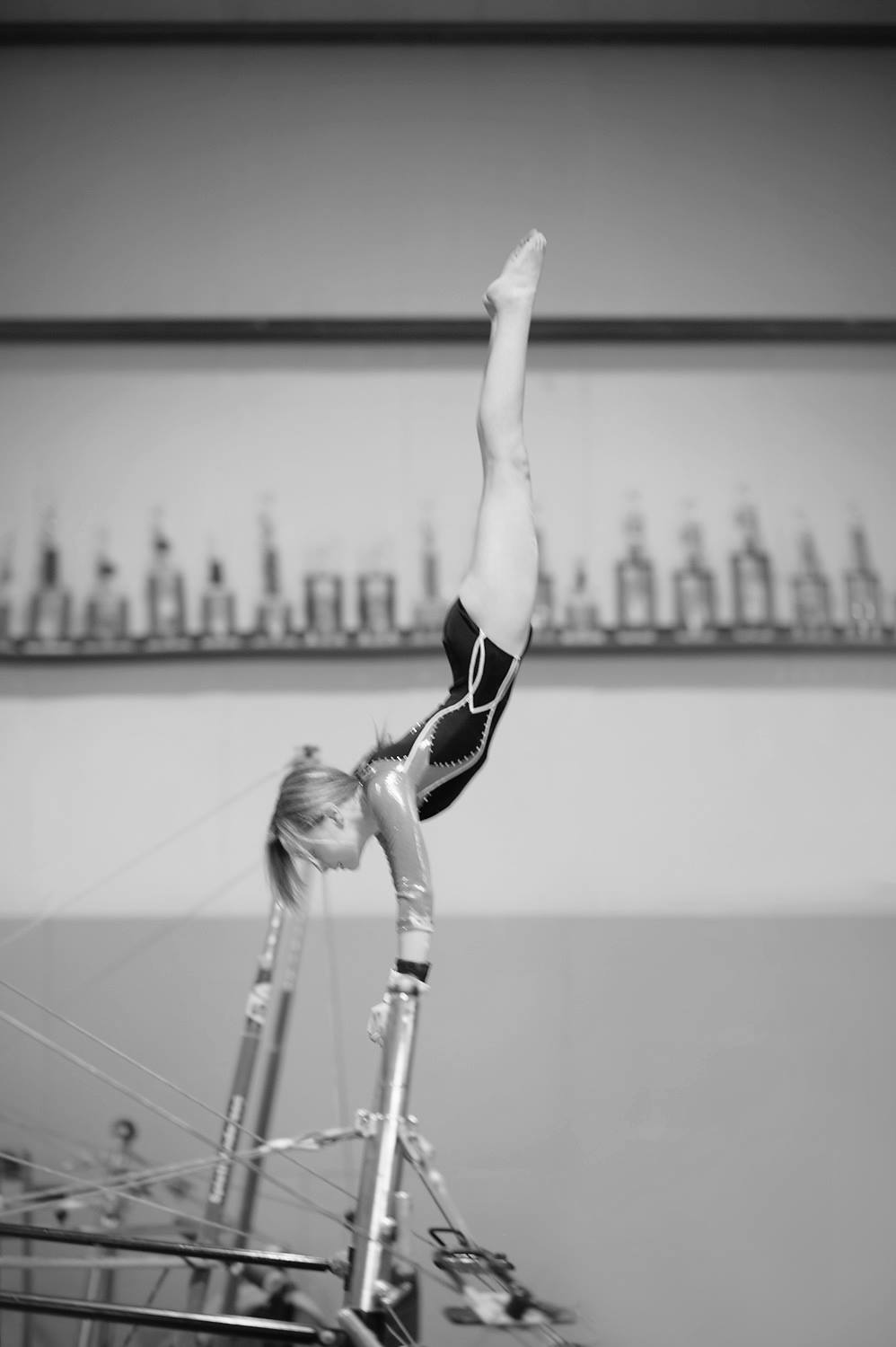
My friend Arun Kumar Jayan (ALL THE WAY FROM INDIA!) shared this drill for basic body shaping for circles for Pommel Horse.
Regardless of the event, it all starts with the correct body shape.
[Read more…]
My friend Arun Kumar Jayan (ALL THE WAY FROM INDIA!) shared this drill for basic body shaping for circles for Pommel Horse.
Regardless of the event, it all starts with the correct body shape.
[Read more…]
We are at the point in the season where many coaches have expressed their frustration to me. The season is almost over and things aren’t going the way they want it to. They feel they have put in the time, they have worked hard and still they fall short at competitions. With many of these coaches what I have seen is a failure to come up with a comprehensive plan OR failing to plan at all!
When I was a rookie coach I was told to practice the “6 P’s” Precise Planning Prevents Piss Poor Performance. It took me a few years to understand everything that must go into a plan and to this day I always feel that I am adding small categories of things that need to go into my plan. I am adamant that my plan must be written down. That way if something works- I don’t have to remember it! If something doesn’t work I have a reference to go back to.
Planning: the preparatory work the coach must do to structure training systematically in alignment with the themes and objectives of training and the athlete’s level of conditioning.
The process is the result of the experience of the coach coupled with applicable sport science concepts.
Jan Olbrecht, Belgian sport scientist, likens the training plan to a table of contents in a book. It should be comprehensive, covering all aspects of the athlete’s performance.
The training plan (Table of contents) should include:
I also know that we will have a session on planning at Gym Momentum Training Camp.
I’ll preface this post by saying that I don’t have many answers. I’m simply asking questions and making observations as we navigate one aspect of our lives: youth sports.
Another preface is that my wife and I were both fairly decent gymnasts in our youth.We weren’t unbelievable, but we were athletic. A few more caveats:
I love coaching. I never really enjoyed coaching my kids. Watching and just being DAD was so much better.
I believe that competition is a good thing.
I believe sports in general and gymnastics specifically have the ability to teach valuable life lessons.
I want my kids to do their best and I will support them however I can.
I always remind myself in the gym that I am teaching WAY more than gymnastics. I want the kids to create some positive lasting memories.
Here’s the big question I’m wrestling with regarding youth sports: Where is the joy?
Have we traded it in for competition? Or preparation? Or even comparison?
I’m not talking about International gymnastics or truthfully even college gymnastics, that’s not reality yet.
With regards to families- I’ve seen it all.
Angry parents. Frustrated coaches. Bitter kids. Schedules on the brink of disaster.
Screaming, hustling, shuffling.
Demanding, spending, comparing.
More dinners out of a bag in the back of the car than around a table. More time apart than together. More chaos than peace.
For the love of our kids, can we please inject some more joy into gymnastics?
After all, are our children competing in gymnastics because they love it or because we want them to love it?
Because it teaches them something about themselves or because it validates something about ourselves?
Because competition brings out the best in them or the worst in us?
Chances are very small that any of our five children will ever earn a penny from playing a sport. (Unless they hustle younger kids on the playground. “Hey- I’ll do a back flip for a dollar!”)
In light of that reality, wouldn’t it be amazing if our youth gymnastics coaches and parents filled these kids up with joy for the sport instead of over-competition? Joy instead of frustration?
With encouragement instead of criticism?
With a slap on the back instead of chastising them?
I’m not pretending to know all the answers. But I do know that, in the name of giving our kids an opportunity, we’ve stolen joy and replaced it with anger many times.
This isn’t a battle we’re shying away from and youth sports aren’t something we’re going to stop pursuing. After all, our kids love it for now.
So practically, here are ways to inject more joy into youth sports:
This is a sensitive conversation that I’m sure isn’t fully exhausted here, but it’s one I think we should start having more honestly and openly. I’m hopeful we can all start to play a part in the solution.
Because Gymnastics should be enjoyed not endured.
This post was adapted from Justin Ricklefs’ blog.
Follow Justin Ricklefs on Twitter: www.twitter.com/justinricklefs
A parent of a gymnast I work with posted this on my Facebook page. It is a great reminder that what we are doing is WAY MORE than just coaching gymnastics.
SOMETIMES IT’S HARD TO BE A GYMNAST… Sure, it’s hard to flip backwards on a 4 inch beam and YES it’s hard for their tiny bodies to defy the laws of physics & gravity in the way that they do…. BUT what’s really hard is to watch my child balance the world of being a gymnast and being a teen. It’s hard to watch her spend 15-20 hours a week in the gym while juggling her time to be a great student and a great friend. It’s hard to watch her suffer through injuries while all the time watch her anxiously await the green light to go back to what she knows & loves. And yes, it’s gut-wrenchingly hard is to watch your child feeling left out of things her school friends can do and she cannot.
But here’s what’s NOT HARD: It’s NOT HARD to watch my child set weekly goals… It’s NOT HARD to watch her fall down only to get back up again. It’s NOT HARD to see her experience what it’s like to fail and then in turn what it’s like to succeed. It’s NOT HARD to watch her truly learn the lessons she’ll need to be successful in life. It’s also NOT HARD having coaches who practically co-parent her on a daily basis, who want what’s best for her and who set the bar VERY high in terms of maturity. So sure it’s HARD to be a gymnast, but what’s NOT HARD is all of the other REALLY IMPORTANT STUFF
10 Reasons to Get your Child involved in Competitive Gymnastics
If you are reading this you are probably somehow involved in competitive gymnastics (or you are at the WRONG website? ) You probably can give your own 10 reasons. We’ve been hearing for years that youth sports build character, persistence and teamwork. I’d like to get a bit deeper and explain very specific reasons why parents should get their children involved in competitive gymnastics and why I am glad my children competed in sports. My daughter was a gymnasts and went into Color Guard. My son started off in gymnastics and now is a runner. My wife and I have had a number of live in gymnasts through the years. They were just part of our family. As I see any of “our kids” react to challenges in the workplace in college or in relationships, I am very grateful for these lessons they learned through competition:
1. Dealing with difficult people.
In Gymnastics, it was difficult coaches and teammates. In the real world, it’s coworkers or neighbors or even in-laws.
My daughter has dealt with coworkers who remind her of arrogant high school teammates. Her sports experiences gave her the ability to see past the annoying behavior and seek to understand.
2. Doing a job under pressure.
Recently, when Colby (one of our live in gymnasts) faced pressure as she was trying to become a pilot, I knew she would stay calm. As a gymnast in high school and college, she was the anchor of the team on Beam. It was imperative she stay calm under pressure.
It’s hard on Mom and Dad to watch their kids compete under stress, but that pressure is a breeding ground for growing the ability to stay calm when they grow up and life throws them curve balls.
3. Sticking with a hard task.
In Gymnastics, your child can learn to keep working towards a goal, even when it feels hopeless. I see this daily in my daughter, who is working hard to achieve a personal goal in her life. She has faced numerous setbacks, but she will not give up.
That type of persistence is only learned as one faces and works through challenges. She learned this as she fought for every skill she ever learned.
4. Ignoring Doubters.
There will always be naysayers and haters. We have all heard them when we coached teams that did not live up to expectations. We heard them when kids made mistakes and parents struggled to believe in their abilities. Our kids heard them from teammates who second-guessed each other.
If your kids learn to ignore the negative voices in gymnastics, they will be ready to do the same in life.
5. Understanding the Boss (i.e. Coach)
As a coach and parent, I wasn’t perfect, there were times when the girls could not understand what I was asking. All kids had coaches who were difficult to read. You need to tell them their job is to strive to understand what the coach wanted and needed them to do, even if he wasn’t clear in his instruction. This endeavor to try to understand others before judging will help them through many relational and workplace problems.
6. Expressing needs and wants.
When you insist that your child confront the coach themselves instead of jumping in to do battle for them, they learn to express concerns to a person of authority. I see how my son and daughter have become confident communicators because we didn’t do their talking for them.
7. Exercising patience with people who can’t keep up.
There was always a gymnast who needs more help than others. The beauty of gymnastics is that it is an individual sport and children will all progress at their own pace. As adults, gymnasts are able to give encouragement and compassion to coworkers, friends, or neighbors who can’t quite keep up in life. I have no doubt that they learned this partly in the gym.
8. Respecting and benefitting from the strengths of others.
The ability to appreciate the skills of others and support their talents makes for a great team player, in the gym, in the office, in the home.
9. Finding Worth.
Your children can learn that they are defined by who they are, not by what they do.
When integrity, honesty and hard work become the true measure of a champion, and not just stats, trophies and accolades, then your kids will not base their self-esteem on performance — in the game or in life — but on who they know themselves to be on the inside.
10. It’s Fun
I miss watching my kids play sports. All sports. From little league to youth soccer. I miss watching my daughter compete in gymnastics. and Color Guard. Today, watching my daughter coach her Color Guard Team is just not the same. But as I see them apply their sports lessons to the real world as adults, I feel like a proud dad watching from the stands all over again.
I just read your new article! Well, that was a shocker when I saw my name in there. Great article. I can’t agree more, gymnastics has paved a foundation for the rest of my life that I countlessly depend upon.
You have had a VERY large part on who I am today! I use lessons you’ve taught me on a regular basis and I still do ‘what was the best part of your day’ whenever I can remember to. It was learning to get through the adversity of gymnastics that keeps me going today and what allowed me to finish 3rd in my Pilot training class (after being 1 ride away from failing).
If at first you don’t succeed, Try, Try again. (But make a correction please)
There are many reasons why sports are so valuable for our children to play, no matter what age those children may be. Of course, helping kids develop and maintain physical fitness is one extremely important reason why kids should play sports. Playing sports helps kids stay healthy. In an age of almost epidemic numbers of people suffering from diseases and physical ailments related to obesity or not being at their optimal weight, the more opportunities for kids to be healthy and fit, the better it is for all.
On top of the physical benefits, there are many other reasons why kids should play sports, probably too many to cover in a single blog post. We have all heard it many times now, but sports can teach kids so many valuable life lessons. As coaches, many of us focus on intentionally teaching those life lessons to the young people in our care. The booklet and presentation by the same name, Life Lessons for Athletes, by Bruce Brown, the director of Proactive Coaching, highlights 10 behavioral characteristics that we should be helping kids to learn, understand and develop, not only for their involvement in sports, but for all aspects of their lives. The 10 characteristics are:
1. Integrity
2. Teachable Spirit
3. Academic Responsibility
4. Confidence
5. Accountability/ Work Habits
6. Discipline
7. Mental Toughness
8. Pride/Humility
9. Leadership
10. Selflessness
While there are certainly more things that playing sports can teach young people, this list is a prime example of many of the qualities and characteristics we can help young people learn by being involved in sports.
However, there is an extremely important caveat to this. In order for us to make sure that sports are teaching young people these things, we must make sure that we are intentional and purposeful about teaching them to our student-athletes. So often we hear people say that sports teach character, but when we look at the games that kids (and adults) are playing, we do not see examples of great character — and all too often we see the exact opposite. Just because a child runs around on a soccer field or a basketball court for two hours, it does not mean that s/he will learn how to be a better person or learn the value of working hard or any of the other elements on the list above. In fact, too often children are taught (whether intentionally or not) how not to behave. Oftentimes children learn how not to behave from the example of the people who should be teaching them the right way to behave — coaches and parents. But when coaches (and parents) intentionally design lessons and practice plans that include various elements of character, sportsmanship and life lessons, and then go out and work on those things with their teams, children have a much better chance of learning many positive lessons from their involvement in sports.
So how can coaches and athletic administrators do this? It’s quite simple — incorporate into your practice plans daily or weekly themes and lessons that you will teach. This can be done for 10 or 15 minutes prior to or after practice, where you take a theme of the week (for instance, something on the list above) and you read a paragraph or two about that theme and then discuss it. It is helpful to have some quotes by famous (and not-so-famous) people about that quality and discuss those quotes with players. Some of my favorite moments as a coach have been those 15-minute lessons I have had with my teams, to hear how certain ideas or quotes have affected certain players, and to hear the discussions that were then spawned because of it. This can be a very powerful part of any team’s season.
However, it doesn’t end there. If we take 15 minutes for four days in a week to discuss sportsmanship or poise, and then in the game on Friday night, I act like a raving lunatic at every call I disagree with, or I run the score up on a much weaker opponent, the 15-minute lessons were worthless — and possibly even damaging. We must go out and live by the very principles and lessons we are trying to espouse. During the week when we cover sportsmanship, for instance, I will set up moments in practice (that the players don’t know are coming) that will test our sportsmanship. I have purposefully made bad calls in scrimmages to see how we handle ourselves and then stopped the scrimmage to address the right or wrong response that we saw.
Sports can be extremely valuable in the growth and development of young people. However, it is up to us as the adults to do everything we can to make sure that what we want them to learn and enjoy from the experience are the very things that we are teaching them.
For more information on Proactive Coaching, visit www.proactivecoaching.info
It has been said life is equal parts what happens to us and how we process what happens to us.
I think that is very true in gymnastics. The attitudes and beliefs that a gymnast has about herself and the sport will inevitably shape how long she participates, or at least how happy she is while she is involved.
Here are nine beliefs that inevitably lead to a less than stellar gymnastics experience:
My mornings generally start the same.
I get up, turn on NPR, make coffee as I scan the headlines then head to the gym to work out. This morning was no different. After I checked the news and weather I checked Facebook. There was a great status posted by one of my FB Friends from Texas.
I’m watching Katy at gymnastics practice and she is all smiles and so incredibly happy. Can you imagine finding your passion at such a young age?
……People gasp and give me “looks” when I tell them how many hours she is at practice….but if their baby says to them what Katy has said to me “if you take gymnastics away from me it’s like taking food or water away” they too would understand my level of support.
To which I commented:
This is the best thing I could possibly have read first thing in the morning. It is something I try to show each gymnast I work with. That they should do this for the love of the sport. This is something I try to teach each coach. That what we teach is WAY MORE than just gymnastics.
And she responded:
Tony I agree and it absolutely matters that her coaches create a healthy environment for her to thrive. What you and Gym Momentum camp do to train coaches makes a difference. See you in Boston!
Thank You Stacy! You made my day!
This was pretty good.