Mykaya Skinner making twisting doubles look WAY too easy.
https://www.youtube.com/watch?v=Hz9KL1pw9jc#t=73
Mykaya Skinner making twisting doubles look WAY too easy.
https://www.youtube.com/watch?v=Hz9KL1pw9jc#t=73
Pioneer Gymnastics, Inc. is a gym that touches the lives of families in the local community. The gym was established in 1966 and is located in beautiful East Longmeadow, Massachusetts.
Summary of Position
Great opportunity to join a dedicated coaching staff along with a successful, strong and rapidly growing competitive team.
The position is responsible for providing leadership and guidance to athletes and assistant coaches within the program. The Head Coach will help coordinate the selection, instruction, training, and conditioning of all athletes at all levels in the program. The Head Coach works closely with the recreational program leaders to ensure all curriculums are developed to meet team requirements.
Essential Duties
Experience
Qualifications
Evening (3:30-7:30pm) and Saturday AM hours (9-12pm) required. Flexibility with the number of work days.
Pay & Benefits based on experience.
Contact Information
Pioneer Gymnastics, Inc.
Name: Danielle McKinnon
Address: 45 Maple Street
City: East Longmeadow
State/Province: Massachusetts
Zipcode: 01028
Ph: 4135251291
Email: info@pioneergymnastics.com
URL: http://www.pioneergymnastics.com/coachingcareers.html
I’d like to thank WENDY BRUCE MARTIN for contributing this article. Wendy, a former US Olympian, is now working as a Sports Psychology Expert at Peaksports.com and Get Psyched. She has a great blog, Get Me Psyched, as well.

There are numerous articles, books, videos, camps, and conventions that focus on educating coaches and gym owners all the skills, drills, and secrets to having successful athletes. As a coach, we want to make sure we are on the cutting edge of training, conditioning, and skill development and we do everything in our power to make sure that we offer our gymnasts the best training experience. But what can we do to help our gymnasts prepare for life after their gymnastics career is over?
A typical gymnast’s life starts around the age of five. They usually start off training once a week for an hour. Then every time they move up a le
vel they add hours and days to their training schedule. By the time the gymnast is a level 6, they are training twenty hours a week. If the gymnast keeps moving up to level 10 and stays in gymnastics until the age of eighteen, they will have devoted over 10,000 (even more if they compete in college) hours of their youth to the sport of gymnastics. For those 10,000 plus hours they are told what to do, when they need to do it, how to do it, and why they need to do it. Every aspect of their career is dictated by the sport of gymnastics. They do their schooling around their gymnastics schedule. Their family takes vacations around their gymnastics schedule. Even their eating and sleeping schedule is at the mercy of their gymnastics life. And if you ask the gymnast, they wouldn’t want it any other way.
A gymnast is proud of their muscles, rips, calloused hands, and washboard abs. They take comfort in knowing that they have found a sport that they found their true friends and family. They have a sense of security knowing that their lives will pretty much follow the same schedule until they graduate high school. And they are honored to be called a gymnast. But what happens when a gymnast reaches the end of their career? What happens when their rips and calloused hands turn soft? What happens then they lose their gymnastics friends and family? What happens when for the first time in their lives they have no one telling them what to do, when to do it, how they should do it, and why they should do it? What happens when they are no longer a gymnast?
Many former gymnasts say that they had a hard time adjusting to life after gymnastics. One gymnast said this “It felt like I had spent my entire life being coached on how to be a successful gymnast and then one day it was over and I was left to fend for myself. Everyone around me expected me to just move on in life, but for me, I felt empty inside. I felt like something inside me had died. I had to deal with the loss of gymnastics, the loss of my gymnastics family, and even the loss of my dream of making the Olympics. I felt like I had climbed Mt. Everest and I was standing on the peak admiring the pinnacle of my career and I looked back on my amazing journey with only great memories. But then I felt like I was left to figure out my own way home and everyone that had helped up to that peak had disappeared. Everything I had known my entire childhood was gone in one day.”
Numerous athletes tell me similar stories and how the loss of gymnastics was devastating. Like any loss in life, gymnasts may feel depressed, angry, confused, bitter, or empty. I have seen many gymnasts feel like they were failures in their sport because they didn’t live up to their expectations. Others who had to quit because of injury may feel robbed of their dream and have resentment to the sport. Some gymnasts lose their identity and struggle to find their self-worth without gymnastics. And still there is a select group that remains angry and bitter to a sport that they gave their childhood to and then abandoned them when they grew up. These stories of gymnasts that grieve over the loss of gymnastics are very real. But they need to know that they are not alone. It is OK to grieve over the loss of their gymnastics. They may feel many emotions from anger to bitterness. All of these emotions are natural and healthy. Gymnastics is one of most difficult sports in the world and it will be hard to find another sport that can compare to the training regimen of that of gymnastics. A gymnast needs to know that they can take all the wonderful skills both mental and physical that they learned in gymnastics and apply them to the rest of their lives.

It is also imperative for coaches and gym owners to understand that it is very important for gymnasts to feel that they are not lost and forgotten after they leave gymnastics. Gyms can create an alumni program: with gymnasts’ dinners, invite them to team banquets and have them sit at the alumni table, design boot camps to challenge their fitness, invite them to competitions and mock meets, have open communication with the athletes so they can know that the gym still cares, and have the gym owner and coach continue to help the gymnast set new life goals. These little things can make a big difference with a gymnast and hopefully help them transfer from a gymnastics life into life after gymnastics a little smoother.
This last weekend I was up in Montreal for Gymnix International. It was a truly great competition for all levels. There were 4 different clubs there who I consult with through out the year and I was SO happy to see them compete and help out where I could. As a gift for the gymnasts and coaches I worked with I brought T-shirts for the gymnasts and polo shirts for the coaches.
Someone asked, “What is Gym Momentum?” and “Can I get one of those T-shirts?”
Answering the second question first. At this point Gym Momentum apparel is NOT for sale. It can only be earned at a training camp or clinic.
WHAT IS GYM MOMENTUM?
 The idea for Gym Momentum started at a camp I used to work at. After long days in the gym we would hang out at night and continue the gymnastics discussion. A coach would come in and ask a question about something they struggled with in the gym that day (or a problem back at their home gym). Now there are 6 or more pretty smart gymnastics minds all problem solving. Talking technique, drills, common cues and common mistakes. When we are problem solving, we are ALL equals.
The FEELING I want for Gym Momentum is coaches working together for a common goal. Sharing their knowledge and experience.
If you have a question- ASK IT. If you have an answer, GIVE IT.
I have some great coaches, physical therapists, personal trainers, sports psychologists, business minds and sports scientists who regularly share and contribute. I couldn’t (and wouldn’t) do this without them. I am just not that smart!
So get involved, keep the momentum going and become part of the Gym Momentum community.
We will soon begin selling videos from the Gym Momentum website. This is just another way we can share gymnastics knowledge.
Many people have already booked a Gym Momentum clinic. Whether for business consultation, recreational or pre-school program or a team clinic. If I can not do it or I feel one of my other coaching friends is more qualified, I will help get you in touch with them.
 The BUSINESS of Gym MOMENTUM has been pretty good. Lately I have been spending about as much time doing business consulting as I have spent time doing gymnastics consulting with about 2 weeks a month on the road.
The last 2 clubs asked:
“What’s your secret? How can you spend as much time AWAY from your gym as you spend at your gym and still be successful?”
My answer is was the same.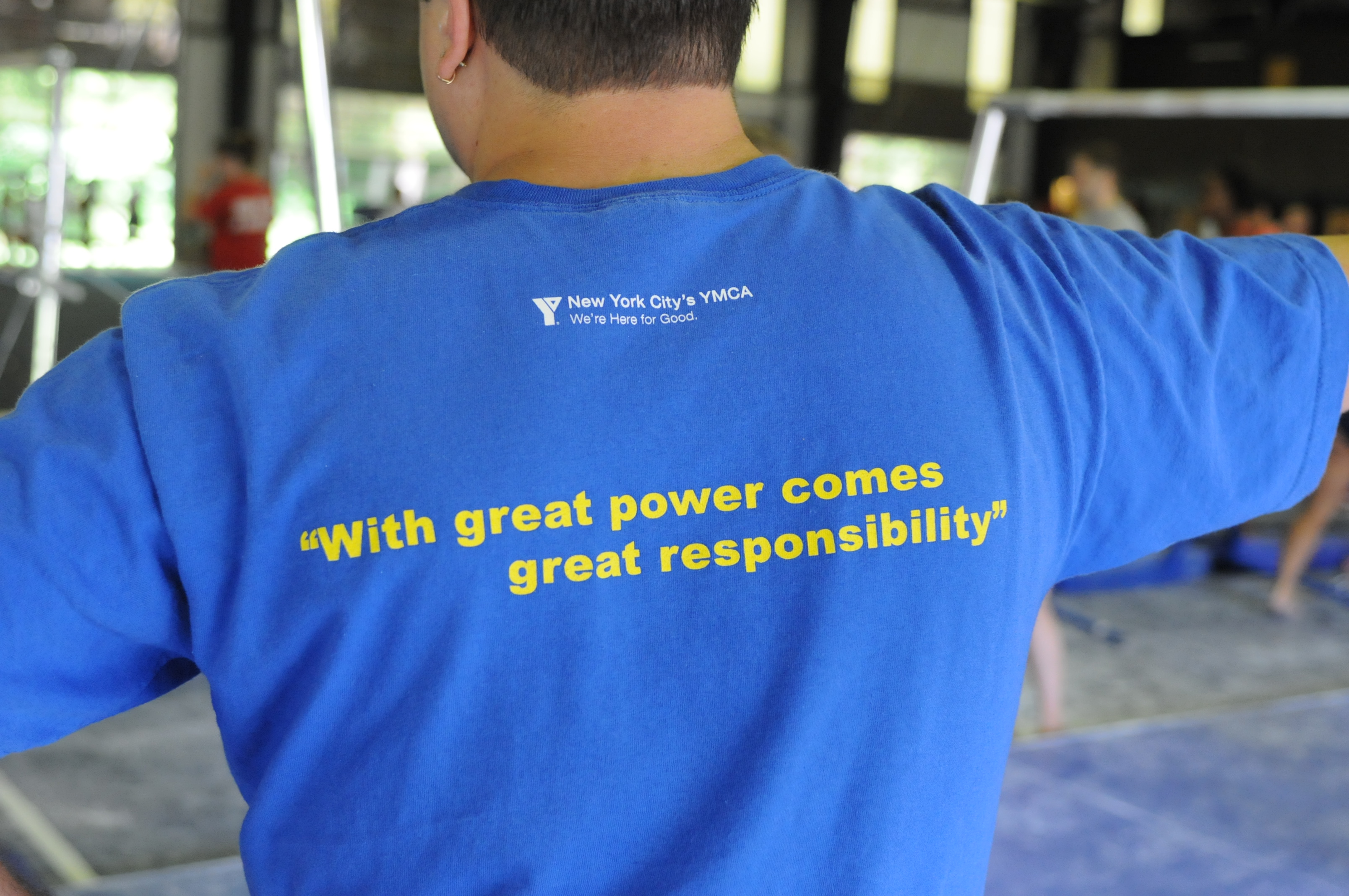
I find myself increasingly appreciative of the jobs my staff do. Nearly every meeting has me saying-
“I’d ask Dina (The General Manager) to do this….”
or
“Matt (Head Coach) would….”
or
“Cori (Co-head Coach) did …”
All with good results.
This past week up in the Canada. The director of the club was spending too much time micro-managing everyones job and not focusing enough on the group she was coaching or the business she was trying to run.
We spent a lot of time trying to get her to “let go” of some of the responsibilities.
It is easy to say you want to empower your staff. It is difficult to actually do it.
She asked how am I able to TRUST everyone to do their job and I said it is fairly simple-
I have clear expectations and make sure that everyone knows that they can not have the authority without the responsibility. “
None of us like “Helicopter Parents” nor should you like a “Helicopter Owner”
She asked how my business can afford for me to be away . When I started coaching IN the gym less, I took less money from the team program in salary. I spent more time working ON the gym. Marketing, Management and business planning. The increased revenue from this contributed to my salary. The money I make in clinics offsets the “lost income” from not taking the same salary due to reduced coaching hours.
I said- NEVER pay for a job that is not being done or being done to your expectations. And that includes yourself. If I have to do someone else’s job or continuing to clean up someone else’s mess then I would pay myself more and pay that person less. I still plow my parking lots and I have 1 night I am responsible for the gym to be clean for the morning. Everything has a price and at this time I am not willing to pay someone else to do those jobs.
At one consulting job an owner talked about one staff member who was always undermining their authority and causing unnecessary drama.
Long story short- That employee was fired on Saturday before I left.
Be the boss. Responsible and fair. If someone is NOT doing their job, doing their job poorly or undermining you, they are stealing. Stealing your energy and time and money. You can (and should) get by without them.
And to ANY of my staff who read this- just so you know- I say great things I say about you when I am called on to consult. Thank you. You’re the best.
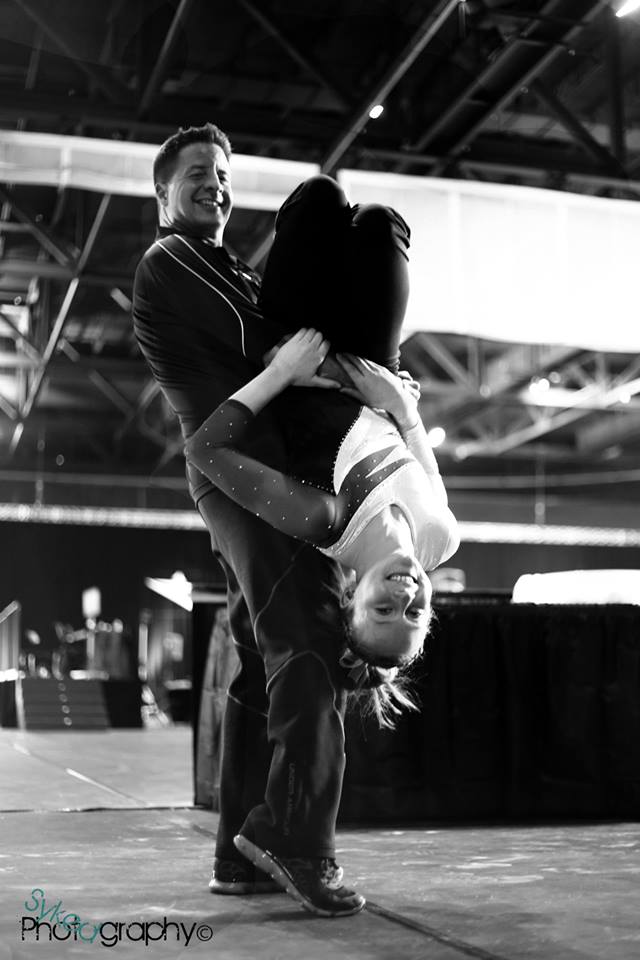
Just having fun
At some point in your life, you have probably made a New Year’s resolution. Maybe it was this year, and you set a goal to live your life differently in some way, big or small. You might already have abandoned your plans. Perhaps you have given up making resolutions because they so rarely succeed.
It is hard to make big changes in your life, and you have to enter into that process expecting that you will experience a few setbacks. What separates the people who succeed at achieving their big-picture goals from those who do not is not that they never fail. It is in their response to failure.
Everyone fails. Sometimes, you give in to temptation and do something you shouldn’t. Sometimes, despite your best efforts, other factors cause your best-laid plans to go awry.
So, how can you learn from your failures rather than giving up? Here are five suggestions
Check your goals.
Often, the way you state your goals can get in the way of your success. When you are on the verge of giving up, look at what you set out to do. Did you set yourself a positive goal like eating healthier food or reading more books at work, or did you create a negative goal like eating less or avoiding distractions?
Negative goals are almost always doomed to failure, for two reasons. First, when you are constantly trying to stop yourself from performing an action, you have to ride your mental brakes, using brain systems that are prone to weakening and giving out. Second, your habit-learning system does not learn from the experience of avoidance. You generate habits when you perform an action that is related to an environment. You learn from doing. You do not learn when you don’t do something.
So, even when you successfully resist temptation, you’re not training your mind and body to act a certain way. You have to reframe your goals to turn them into actions you perform rather than actions you are trying to avoid.
See the gray.
There is a tendency for people to set up their goals in all-or-nothing terms. You may create a strict diet that you have to adhere to. You may go from being a couch potato to a daily exerciser.
The problem with these all-or-nothing goals is that you are either succeeding or failing. In the case of a diet resolution, you are either sticking to the plan, or you have given up. Breaking the diet a little feels like failure, which can lead you to break it a lot.
If you find that your small failures become catastrophic ones, then you need to think about whether you are creating too strict a boundary between right and wrong in your goals. Do you feel that small failures are just as bad as big ones? If so, you might consider seeing a little gray. Yes, it is bad to overeat a little, but better to admit you had a bad day and try to do better the next day than to go into a tailspin.
Rework your plan.
When you fail, that means that something has gone wrong. You probably had some plan to achieve your goals, and on that day your plan did not work. As difficult as it can be to do so, you need to think through what went wrong and revise your plan so that the same thing does not happen again.
The Federal Aviation Administration (FAA) allows pilots to send reports of any mistake they make while in a plane to a central database. The pilots are not punished for admitting their mistakes. The FAA then analyzes the mistakes to see if there are changes in procedures that need to be implemented. Air travel is safe because of this willingness to reset the plan. The same principle can be used to help you make your life better.
Lead me not into temptation.
One of the biggest sources of failure is the environment. It is hard to resist temptations in your world. The more you are forced to confront temptation, the more likely you are to give in.
That means that you need to seize control of your environment and structure it to make the actions you want to take easy and the actions you don’t want to take difficult. If you find that you are spending too much time each day checking your email, then close your internet browser for a few hours a day. Consider removing the email app on your smart phone.
Make it hard to do the actions you want to avoid, then, replace those actions with something else. Rather than checking your email compulsively, spend the time reading, writing or taking care of tasks at work. Rather than pulling your phone out every 10 minutes, spend time talking to people and looking around the world. Give your habit-learning system a fighting chance to learn new ways to engage with the world.
Be kind (to yourself).
Finally, remember that failure is not a sign of weakness. It is just a sign that changing your behavior is hard. When you realize that you have failed at something, you will feel bad at first. Give yourself a chance to experience the sadness or anxiety that may come along with a failure. Then, after a few hours (or perhaps a day), get back on the horse. Learn from the experience and move on.
Remember that you forgive lots of people for their mistakes. Be sure to forgive yourself as well.

I fully believe that in order to Succeed you must have some set backs. Failure is a Prerequisite for success. So when you have a set back. Deal with it. Learn from it and move on.
 While most people from the North East of the USA were spending their vacation week in Florida or Caribbean, I headed up to Whitehorse in The Yukon Territory of Canada to run a clinic for the local club, Polarettes Gymnastics. It was an AMAZING time. I worked with their pre-competitve gymnasts and coaches up through their competitive gymnasts and coaches. There really is nothing better than working with eager gymnasts and enthusiastic coaches.
The Yukon is a pretty large and sparsely populated province. It’s pretty far North with Whitehorse being about as far North as Anchorage, Alaska and pretty far inland. While I was up there the temperature did not get above zero. Although COLD it was ABSOLUTELY BEAUTIFUL and I have never met a nicer group of coaches, kids and parents.
Being a small town it was pretty easy to be spotted as NOT being a local. Perhaps it was my lack of flannel or that I was wearing a purple cashmere sweater and a Boston Bruins (Toque) hat. I am a big believer in BUY LOCAL so I made a point of walking by Starbucks to go to a small local bakery, Baked Cafe. At night I would go catch some local bands and have a beer at PADDY’s PUB. By my third night when I walked into Paddy’s, I felt like a regular!
Back to the Gym: The gym was just loaded with equipment. Their biggest issue was finding a keeping staff as many former gymnasts coach for a while before moving away. The director of the gym, Cat, had a great core staff. Tessa, Anna and Andrew took a ton of notes, asked a ton of questions and we all had great discussions on what to do next. The gymnasts all worked so hard to meet my expectations, to show me what they could do and to try every drill and progression I showed them. The girls had solid basics and were ready to try some new skills.
Embarrassing comment of the trip: Cat had sent me a text telling me the Northern Lights were out. I texted back asking which way to look. Answer, “UP”.
Best Gymnastics Memories: Reena’s 1st double pike! HUGE. Fayne’s Improved down swing on giants! I could really name something fantastic that each gymnast did. Megan’s improved shoulder angle, Emily and Alexis making great corrections on vault, Anisa’s double back!! Caitlyn and Sydney’s drills on floor and Bianca and Matisse’s work on developing swing on bars. I was so proud of all of them!
Best NON Gymnastics Memory: They had a big weeklong celebration called RENDEZVOUS. There was snow sculptures and all kinds of out door activities. Now I am not sure WHO thought it was a good idea to plan all these outdoor activities when it is WAY below zero outside- But- It was fun.
If you ever get the opportunity to travel up to the Yukon. Take it! You will not regret it. Look for information about a possible Training Camp 2015!
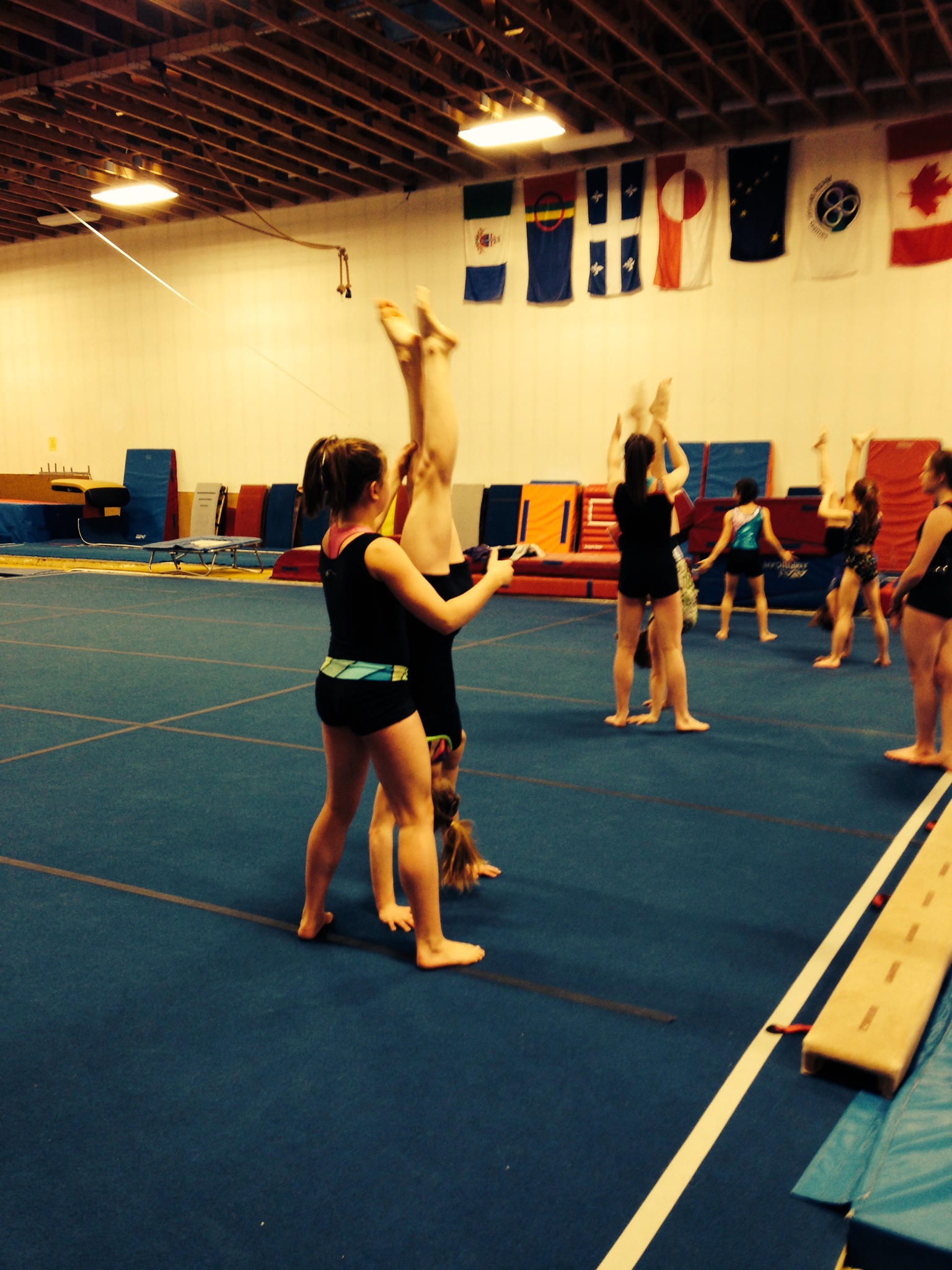
Handstand drill
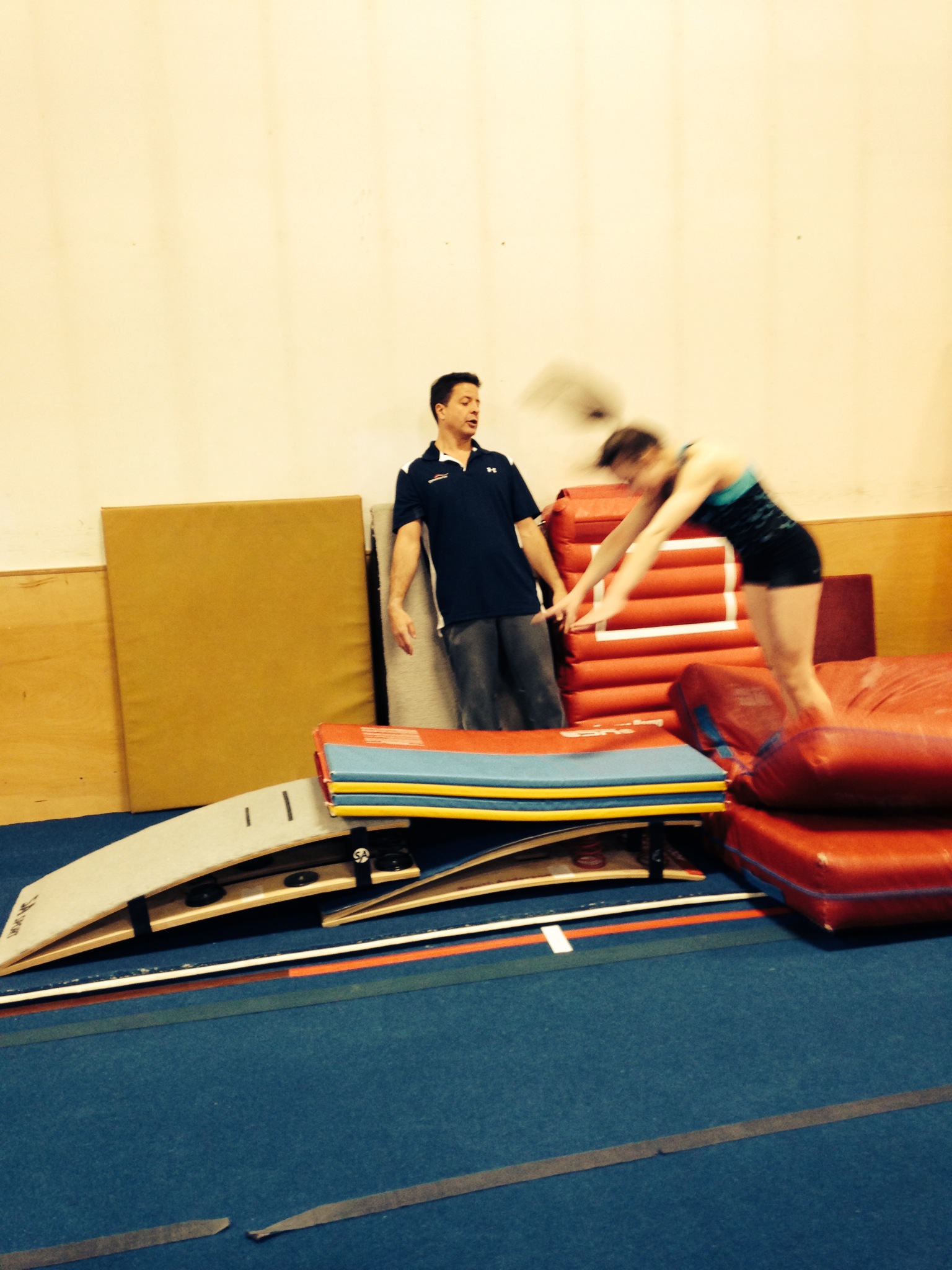
Yurchenko Drill

Working on Arm position with Fayne

COOLEST SNOW FORT EVER



Winning Snow Sculpture

Winning Snow Sculpture

Eating Eskimo Donuts with the girls

Meeting A Celebrity. RUGER who won the Dog Howling Competition


It’s Not about the Coffee.
Improve the Gymnastics Experience.
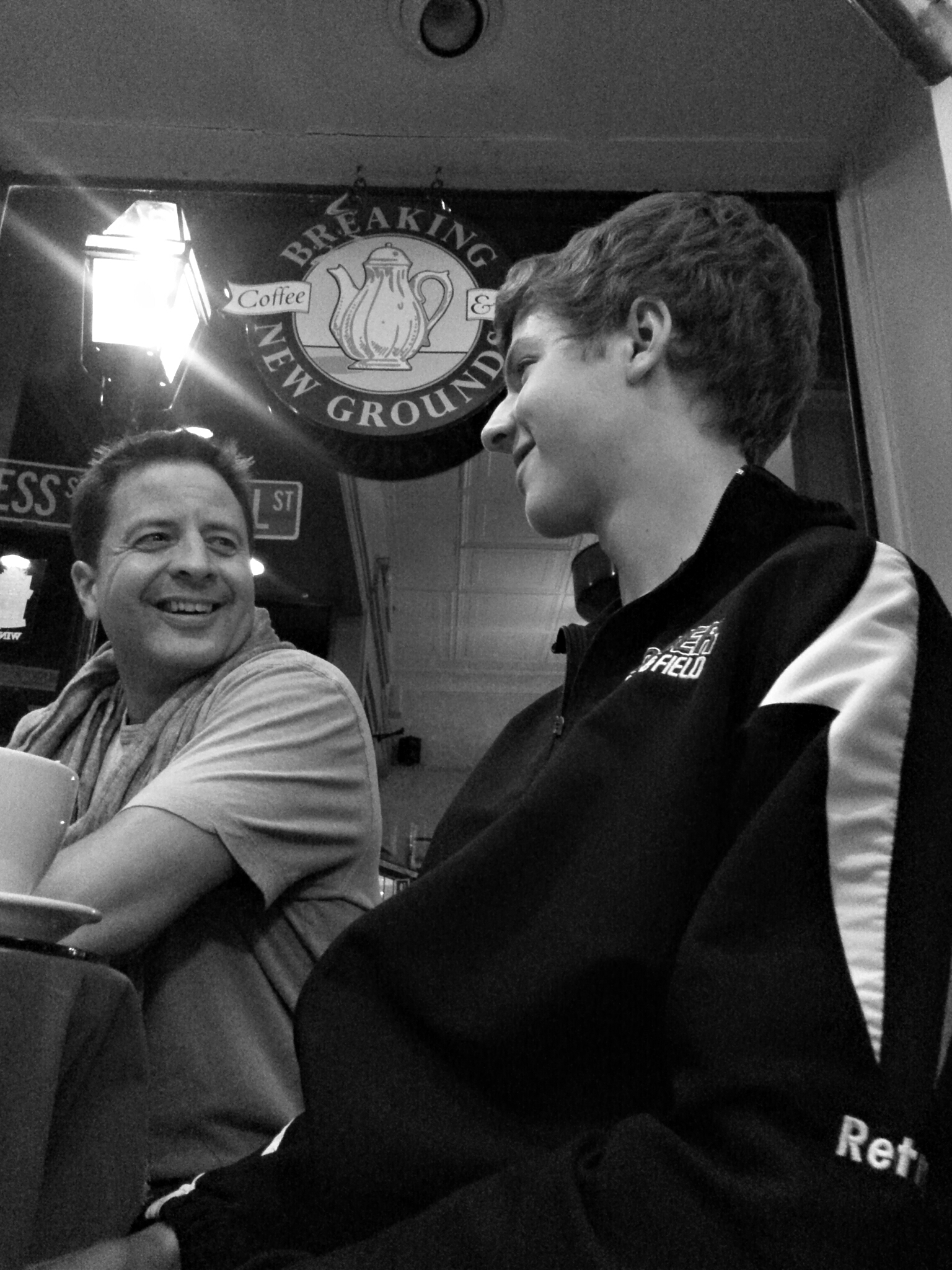
I am a big fan of Coffee. I prefer to go to my local cafes. rather than to a Starbucks. Although I can barely tell Sumatra Plus from instant coffee, I do know one thing about the cafe I frequent, BREAKING NEW GROUNDS (BNG), it is all about the experience.
The joke among friends and family is that BNG is “my office”. A few other business owners also frequent the cafe and we all refer to it as “the office”. Lets face it, we can get a change of scenery out of the gym, the terms of the lease are quite favorable, and I can hear what is going on around town. It is important to have a Third Place.
At my office they know me. A friend once had a birthday present delivered to me there. (By the way if you are ever in Portsmouth give me a call and I will meet you at the office.) Usually when I walk in they know I want a House roast for here. No room for milk or cream. It costs $1.95.
I know I can get twice as much coffee at McDonalds for $1.07, so why BNG? Plain and simple it is about the experience. The baristas are friendly, the music is great,free Wi Fi (which works most of the time) and I actually like it that the tables are close together. It is about interacting with the community and with the tables close, you can talk with the people at the next table without feeing awkward. I know McDonald‘s has free Wi Fi also and it may be faster; but it’s just not the same. I usually can find other local cafe’s with a similar experience and with some minor variations anywhere I go in the US and in the world. (I just returned from Whitehorse in The Yukon in Canada and had a great experience at BAKED.) Heck I even like the smell the smell of the brewing coffee (I know you coffee aficionados say they burn their coffee hence the smell) but it sure beats the smell of greasy burgers at MacDonald’s.
So what does this have to do with coaching or your Gym Business? To me it is a clear message to us as coaches, it’s not about the wins or losses, it’s not about the sets and reps, or the volume of running, it’s about the process and the process comes from the experience. We must give our athletes daily experiences that instill in them a desire for excellence in everything they do. We, the coaches are responsible for this. It is not about facilities or technical knowledge; it is a clear focus on people and relationships. Before you start training today look closely at the experience you are giving your athletes – How do you greet them when they arrive at workout? How do you correct them when they have done something incorrect? You, yes you the coach, can create an atmosphere where champions in sport and life are inevitable. Remember it is not about the coffee!
Coaching is a process that has a deep foundation in pedagogy (Science of teaching), supported by science, forged in experience, proven and tested in the competitive arena. At its essence coaching is teaching and the coach’s classroom is the gym, the pool or the track. To be truly effective as a coach it is important to remember it is not something you do for a couple of hours a day, it is something you are. To be a great coach demands that you be all in with a total commitment to being the best you can be. After all how can we ask the athlete for commitment if we are not? Immerse yourself in the process and the outcomes will take care of themselves.
It may be a little trite to say, but GOOD is the enemy of GREAT. After workout this morning I was reflecting on what it takes to be the best. I run into a lot of coaches who say they want to be the best. It is easy to talk about it and intellectualize about being the best, but actually taking the actions necessary to be the best is another thing.
For your gymnasts it starts with talent and ability. I have seen many talented athletes who never took that last step to greatness; it is a big step into unknown and sometimes uncharted territory. It is a step filled with uncertainty and risk.
Dedication and commitment are prime ingredients. Proper guidance in the form of coaching and support personnel will go a long way toward making dedication and commitment meaningful. Certainly ability to have a laser like focus on the task at hand is important. Along with focus the ability to maintain perspective is important – the ability to balance wins and loses, successes and failures as well as maintain some semblance of a normal life outside sport are important.
Lest we forget this is a process that takes time. It is a growth process. Not very many people wake up one morning and are great. That’s make perseverance, the ability to stay the course in spite of obstacles a huge component of being great.
In my experience after all that is said and done it simply comes down to choices. It is as simple as choosing to stay in bed and sleep in or go to the morning workout – the athlete makes conscious choices to be the great or merely be good, sometimes on a daily basis. The great ones make the choice to be outside their comfort zone all the time! Frankly I think this is the reason there are few truly great ones, it is rather simple, many are called but few choose. It is easier to just be good.
Recently I have been doing a lot of consulting with a few individuals looking to start their own gyms. Their questions range from “What’s a good name?” to “how much start up money will I need?” My gym, Atlantic Gymnastics Training Centers is in its 20th year. It seems like just yesterday I was standing in loan office of the bank 100% sure they were going to turn me down. But at least I knew where to start. My friend John (who had just opened up his own club) and I would talk on the phone 2 and sometimes 3 times a day. Just helping each other out with the current crisis. We joked that we only worked 1/2 days. We worked a 12 hour day so technically we were correct. It seems like just this morning that I was the one to plow and shovel and I was the one coming in to clean the bathrooms. Wait, that was this morning.
20 years ago I had a passion for gymnastics. A passion that is still there today. I had out grown the club I was working at. I had a good solid team level 5- Elite. I had some great ideas for recreational and preschool classes. How do I turn that passion into a profitable business? When we opened we had 80 team kids and about 150 kids in other programs. Today we have 80 Team kids. 800 Rec and Pre school kids at our Portsmouth facility and another 60 team kids and 500 kids at our Dover facility. I am happy to say that now I see MANY of my original customers at the gyms with THEIR children.
The first question to ask yourself when you are opening up a gym:
So: how do YOU turn your passion into not only a solo career but also a thriving business?
Think laterally when you build on your existing skills and passion
Is there a problem or disconnect in your community where you can fill the void? When I first opened up I saw that there was some places to find good gymnastics instruction, some places that had good customer service, and some places that had good quality team programs. I could not see why these couldn’t be combined under one roof. It was going to be hard, but we knew it was possible.
Don’t be put off by initial hurdles – work hard to find the right partners
I came up with the ideas, we talked them out at staff meetings, usually me, one of my coaches and my wife. We tried things out. Whether it was a preschool lesson plan, a marketing idea, or a competition plan for the Level 10’s and elites. Some worked and some didn’t. I learned a TON from other coaches and club owners who have been down the road before (see Reinventing the Wheel) We had some partners initially but our goal was to buy them out in 2 years. I’ve never worked with a partner in a business before, only with other coaches and teachers. I learned to listen, I learned to compromise and I that I was not always right. I was smart enough to keep some pretty good notes as we found our path. So I wasn’t going to stumble down the same dead end.
If you don’t know: ask!
Ask loads of questions, take help – there’s always someone you can call. I ask a lot of questions! Wherever I go, I try and meet someone new. At USAG National Congress I met loads of club owners who were very enthusiastic about helping me. Pointing out some important things I may be forgetting. The most important thing I learned- “You’re only as good as your staff. Build a good team there.”I wish I could remember who told me that. I still have it written down on a paper above my desk at home. (If it was you, I thank you.)
Work on your brand’s appeal
We took the ATLANTIC name and built a world around it: We wanted Atlantic Gymnastics Training Center to be THE place to do gymnastics on the seacoast. Not A place to do gymnastics. We created a history and a feeling that being at ATLANTIC made you part of something special. We got involved in the community and with the arts. We kept our name out there. We created a tag line, “Building Campions for Everyday Life”. We wanted people to know that no matter what sport you went into, gymnastics was the place to start. We trained soccer teams, hockey teams, skiers and snow boarders. AND- we made each one feel important.
Be prepared to make sacrifices – and put in a lot of hours
I never kept track of the amount of hours I worked in the beginning. It would have only depressed me. I know the feeling that I had when I had just finished cleaning the gym at the end of the night after a 12-14 hour day, looking back as I turned off the lights and thinking, “wow, this is mine.” I still get that feeling.
There will of course be long hours, and seemingly endless weekends of competitions only to have to get to the gym extra early Monday to meet the guy to fix the heater.
Don’t expect any sympathy from ANYONE who owns a business. It’s just part of the job.
Approach other businesses with a point of difference
When you are introducing yourself to other businesses in your area, let them know what makes you different from other gymnastics clubs. Why should they get to know you. Why they should see if cross marketing with you is a good idea.
Be a pioneer
When I opened up in 1994 there were a lot of clubs that were operating and had been in business a long time. We were going to do some things different. Our goal was to be the new standard for gymnastics instruction and customer service. I charged the most and delivered the most.
Just my thoughts. Have something you want to add? Share it with Gym Momentum!