Go get a friend
Sit Down
and watch.
Jason Mortimer share another great set of drills. This time for increasing the extension in a GLIDE KIP. You should really check out his youtube channel. He has a lot of great videos on there.
[Read more…]
Obviously not a drill every coach can do.
It’s an easy way of drilling the one-arm release with bigger, heavier kids and getting them comfortable. If you’re going to pause them, holding them by the hips/waist requires arm strength. With this particular spotting method, my arm is pretty much buttressed in such a way as to eliminate the need to exhaust (or injure) my bicep.
As the high-to-low transition gets faster, the standard method of guidance spotting at the chest/hips/waist/thigh takes over.
Submitted from Gym Momentum follower Andrew from Australia. Did any one really think this was a good idea?
I’m sure the conversation went something like this:
“Hey Guy’s watch this!”
“Well, it seemed like a good idea at the time”
USA Gymnastics shares the Top 10 moments from 2012
[Read more…]
Each year at this time of year I look back on the previous year just completed and as I get older I find myself looking back increasingly over years gone past. I do this not for nostalgic reason rather I do it to gain perspective to more forward. Much like a rower in a single scull sits facing away from the direction they row, they must look back to move forward effectively. The end of the year is a time for reflection and analysis. Each day is special, so do something to make each day special for yourself and for someone else.
Lessons from 2012
Being ready to deliver on the day – The ability to have your athletes ready to perform at their best at the required time is most important. That can be the final of the Olympic games or a Level 4 local meet. Everything is directed to this goal.
Coaching is a careful blend of art and science – No more explanation is necessary
Emotional intelligence is the key to effective coaching – It is all about people and how we as coaches grow and develop ourselves and the people we work with.
An overemphasis on injury prevention will lead to injuries – Good injury prevention is a transparent part of a sound training program. What is happening today is an over emphasis on so-called corrective exercise and special injury prevention exercises. Normal training is being ignored. When training is ignored then the athlete is predisposed to injury because they are not ready to perform.
It is imperative to develop and refine physical literacy in parallel with skill development – Physical literacy slightly leads skill and technical development; it is impossible to have one without the other.
We must take a giant step back and look at what we are doing with recovery – I think we need to learn to use recovery methods more judiciously. Not necessary just ice baths after every workout. We need to understand that the inflammatory cascade is part of the adaptation process. We must educate the body to take advantage of this not interfere with this all the time. Incorporating recovery into your workout plan can not be ignored. Here is an article by BILL SANDS- The importance of planning rest periods in the weekly training plan. Includes a sample recovery program.
Little things count – Big things are a given, they are hard to overlook but it is the little things that quickly add up. Attention to detail in each part of your practice will make the difference.
Coaching men and women is different. “Men battle to bond. Women bond to battle.” Nigel Redman – I think this is pretty self-explanatory.
Things I Will Not Miss About 2012 (and never want to hear about ever again)
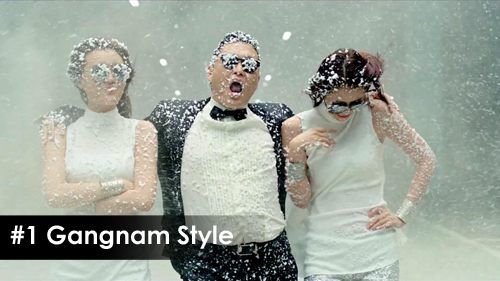
We had to endure the Electric Slide, the Hustle and, the Macarena. 2012 brought us, direct from South Korea, Gangnam Style. I don’t get it. Still it received over one billion views on Google’s You Tube. Frankly it is stupid. It has replaced YMCA and the Conga as the most embarrassing dance at weddings and celebrations – unless of course you are eight years old. Enough is enough.



TwilightYes, Robert Pattinson and Kristen Stewart might be easy on the eye but that’s the only appeal of Twilight, whose lovesick melodrama is surely only acceptable if you’re 15 years old and full of hormones. You like vampires? Watch The Lost Boys – in a battle for King of the Vamps, Kiefer Sutherland’s David Van Etten would beat Edward Cullen hands down.


MORE THINGS ON MY LIST
THE KARDASHIANS AND OTHER REALITY PSEUDO CELEBRITIES
FISCAL CLIFF – C’mon Congress. Do your job! And you wonder why your approval rating is lower than Nixon during the height of Watergate.
THE 1 PERCENTERS – I don’t know about you, but I am sick and tired of hearing about the “1 percenters.” Why does our society insist on the one hand deifying the rich and famous actors and athletes who are overpaid far more than bankers yet at the same time demonize successful entrepreneurs? Why can’t we think about the 100 percenters, that is everybody as a society in its entirety? Remember that more one percenters live in the “Sandy” states of New York, New Jersey and Connecticut than anywhere else. They are people too. Instead, politicians have to pit segments of society against each other. It is so counterproductive. We made it through World War II by being a nation of 100 percenters. We fought epidemics like AIDs as a nation of 100 percenters. Why change our strategy now?
STATES TALKING ABOUT SECEDING- Just stop it. You really aren’t going anywhere. Be part of the solution not part of the problem.
Q
Q stands for quality. Quality is a measure of perfect. Each day, each training session we should strive for the highest quality possible. Start with perfect effort that should not be difficult. Effort sets up the outcome. Quality effort and intention leads to quality outcome. Quality training outcomes in turn yield quality competition results. To asses progress in training at the conclusion of each training session rate you quality of training on a scale of one to ten. One being the poorest and ten being perfection. Focus on the process to achieve the desired outcome. Quality is the key to optimizing the process.
Feeding the Beast
The beast – The Internet, cable television, YouTube all have an insatiable appetite for training porn. There is no filter, no checks and balances. Quote a scientific study out of context and you have the “evidence based” research needed to validate the misinformation. The fundamental training principles that I learned over twenty years still hold true. We need to follow them – not some wacked fad based pseudo scientific training that hurts more people than it helps. Even if it doesn’t hurt, ask yourself does it help? For validation look at results that are consistent over time, methods that top coaches and athletes have used to win medals and set records. Those things do not happen by chance and by chasing Internet training fantasies. Certainly we should innovate and challenge conventional wisdom, but start with a clear understanding of the basics and build from there. Let’s stop feeding the beast, except at prescribed feeding times, much like the animals at the zoo.
I try to be an easygoing person. Some have even described me as laid back. But like many, when things went wrong, it can be tough to recover from. Some coping skills just aren’t effective, unless you consider drowning your sorrows in bottles of wine and pans of brownies healthy. When things don’t go my way or my expectations weren’t met, I can feel desperately inept at holding myself together.
I wait for my life to change–for things to start going my way. And that’s when I finally realize that life doesn’t work that way. It doesn’t simply go the way you want it to, no matter how much you wish or pray about it, and even sometimes no matter how hard you work at it. More often than not, life is simply hard. You don’t often get what you want, and many feel they don’t get what they deserve. We just get what we get. It’s how we cope with it, embrace it, and learn from it that makes us whole or broken.
Once I realized this, it was a slow awakening. I didn’t simply understand one day and wake up changed. Just like the reality of the alarm clock in the morning, I tried to deny it. I hit snooze. Pulled the covers over my head. Chased the last bits of darkness and dreams. But eventually, as is always true, I had to wake up and live my life.
Funnily enough, I took my cues on changing the way I lived from one of my employees and friend dog Jacoby. After all, He is happy all the time, so who better to look to for ways to live life? So I started to live like Jacoby.
1. Embrace the morning.
I hear that every morning, Jacoby wakes up happy and realized there’s no reason I can’t, too. He’s always snuggly and wagging and excited that it’s a new day. Instead of waking each morning and wishing my life were different, I decided to wake up thinking of it as a new beginning. No matter what has happened the day before, the morning is always a new opportunity—to change your attitude, your mood, your mind. That was a decision I had to make, a practice to put into play. I talked myself through it everyday until I didn’t need reminders anymore. Now, I awake to stretch my limbs, get some good snuggles, and go outside for some fresh air. Each morning, regardless of whether it’s cold outside or I’m especially sleepy, is a fresh start.
2. Use your senses.
During competition season I have to walk Jacoby every once and a while. Every time I walk him, he’s constantly sniffing, listening, alert. I realized that I never paid attention to my surroundings. I was always too busy brooding—looking at my feet or my phone or just lost in negative thoughts. Now, I’m present in each moment of my day. I look up at the sky to notice its blueness and the way the clouds stretch across the horizon. I take deep breaths, inhale the crisp winter air, and give thanks. I listen to the last of the leaves crunching underfoot, and cuddle into the softness of my scarf. It makes me grateful for the small things.
3. Sing!
Let me preface this by telling you: I am not a singer. But, Jacoby absolutely adores it when I sing. He wags his whole body when I sing to him. I sing The Ramones, Greenday and James Taylor and butcher every last lyric and note. But guess what? It makes him—and me—happy. You can’t belt out Bohemian Rhapsody and stay in a bad mood. It’s a scientific fact. Ok, maybe not, but it’s true for me.
4. Show affection.
No matter what has happened in his day, Jacoby is always glad to see Matt. He wags. He jumps. He gives kisses and cuddles. He even cuddles up to me when I come over and sit on the couch and he tries to sit on my lap (No easy feat as he is nearly as big as me). While his affection doesn’t exactly translate into my world, I take a cue from him by smiling at people on the street, saying good morning, holding doors open, and paying compliments to friends and strangers alike. Not surprisingly, it makes me feel good to make others feel good.
How does this translate into resilience? Well, I’m a happier person. Not because I have the perfect job or family or friends (and I DO). Not because I have loads of money or amazing Car (I DON’T). I’m happier because I’m grateful. I realize that for all the things I don’t have in my life, there are hundreds, maybe even thousands, more to appreciate. When things don’t go the way I’d hoped, it doesn’t destroy me because I can recognize that there’s so much I have that is good, and there are so many reasons to be happy. I allow myself to feel sad or hurt or angry, but it doesn’t consume me. I feel it, and then I move on from it. I can see the bigger picture and realize that these are all small moments in a much greater scene. Rather than pursuing happiness, I’m just letting myself be happy.
Sometimes Jacoby come to the gym to help us with Vaulting
The best way to lead is always by example. But in order to be that leader you must:
What do you coach?
Do you coach Track & Field, Football, Gymnastics or diving? Yes you do but more importantly you coach the people who compete in those sports. The human element transcends all. Anyone can learn the techniques and strategies, but to be truly effective as a coach you must coach the person. Know what makes your athletes tick. Take an interest in them as people, they are not machines, they have feeling and emotions, they have lives outside of sport. I think of the great coaches I have been privileged to be around, this is a characteristic they all shared. They were emotionally intelligent; they took the time to understand their athletes as people and coached the person who did the sport. At the end of the day I always ask myself did you coach today the way you would have wanted to be coached?