Owen Field recently posted a very good tkatchev progression. I like this video because it focuses on 1 athlete and you can see each step. EVEN when she struggles.
Follow his blog at: COACH OWEN FIELD
Owen Field recently posted a very good tkatchev progression. I like this video because it focuses on 1 athlete and you can see each step. EVEN when she struggles.
Follow his blog at: COACH OWEN FIELD
An intriguing article from The Boston Globe.
By Kay Lazar
For Kim Goodwin, the proof is in the pool.
Goodwin, a swimming coach at Norwood High School, has witnessed ninth-grade boys with little experience muscle through a 100-yard freestyle competition to beat female teammates who have been training for years.
“Some of the boys who were beating the girls had terrible technique, but they had explosive speed,” said Goodwin, herself an accomplished swimmer with national titles. “Their feet are bigger and their hands are bigger and that is huge in swimming.”
The gender gap that Goodwin observed has fascinated scientists for decades.
Research at Indiana University is yielding some of the freshest evidence on how age — and hormones — factor into sports performance. The scientists found no difference in swimming performance in children through age 7. And they pinpointed little differences among 11- and 12-year-olds.
But that started to charge with the arrival of adolescence. The scientists — who analyzed data from nearly 2 million swims by youngsters age 6 to 19 who competed from 2005 to 2010 — found that the effects of puberty on performance began showing around age 13, as the boys started experiencing accelerated height, weight, and strength.
After puberty, males have historically outrun, outjumped, outvaulted, outswum, and generally notched superior athletic performances. But researchers have long hypothesized that more access for women to training opportunities since the 1970s would squeeze that gender gap until the chasm eventually disappeared.
Two events at the just-concluded Summer Olympics highlighted that tantalizing possibility.
One was the height reached by US gymnast McKayla Maroney in the women’s vault event, higher even than gold medal gymnast Kohei Uchimura of Japan in the men’s vault.

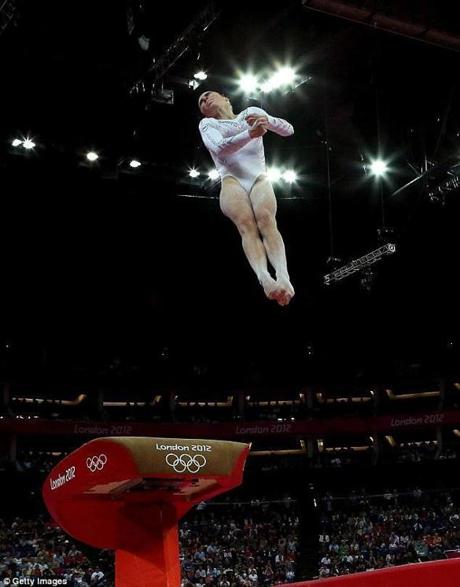
The other was the jaw-dropping speed of Ye Shiwen, the 16-year-old Chinese swimmer who not only won gold in the women’s 400 meter individual medley in record time, but also swam the final 50 meters faster than Ryan Lochte, the US swimmer who won gold in the men’s 400-meter event that same night.
Some swimming officials have said the teen’s time was so unbelievable they suspected she might be taking performance enhancing drugs, which are prohibited in the Olympics. Ye denied the accusations, and drug tests appeared to back her up, coming back negative.
Dr. David Geier, director of sports medicine at Medical University of South Carolina, said he would not be surprised to see a few rare cases of elite female athletes besting their male counterparts. Such instances, he said, would most likely happen in swimming and gymnastics, sports that require flexibility, a trait more common in females.
“Swimming is about skill and mechanics, and there is an element of flexibility that requires a tremendous amount of shoulder rotation,” Geier said. “I am reluctant to say no woman could catch a man, but I would think it would have to be the right sport and the right circumstances.”
British researchers in 2004 published a paper in the journal Nature that analyzed race times in the Olympic 100-meter sprint from 1900 through 2004 and concluded that if the trend continued, the female winner in the year 2156 could notch a faster finish than the top male.
But a 2010 study by French researchers published in the Journal of Sports Science and Medicine compared a century’s worth of best performances by the top 10 male and female Olympic athletes across 82 sports and found that after a significant shrinking of the gap, women’s performance, on average, has not gained ground on men’s since 1983.
They concluded that more athletic opportunities for women, along with rising use of performance enhancing drugs during the 1970s and early ’80s, rapidly shrank the gap. Then regulators improved detection of prohibited drugs, leading to less drug doping, the researchers said. Female athletes’ swift gains stalled to where they remain today, about 10 percent behind male performances, on average.
“These results,” the scientists concluded, “suggest that women will not run, jump, swim, or ride as fast as men.”
Much of the doping in decades past involved anabolic steroids, a drug that mimics the effects of testosterone in the body. Because women naturally have much lower levels, female athletes in particular would benefit from steroid use.
Bottom line, say exercise specialists, is that Mother Nature is the ultimate doper, imbuing males with testosterone, a hormone that makes them more powerful and allows them to inevitably trump females’ athletic performances.
For starters, testosterone helps men carry more oxygen in their blood to feed their muscles.
“If you look at pure physiology, men definitely have an advantage,” said Polly de Mille, an exercise specialist at the Women’s Sports Medicine Center in New York’s Hospital for Special Surgery. “They have wider lungs, bigger airways, and a bigger heart that will pump more blood with each beat.”
Which brings us back to the pool at Norwood High.
Goodwin has found that several of the boys, who were novice swimmers and struggled to keep up with their more experienced female teammates in the longer events, now appear poised to overtake them. Those veteran girls initially held the edge in longer distances because technique and training can be as crucial as raw power in those events. But with a few years’ training for the male teammates, the traditional gender gap emerged.
Norwood is among a small number of Massachusetts high schools with boys competing on the girl’s swim team. Massachusetts law requires equal access to sports for both genders. Most schools typically offer a fall swimming season for girls, and have both boys’ and girls’ teams in the winter. But some districts, such as Norwood, offer just one team and one season because of budget constraints and having to share a pool with a nearby town, hence the mixed-gender Norwood swim team.
That arrangement created national headlines last fall when a Norwood boy, Will Higgins, smashed a meet record for the girls’ 50-yard freestyle event that was set 26 years earlier, by a female.
Some charged that it was fundamentally unfair for men to compete with women — and strip them of records — given the physiological differences.
Goodwin, Higgins’s coach, is torn.
“As a coach, you are thrilled with the hard work and watching it pay off,” she said. “But it’s going to be harder for the girls on the team.”
That’s because the boys’ increasingly faster times, as they catch up in training, will knock some of their female teammates out of events in local girls’ swim meets.
But the brouhaha from last fall’s upset prompted the Massachusetts Interscholastic Athletic Association to change its rules, and for the first time during the fall season, the small number of boys who compete on girls’ swim teams will only be allowed to compete with other boys in state tournaments. They will have their own mini-tournament, with perhaps a dozen or so competing.
Association spokesman Paul Wetzel said the organization changed the rules for tournaments because it concluded a gender gap continues to exist.
Performance results “will always reflect that,” Wetzel said
2013 will be my 30th year at The National Gymnastics Training Camp (AKA Gym Momentum Camp). I started out there as a 16 year old Jr coach. My job was to basically spot, move mats, listen and learn. Through the years I have had the opportunity to work with some amazing people. Both gymnasts and coaches.
Since I took over directing the camp in the mid 90’s I have put together what I believe are the best coaches anywhere, orchestrated a huge upgrade of the facility and seen our numbers grow steadily. Every once and a while a song comes on the radio and I am instantly transported back in time to a summer.
Love them or Hate them, here are the #1 Songs of the summer according to Billboard Magazine. Coming up with this list made me realize how much I dislike “Top 40” music. So where appropriate I have added Tony’s Top Summer Songs. I have avoided (in most cases) making sarcastic comments on songs. Have a TOP song you want to share? Let me know!
1983
1984
1985
1986
1987
1988
1989
1990
1991
1992
Probably the song that has been used in more Skit Nights than any other song
1993
1994
1995
1996
1997
I wonder if there is an award for the Bass Line being in two #1 Summer Songs 13 years apart?
1998
1999
2000
2001
2002
2003
2004
2005
2006
2007
2008
2009
2010
2011
2012
WHAT WILL 2013 BRING?
The other day I was in my office at my gym when I heard a 6 or 7 year old DEMANDING certain things from their mother. Then Listening to the mother make concession after concession and explain to my office manager that her child was “strong willed” . As a Dad of 2 teenagers, I can remember times like that. I am far from being a perfect parent. But, I AM THE PARENT. I lead the way. I recently lectured in Region 7 on “Dealing with difficult Children” so this has been on my mind.
Reading Tom Burgdorf’s facebook post this morning was timely and I want to share.
From Tom Burgdorf facebook page:
Parents, Teachers and Coaches – 7 Year Olds Obey, They Don’t Dictate
Most 7 year olds are cute, they have been on this earth 84 months and they don’t know how to multiply yet. How did they get so much control and power in a family? We are seeing more and more families catering to the desires and whims of 7 year olds as if they know what is right for them. As if they are “worldly,” educated and have a grasp at right and wrong. Doesn’t that seem odd?
7 Year olds don’t have the knowledge, tools, experience or education to know what is right for them. Or what sport they “should” be trying or how many practices is correct for them. They don’t know the right food to eat, when to eat or in some cases how to behave properly. Enter the adults in their lives to guide them. These 7 year olds don’t even get the conversation right all of the time when a teacher or coach talks to them. Do we hang on every word a 7 year old brings home about school or sports practices?
We are doing a disservice to the development of a 7 year old if we give them too many choices. They just don’t have the right experiences or knowledge to make an educated decision at this age. No, you aren’t showing them “love” by letting them decide what their life is all about. No, we aren’t training them to make decisions later by letting them dictate at age 7. No we aren’t teaching them that their opinions count when they complain about the way an adult teacher or coach talked to them in practice at age 7.
7 year olds need guidance. 7 year olds need to learn their position in life. 7 year olds need to be more quiet and listen to those who know a zillion more things than they do. I really think there are a few 7 year olds out there who think they are equal to the adults in their life. Strong parents know that a 7 year old is vulnerable, confused, uneducated and in need of lots and lots of help.
Haven’t we all seen an adult or two dominated by a 7 year old? How can anyone think that that is a positive situation for the child? I am not talking about the occasional tantrum but something even more important. “Mom, put my shoe on,” as the 7 year old motions for the mom to kneel at her feet. Or the 7 year old refusing to eat the meal that the parents have prepared or paid for. (She then goes hungry for several hours as her body tells her how stupid she was to make the grandstand play at dinner.)
7 year olds dictating to her parents, teachers or coaches? Really? We, as educated adults really think that is a good situation? 7 year olds should obey 95% of the time and nicely question 5% of the time. We know what is best for them. We know how to keep them safe, fed, clothed and moving forward. A 7 year old comes home, complains about her teacher at school and we are on the phone 5 minutes later with the principal? Really? (Serious things yes, minor things no.)
7 year olds have no power or influence. They can be heard and we will consider their feelings and desires but they always understand that the parent, teacher or coach knows what is best. This is a very important lesson.
Side note, I am seeing a little bit of a trend with kids that they dwell on the negative a great deal. They talk about their “bad” teachers at school and tell about all of the bad things that happen at practice. I think this comes from them feeling “empowered” to be able to do this. I think this is detrimental to them being excited about learning. Stop complaining about your teachers and get some work done.
I hope you don’t see too many 7 year olds in your circle of friends and families that dictate rather than obey. As they get older we can start giving a little more responsibility to them to make decisions and hopefully do the right thing but not at 7. It is so important for us to teach our 7 year olds their proper place in the world. Tom Burgdorf Gymnet Sports on Facebook
(If you like “Tom’s style,” and you run a “for profit” sports gym, cheer gym, dance studio or sports program, consider becoming a member of his Elite 100 Sports Business Program. You can receive a sample of this program by e-mailing Tom@gymnetsports.com. This program is terrific for all year training of staff.)
From A thought provoking blog from Vern Gambetta.
Here is my version.
This summer I have done more training camps, clinics and congresses than ever before. I will still be traveling well into the fall. This has allowed me to meet and speak to some extraordinary people and have a chance to listen to what a lot of people have to say.
I think there is a time in everyone’s career when they think they have all the answers. Learning how to say smart things and give smart answers seems very important. I know I have been there. The longer I coach and teach and the older I get the more I realize it is not about having all the answers and saying smart things. It is about having the right questions. I realize that the people I respect the most have the ability to listen and ask very incisive questions that make you think and challenge you to learn.
There is power in the question. I think the toughest lesson to learn is to listen to others, respect their ideas and opinions and ask smart questions. I know it has taken me a long time to get there and I am not completely there yet. I do know that 25 years into my coaching career that I have more questions than I do answers. That makes every day fun and exciting because the drive to answer the questions keeps me learning and innovating.
I believe today that too many coaches TALK with out asking QUESTIONS. Too many coaches HEAR without really LISTENING. It is OK to have convictions in your beliefs and confidence in your coaching but really no one has all the answers.

Just my thoughts.
Once again Vern Gambetta shares some good information in a simple format.
The importance of communication with your athletes and your colleagues can never be understated. It is through open and consistent lines of communication that teamwork is built.
The basis of communication is the 3 C’s.
Connect – Get the athlete’s attention. Know the athlete. Know their attentional style and preferred communication mode. Remember connection is not just verbal, it is non-verbal; body language can send a strong powerful message to connect or disconnect.
Convey – The message must clear, no nuance or hidden messages. Let the athlete know clearly what the message is in a language they can understand and translate into action.
Convince – The goal of the communication is to convince the athlete or professional colleague to act. If the message is clear and the intention is defined this should be a logical outcome of connecting and conveying.
Good coaches use the 3 C’s constantly without thinking about it. They get it because intuitively they know that communication is the cornerstone of successful coaching. It is not what you know; it is how you communicate what you know and elicit the desired action.

It is a pretty busy time of year and time of life. We are involved in a new business, TAKE FLIGHT AERIAL ADVENTURE PARK, I am away every weekend at USA Gymnastics Regional Congresses, or Clinics/ Training Camps. The Olympics have been VERY GOOD to the gymnastics business and both gyms that I own (Atlantic Gymnastics) are going strong.
Through all this craziness I started thinking about how fortunate I have been and what is good about the world we live in. In today’s crazy chaotic world we are bombarded with negativism, bad news and hatred. We don’t have to let this be our world; I refuse to let it be my world. We each can create our own reality and influence and be influenced by our friends and families.
Earlier this summer at my gymnastics camp I was sitting out on the patio looking up at the stars (and looking for satellites with a friend) when someone asked me, “What do you see?” I replied “What ever you want to see” . The more I think about this statement the more it rings true. In life, in the gym, in school and up in the sky, you will see what you want. I choose to focus on what is possible; I choose not to listen to the naysayers.
We live in an exciting time of change that offers infinite opportunities for growth. Take advantage of this, look for what you can do, look for chances to complement someone. Take a minute today to reflect on what is good about your life and your world. Take a minute and call a friend or a family member to say hello and thank them for being in your life. You will be surprised by how good it makes you feel.
And to my camp people: “Hey, what was the best part of your day?”
Here is a slide show from Gym Momentum Camp and National Gymnastics Training Camp (my summer gymnastics Camp) 2012.
It was really a great time. You do NOT want to miss 2013.
Gym Momentum Camp: June 21-23
National Gymnastics Training Camp
Session 1: June 23-June 28
Session 2: June 30-July 5
Look for more information and photos!
I am getting ready for USAG Region 7 congress and I realized that I need to do some BACK TO SCHOOL shopping for my kids. The first part of my summer was spent at Gym Momentum Camp and at The National Gymnastics Training Camp (my summer gymnastics camp) It was spent with some great coaches and great kids.
Most of our gymnasts are getting ready to head back to school and I like to remind them that there may be somethings they have forgotten about school!
As the four seasons (and upcoming movie!) of Phineas and Ferb demonstrate, “104 days of summer vacation” can sometimes take a very long time to pass by. And we don’t blame you if, while you’re “building a rocket, fighting a mummy, or climbing up the Eiffel Tower,” you forget some things about what it’s like to go to school. So to refresh your memory, here are 10 things you (might have) forgotten about the school year over the summer.
1. The weather gets cold.
I know, as you’re bathing in the sun on the beach, it’s pretty hard to imagine the weather getting colder. But (if you don’t live in California) that’s just the sad reality.
2. The clock is your best friend.
When boring classes seem like they’ll never end, you can always look to the clock for assurance. That minute hand will keep on moving until, sooner or later, the bell will ring and you’ll be free to go. That is, until the next class starts.
3. Don’t get too stressed.
During the school year, make sure to remember how insignificant last year’s tests seem, and stop yourself from getting too stressed out over every test score.
4. You feel like this every Friday…
5. You feel like this every Monday.

6. “Which seat should I take?” becomes a legitimate question.
Trust me, when you get on the school bus, you will be dumbfounded by all of your amazing seating options.
7. Teachers are often your archenemies.
When teachers give out “impossible” tests or spend inordinate amounts of time picking on you, it may seem like they don’t have hearts. And a lot of the time, they don’t. But…
8. Sometimes, teachers are your biggest allies.
When you don’t have anyone to talk to and you’re going through a hard time, teachers are the best people to talk to. Think about it, their job profile pretty much requires them to be nice and smart. So, don’t be afraid to look to teachers for help when you’re having a hard time.
9. You are in really bad shape when you save your homework for Sundays.
Yes, it’s enticing to go out to parties or hang out with friends on Fridays and Saturdays. After a long week of school, a break from work is sometimes just what you need to power yourself up for the next week. But when Sunday comes around and you just want to watch football and relax, you will definitely wish that you’d done your homework earlier in the weekend (that said, of course, I’ve pretty much never done homework on a Friday…).
10. Next summer vacation will start before you know it.
The school year will be in your review mirror soon enough. Sadly, it won’t feel that way when you’re cramming for essays during the dark depths of November.
