There is nothing that can prepare a coach for what I had to do at my camp last week. I had to deliver some terrible news to a camper. Remember that we are teaching way more than just gymnastics.
[Read more…]
South Florida – Gym Momentum Camp
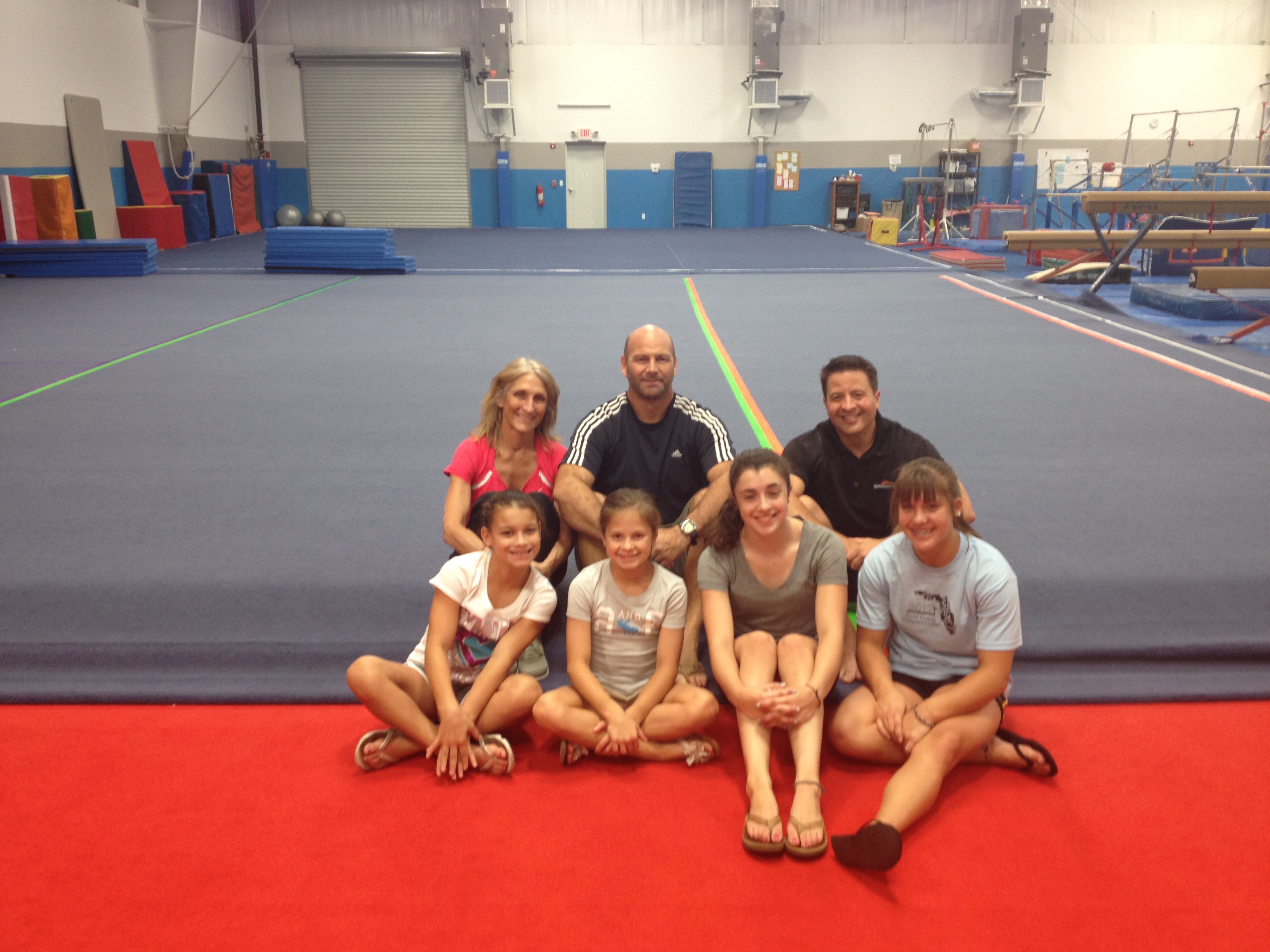
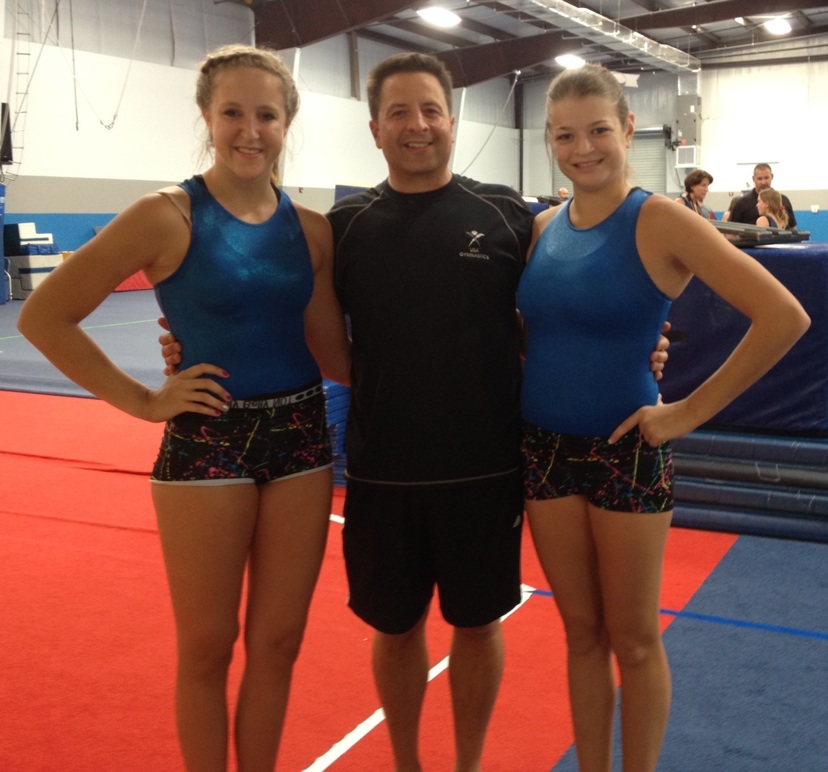
Just returned from South Florida Gymnastics Center and Gym Momentum Camp. It was my pleasure to work with Steve and Sue Arkell from Gym Plus in Panama City.
Steve and Sue each had so much to share it was an amazing camp. They brought 4 very talented gymnasts to serve as demonstrators.
Be on the look out! Gym Momentum will be selling Steve’s Videos in the Pro Shop Section. He has some fantastic drills. You will NOT regret this purchase. There are 3 individual DVDs. Bars, Floor, and Vault/conditioning.
I have written at great length about the importance of having a PLAN for all of your events. Steve and I deliberately did not discuss our individual plans with each other before the “lecture portion” of the camp. We were hoping to create some discussions with the differences with our plans. What happened was that our plans were nearly identical. Right down to the title of our lectures!
Those who know me know that I am a stickler for time. Things MUST run on time, events MUST switch on time. On Friday night we set a record! Steve and I had so much to share in our Body Position and Bar lecture that we ran 2 1/2 hours OVER TIME! Then we ended up answering questions for another 45 minutes!
The hospitality of the parents group at South Florida Gymnastics was 1st class. Lunch was brought in for the coaches and gymnasts so that when lunch was over and the kids had some down time (watching Visa Championships on TV) they were ready to go for the afternoon session.
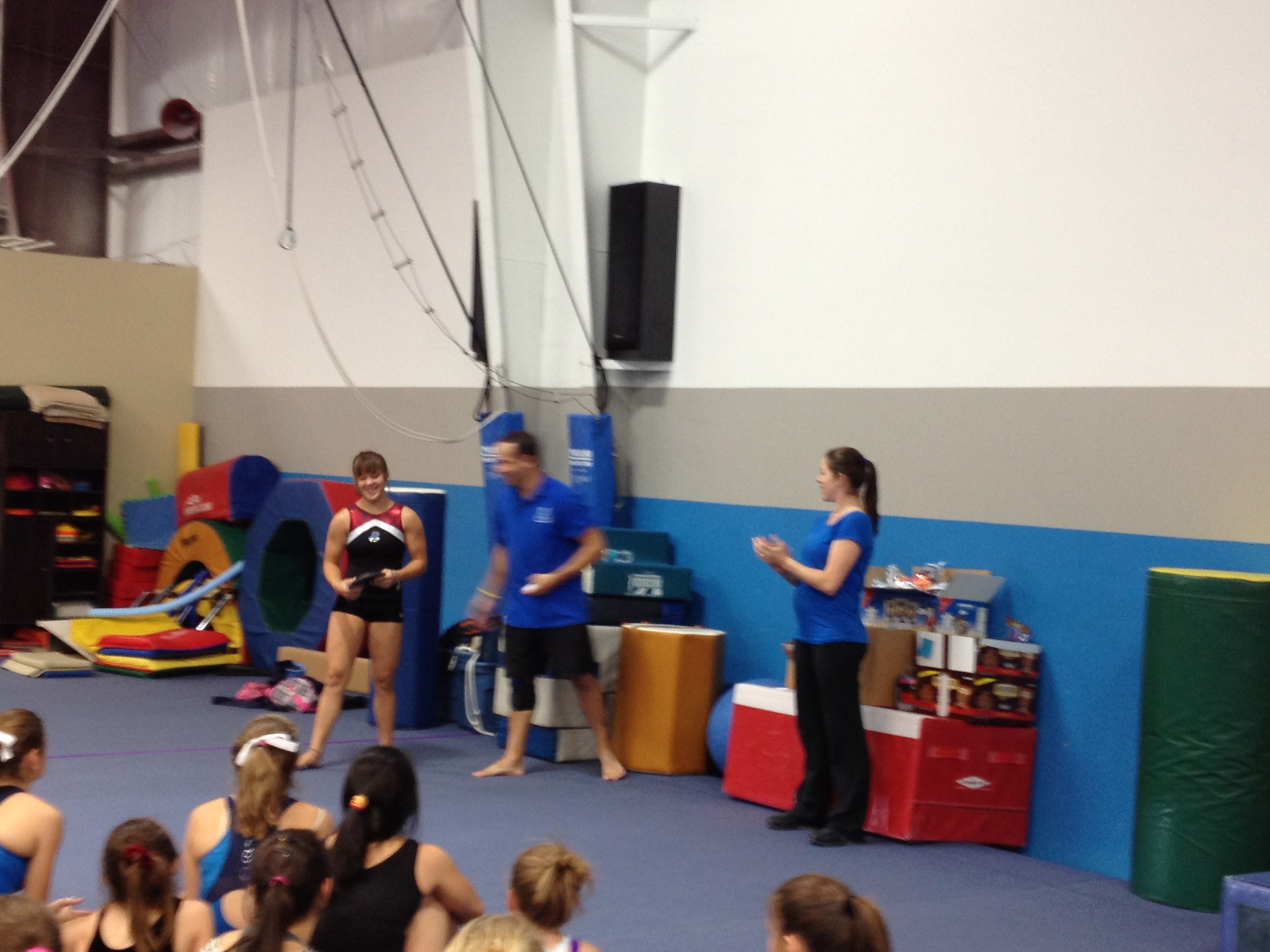
At the end of each training session there was an “open gym” where coaches could take gymnasts from their gym and work on the skills and drills they had practiced earlier in the day. There was so much energy from both the gymnasts and the coaches that all the training sessions seemed to fly by.
I know that Chris and the Crew at South Florida Gymnastics Center will be sending me photos and I will be posting them up here as well as on the Gym Momentum Facebook page.
TOPS CHANGES 2012
TOPS TESTING CHANGES FOR 2012 SEASON
The following are changes to the STATE LEVEL TESTING program. They will be in affect for the 2012 TOPS season.
Update 3/27/2012
TOPS Testing SCHEDULE
TOPS Physical Abilities Manual
Physical abilities changes
All Handstand Holds will be 30 seconds.
Eliminate the Bridge, the Jump Test and the Sprint Test
Skill testing changes
Local tests will include skill and skill combination testing.
Coaches are encouraged to use additional 8 inch or 4 inch matting for safety.
Coaches are able to stand near the athlete (without blocking the testers view) for the safety of the athlete.
Bars
8 Year Old Bars
2 glide kip casts to minimum 45 degrees in a row, clear hip circle to horizontal, to glide kip cast to horizontal, to stoop back toe circle, jump to high bar to kip cast to horizontal, swing 1⁄2 turn with feet at minimum horizontal with the bar, changing one hand only (level 5 dismount).
1. Legs together on all casts
2. Option to straddle on the first glide only. All other glides are legs together.
3. May bend the knees on the second 1⁄2 of toe circle
4. Landing of final skill is not judged. The height of the swing is primary.
9 Year Old Bars
2 glide kip casts to minimum 45 degrees in a row, clear hip circle, back toe circle or stalder circle to 45 degrees, to glide kip cast to horizontal to stoop back toe circle, jump to high bar to kip cast above horizontal, swing 1⁄2 turn with feet and hips above the bar, changing one hand only (level 5 dismount).
1. Legs together on all casts
2. Option to straddle on the first glide only. All other glides are legs together.
3. May bend the knees on the finish of the toe circle to facilitate jumping to high bar
4. A coach must stand between the bars as the athlete moves to the high bar. Safety spot when needed. Additional matting is also recommended
5. Landing of final skill is not judged. The height of the swing is primary.
10 Year Old Bars
Glide kip cast 1⁄2 pivot to kip cast to minimum 45 degrees, clear hip circle, back toe circle or stalder circle to above 45 degrees, to glide kip cast to horizontal to stoop back sole circle, jump to high bar to kip cast above horizontal, swing 1⁄2 turn with feet and hips above the bar finishing with both hands changed before dropping below the bar height.
1. Legs together on all casts
2. Option to straddle on the first glide only. All other glides are legs together.
3. A coach must stand between the bars as the athlete moves to the high bar. Safety spot when needed. Additional matting is also recommended.
4. Landing of final skill is not judged. The height of the swing is primary. Alternating or simultaneous hand change.
Note: It is suggested the 1⁄2 turn swings be taught on a single bar with hands on coaching. Move to a regular two bar system only when the athlete is safe to do so.
Beam
Start anywhere on the beam to accommodate spacing. Low beam matting is to the height of the bottom of the beam.
8 Year Old Beam sequence
Back walkover finish in lunge, 2 or 3 steps to split leap or switch leap, front to back cartwheel finish, standing back tuck dismount to stick. Front walkover on low beam.
9 Year Old Beam
Back walkover finish in lunge, standing back handspring, 2 or 3 steps to switch leap, front to back cartwheel finish, standing back tuck dismount. Front walkover on low beam.
10 Year Old Beam sequence
Back walkover finish in lunge, handstand step down to back handspring, 2 or 3 steps to switch leap, front to back cartwheel or round off, or 1 or 2 back handsprings to back tuck stick. Front walkover on low beam.
Floor
No additional matting available.
Coaches are encouraged to spot the finish of none sticking skills.
8 Year Old floor sequences
Sequence 1– 1 to 2 steps hurdle to 2 front handspring step outs to front handspring feet together. None sticking. The athlete should be encouraged to be moving forwards at the completion of the final skill.
Sequence 2– From panel mat jump hurdle round off to 2 back handsprings to back tuck to stick.
Sequence 3– Start arms up. Kick through scale to HS, show for 2 seconds. Extend shoulders to front limber, stand up from limber with arms and head staying back and connected, finish through tall position to forward roll to pike up to HS, 1⁄2 pirouette to HS stoop down to tall stand, tuck sit to back extension handstand lower with straight body to push up position with no pike. Stoop feet under to stand and finish.
9 Year Old floor sequences
Sequence 1- 1 to 2 steps hurdle to 1 front handspring feet together to front tuck landing with stick.
Sequence 2- From panel mat jump hurdle to round off 2 back handsprings to back whip to rebound.
Sequence 3- From panel mat jump down to punch tuck front to stick. Arms up kick through scale to HS, show for 2 seconds. Extend shoulders to front limber, stand up from limber with arms and head staying back and connected, finish through tall position, front pike roll, pike up to HS show straight body then 1⁄2 pirouette to HS stoop down to back extension handstand lower with straight body to push up position with no pike. Stoop feet under to stand and finish.
10 Year Old floor sequences
Sequence 1- 1 to 2 steps hurdle to front handspring step out to front handspring feet together to front tuck landing with stick.
Sequence 2- From panel mat jump hurdle round off 2 back handsprings to back layout stick.
Sequence 3- From panel mat jump down to punch straddle split to punch tuck front to stick. Arms up kick through scale to HS, show for 2 seconds. Extend shoulders to front limber, stand up from limber with arms and head staying back and connected, finish through tall position, front pike roll, pike up to HS show straight body then 1⁄2 pirouette to HS stoop down to back extension 1⁄2 turn forward roll to stand and finish.
For More Information Contact your State TOPS Coordinator.
Functional Path Training, Flexibility
If you have not already discovered Vern Gambetta’s website FUNCTIONAL PATH TRAINING you need to. He has some great thoughts on conditioning, flexibility and technique.
About Vernon Gambetta
Vern is currently is the Director of Gambetta Sports Training Systems. He has been the a conditioning coach for several teams in Major League Soccer as well as the conditioning consultant to the US Men’s World Cup Soccer team. Vern is the former Director of Conditioning for the Chicago White Sox and Director of Athletic Development for the New York Mets. Vern is recognized internationally as an expert in training and conditioning for sport having worked with world class athletes and teams in a wide variety of sports. He is a popular speaker and writer on conditioning topics having lectured and conducted clinics in Canada, Japan, Australia and Europe. Vern’s coaching experience spans 39 years at all levels of competition.
Vern has authored six books and over one hundred articles related to coaching and sport performance in a variety of sports. He received his BA from Fresno State University and his teaching credential with a coaching minor from University of California Santa Barbara. Vern obtained his MA in Education with an emphasis in physical education from Stanford University.
Thoughts on Flexibility
Seldom does a flexibility deficiency appear in isolation; it is usually related to a deficiency in strength and sometimes posture. The qualities of flexibility and strength are closely related. Many times the so-called “tight” individuals can significantly improve flexibility by undertaking a good sound balanced strength-training program.
In terms of training, flexibility is considered a separate training unit. It should be addressed daily. Like any other training component, variation must be programmed into the flexibility routines. Flexibility is not warm-up! It is part of warm-up, nor is it is not the major focus in the warm-up. As a separate training unit to address specific deficiencies flexibility is best placed after warm-up. The rule of thumb to remember is warm-up to stretch, do not stretch to warm-up. My experience has shown static stretching is best placed at the end of the workout as part of a cool down. Placed there it serves to restore the muscles to their resting length which will reduce soreness and enhance recovery for the next workout.
For optimum results flexibility exercises in the warm-up should be active to facilitate the excitation of the nervous system to create a readiness for movement. The tempo of the stretches used in warm-up is stretch – hold one count – relax and repeat three times and then move onto another body part. The purpose of stretching in warm-up is neural activation. Passive or static stretching has a relaxing, calming effect. That is appropriate for the cool down or in a recovery
Deficiencies in range of motion can be remedied quite quickly, but sufficient work must be done to maintain those gains and to make sure those gains transfer to the activity. There are many tools to improve flexibility. The most available and adaptable tool is gravity. It is always available, easy to use, convenient and effective. A balance point in the form of a rail, hurdle, or a bench can help to enhance gravity. Towels or ropes can be used to gain a lever advantage as an aid to stretching.
I have found it most effective to work on flexibility several times a day in shorter sessions these sessions should be designed to meet the individual athlete’s needs. Vary the duration of the stretch. For developmental stretching hold the end position in a range of time from ten to thirty seconds. Repeat the stretch three to five times.
Although not substantiated by research, my experience has shown that stretching for 15-20 minutes approximately two hours after the last workout of the day to be very effective in terms of reducing soreness and enhancing recovery as well as making noticeable range of motion gains.
According to Thomas Kurz: “Flexibility Training is speed-specific because there are two kinds of stretch receptors, one detecting the magnitude and the speed of stretching, the other detecting magnitude only. Static stretches improve static flexibility and dynamic stretches improve dynamic flexibility, which is why it does not make sense to use static stretches as a warm-up for dynamic action.”
The amount of work (time devoted) to maintain flexibility is significantly less than the amount of time needed to develop it.
In dynamic flexibility work there are no sudden movements; the movements are controlled and flowing. Dynamic flexibility work will improve elasticity of muscles and ligaments. It consists of arm swings, leg swings, trunk rotations, reaches and bending to stimulate blood flow and wake up the nervous system.
Static stretches should follow dynamic stretches. Static stretching can be counter productive if placed before a workout requiring explosiveness, speed or agility. Immediately following static stretching the muscles are less responsive to stimulation and coordination is thrown off. Static stretches interfere with the activity of tendon reflexes. This underscores the importance of carefully choosing the type of flexibility to be used relative to the type of workout. This is all part of a good plan.
TEAM GYM NORDIC CHAMPIONSHIPS
TEAM GYM Nordic Championships 2011
Thanks to Kolbrún Ósk Ásgeirsdóttir from Iceland for sharing this great video.
[Read more…]
Pampered Children Are Hard To Coach
Many of you know Tom Burgdorf from Gymnet Sports. He posted this on Facebook the other day. It really makes a lot of sense.
Pampered Children Are Hard To Coach
“Your child is a real treat to teach/coach.” One of the comments about your child most parents love to hear. It means you have done a good job of parenting and your child has a bright future in learning from others. Great.
Children who grow up pampered are hard to coach. They get so much without earning it that they feel “entitled” to a reward regardless of effort or behavior. “Just show up sweetheart and we will give you a trophy.” “Sure, only give 50% in practice the week before the meet and you can still compete and represent my team.”
Are we sending the right signals when we “give without earning?”
We seem so hung up on keeping these kids happy that we are “giving” them their early life without them earning it. And then we are releasing them off to college, away from our umbrella of protection and saying “have a great life.” The college bound young adults aren’t afraid because they expect to find more people to “give” them what they want and need. A disaster waiting to happen and we are seeing it all over.
As parents, consider giving your coaches athletes who work hard. Athletes who know that you need to “do A and B before you get C.” If they consistently are given “C” without doing “A and B” guess what they will expect in the future. We want athletes who aren’t afraid to sweat. Children who have been raised at home where the lesson is try and learn from your experiences, not you will win all of the time. We want athletes who aren’t afraid of falling. A pampered child is usually shielded from situations where they may fall.
Step back today and look at the children you are guiding toward young adulthood and determine if you may be giving a little too much too often. We as parents need to be preparing them to be able to handle the ups and downs of life rather than making them “happy” every day. You are shaping these individuals for a life with “less of you in it.” The sooner we realize that the better. Build a young adult who can excel at handling everything that life throws at them. I want them to win that trophy.
Tom Burgdorf Gymnet Sports
SOUTH FLORIDA SKILLS CAMP
ARE YOU LOOKING FOR A GREAT OPPORTUNITY TO JUMP START YOUR SUMMER AND THE GYM MOMENTUM TRAINING CAMP IS ALL THE WAY UP IN NEW YORK?
HERE IS YOUR CHANCE TO WORK WITH SOME GREAT COACHES (In my humble opinion)
Staff: Tony Retrosi, Steve Arkell, Sue Arkell, and others!
WHERE: South Florida Gymnastics. 3241 59th Dr E Bradenton, FL 34203
WHEN: June 15th-17th
FOR MORE INFO CALL OR E-MAIL: Chris Lakeman 941-730-8016. sfgymcheer@verizon.net
Hello everyone!
I know I have spoken with many of you already about this camp/clinic we are doing this summer and wanted to get all the information out to you and explain what we are doing in a little bit more detail. Hoping you all can join us.
On June 15th-17th, we will be hosting a coaches hands-on clinic and athletes skills camp. We have asked National Clinicians Steve and Sue Arkell and Tony Retrosi to come and help us run a Coaches “hands on” clinic to help teach spotting techniques for upper level skills as well as an Optional and Compulsory skills camp Saturday and Sunday respectively. We have 72 spaces for each optional and compulsory camp. We will be reserving participants for our own athletes until April 16th. After April 16th, its first come, first serve until we reach max capacity of 72 per clinic. There is no limit to coaches allowed for Friday’s clinic. There is no registration deadline. We are keeping registration open until we are filled. So feel free to call and check availability at the gym at 941-758-5775 or Chris’ Cell at 941-730-8016
We invite coaches to come and learn spotting techniques for advanced optional skills on each event for 4 hours on Friday afternoon starting at 2pm and ending at 6pm. Steve and Sue will be bringing 4 of their upper level athletes as “spotees” for the hands-on clinic. We are also opening an invite to coaches that wish to bring any Level 8 – 10 gymnast who would make for good “spotees”. There will be no charge for any gymnast on Friday for the coaches clinic. We will need you to email us the skills those athletes are training so we can see if there is a need for those skills. But extra training work for free is always a good thing!
Saturday, we will be holding the optional skills clinic. Gymnast will get a chance to work on each event with either Steve and Sue Arkell as well as Tony Retrosi. SFG Staff and any coaches that wish to practice their new spotting skills are welcome to coach both days! This skills clinic will run from 9am to 5:30 pm with a 90 minute break for lunch. SFG Booster Club will be providing lunch for all gymnast and coaches that participate. They will also be planning some fun activities during their break.
The compulsory camp will be held on Sunday and will run from 9am to 2pm. There will be a 60 minute break for lunch that will be provided by SFG Booster Club for all gymnast and coaches. We will be splitting the compulsory camp between compulsory skills and a 90 minutes open gym for the athletes to develop some of their early optional skills.
Prep opts: For prep optional athletes, please use your best judgment as coaches. If your athletes are working level 7+ skills, then the optional camp would be great. If not, we recommend the compulsory camp.
Enclosed you will find the brochure along with the registration form and the skills evaluation sheet for grouping. Please distribute to your team kids at your convenience. The front of the form is for your athlete to fill out their camp skill “wish list”. On the back, we ask that you write any and all progressions you have worked with your athlete so that we can properly group them prior to the skills camp. Prices are listed on the brochure, if your gym sends 5 kids to camp, you can send 1 coach to the Friday clinic for FREE. If your gym sends 10 kids to our camp, you may send as many coaches as you would like for free. Cost for Friday only is $100 per coach unless you have athletes attending. All we ask is that you list them on the registration form, along with any USAG information so that we may submit it to our insurance. We are hoping to make this an annual clinic and will continue to try and help it grow over the next few years with more national coaches and additional facility for boys next year.
We are hoping you all can come and bring some kids to this great one day camp. If you have any questions, please call Chris at 941-730-8016 which is his personal cell phone. He will be happy to discuss with you any and all questions you may have.
Chris Lakeman
Program Director
South Florida Gymnastics941.758.5775
Parents- A note on YOUR reputation
Parents – Your Reputation At The Gym Or In Your Sports Program
This is from Tom Burgdorf of GYMNET Sports.
He makes some great points and I couldn’t have said it better. If you can, subscribe to Tom’s newsletters and at the very least, “Friend” him on face book.

We rate the athletes all of the time regarding their performance, progress, behavior and importance to our sports programs. I wonder if the people in charge of your gym or sports organization rate the parents of their athletes too? Of course they do. Maybe we don’t show a score for each parent at the meet but in the minds of the coaches there is a “score” for the actions, behavior and importance to the program for each parent on team.
Shocked?
We all have reputations based on how we talk, behave and react. How we support or don’t support the goals and philosophy of the sports program. Your reputation can be helped or hindered by whether you are seen as a “supporter of all of the athletes on team” or selfish as in “my child and no one else.” We all create and add to our reputations daily.
And the reputation, the way people think of you, at your sports program is what at this moment? Wouldn’t it be interesting to ask 5 of your fellow team parents what your reputation is? How about asking the coaches how they feel about you?
PARENTS ARE GREAT! I feel strongly that our sports programs are filled with 98% terrific, supportive parents who have great reputations with the other parents and with the coaches. It’s the other 2% that can mess things up. In fact many terrific coaches burn out after a few years and one of the major causes is dealing with difficult parents. Not fair.
**We need positive parents.
**We need parents who believe in the program goals and the coaching staff.
**We need parents who, when faced with a concern, go to the coaches in a constructive “let’s work this out” type attitude rather than cutting down the program and coaches in the background.
**We need parents to make sure that those 1 or 2 misguided parents don’t “rule the parents area and the bleachers.”
**We need parents who understand how wonderful sports are for their children.
If you are one of the 98% of the parents who have built a great, supportive reputation at the gym or in your sports program, fantastic and we need you to continue setting a great example for everyone else.
Continue to help create an environment for the coaches to achieve the ultimate goal of all sports programs, developing a better young adult to attack life with the skills and attitudes to be successful. We need you. (Send me your comments about this important topic.) Tom Burgdorf GYMNET Sports
Jesus Carballo sen. at Challenge Cup, Cottbus 2012 (in spanish only)
Jesus CARBALLO, sen., the Spanish “Father of Gymnastics” is speaking abou the topical situation of Spanisch men’s and women’s artistic gymnastics, four months before the Olympic Games in London.
(in Spanish only!)
TEAM MIKEY’S WAY UPDATE
Tony,
Just wanted to let you know how I did in my last two meets. At the Peach Tree Invitational in Atlanta, GA. My gymnastics was not great at these meets, but I did get to talk about Mikey’s Way, and with the help of the host gym, I raised almost $200 for Mikey’s Way through donations and the sale of Mikey’s Way wrist bands. I was also honored with the Watson-Raines Award, a $1,000 scholarship for travel and training expenses.
Then the Houston National Invitational, the host gym put a page in the meet program about Mikey’s Way and introduced at the meet before my floor routine. I scored a 14.5 on floor and I tied for 8th. I also won high bar, scoring a 15.55, and brought home the $400 prize money for an event title.
Thanks for your help and remember Always be Uplifting!
Ian